Appliances · Buying Guide
Best Coffee Beans For Grinding: Top Mills And Grinders For Fresh Flavor
Finding the best coffee beans for grinding starts with choosing the right equipment to unlock rich aromas and balanced extraction. Whether you prefer a fine powder for a morning espresso or a coarse texture for a relaxing French press, the right grinder transforms whole coffee beans into a flavorful, aromatic brew for your daily routine.
Different brewing styles require specific particle sizes to prevent weak or bitter cups in your favorite mug. From compact manual mills suited for travel and outdoor camping to automated electric burr grinders designed for busy household kitchens, matching your preparation style with the correct grinding tool ensures consistent results every single time.
As an Amazon Associate, StacyLaughs earns from qualifying purchases.
Buying guide
Burr Grinders Versus Blade Grinders
Selecting between burr and blade systems determines how coffee beans are processed before brewing. Blade models use spinning metal to chop beans into mixed sizes, while burr mills crush beans uniformly. This structural difference impacts extraction consistency, flavor clarity, and the overall balance of your daily cup.
Choosing a burr mill helps maintain uniform particle size, reducing bitterness caused by uneven extraction. Blade options offer simpler mechanical operation and often lower costs for casual users. Evaluating your flavor preferences and brewing style ensures you pick the right grinding mechanism for your kitchen counter.
Understanding Grind Size Settings
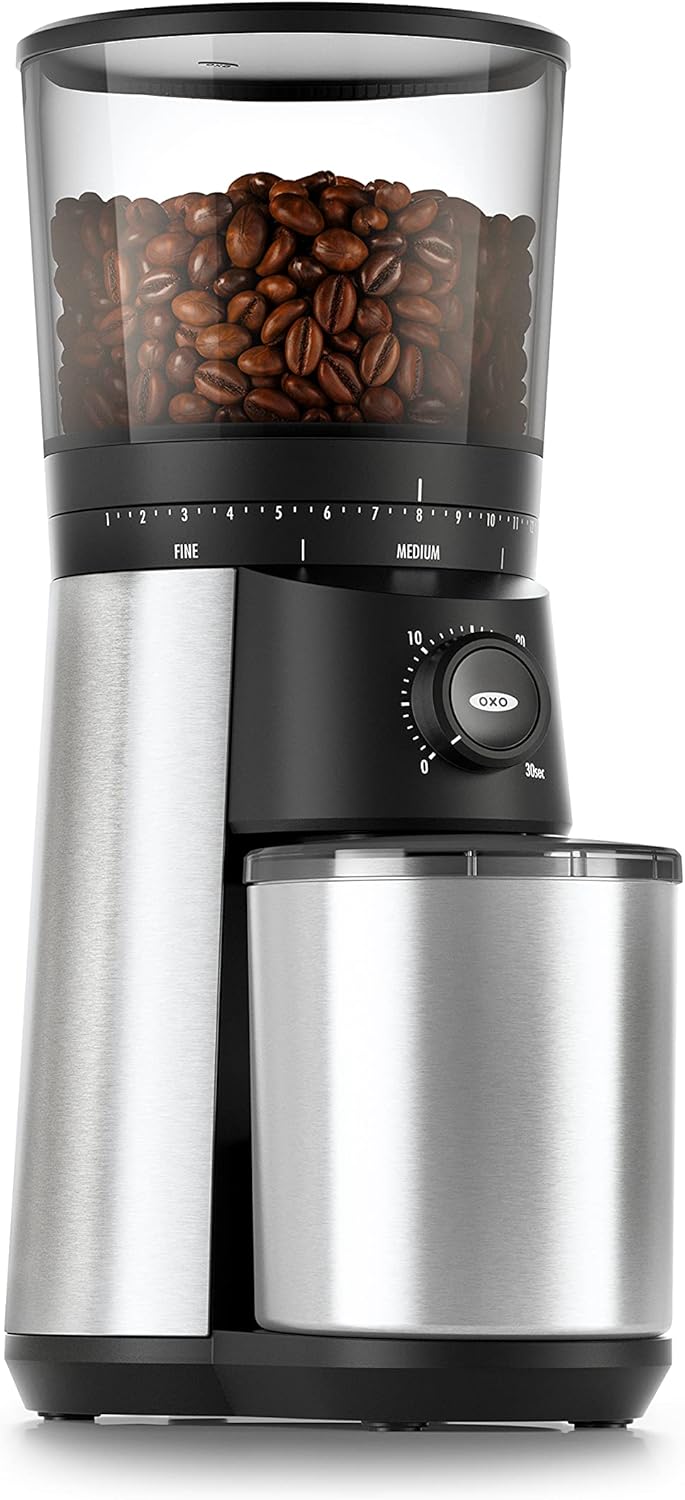
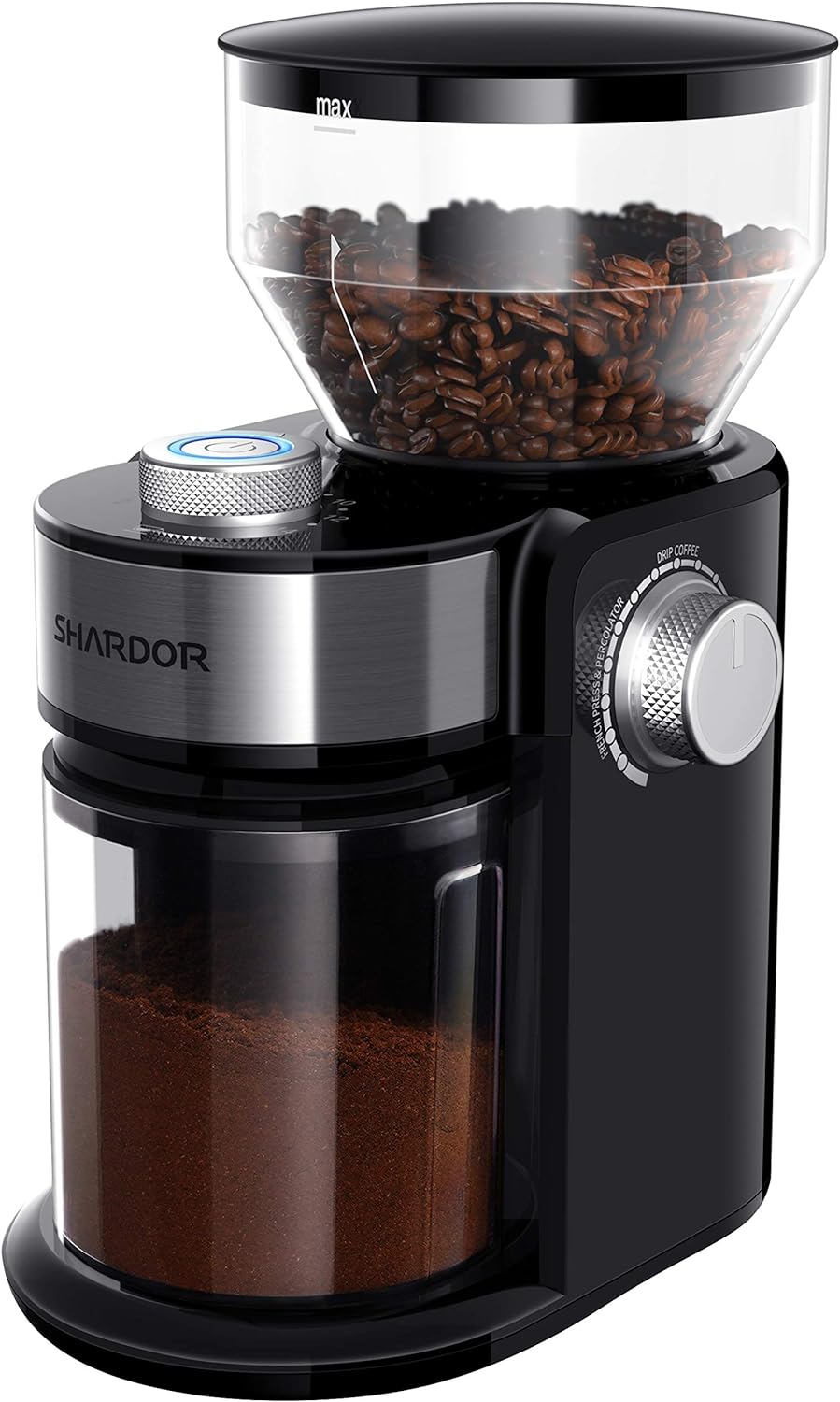
The number of available grind settings dictates how versatile your coffee equipment will be across different brewing methods. Fine settings create powdery grounds for espresso extraction, while coarser options suit French press and cold brew preparations. External rings or numbered dials let you adjust particle sizes easily.
Having more adjustment levels allows precise tuning to match specific bean origins and roast profiles. Grinders with fewer settings offer straightforward operation but less customization depth. Matching your preferred brewing technique to the available setting range prevents poor extraction results.
Bean Hopper Capacity And Batch Size
Hopper capacity determines how many coffee beans you can load into the grinding machine at one single time. Larger capacities support multi-cup brewing for families or hosting guests without constant refilling. Compact hoppers suit individual routines and smaller kitchens with limited space.
Assessing your daily consumption helps identify whether a large container or a portable mini hopper fits your lifestyle. Removable hoppers with secure locking mechanisms also simplify cleaning and bean swapping. Balancing storage volume with your counter space prevents kitchen clutter.
Manual Versus Electric Operation
Deciding between manual hand-cranked mills and electric motorized grinders depends on your mobility needs and convenience preferences. Manual devices provide portable grinding solutions for travel, camping, and outdoor activities without requiring electrical outlets. Ceramic burrs in manual mills generate minimal heat during use.
Electric grinders offer fast, automated batch processing with push-button activation or smart timers for hands-free convenience. While they require permanent counter space and power cords, they eliminate physical effort. Choosing between these power sources depends entirely on your daily routine.
Maintenance And Cleaning Requirements
Regular cleaning ensures your coffee equipment maintains optimal performance and prevents old oils from altering fresh brew flavors. Many electric models feature removable grinding bowls, stainless steel chambers, or included brushes to sweep away micro-grounds. Dishwasher-safe components simplify routine upkeep.
Manual ceramic grinders typically require dry cloths or specialized brushes instead of water exposure to protect mechanical parts. Following manufacturer guidelines for disassembly prevents damage while keeping your grinding mechanism hygienic. Simple maintenance routines extend the functional lifespan of your device.
Countertop Footprint And Storage
Physical dimensions and cord storage features significantly impact how well a coffee grinder fits into your kitchen layout. Compact appliances tuck neatly beneath upper cabinets, while heavy-duty motor housings require dedicated counter space. Hidden cord compartments help conceal loose cables.
Evaluating cabinet clearance and base dimensions prevents purchasing an appliance that overwhelms your workspace. Lightweight portable options can be stored inside drawers or travel bags when not in use. Prioritizing spatial compatibility ensures daily convenience.
Frequently asked questions
Can I use an electric coffee grinder for spices and herbs?
Many electric blade grinders, such as select compact multi-cup models, are designed to handle dry herbs, seeds, and spices alongside coffee beans. This dual capability allows you to grind peppercorns, flax seeds, or chia seeds for cooking and smoothies. However, you should clean the grinding bowl thoroughly between uses to prevent lingering flavors from transferring into your fresh coffee grounds. Always check the manufacturer guidelines for your specific grinding appliance before processing non-coffee ingredients to ensure proper mechanical compatibility and prevent damage to internal burrs or blades.
How do I clean a manual ceramic coffee grinder?
Cleaning a manual ceramic grinder involves disassembling the main parts, which typically include the handle, lid, and inner chamber. Manufacturers generally advise against washing ceramic burrs and internal metal parts with water, as moisture can impact future coffee flavors or cause wear. Instead, use a specialized cleaning brush or a dry cloth to sweep away leftover micro-grounds and powder residue. Regular dry maintenance preserves the ceramic burrs and ensures smooth mechanical operation during travel or home use without risking moisture retention inside the grinding mechanism.
What is the difference between flat and conical burrs?
Conical burrs feature a cone-shaped inner cutter nested inside a matched ring, producing uniform grounds that support balanced flavor extraction for various brewing styles. Flat burrs consist of two horizontal, ring-shaped discs with matching teeth that crush coffee beans with high precision, often favored for consistent particle sizing. Both configurations outperform traditional blades by crushing rather than chopping beans, preserving natural aromatic oils. Your choice between flat and conical burrs depends on personal preference, counter space, and the specific extraction consistency required for your favorite brewing method.
Why does grind size matter for different brewing methods?
Grind size directly controls how water extracts flavor compounds from coffee grounds during the brewing process. Fine grounds expose more surface area, making them ideal for quick-extraction methods like espresso where water passes through tightly packed coffee quickly. Coarser grounds reduce surface exposure, preventing over-extraction and bitterness in slow immersion styles like French press or cold brew. Matching the correct particle size to your specific brewing equipment ensures a balanced, flavorful cup every time you prepare coffee in your kitchen.
Do electric grinders require a constant wall outlet connection?
Electric coffee grinders rely on continuous power from a standard wall outlet to operate their motorized burr or blade systems. Corded designs require permanent proximity to an electrical plug during every single grinding session in your kitchen. If you need mobility for outdoor camping, travel, or rooms without accessible electrical outlets, a portable manual hand-cranked grinder serves as a practical alternative. Evaluating your kitchen layout and planned brewing locations helps determine whether an electric corded appliance or a manual hand mill best suits your lifestyle needs.