Appliances · Buying Guide
Best Coffee Grinder Fine Grind Options for Every Home Brew Style
Achieving a precise texture is essential when you want to extract rich, balanced flavors from your favorite coffee beans. Whether you are brewing a concentrated morning espresso or a robust French press, having the right countertop equipment transforms your daily routine and ensures every single cup tastes exceptional, aromatic, and deeply satisfying.
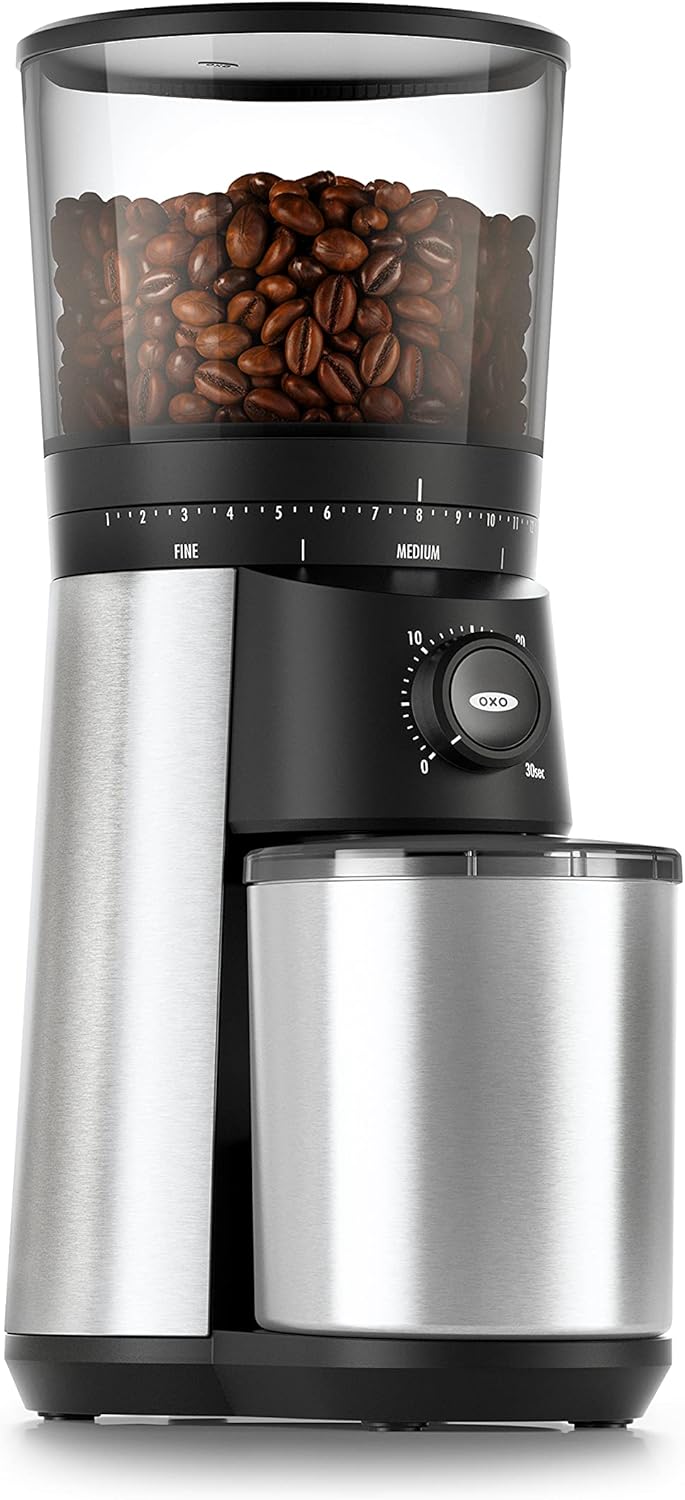
Modern electric mills offer various mechanisms, ranging from efficient stainless steel blades to advanced conical and flat burrs, allowing you to customize your grind for any brewing style. We explore several popular options designed to handle everything from coarse grinds down to ultra-fine particles, ensuring consistent results while fitting seamlessly into your kitchen space.
As an Amazon Associate, StacyLaughs earns from qualifying purchases.
Buying guide
Understanding Burr Versus Blade Mechanisms
When searching for a reliable coffee grinder fine grind solution, understanding the difference between burr and blade systems is crucial. Blade grinders use spinning metal edges to chop beans into mixed sizes. While budget-friendly, they can produce uneven particles.
Conversely, burr grinders use two revolving abrasive surfaces to crush beans uniformly. This mechanical difference directly impacts extraction quality, making burr systems ideal for enthusiasts seeking precise control over their daily brew consistency.
Evaluating Hopper Capacity and Batch Sizes
Choosing the right capacity depends heavily on your household size and daily coffee consumption habits. Compact models hold small amounts suitable for single servings or a few cups. Larger hoppers accommodate substantial quantities of beans at once.
If you frequently entertain guests or prepare large batches for multiple people, selecting a device with an expanded bean hopper saves time. Matching capacity to your routine prevents stale beans from sitting out.
Customizing Grind Settings for Your Brew
Different brewing methods require vastly different particle textures to achieve optimal extraction results. Espresso machines demand very fine grounds, while French press and cold brew require coarse textures. Multi-setting grinders provide adjustable dials.
Investing in a model with numerous grind levels or micro-adjustments allows you to fine-tune your extraction across diverse coffee styles. This versatility ensures your equipment adapts easily as your brewing preferences evolve over time.
Countertop Footprint and Kitchen Fit
Kitchen space is often at a premium, making physical dimensions an important factor when selecting a grinder. Compact blade units take up minimal counter space and store easily inside cabinets.
Advanced burr grinders often feature taller profiles and wider bases to house heavier motors. Measuring your vertical cabinet clearance before purchasing ensures your chosen appliance fits comfortably in your kitchen layout.
Ease of Cleaning and Removable Parts
Regular maintenance keeps your grinder operating efficiently and prevents old coffee oils from affecting fresh flavors. Models featuring removable grinding bowls simplify the cleaning process significantly.
Being able to detach internal chambers or burr components allows for thorough washing or brushing away leftover particles. Prioritizing designs with accessible parts ensures effortless daily upkeep and long-term durability.
Safety Features and Operational Controls
Modern kitchen appliances incorporate various safety mechanisms to protect users during daily operation. Lid-locking designs ensure that spinning blades remain inactive until the cover is securely fastened in place.
Additionally, intuitive push-button controls or automatic shut-off features streamline the grinding experience. Evaluating these control systems helps you find an appliance that balances safety with straightforward, hassle-free daily performance.
Frequently asked questions
Can a standard electric grinder handle spices as well as coffee beans?
Many electric blade grinders and certain versatile models are explicitly designed to process dry herbs, seeds, nuts, and spices alongside coffee beans. Using stainless steel blades and durable bowls allows these appliances to tackle hard ingredients effectively. However, users should clean the grinding chamber thoroughly between uses to prevent lingering spice flavors from transferring into your morning coffee batch. Checking manufacturer specifications ensures your chosen appliance supports multi-use grinding for culinary herbs and daily roasting favorites safely.
What is the difference between blade and burr grinders for fine brewing?
Blade grinders chop coffee beans using high-speed metal propellers, which can result in a mix of fine dust and larger chunks. Burr grinders crush beans between two calibrated surfaces, producing a uniform particle size distribution. Uniformity is critical for fine brewing styles like espresso, ensuring water extracts flavor evenly without causing bitter or weak spots. While blade models offer quick and affordable operation, burr mills provide the precision necessary for balanced extraction across diverse coffee preparation techniques.
How do I clean and maintain my electric coffee grinder?
Maintenance routines depend heavily on the specific construction of your grinder. Models featuring removable stainless steel bowls often allow for easy washing or dishwasher cleaning. Fixed-bowl units require careful brushing using included cleaning tools to remove trapped grounds without damaging the internal blades. Always follow manufacturer compatibility guidelines regarding disassembly and cleaning. Regularly clearing out old coffee oils prevents rancidity and preserves the pure aroma of freshly ground beans during every subsequent morning brew.
Why does grind consistency matter so much for espresso?
Espresso extraction relies on water being forced through a compact bed of finely ground coffee under pressure. If particle sizes are inconsistent, water finds paths of least resistance through coarser chunks, leading to underextracted weak spots while overextracting fine dust. This imbalance creates bitter or sour flavors in your cup. Using a grinder capable of precise, uniform fine grinds ensures even water resistance and balanced flavor development across every shot of espresso you pull at home.
How many cups of coffee can a typical home grinder prepare at once?
Home grinder capacities vary widely based on hopper size and internal chamber volume. Smaller compact models typically hold enough beans for two to three cups or around two-thirds of a cup total capacity. Larger residential grinders feature hoppers that accommodate enough beans to brew anywhere from 12 up to 32 cups of coffee in larger batch preparations. Evaluating your daily household consumption helps determine whether a compact personal grinder or a high-capacity multi-cup appliance best suits your routine.