Appliances · Buying Guide
Best Coffee Grinder For Coffee Shop Setups And High Volume Daily Brewing
Finding a reliable coffee grinder for coffee shop environments or heavy home preparation requires carefully evaluating internal burr size, motor power specifications, and fineness adjustment steps. Whether pulling continuous espresso shots throughout the morning rush or managing batch brewing for guests, maintaining uniform particle size prevents extraction flaws, ensuring a balanced, flavorful cup every single time you brew.
Different machines offer distinct bean hopper capacities, sturdy housing materials, and built-in anti-static technologies designed to streamline daily workflow demands. Exploring these physical traits helps match specific equipment dimensions and features directly to your everyday beverage output needs without relying on unverified performance metrics.
As an Amazon Associate, StacyLaughs earns from qualifying purchases.
Buying guide
Burr Geometry and Particle Uniformity
Selecting the right grinder starts with understanding burr geometry. Flat burrs produce uniform particle distributions that favor crisp, distinct flavors in espresso. Conical burrs offer a broader particle distribution, which creates a more forgiving, well-rounded cup profile. Evaluating how these shapes affect your preferred brewing method ensures consistent extractions without unexpected bitterness or weak spots.
Material composition also plays a vital role in longevity. Stainless steel burrs resist dulling over thousands of cycles, preserving the integrity of your coffee beans. Avoid assuming all burrs perform identically across different roast levels. Dark, oily beans require designs that resist clogging, while lighter roasts demand exceptional structural rigidity to maintain precise particle spacing during extraction.
Motor Power and Heat Management
Motor wattage dictates how easily a grinder processes dense, lightly roasted coffee beans. Higher-wattage motors deliver sustained torque, preventing stalls during heavy grinding sessions. However, raw power must be balanced against rotational speed. Low-speed motors generate less frictional heat, protecting delicate aromatic oils from degradation during extended grinding runs in busy home environments.
Thermal management directly influences flavor preservation. Excessive heat transferred from fast-spinning burrs can scorch grounds, imparting a bitter taste to your morning cup. Look for housing materials like die-cast aluminum that dissipate heat effectively. Matching motor specifications to your typical daily volume prevents premature burnout while safeguarding the complex flavor notes of specialty beans.
Hopper Capacity and Daily Volume
Bean hopper capacity determines how frequently you must pause to refill beans during preparation routines. Large hoppers holding twelve ounces or more reduce interruption frequency for multi-cup brewing. Conversely, smaller hoppers keep bean exposure to ambient air minimal, ensuring fresher aromatics when brewing single cups throughout the day. Assess your household or service volume carefully.
Physical dimensions of the hopper also impact kitchen cabinet clearance. Taller setups with oversized bins may fail to fit beneath standard overhead cabinetry. Always measure vertical counter clearance before selecting a high-capacity model. Balancing bean storage volume with available spatial clearance guarantees a seamless fit in your kitchen layout without requiring awkward repositioning during use.
Adjustment Steps and Grind Customization
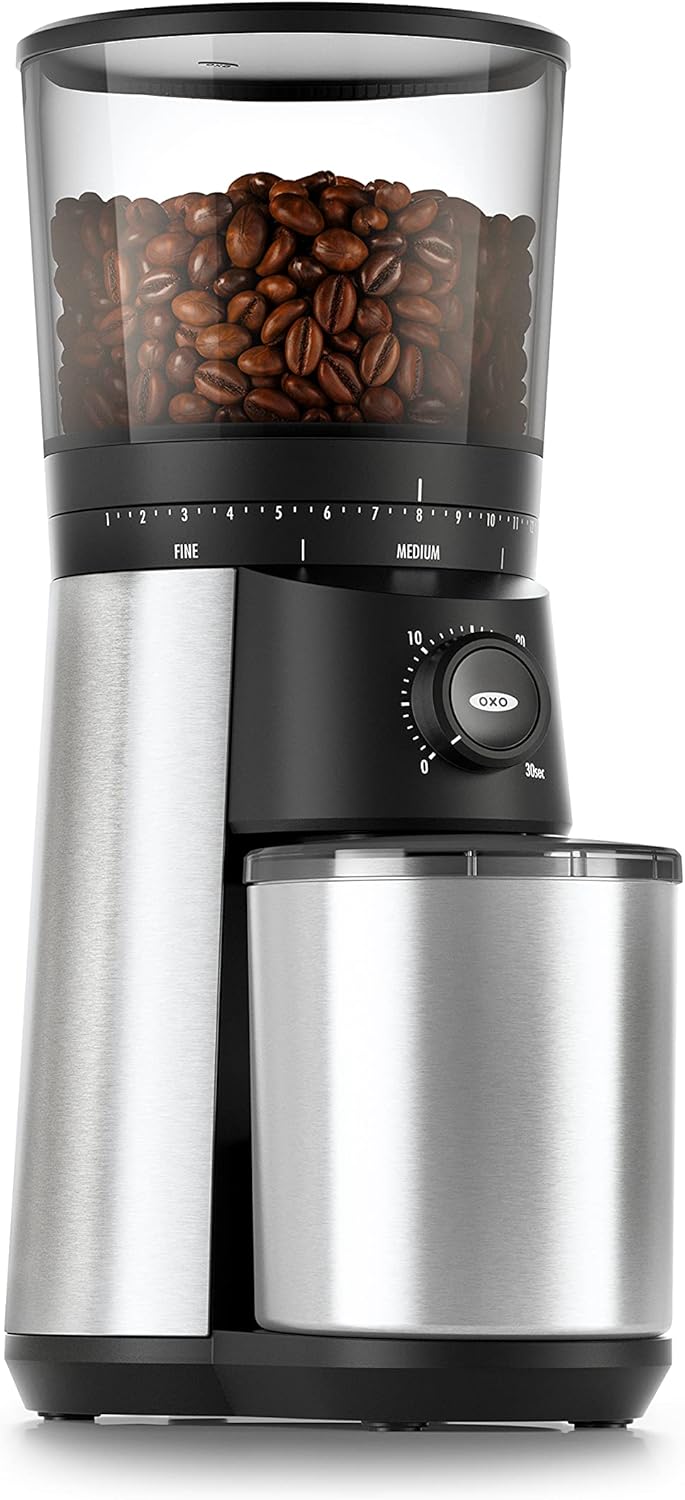
Grind adjustment precision dictates your ability to dial in specific extraction parameters. Grinders offering one hundred micro-settings provide granular control over espresso flow rates, whereas simpler eighteen-step models suit coarser drip and immersion brews. Identifying the range of grind sizes you actually utilize prevents paying for unused complexity while ensuring proper extraction speeds for your favorite brewing equipment.
Locking mechanisms and clear scale markings enhance daily usability. Click-scale rings and numbered dials allow you to repeat exact settings reliably without guesswork. Avoid models with loose adjustment collars that shift during operation. Reliable locking ensures consistent particle size across multiple daily brewing sessions, maintaining flavor predictability whether you are preparing single-origin pour-overs or traditional French press pots.
Anti-Static Technology and Cleanliness
Static buildup often causes freshly ground coffee to cling to chutes and scatter across countertops, creating unnecessary cleanup tasks. Built-in anti-static systems and stainless steel grounds containers neutralize electrical charges, directing coffee smoothly into your basket. Evaluating these mess-reduction features saves valuable time during busy morning preparation routines when efficiency matters most to your workflow.
Maintenance accessibility complements static control. Grinders featuring tool-free removable burrs, magnetic discharge pipes, and included cleaning brushes simplify residue removal. Regular cleaning prevents rancid oil buildup that can compromise coffee flavor over time. Prioritizing designs that allow straightforward interior access ensures your equipment remains hygienic and fully functional with minimal effort during routine upkeep.
Portafilter Compatibility and Workflow
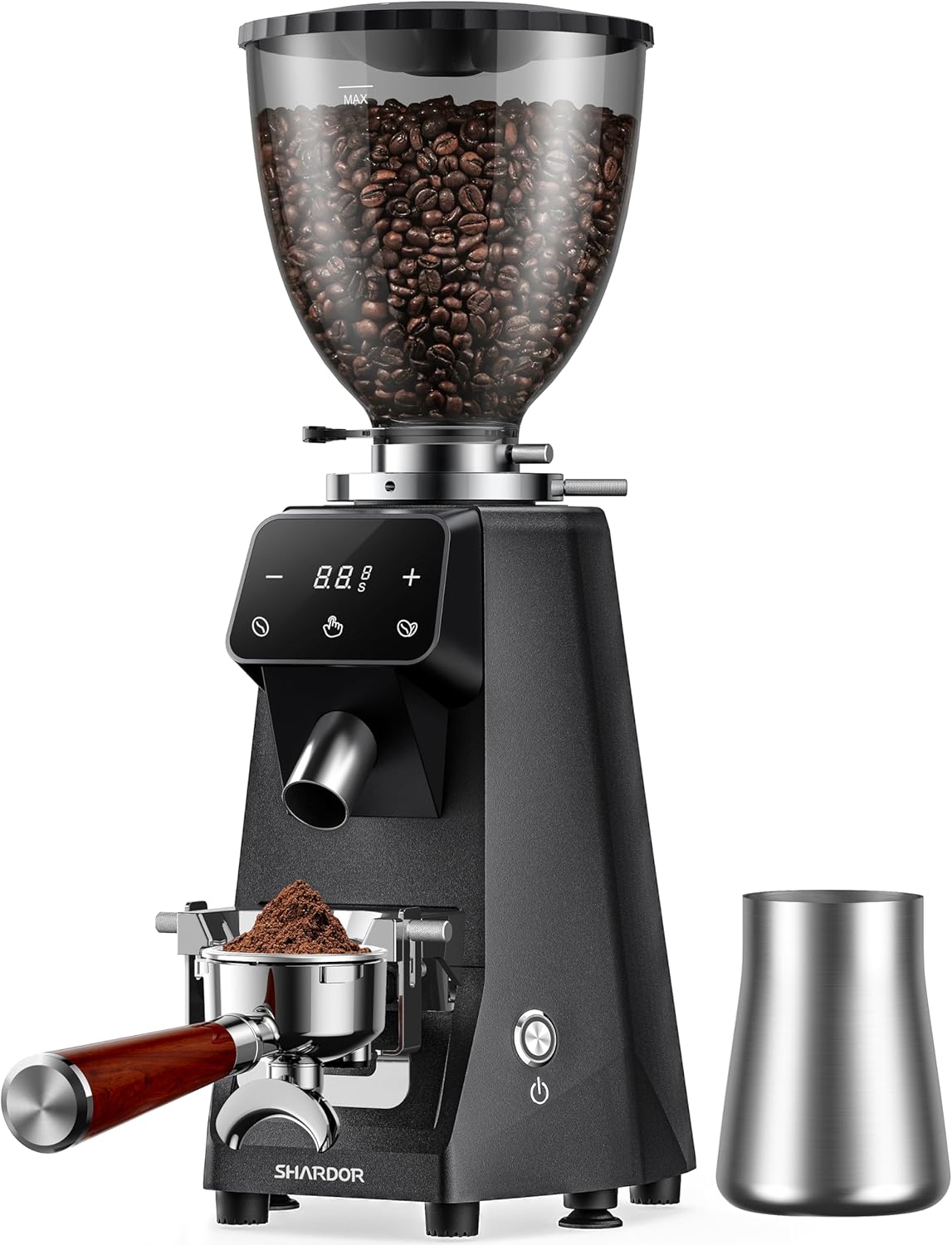
Direct portafilter grinding transforms espresso preparation by eliminating intermediate transfer steps. Adjustable cradles accommodating standard 51mm and 58mm handles allow hands-free dosing straight into your basket. This direct workflow minimizes grounds spillage and accelerates preparation time when pulling successive shots. Match the cradle dimensions to your specific espresso machine handles for optimal compatibility and seamless daily operation.
Programmable timer features further enhance workflow efficiency. Single and continuous shot programming lets you dispense exact doses automatically, reducing waste and ensuring consistency across every beverage. Evaluate whether manual override options are available for custom top-up dosing. Combining programmable timing with direct portafilter support creates an organized, professional-grade preparation experience right on your home kitchen countertop.
Frequently asked questions
How do flat burrs differ from conical burrs in daily coffee preparation?
Flat burrs feature parallel ring-shaped cutting surfaces that slice coffee beans into uniform particles, producing high clarity and distinct flavor separation often favored in specialty espresso. Conical burrs consist of a central cone inside a notched ring, crushing beans into a slightly bimodal particle distribution that yields a more blended, heavier-bodied cup profile. While flat burrs excel at highlighting delicate notes, conical burrs are typically more forgiving with extraction variables. Your choice depends primarily on your preferred brewing style and flavor profile expectations.
Why is anti-static technology important for electric coffee grinders?
Static electricity naturally develops when dry coffee beans are fractured by high-speed burrs, causing fine particles to cling stubbornly to plastic chutes and scatter across kitchen countertops. Built-in anti-static systems, silicone bellows, and stainless steel grounds containers neutralize these electrical charges during grinding. This technology ensures that all ground coffee falls cleanly into your collection bin or portafilter rather than creating messy residue. Implementing anti-static features significantly reduces daily cleanup time and prevents wasted coffee during your morning routine.
Can I use a home electric grinder for commercial coffee shop operations?
Most prosumer and home electric grinders are engineered for residential duty cycles, meaning continuous operation during heavy all-day commercial rushes can overheat motors or strain internal components. Commercial coffee shops require heavy-duty industrial motors, massive burr sets, and continuous cooling systems designed to withstand hundreds of extractions daily without thermal fatigue. While high-end home grinders with robust metal housings and powerful motors handle light prosumer tasks effectively, true commercial settings demand dedicated heavy-duty machinery built specifically for continuous daily workloads.
How often should I clean my electric burr coffee grinder?
Regular cleaning is essential to prevent stale coffee oils and residual bean particles from accumulating inside the grinding chamber and negatively affecting beverage flavor. For most daily users, performing a quick brush-out of the discharge chute and grounds container every few days is recommended. A more thorough disassembly involving the removal of the upper burr and hopper should be completed every few weeks depending on your usage volume. Always follow manufacturer maintenance guidance and avoid submerging motorized housing units in water.
What factors influence whether a coffee grinder fits beneath kitchen cabinets?
Countertop clearance depends heavily on the combined height of the grinder base, motor housing, and bean hopper. Models equipped with oversized hoppers or tall vertical designs frequently exceed fourteen inches in total height, making them difficult to slide beneath standard low-hanging overhead kitchen cabinets. Measuring your available vertical space before purchasing prevents placement issues. If counter space is tight, selecting a model with a compact vertical profile or a removable low-profile hopper ensures seamless integration into your kitchen layout.