Appliances · Buying Guide
Best Coffee Lab and Roasters Gear for Precision Home Roasting
Exploring the world of home roasting and coffee lab preparation requires specialized equipment designed to handle green beans with accuracy. Whether you are sorting batches by size, managing direct flame heat sources, or utilizing automated electric roasting chambers, having the right tools transforms your routine. Enthusiasts and small-scale roasters rely on dedicated grading sieves and roasting machines to maintain control over development profiles and flavor consistency.
Selecting appropriate gear depends on your preferred heat source, batch size, and workspace setup. Gas-powered drums require external burners and manual attention, while electric sample roasters automate thermal cycles for repeatable results. By understanding the distinct physical specifications and operational designs of each tool, you can build a reliable setup tailored to your exact roasting volume and quality goals without unnecessary complications.
As an Amazon Associate, StacyLaughs earns from qualifying purchases.
Buying guide
Evaluating Batch Capacity Requirements
Determining how much coffee you need to roast per session is the first step in selecting the right equipment. Small sample roasters process around one hundred and twenty grams, which suits personal daily consumption testing and green bean evaluation. Mid-size drum models handle two hundred to three hundred grams, bridging the gap between personal use and small weekly supplies.
Larger direct flame systems push capacities up to six hundred grams per batch, making them ideal for households or small operations consuming higher volumes. Keep in mind that larger capacities demand heavier machinery, greater workspace footprints, and more robust external heat sources to maintain thermal stability throughout the entire roasting cycle.
Understanding Heat Sources and Power Needs
Roasting equipment relies on different energy methods, ranging from direct gas flames to high-wattage electrical heating elements. Gas-powered drum roasters require an external burner, often needing specific minimum BTU outputs to deliver sufficient thermal energy for proper bean development. These manual setups give you direct physical control over flame adjustments.
Electric sample roasters integrate heating elements directly into the housing, requiring standard electrical wall outlets and drawing significant wattage like fourteen hundred watts. When choosing your machine, verify whether your space supports an external gas burner setup or if a plug-in electric countertop unit fits your kitchen infrastructure better.
Precision Grading and Sieve Sorting
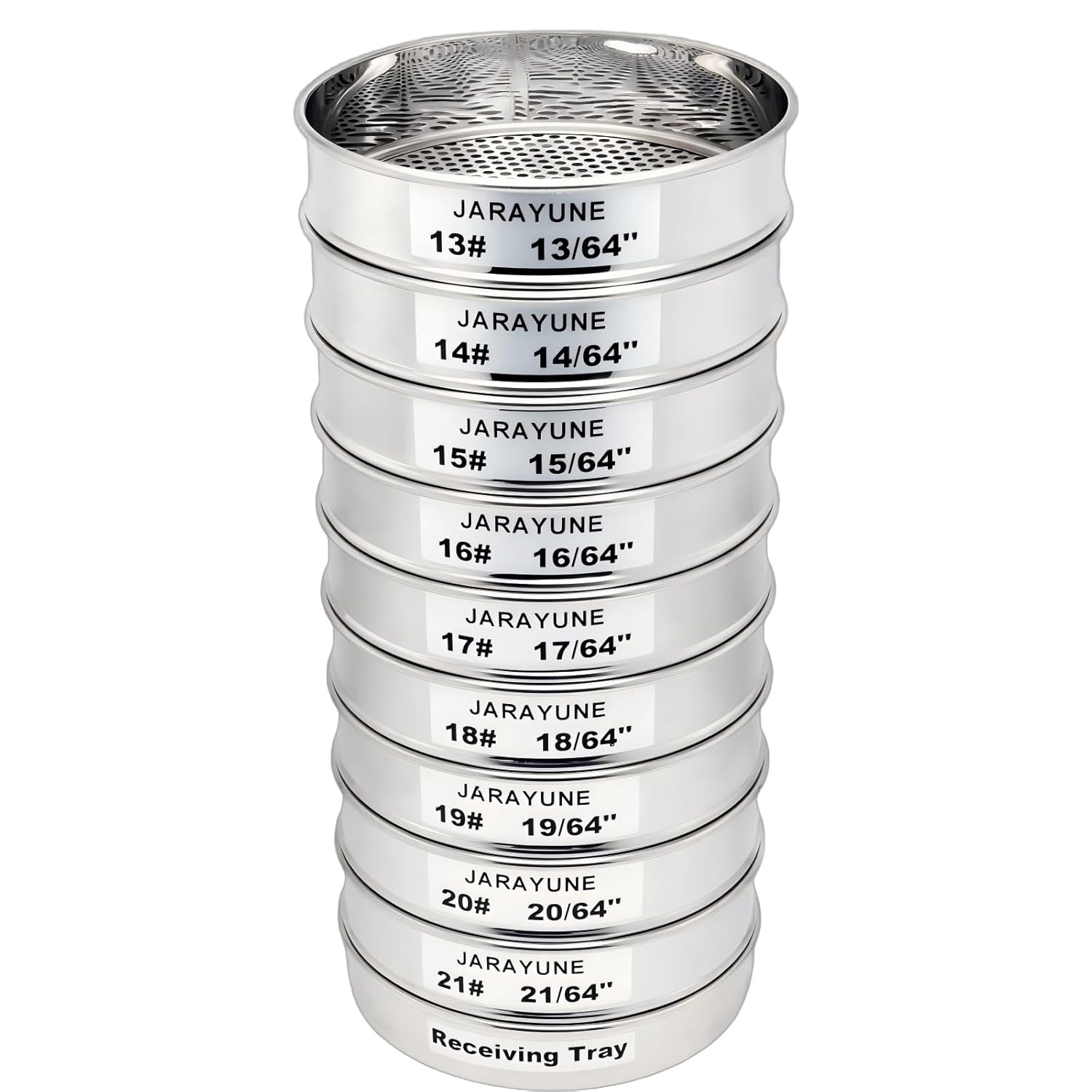
Achieving an even roast begins long before beans touch the heat by sorting green coffee by physical dimensions. Using a stainless steel grading sieve set with screens ranging from number thirteen to twenty-one allows you to separate beans accurately. Consistent bean sizing prevents smaller beans from over-roasting while larger ones remain under-developed.
Stackable multi-layer sieve designs simplify this preparation phase by letting you sort multiple sizes simultaneously. While multi-tier screens take up vertical storage space and add weight to your prep area, the resulting batch uniformity significantly improves flavor consistency across your final roasted coffee product.
Monitoring Temperature and Data Logging
Tracking temperature changes during a roast helps you replicate successful profiles and understand bean behavior. Basic roasters utilize analog dial thermometers or digital displays mounted on hopper kits, offering straightforward visual indicators of internal drum conditions. These tools let you monitor progress manually batch after batch.
Advanced setups offer dual thermometer options or data logger compatibility that connects directly to a personal computer running roasting software. If you enjoy analyzing rate-of-rise curves and documenting thermal milestones, investing in a model with data logging support provides the detailed metrics needed for scientific roasting analysis.
Drum Design and Agitation Mechanics
The internal drum is the heart of any rotating roaster, influencing how heat transfers to the green beans. Perforated drums featuring numerous small holes allow convective and conductive heat to flow smoothly while letting chaff separate during agitation. Internal stirring blades ensure beans tumble continuously without scorching against hot metal surfaces.
Housing-free drum models expose the metal directly to the flame for rapid thermal response, while enclosed stainless steel drums offer steady heat retention. Consider whether you prefer a perforated drum with stirring blades for stable agitation or an open housing-free drum for immediate heat reactivity.
Workspace Footprint and Portability
Roasting gear varies dramatically in physical size and weight, influencing where and how you can operate your setup. Compact electric sample roasters and lightweight manual housing-free roasters offer portability, with some manual models even operating without electricity for outdoor use. They fit easily on standard countertops.
Conversely, high-capacity direct flame roasters and multi-tier stainless steel sieve stacks add substantial weight and height to your workspace. Heavy drum machines weighing over forty pounds require dedicated, stable stations capable of supporting hot equipment and external gas connections safely during operation.
Frequently asked questions
Why is green bean grading important before roasting?
Sorting green coffee beans by size using a grading sieve set ensures that all beans in a roasting batch share similar physical dimensions. Uniform bean size promotes even heat absorption and roasting development, preventing smaller beans from burning while larger ones remain under-developed. This preparation step leads to a cleaner, more balanced cup profile and reliable flavor consistency across multiple roasting sessions in your coffee lab.
Do gas coffee roasters require special external equipment?
Yes, traditional gas coffee roasters require an external gas burner to supply the necessary thermal energy for roasting. Depending on the specific roaster model, you may need a burner with a minimum BTU output, such as eight thousand BTUs for larger units. Unlike all-in-one electric appliances, these gas-powered drums do not include integrated heating elements, so you must arrange a compatible stove or portable burner setup.
Can I connect my coffee roaster to a computer for data logging?
Some advanced roaster models offer dual thermometer options or data logger capabilities designed to connect with a personal computer. This feature allows you to use roasting software to track temperature curves, record thermal milestones, and analyze roast profiles in detail. You should check the specific specifications of your chosen roaster model to confirm whether data logging hardware or software compatibility is included standard or offered as an upgrade.
What is the benefit of a perforated drum in a home roaster?
A perforated drum features numerous small holes distributed across its stainless steel surface, allowing both conductive and convective heat from your burner to flow smoothly into the roasting chamber. These holes also help separate chaff from the beans during tumbling. Combined with internal stirring blades, a perforated drum ensures stable agitation and efficient heat utilization for consistent bean development during every batch.
How do I clean and maintain stainless steel coffee sieves?
Stainless steel coffee grading sieves are generally dishwasher safe and designed for straightforward maintenance between sorting tasks. Their stackable, multi-layer structure allows you to clean multiple screens efficiently. To maintain precision sizing over time, ensure the precision-cut stainless steel screens are thoroughly dried before storing them in your workspace, keeping the grading surfaces free of debris and ready for your next green bean preparation batch.