Appliances · Buying Guide

Best Cold Brew Coffee Device for Your Daily Routine

Making smooth, low-acid coffee at home relies on choosing the right cold brew coffee device for your kitchen space and schedule. Whether you prefer an overnight steeping process or an active electric extraction system, understanding how different pitchers, filters, and mechanisms operate helps you match a brewer to your daily habits.

From glass carafes with rainmaker water distributors to shatter-resistant Tritan containers and fast electric cycle options, each design brings distinct material and capacity traits. Exploring these practical attributes ensures you select a dependable brewing vessel that simplifies preparation, pouring, and cleanup.

As an Amazon Associate, StacyLaughs earns from qualifying purchases.

OXO Good Grips Cold Brew Coffee Maker, 32 oz
#1 Best Overall

OXO Good Grips Cold Brew Coffee Maker, 32 oz

Uses a rainmaker top to evenly distribute water over coarse coffee grounds for a 12-to-24-hour steep. Features a brew-release switch to start and stop filtration on demand, automatically halting when the borosilicate glass carafe is removed. Includes an ultra-fine stainless steel mesh filter and nests together for compact storage.

Best for Controlled overnight concentrate brewing

Smooth low-acid coffeeBorosilicate glass carafeReusable mesh filterEasy to cleanCompact countertop size
View on Amazon →

What stands out

  • Rainmaker top evenly distributes water over coffee grounds to ensure balanced saturation during the steeping process.
  • Easy-access brew-release switch lets you start and stop filtration on demand while preventing accidental spills.
  • Borosilicate glass carafe holds up to thirty-two ounces of concentrate and features clear measurement markings.

What to consider

  • Glass construction requires careful handling during daily washing routines and refrigerator storage compared to shatter-resistant alternatives.
  • Requires hand washing for all non-glass components, adding manual maintenance steps after each brewing cycle.
Key specifications
Capacity
32 fluid ounces
Item Dimensions D x W x H
9.53"D x 9.53"W x 14.72"H
Material
Glass, Plastic
Filter Type
Paper,Reusable
Operation Mode
Fully Automatic
Other Special Features of the Product
Dishwasher Safe

The practical verdict

Best for coffee drinkers wanting precise control over extraction timing and stop-flow filtration. Avoid if you prefer rapid brewing cycles under fifteen minutes. The primary trade-off involves combining a glass carafe with multi-part manual cleaning requirements.

#2
Takeya 2-Quart Tritan Cold Brew Coffee Maker
Compact Refrigerator Pitcher

Takeya 2-Quart Tritan Cold Brew Coffee Maker

Best for Space-saving fridge door storage

Crafted from BPA-free Tritan material, this two-quart pitcher features a twist lid designed to preserve flavor and aroma while resting upright on refrigerator shelves or laying flat. Includes a reusable fine-mesh filter for steeping coarse grounds in cold filtered water over a twenty-four-hour period.

What stands out

  • Shatter-proof Tritan pitcher construction withstands daily use while offering resistance to stains and odors.
  • Compact two-quart profile fits neatly inside most standard refrigerator doors or can lay flat on shelves.
  • Airtight, leak-resistant twist lid helps preserve beverage flavor and aroma during chilling.

What to consider

  • The two-quart rating indicates total pitcher capacity rather than a guaranteed finished-coffee liquid yield after ground absorption.
  • Requires a twenty-four-hour steeping duration, which limits rapid preparation for immediate beverage needs.
Key specifications
Capacity
2 quarts
Item Dimensions D x W x H
0.6"D x 4.1"W x 12.2"H
Material
Tritan
Filter Type
Reusable
Power Source
Manual
Other Special Features of the Product
Portable

The practical verdict

Best for users needing a slim, shatter-resistant pitcher that fits refrigerator doors. Avoid if you require fast brewing cycles under an hour. The main trade-off is balancing a compact vertical shape with extended steeping wait times.

#3
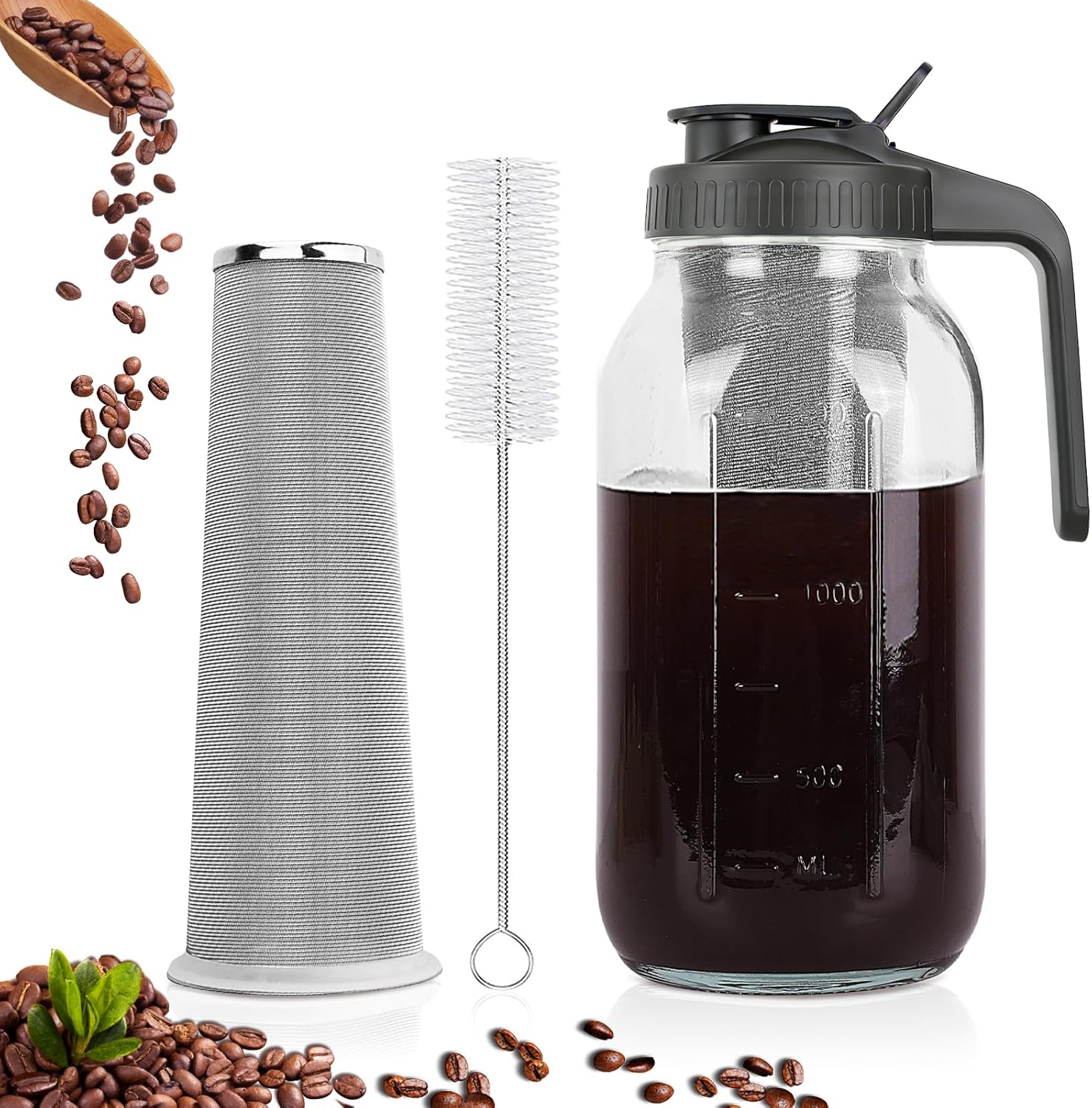
64 oz Mason Jar Cold Brew Coffee Pitcher
Large Capacity Mason Jar

64 oz Mason Jar Cold Brew Coffee Pitcher

Best for Bulk batch beverage preparation

Built with heavy-duty soda-lime glass and a 160-micron 304 stainless steel fine mesh filter, this sixty-four-ounce mason jar accommodates large batches of cold brew, tea, or lemonade. Features an ergonomic thickened handle, an airtight pour spout lid with a silicone ring, and a wide mouth for easy filling.

What stands out

  • Large sixty-four-ounce soda-lime glass body provides ample volume for bulk beverage preparation and serving.
  • Super dense one-hundred-sixty-micron stainless steel mesh filter effectively restrains fine coffee grounds and tea leaves.
  • Ergonomically thickened handle and airtight spout lid prevent spills while securing fridge freshness.

What to consider

  • Maximum safe operating temperature is sixty degrees Celsius, requiring caution to prevent thermal cracking from sudden temperature shifts.
  • Heavy-duty glass jar and wide body require dedicated shelf space and careful handling during cleaning tasks.
Key specifications
Capacity
4 pounds
Item Dimensions W x H
6.2"W x 8.4"H
Material Type
Glass, Plastic, Stainless Steel
Lid Material
Plastic
Additional Features
In-Built Filter
Color
Black

The practical verdict

Best for households preparing large quantities of cold brew or iced tea. Avoid if you have limited refrigerator shelf height or prefer lightweight plastic pitchers. The trade-off centers on heavy soda-lime glass capacity versus strict temperature limits.

#4
Maestri House 40oz Tritan Cold Brew Coffee Maker
Precision Ratio Tritan Pitcher

Maestri House 40oz Tritan Cold Brew Coffee Maker

Best for Custom coffee strength brewing

Features precise body scales for matching coffee ground weights from sixty to one hundred twenty grams with water quantity to customize brew strength. Employs a 350-mesh ultra-fine filter with a removable bottom cover for residue cleanup, housed inside a forty-ounce shatter-resistant BPA-free Tritan pitcher.

What stands out

  • Precise body scales help measure coffee ground ratios to customize brew strength and flavor concentration.
  • Three-hundred-fifty-mesh ultra-fine filter ensures high filtration purity and minimal sediment in the finished beverage.
  • Removable bottom cover on the filter simplifies cleaning out spent coffee residues compared to sealed designs.

What to consider

  • Forty-ounce capacity yields fewer total servings than larger sixty-four-ounce pitchers for high-volume gatherings.
  • Manual brewing method requires precise weighing of grounds and standard refrigeration steeping intervals.
Key specifications
Capacity
1.2 liters
Item Dimensions D x W x H
6.29"D x 3.58"W x 9.17"H
Material
Tritan
Filter Type
Reusable
Operation Mode
Manual
Other Special Features of the Product
Cold Brew

The practical verdict

Best for coffee enthusiasts experimenting with specific coffee-to-water ratios and strengths. Avoid if you want automated electric brewing or massive bulk capacity. The key trade-off pairs dedicated ratio markings with a moderate forty-ounce volume limit.

#5
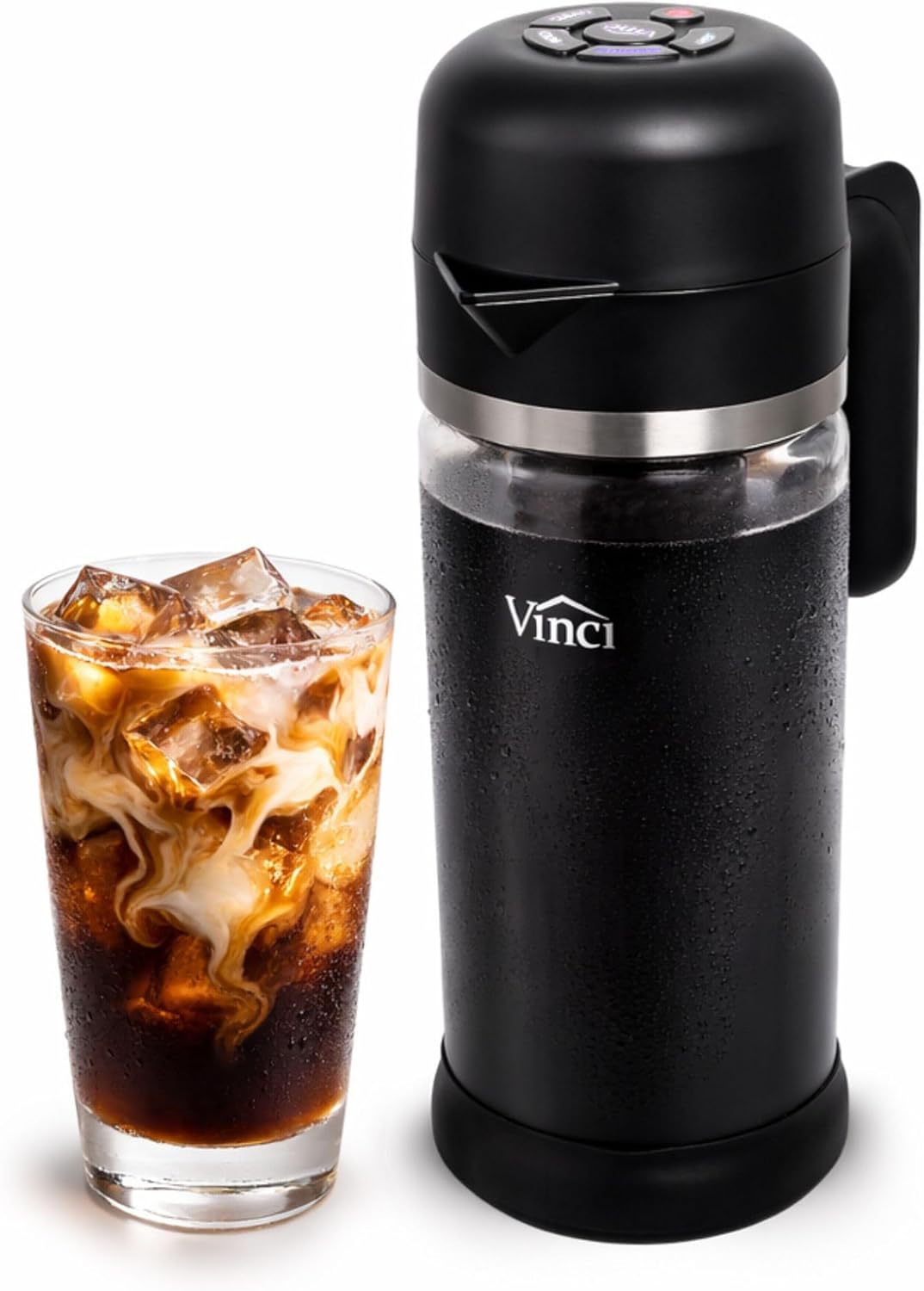
Vinci Express Electric 10-Minute Cold Brew Coffee Maker
Fast Electric Extraction System

Vinci Express Electric 10-Minute Cold Brew Coffee Maker

Best for Rapid electric brewing cycles

Replaces traditional overnight waiting periods with an active electric circulation system using patented circle flow technology to brew cold coffee in ten to twenty-five minutes. Offers three selectable strength settings, a 1.4-liter borosilicate glass carafe with a dedicated serving lid, and a built-in self-cleaning function.

What stands out

  • Active electric extraction system brews cold coffee in as little as ten minutes instead of overnight.
  • Three built-in extraction settings let you select light, medium, or bold brewing strengths easily.
  • Built-in self-cleaning function flushes the internal brew path with fresh water using a dedicated cleaning cup.

What to consider

  • Requires an electrical power source and plug access near your kitchen counter setup area.
  • The one-point-four-liter borosilicate glass carafe requires careful handling during washing and storage routines.
Key specifications
Capacity
1.4 liters
Item Dimensions D x W x H
7"D x 4"W x 12"H
Material
Borosilicate Glass
Wattage
3 watts
Voltage
120 volts
Power Source
electric

The practical verdict

Best for buyers seeking fast, automated cold brew cycles under half an hour. Avoid if you require a manual, non-electric pitcher for refrigerator door storage. The trade-off involves gaining active electric speed while managing a powered appliance footprint.

Buying guide

Material Composition and Durability

Selecting the ideal cold brew coffee device begins with evaluating the primary materials used in the carafe and filter assembly. Borosilicate glass provides thermal resilience and clarity, allowing you to monitor extraction levels while offering a smooth interior surface that resists stains over years of daily use.

Alternatively, BPA-free Tritan plastic offers shatter-resistant performance, making it a practical choice for busy households or outdoor settings where accidental drops might occur. Reviewing how glass and Tritan interact with your daily kitchen routine helps ensure long-term satisfaction without unexpected breakage concerns during washing.

Capacity and Serving Volume

Pitcher capacity dictates how many servings you can prepare in a single batch, directly influencing whether a specific model suits solo drinkers or busy families. Compact models holding around thirty-two to forty ounces fit comfortably on refrigerator shelves while producing enough concentrated liquid for several refreshing morning coffee drinks without taking up excessive vertical cabinet space.

Larger sixty-four-ounce mason jar pitchers and multi-quart designs easily accommodate high-volume households or gatherings, significantly reducing how often you need to restart the steeping process. Matching the stated capacity to your typical daily consumption rate prevents the inconvenience of running out of cold coffee prematurely during peak morning hours when time is limited.

Filtration Methods and Mesh Density

The filtration mechanism inside a cold brew coffee device determines the clarity, body, and overall texture of your final beverage. Ultra-fine stainless steel mesh filters, ranging up to three hundred fifty mesh or one hundred sixty microns, effectively restrain coarse coffee grounds and loose tea leaves from escaping into the chilled brew liquid.

Reusable metal filters eliminate the ongoing financial expense and environmental waste associated with disposable paper filters while maintaining a consistently smooth extraction profile. Evaluating whether a filter features a removable bottom cover or simple screw-off cap also helps streamline the post-brew cleaning process and prevents stubborn coffee residue buildup over time.

Brewing Operation and Speed

Cold brew preparation methods vary significantly between traditional passive steeping systems and modern active extraction technologies. Manual immersion pitchers typically require twelve to twenty-four hours of uninterrupted refrigeration to achieve proper extraction, allowing chilled water to slowly draw out rich flavors and low acidity from coarse coffee grounds without applying direct heat.

In contrast, electric cold brew makers utilize active water circulation pumps and specialized circle flow technology to accelerate extraction down to a rapid ten to twenty-five minutes. Weighing whether you prefer the set-it-and-forget-it nature of overnight refrigeration against the instant convenience of a powered appliance helps shape your daily kitchen routine.

Maintenance and Cleaning Routines

Keeping your cold brew coffee device hygienic requires understanding the specific manufacturer cleaning guidelines for each individual component part. Many glass carafes, Tritan pitchers, and stainless steel mesh filters offer convenient dishwasher-safe construction, allowing you to sanitize major structural parts easily after emptying spent coffee grounds from the interior container.

Certain models also feature specialized maintenance additions, such as automated self-cleaning cycles with dedicated cleaning cups or removable filter bottom covers that wash away trapped residue effortlessly. Reviewing these disassembly and washing requirements beforehand ensures you select a reliable brewer that fits comfortably into your regular kitchen cleanup preferences and ongoing home kitchen maintenance habits.

Storage and Countertop Footprint

Evaluating the physical dimensions and storage footprint of a cold brew coffee device prevents unexpected placement issues in your refrigerator or kitchen cabinets. Slim, compact pitchers designed with low-profile shapes fit neatly into standard refrigerator door bins or can safely lay flat on interior wire shelves without blocking adjacent food items.

Taller glass carafes and electric countertop brewing machines require adequate vertical clearance and dedicated counter space during operation, making them better suited for permanent display areas. Assessing your available refrigeration space and cabinet height ensures the chosen brewer integrates seamlessly into your existing kitchen layout without causing daily kitchen storage friction or countertop clutter.

Frequently asked questions

How do I choose the right grind size for a cold brew coffee device?

Selecting coarse coffee grounds is generally recommended for most cold brew coffee devices to ensure optimal extraction and prevent fine particles from passing through the mesh filter. Coarse grounds slow down the extraction rate, allowing the water to dissolve flavors evenly over extended steeping periods. If you use grounds that are too fine, sediment may pass through the mesh or over-extract, leading to a bitter taste. Always check your specific device manufacturer guidelines for recommended coffee grind textures and ratios.

Can I use hot water in a cold brew coffee maker?

Operating limits depend entirely on the specific materials used to construct your cold brew coffee device. Tritan plastic pitchers are typically engineered to withstand both hot and cold brewing methods, while certain glass pitchers specify strict maximum temperature limits, such as sixty degrees Celsius, to prevent thermal cracking. Pouring boiling water directly into unrated glass containers can cause severe damage. Always review the manufacturer specifications and temperature warnings before attempting any warm or hot water brewing processes.

How long should coffee steep in a manual cold brew pitcher?

Traditional manual cold brew coffee devices typically require a steeping duration between twelve and twenty-four hours in the refrigerator. This extended time allows cold filtered water to slowly extract soluble oils and sugars while minimizing acidic compounds, resulting in a smooth concentrate. Leaving the coffee to steep for shorter periods may produce a weaker flavor profile, while exceeding twenty-four hours can sometimes alter the taste. Following the recommended time frames helps achieve consistent results with every batch.

Are stainless steel mesh filters better than paper filters?

Reusable stainless steel mesh filters offer a practical, eco-friendly alternative to disposable paper filters by eliminating ongoing repurchasing needs and reducing kitchen waste. They are designed with fine weaves to restrain coffee grounds while permitting natural oils to pass through, which can influence the body of your beverage. While paper filters trap virtually all fine sediment and oils for an extremely clean cup, metal mesh filters simplify cleanup because they can be washed and reused repeatedly over time.

How do I clean and maintain my cold brew coffee maker?

Proper maintenance involves disassembling the filter cap, removable bottom covers, and gaskets according to the manufacturer instructions. Many glass carafes, Tritan pitchers, and stainless steel mesh filters are dishwasher safe, though certain delicate components may require gentle hand washing with mild soap. Electric models often feature dedicated cleaning cycles or flush functions to clear internal pathways. Regularly cleaning all parts prevents residual coffee oils from building up and preserves the fresh taste of your future brew batches.

Final thoughts

Finding the ideal cold brew coffee device depends on balancing your preferred brewing speed, available refrigerator space, and desired batch capacity. Whether you choose a manual glass carafe with controlled release valves or an electric fast-brewing machine, each option offers distinct material and functional benefits.

By carefully evaluating filter mesh densities, carafe durability, and cleaning routines, you can select a reliable brewer that matches your daily routine. Investing in the right cold brew pitcher ensures smooth, low-acid coffee is always ready to serve at home.