Appliances · Buying Guide
Best Cold Brew Iced Tea Maker Options for Refreshing Homemade Drinks
Crafting smooth, low-acidity beverages at home becomes remarkably straightforward when you select the right cold brew iced tea maker for your kitchen routine. Whether you prefer steeping loose-leaf botanicals overnight in the refrigerator or utilizing a rapid electric brewing system, matching the vessel design to your daily habits ensures consistent flavor extraction without unnecessary kitchen clutter.
Modern brewing vessels incorporate specialized filter meshes, durable materials like Tritan or heatproof glass, and thoughtful sealing lids to preserve freshness. Exploring various pitcher capacities and operational modes helps you find a setup that accommodates your household volume, spatial constraints, and preferred beverage styles seamlessly throughout the changing seasons.
As an Amazon Associate, StacyLaughs earns from qualifying purchases.
Buying guide
Material Selection for Your Pitcher
Choosing the right material for your cold brew vessel impacts durability, weight, and thermal limits. Glass offers a traditional feel and resists staining, but heavy options require careful handling and strict adherence to maximum temperature thresholds to prevent thermal shock.
Alternatively, BPA-free Tritan provides a shatter-resistant, lightweight alternative that handles daily refrigerator storage securely without adding excessive arm fatigue during pouring tasks. Evaluating your household environment helps determine whether glass or shatter-proof polymer fits best.
Capacity and Spatial Storage
Pitcher capacity dictates how many beverage servings you can prepare before needing a fresh steeping cycle. Larger two-quart and sixty-four-ounce models suit busy households or frequent drinkers, while compact twelve-hundred-milliliter and forty-ounce options easily accommodate smaller refrigerators and tighter storage spaces. Evaluating your daily consumption habits helps balance batch frequency against available cooling room in your kitchen.
Before purchasing, measure your refrigerator door height and internal shelf depth to confirm the container slides into position smoothly without awkward tilting. Verifying these dimensions prevents storage frustrations, ensuring your pitcher fits designated door bins or shelf layouts without crowding other food items or requiring unnecessary rearrangement of daily groceries.
Filtration Mechanisms and Mesh Types
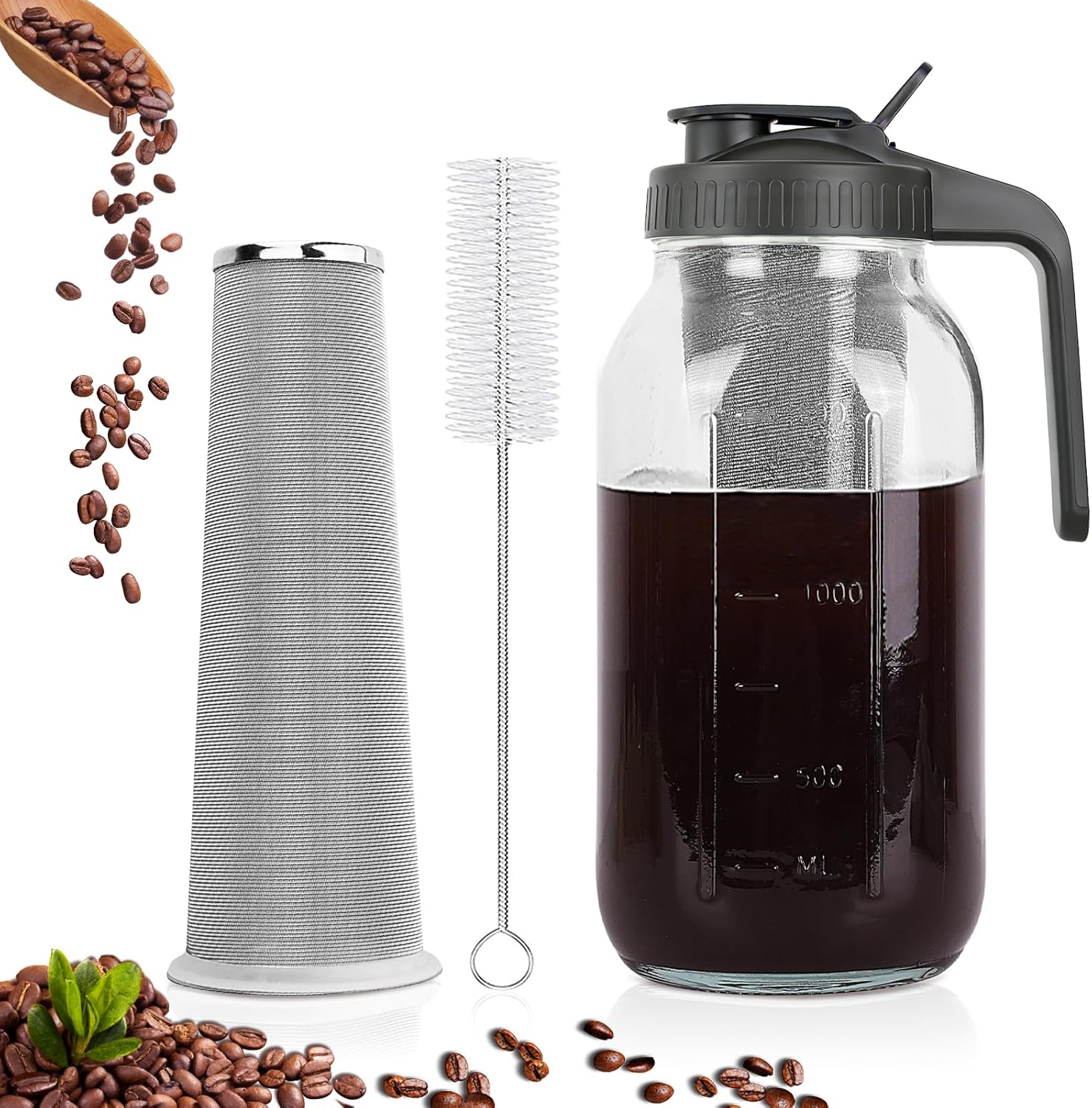
The quality of the filter directly influences the clarity and texture of your finished iced tea or cold brew coffee. Fine stainless steel mesh filters, including dense micro-weave options and multi-mesh baskets, effectively trap loose tea leaves and fine coffee grounds while allowing water to circulate fully around the dry ingredients for maximum flavor extraction.
Removable bottom covers and modular filter designs simplify the process of dumping spent leaves and washing stubborn residue from the interior mesh after every batch. Selecting a robust filtration system prevents unwanted sludge from settling at the bottom of your glass during pouring, ensuring a consistently clean and enjoyable flavor profile.
Operation Modes and Steeping Speed
Cold beverage makers typically rely on passive refrigerator steeping or active electric brewing cycles to produce refreshing daily drinks for your household. Passive manual pitchers require several hours of steeping inside the fridge, extracting smooth flavors slowly without consuming electrical power or requiring permanent countertop space near an electrical outlet in your kitchen.
In contrast, electric brewing systems accelerate the preparation process to under ten minutes using internal heating and automated steeping mechanisms controlled by simple push buttons, featuring convenient automatic shut off. Consider whether you prefer rapid automated speed on your kitchen countertop or unhurried passive steeping tucked away safely inside refrigerator cooling compartments overnight.
Sealing Lids and Spill Prevention
A secure, airtight lid is essential for preventing unwanted refrigerator food odors from contaminating your delicate tea or coffee while allowing the pitcher to rest safely on any shelf. Silicone sealing rings and twist-lock mechanisms help keep liquids completely contained during storage and transport inside the busy refrigerator environment without causing any accidental spills.
Models that permit laying flat on refrigerator shelves offer helpful spatial versatility when vertical door space is fully occupied by other household groceries and condiments. Verifying robust lid construction ensures you can store and pour from the exact same glass or polymer vessel without experiencing messy liquid leaks during everyday kitchen handling and serving routines.
Maintenance and Routine Cleaning
Regular cleaning keeps your beverage maker entirely free of residual natural oils and bitter tannins that can alter the fresh taste of subsequent tea or coffee batches. Many glass and Tritan pitchers feature dishwasher-safe components that greatly simplify routine hygiene maintenance after emptying spent grounds or loose leaves from the internal filter basket structure.
Removable filter baskets with accessible mesh surfaces make it much easier to rinse away trapped fine particles thoroughly under warm running tap water. Following manufacturer care guidelines ensures your brewing vessel remains clear, hygienic, and ready for continuous daily use throughout the warm weather seasons without requiring excessive manual scrubbing effort or specialized cleaning solutions.
Frequently asked questions
Can I use boiling water directly in my cold brew iced tea maker?
Operating guidelines vary significantly depending on the specific pitcher materials used in construction. Glass pitchers, particularly soda lime glass variants, often specify strict maximum temperature limits, such as sixty degrees Celsius, and require avoiding sudden hot-to-cold thermal shifts to prevent cracking damage. Conversely, heatproof glass and durable Tritan vessels handle higher temperatures more resiliently. Always check the manufacturer instructions for your specific model before introducing hot water to ensure safe preparation and avoid compromising the vessel integrity.
How long should I steep loose leaf tea or coffee grounds?
Steeping duration depends on your preferred beverage strength and whether you are preparing iced tea or cold brew coffee. Most passive refrigerator steeping methods recommend allowing loose tea leaves or coarse coffee grounds to steep between twelve and twenty-four hours for optimal flavor extraction. Electric brewing systems operate much faster, completing the steeping cycle in under ten minutes using heated water and automated pumping. Adjusting ingredient quantities or steeping times allows you to customize the concentration to your personal taste preferences.
Are these cold brew pitchers difficult to clean after use?
Cleaning difficulty varies based on filter design and pitcher materials. Many models feature removable filter bottom covers or dishwasher-safe components that make rinsing away spent grounds and loose leaves straightforward. Tritan and glass surfaces generally resist staining, though dark-colored infusions may require prompt washing to prevent discoloration over time. Utilizing the included cleaning brushes or tossing dishwasher-safe parts into the machine helps maintain proper hygiene without requiring excessive manual scrubbing effort during your routine kitchen cleanup.
Will these pitchers fit inside standard refrigerator door shelves?
Spatial compatibility depends entirely on the exterior dimensions and capacity of the specific pitcher you select. Compact two-quart and twelve-hundred-milliliter models are specifically engineered with slim profiles designed to fit neatly inside most standard refrigerator door bins or lay flat on interior shelves. Larger sixty-four-ounce mason jar styles feature wider bodies that require substantial vertical clearance and shelf space, meaning they may not fit standard door compartments. Measuring your refrigerator space beforehand ensures a proper fit.
Do I need special paper filters with these built-in mesh baskets?
Most cold brew and iced tea makers equipped with stainless steel or ultra-fine mesh filters do not require additional paper filters. The fine weave successfully traps loose tea leaves, fruit residue, and coarse coffee grounds to deliver a smooth beverage. However, certain electric brewing systems may support optional paper filters in their steeping baskets to catch very fine powders or streamline cleanup. Reviewing the included component list for your chosen model will clarify whether mesh filtration alone suffices for your preferred brewing style.