Appliances · Buying Guide
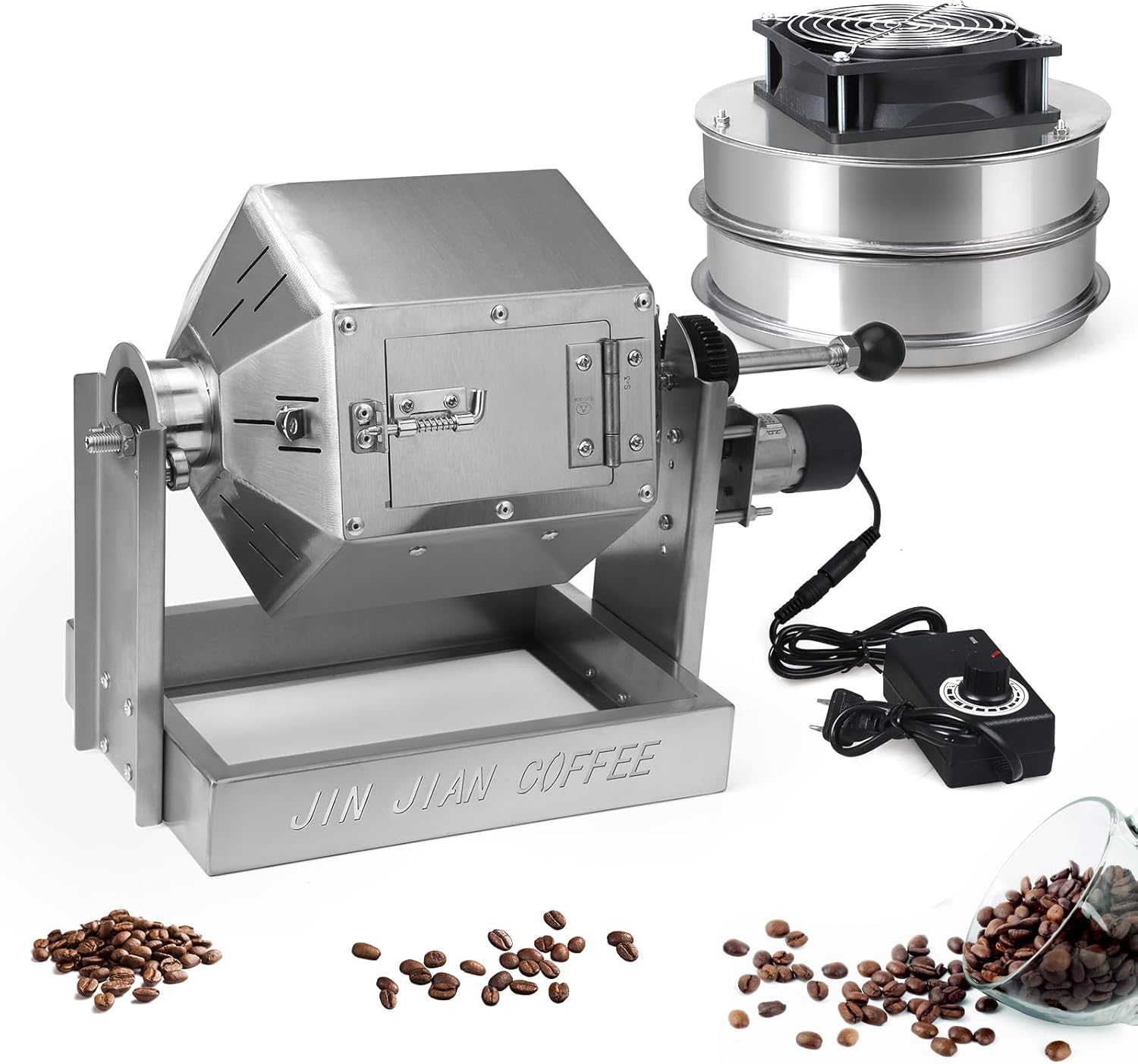
Best Cool Beans Coffee Roasters and Dedicated Cooling Trays
Roasting coffee beans at home requires precise temperature control to capture distinct flavor notes and prevent scorching. Dedicated cooling equipment immediately halts the roasting process, locking in freshness and separating unwanted chaff from your freshly processed batches.
Exploring specialized cooling trays and roasting machines helps enthusiasts find hardware matching their batch sizes and power preferences. The following options highlight various stainless steel designs built for home and small-scale roasting environments.
As an Amazon Associate, StacyLaughs earns from qualifying purchases.
Buying guide
Evaluating Batch Capacity Requirements
Matching your cooling hardware capacity to your typical roasting volume prevents overflow and ensures even temperature drops. Smaller trays handle half a pound comfortably, while larger commercial units accommodate over a pound of material.
Consider whether you roast in single household portions or continuous multi-batch sessions before selecting a specific stainless steel tray size.
Electric Versus Passive Cooling Methods
Electric cooling machines utilize motorized fans and high airflow motors to drop bean temperatures within minutes. This rapid cooling locks in specific aroma profiles immediately after the roast finishes.
Passive stainless steel trays rely on ambient air circulation and mesh screens, offering a portable, unpowered alternative for users who prefer simple manual processing without electrical cords.
Chaff Management and Filtration Design
Roasting coffee produces lightweight silver skins and chaff that must be separated quickly to maintain clean flavors. Double-layer filtration systems capture these loose particles in lower collection trays automatically.
Reviewing how easily a cooling machine separates chaff helps keep your workspace tidy and protects internal fan components from debris buildup over time.
Material Durability and Maintenance
Food-grade 304 stainless steel construction provides reliable long-term durability and resists deformation under regular thermal changes. Smooth metallic surfaces wipe clean easily after handling oily roasted beans.
Selecting sturdy materials ensures your cooling equipment withstands frequent use in home kitchens or small cafe workspaces without degrading in performance.
Motor Noise and Operational Control
Electric cooling fans vary in acoustic output depending on motor design and airflow speed. Units engineered for low-noise operation maintain a peaceful environment while running high-velocity cooling cycles.
Look for intuitive control layouts, such as separate switches and indicator lights, to manage active cooling and stirring mechanisms with minimal complexity.
Countertop Footprint and Storage Fit
Appliance dimensions dictate how easily cooling equipment integrates into your existing coffee preparation station. Compact circular or square footprints store away neatly inside cupboards when not in use.
Measure your available counter space near your roaster to ensure the selected tray or machine fits comfortably alongside your other tools.
Frequently asked questions
What is the main purpose of a dedicated coffee bean cooler?
A dedicated coffee bean cooler rapidly drops the temperature of freshly roasted beans to halt the roasting process instantly. This prevents over-roasting, locks in volatile flavor compounds, and separates loose chaff from the final batch.
Are electric cooling machines better than passive metal trays?
Electric cooling machines use powered fans to cool beans in minutes, whereas passive trays rely on ambient air circulation. Electric models are faster, while passive trays offer a portable, unpowered solution requiring no electricity.
How do double filter systems help during coffee cooling?
Double filter designs feature an upper sieve for the beans and a lower compartment to capture silver skins and chaff. This separation keeps debris away from the cooling fan and prevents unwanted particles from affecting the bean aroma.
Why is stainless steel commonly used in coffee cooling equipment?
Stainless steel provides high durability, corrosion resistance, and simple maintenance after exposure to warm beans and oils. Food-grade variants ensure safe contact and long-lasting structural integrity in home and cafe environments.
Can I use these cooling trays for items other than coffee beans?
Certain drum roasters and cooling trays accommodate other materials like peanuts, soybeans, or cashews with diameters larger than two millimeters, making them versatile tools for roasting various dry agricultural goods at home.