Appliances · Buying Guide
Best Easy Clean Coffee Grinder Options for Your Daily Brew
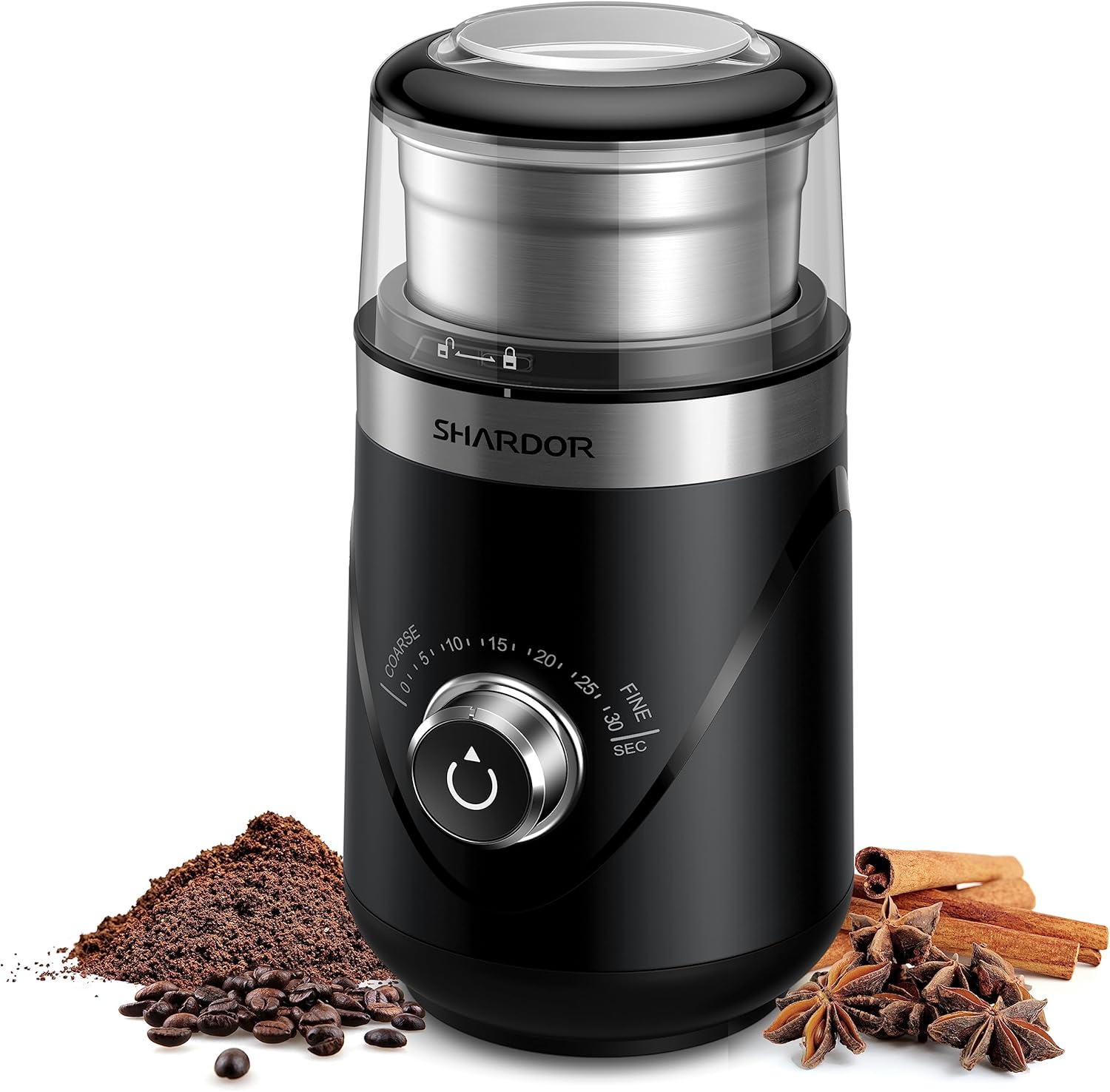
Finding an easy clean coffee grinder simplifies your morning kitchen routine by ensuring coffee grounds do not linger in hard-to-reach corners or create stubborn messes. Whether you prefer a quick blade grind for a large 12-cup pot or precise burr adjustments for espresso, selecting the right machine keeps daily maintenance straightforward and fast.
Modern electric choices feature removable stainless steel bowls, dishwasher-safe components, and compact footprints designed for everyday kitchen counters. Reviewing specific capacities, motor wattages, cord storage solutions, and cleaning instructions helps match your personal brewing habits to a dependable grinding tool. Exploring these diverse appliance attributes ensures you pick a suitable model for your daily beverage preparation.
As an Amazon Associate, StacyLaughs earns from qualifying purchases.
Buying guide
Evaluating Motor Power and Speed
Motor wattage and rotational speed heavily influence how quickly an easy clean coffee grinder processes roasted beans and hard dry spices. Appliance options range from compact 125-watt units to high-speed 200-watt motors capable of operating at intense speeds. Higher wattage typically delivers rapid processing for dense items, significantly reducing the total time spent waiting for your morning grounds.
However, high-speed motors require strict adherence to short operational bursts and mandatory resting periods to prevent internal overheating during heavy use. When choosing a device, you must carefully consider whether you need raw processing speed for tough culinary spices or steady revolutions for delicate daily coffee beans.
Understanding Capacity and Batch Sizes
Grinder capacity determines how many cups of coffee you can prepare in a single batch without repeatedly reloading the grinding chamber. Available options range from compact 2.5-ounce stainless steel bowls yielding roughly ten cups to larger chambers accommodating up to fourteen cups of brewed coffee. Matching this metric to your actual household size prevents repetitive daily grinding cycles.
Keep in mind that a larger capacity bowl often alters the physical footprint of the appliance on your kitchen counter. Evaluating your daily beverage consumption ensures you select a model that bridges the gap between ample bean volume and manageable storage space in smaller kitchen environments without causing clutter.
Blade Versus Burr Grinding Mechanisms
The internal grinding mechanism dictates both particle uniformity and overall flavor extraction quality during your daily coffee brewing process. Basic blade grinders use spinning stainless steel edges to chop coffee beans into mixed particle sizes, which works effectively for general drip pots, immersion brewers, and quick spice milling tasks.
In contrast, conical burr grinders crush beans between specialized surfaces, delivering highly consistent particle sizes across dozens of fine adjustable settings. While burr systems excel at precise espresso and French press extraction by actively reducing heat buildup, blade models offer simpler mechanical construction and faster operation for straightforward everyday users seeking convenience.
Cleaning and Maintenance Convenience
Regular maintenance plays a vital role in preserving the longevity, overall performance, and daily hygiene of any kitchen grinding appliance. Removable stainless steel bowls drastically simplify the process of dumping ground coffee into a filter and allow you to rinse sticky residue away without ever wetting the delicate electrical motor base housing.
Certain models designate their removable bowls as dishwasher safe, while others strictly require careful hand washing or dry wiping. Reviewing manufacturer maintenance instructions ensures you follow correct protocols, preventing accidental damage to specialized surfaces or internal parts while keeping your food preparation equipment sanitary over years of daily household use.
Footprint and Countertop Storage Solutions
Kitchen counter space is frequently at a premium, making the physical footprint of your grinder an essential purchasing factor for daily home users. Compact vertical models feature narrow dimensions that occupy minimal surface area, fitting easily into tight corners or crowded kitchen stations without ever overwhelming your active workspace.
Additionally, thoughtful hidden cord storage systems tucked securely beneath the appliance base help conceal excess electrical wire, preventing unsightly tangles and maintaining a tidy visual appearance when the unit sits idle between morning brews. Assessing your available cabinet clearance and counter dimensions ensures the chosen grinder integrates smoothly into your daily kitchen layout.
Versatility for Dry Spices and Seeds
Many electric grinders designed primarily for coffee beans double effectively as versatile mills for dry herbs, whole peppercorns, flaxseeds, and cinnamon sticks. Utilizing a detachable stainless steel bowl prevents unwanted flavor cross-contamination between savory spices and your delicate morning coffee brew. Having this multi-use capability expands the culinary utility of your countertop appliance without requiring a separate dedicated spice mill.
However, manufacturers explicitly specify that these rotating machines handle dry ingredients only and must never process wet, sticky, or oily foods. Checking ingredient compatibility thoroughly prevents motor strain and protects the cutting blades from premature wear during multi-purpose kitchen preparation tasks across various daily recipes.
Frequently asked questions
Can I put my coffee grinder bowl in the dishwasher?
Whether a bowl is dishwasher safe depends entirely on the specific appliance model you select. Some units feature removable stainless steel bowls explicitly designated as dishwasher safe for easy cleaning, while others require careful hand washing or dry wiping as instructed by the manufacturer. You should always review the specific product guidelines before placing any grinding components into a dishwasher to prevent accidental damage to the materials or finishes. Checking these instructions ensures proper hygiene and extends equipment life.
Are these grinders suitable for milling spices and herbs?
Many electric grinders featured here are explicitly designed to handle dry herbs, peppercorns, flaxseeds, and spices alongside coffee beans. Utilizing a removable stainless steel bowl helps manage these dry ingredients efficiently while minimizing unwanted flavor transfer between batches. However, manufacturers stress that these appliances are built exclusively for dry milling and must never be used for wet, oily, or sticky foods that could strain the motor or damage the internal cutting blades during operation.
How do I control the grind size on a blade grinder versus a burr grinder?
Controlling grind texture differs significantly depending on the internal mechanism of the appliance. Blade grinders typically rely on timed rotary knobs or manual push-down buttons where longer run times yield finer grounds for espresso or drip brewing. In contrast, conical burr grinders use an adjustable selection ring or hopper adjustment to physically change the distance between burr surfaces, delivering precise, uniform particle sizes across dozens of distinct settings ranging from fine espresso to coarse French press.
How can I keep my kitchen counters organized while using a grinder?
Managing counter space is much easier when you select models featuring compact vertical footprints and built-in cord storage solutions. Several grinders incorporate hideaway cord compartments located directly beneath the base, allowing you to conceal excess electrical wire safely out of sight when the unit is not in active use. Additionally, choosing a lightweight, narrow appliance prevents it from overwhelming small kitchen stations or crowding your active workspace during busy morning coffee preparation routines.
What precautions should I take to prevent motor overheating?
High-speed electric grinders require proper operating habits to prevent internal motor strain and overheating during heavy use. You should always run the motor in short, controlled bursts lasting anywhere from five to twenty seconds rather than continuous long cycles. Allowing the appliance to rest briefly between batches gives the motor time to cool down safely, protecting the internal components, extending the overall lifespan of the device, and ensuring reliable performance over years of service.