Appliances · Buying Guide
Best Gene Cafe Coffee Roaster Alternatives and Home Roasting Machines
Exploring home coffee roasting allows enthusiasts to manage distinct flavor profiles and enjoy freshly roasted beans directly from their home kitchens. Selecting the right roasting equipment depends heavily on batch size preferences, preferred heating methods, and the level of automation suited to your daily routine. Understanding these core factors ensures you find a reliable machine that fits your lifestyle without guesswork.
Whether you are looking for an electric appliance featuring digital temperature controls or a manual gas burner setup, evaluating physical dimensions and operational modes helps clarify practical suitability. The selected models detailed below offer varied batch capacities, viewing windows, and structural materials designed to support consistent home coffee preparation and related roasting tasks.
As an Amazon Associate, StacyLaughs earns from qualifying purchases.
Buying guide
Heating Source and Power Requirements
Choosing between electric and gas-powered coffee roasters dictates how you manage heat in your kitchen or designated roasting space. Electric models feature integrated heating elements, such as powerful 1200-watt systems, allowing for straightforward plug-and-play operation without requiring extra cooking equipment. This makes electric units highly convenient for indoor environments where external burners are impractical or restricted by household safety guidelines.
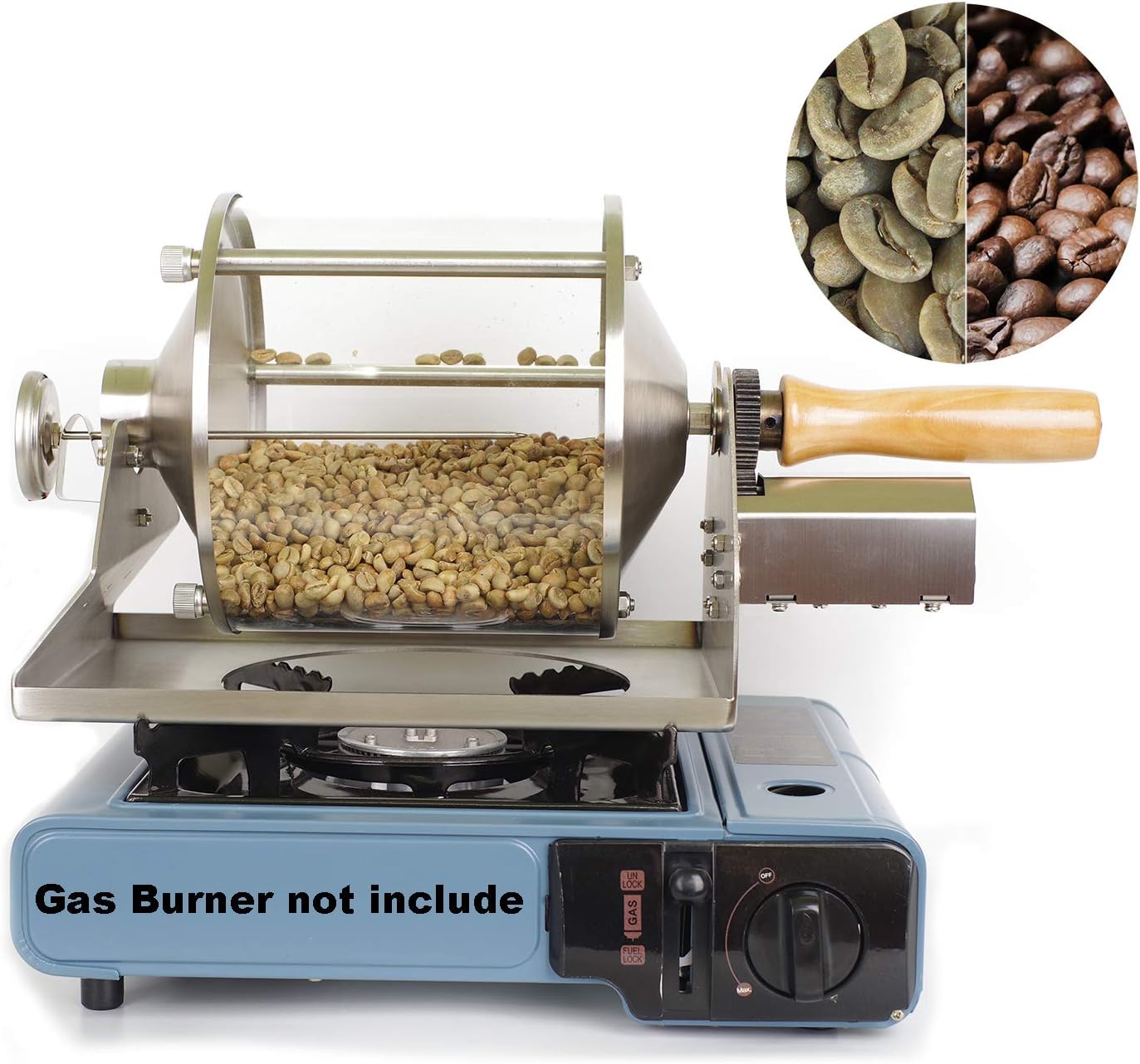
Conversely, gas-operated machines require an external burner to supply the necessary conductive and convective heat for green coffee development. While gas setups demand more careful equipment coordination and burner compatibility, they offer traditional thermal control favored by enthusiasts. Evaluate your available kitchen ventilation, counter space, and existing cooking appliances before selecting a permanent power source.
Batch Capacity and Daily Output
Batch capacity is a critical factor that determines how much coffee you can roast in a single session. Most home roasters handle between 200 and 400 grams per batch, aligning well with typical weekly household consumption. Selecting a machine with an appropriate capacity prevents the need for endless back-to-back roasting cycles while maintaining even heat distribution across the green beans.
If you drink multiple cups daily or share with family, a 300 to 500 gram capacity model provides efficient output. Smaller 200 gram units suit individuals seeking ultra-fresh micro-batches. Always check the manufacturer recommended batch limits to ensure proper airflow and prevent overloading the drum or heating chamber during operation.
Drum Materials and Visibility
The materials used to construct the roasting drum significantly influence heat retention, durability, and your ability to monitor bean progress. Perforated stainless steel drums provide excellent airflow and feature internal stirring blades to agitate beans evenly throughout the roasting cycle. These robust metal builds offer long-term reliability for frequent home roasting routines.
Alternatively, quartz glass or transparent double-layer glass windows allow you to watch color changes from green to yellow, brown, and the crack stages in real time. While glass requires gentle handling and periodic cleaning to maintain clarity, visual monitoring helps beginners learn roasting milestones without guessing. Balance your preference for rugged metal against the educational value of transparent viewing windows.
Automation Levels and Control Modes
Modern home roasters offer varying degrees of automation, ranging from simple automated presets to fully manual profiles. Beginners often benefit from auto modes that manage standard green coffee beans efficiently, reducing the learning curve. These automated programs handle routine temperature adjustments, allowing you to achieve consistent results with minimal intervention during your first few roasting sessions.
On the other hand, manual modes give experienced users precise control over temperature adjustments and roasting duration. This level of customization is especially useful when roasting specialty or decaf beans that require specific thermal curves. Assess your comfort level with roasting science to determine whether you need a fully programmable machine or a straightforward manual setup.
Chaff Collection and Smoke Management
Roasting coffee naturally produces chaff and smoke as the outer bean skins detach and sugars caramelize. Effective chaff collection systems, such as pull-out trays or integrated filters, simplify cleanup by trapping loose skin debris away from the heating elements. Managing this byproduct efficiently keeps your roasting area tidy and prevents smoke accumulation indoors.
While electric hot air roasters often incorporate ultra-low smoke designs and efficient chaff collectors for indoor use, traditional drum roasters may require good kitchen ventilation near a window or exhaust hood. Review how each machine handles chaff disposal and smoke reduction to ensure it fits your kitchen setup and local ventilation capabilities without causing excessive cleanup friction.
Multi-Food Versatility and Build Design
Some electric home roasters feature versatile designs that extend beyond coffee beans to accommodate other roasting tasks like popping corn or roasting peanuts. This multi-functional capability maximizes the value of your appliance if you enjoy preparing various roasted snacks at home. Evaluating the overall build design, including handles, frames, and control interfaces, ensures comfortable daily use.
Pay attention to structural materials like 304 stainless steel, heat-resistant wood handles, and stable plastic bases that support safe handling. A well-designed machine balances physical footprint with sturdy construction, ensuring it sits securely on your countertop. Choosing the right design guarantees your roaster withstands frequent heating cycles while remaining easy to operate and maintain over years of service.
Frequently asked questions
Can I use any home coffee roaster to roast items other than green coffee beans?
Certain electric home roasters feature versatile heating systems and nonstick pans designed to handle alternative foods such as raw peanuts and popcorn alongside green coffee beans. However, many specialized roasters, especially advanced smart or drum models, are strictly engineered for roasting green coffee beans only. Always check the manufacturer guidelines before attempting to roast nuts or grains in your machine, as oil residue or debris from alternative foods can impact flavor and damage internal mechanisms not rated for multi-food use.
What is the typical batch size for home coffee roasting machines?
Most residential coffee roasters feature batch capacities ranging from 200 to 500 grams per cycle, with 300 grams being a common standard across many popular models. This capacity is specifically chosen to provide balanced heating performance and proper airflow without overloading the motor or heating chamber. Roasting within the recommended batch range ensures that your green beans develop evenly from green to light, medium, or dark roast profiles without developing hot spots or irregular roasting outcomes.
Do home coffee roasters produce a lot of smoke during operation?
Smoke production during coffee roasting depends heavily on the machine design, roasting temperature, and the degree of roast you select, such as light versus dark. Some modern electric roasters incorporate hot air roasting technologies and efficient chaff collectors to achieve ultra-low smoke performance suitable for indoor kitchen environments. Conversely, traditional drum roasters or direct-fire models may produce more noticeable smoke and chaff, making adequate kitchen ventilation near an exhaust hood or window highly recommended.
What is the difference between automatic and manual modes on home roasters?
Automatic modes simplify the roasting process by utilizing pre-set temperature curves and timers, making them ideal for beginners or everyday users looking for consistent results with regular green beans. Manual modes provide complete control over temperature adjustments, timer settings, and airflow management, allowing experienced roasters to customize profiles for unique bean varieties like decaf. Choosing between these modes depends on whether you prefer a hands-off roasting experience or precise micro-management of the thermal development process.
How do I clean and maintain a home coffee roaster after use?
Cleaning and maintenance procedures vary based on the specific machine construction, but generally involve emptying chaff collectors, wiping down stainless steel or nonstick surfaces, and clearing drum interiors after the unit has fully cooled down. Models featuring pull-out mesh plates or removable hopper kits make debris disposal straightforward. Always follow the manufacturer instructions regarding cleaning agents and avoid abrasive scrubbers on delicate components like quartz glass drums to preserve their heat resistance and clarity over time.