Appliances · Buying Guide

Best Home Coffee Roaster: Selecting the Right Machine for Fresh Beans

Roasting green coffee beans at home lets you control flavor profiles, roast levels, and batch freshness directly in your kitchen space. Whether you prefer a light morning cup or a deep dark roast, choosing the right equipment depends heavily on your preferred heating method, available kitchen counter space, and desired batch size for daily brewing.

Electric countertop models provide automated stirring and adjustable temperatures for straightforward everyday operation, while gas-powered roasters offer traditional manual oversight through transparent glass drums and external burners. Reviewing the core design features, capacities, and power requirements of each available machine helps align your daily kitchen routine with the most practical setup for fresh coffee.

As an Amazon Associate, StacyLaughs earns from qualifying purchases.

JAYUDQE Electric Coffee Bean Roaster Machine with 300g Capacity
#1 Best Overall

JAYUDQE Electric Coffee Bean Roaster Machine with 300g Capacity

This 110V electric roaster delivers 1200W of heating power for roasting green coffee beans in 300 to 500 gram batches. It features adjustable temperature controls to suit different roast levels and bean types. The appliance also handles alternative foods like peanuts and popcorn, featuring an energy-saving mode and an easy-to-clean plastic construction designed for straightforward kitchen use.

Best for Versatile batch coffee roasting

Adjustable temperature control300-500g batch size1200w electric heatingAutomatic stirring rodEasy to clean
View on Amazon →

What stands out

  • Provides a powerful 1200W heating system to help green coffee beans reach proper temperatures quickly and consistently.
  • Includes adjustable temperature controls that let you customize flavor profiles for light, medium, or dark roasts.
  • Accommodates multi-use functionality for roasting peanuts and popping corn alongside standard coffee beans.

What to consider

  • Constructed primarily from plastic materials, which may influence your preference if you specifically seek glass or metal viewing components during the roasting cycle.
  • Features a recommended batch capacity of 300 to 500 grams, requiring you to portion larger bulk green bean supplies across multiple sessions.
Key specifications
Capacity
300 g
Item Dimensions D x W x H
12"D x 13.6"W x 5.9"H
Material
Plastic
Other Special Features of the Product
Easy to Clean, Energy-Saving Mode, Temperature Adjustment
Coffee Maker Type
Bean-To-Cup
Model Name
Coffee Roaster

The practical verdict

Best for home coffee enthusiasts wanting a powerful 1200W electric machine that easily doubles as a peanut and popcorn roaster. Avoid if you prefer glass drum visibility or smaller batch sizes. The primary trade-off involves relying on a plastic exterior housing and a fixed 300 to 500 gram capacity range, which balances high-output heating performance with everyday countertop convenience and straightforward cleanup.

#2
MAGO MAGA Roma Pro Smart Home Coffee Bean Roaster
Smart Digital Home Roaster

MAGO MAGA Roma Pro Smart Home Coffee Bean Roaster

Best for Smart digital home roasting

The Roma Pro combines smart technology with a compact 120V design, featuring a digital display, Celsius and Fahrenheit switching, and both auto and manual modes. It roasts up to 300g of green coffee beans per batch using hot air circulation and an efficient chaff collector to maintain ultra-low smoke levels. A double-layer glass window allows real-time viewing, while the auto-cooling system locks in flavor.

What stands out

  • Features both automatic and manual operating modes to accommodate beginner setups and precise personalized roasting profiles.
  • Uses hot air roasting paired with an efficient chaff collector to maintain ultra-low smoke during indoor cycles.
  • Includes a double-layer glass window that lets you monitor bean color changes in real time.

What to consider

  • Designed strictly for green coffee beans and cannot function as a standard beverage coffee maker or process other foods.
  • Maintains a strict 300g capacity limit per batch, which requires multiple cycles if you process larger quantities of green beans.
Key specifications
Capacity
0.3 kg
Item Dimensions D x W x H
6"D x 8.3"W x 18.5"H
Material
Glass
Other Special Features of the Product
Timer
Operation Mode
Semi-Automatic
Style
Compact

The practical verdict

Best for users seeking digital temperature controls, auto-cooling, and low-smoke hot air roasting for green coffee beans. Avoid if you need a machine that roasts nuts or handles larger batches. The main trade-off is the dedicated 300g capacity and single-purpose green bean design, which trades multi-food versatility for precise digital monitoring, an integrated chaff collector, and a clear double-layer glass viewing window during everyday operation.

#3
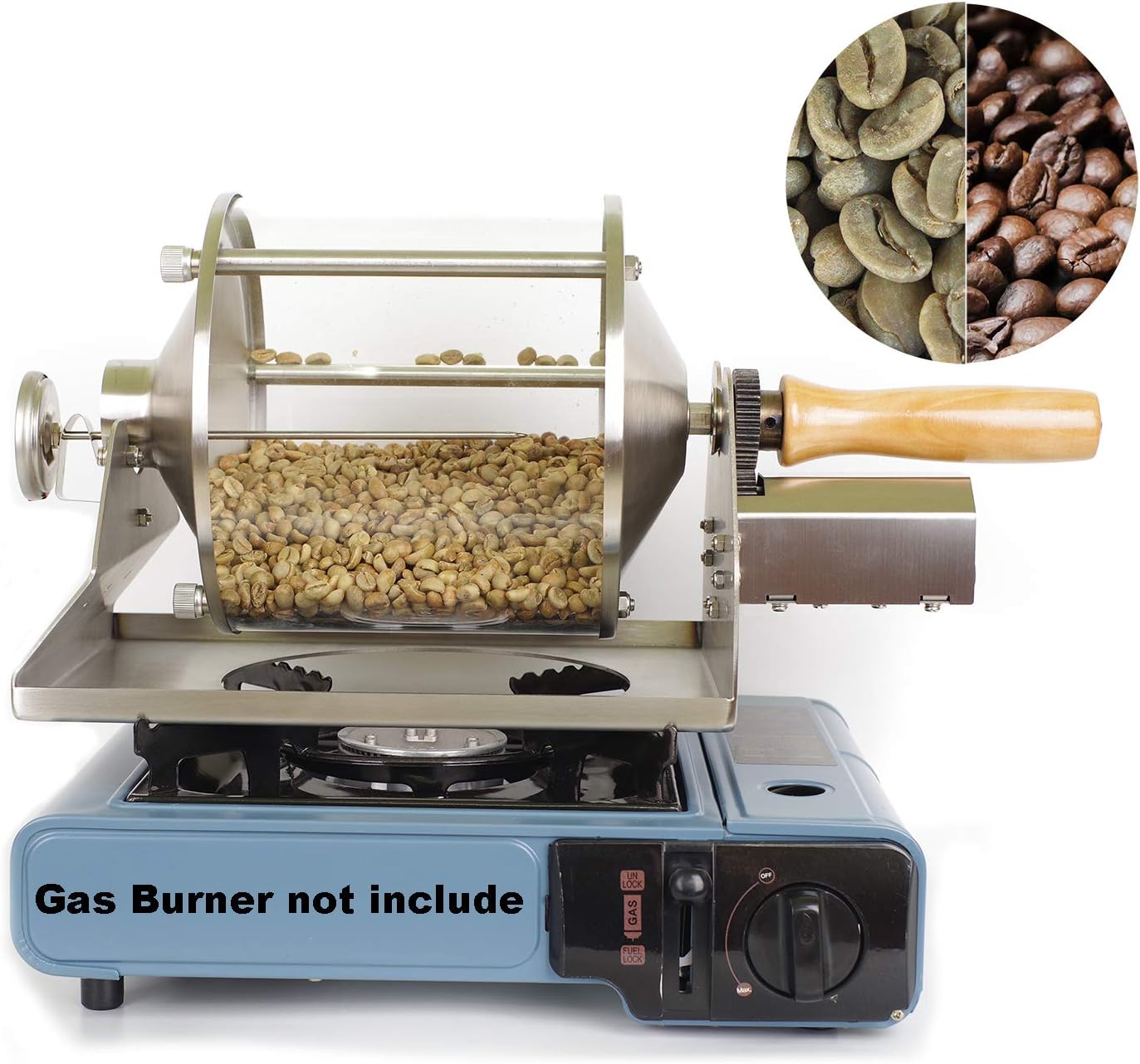
DYVEE KAKA-G400 Gas Burner Coffee Roasting Machine with Glass Drum
Quartz Glass Gas Roaster

DYVEE KAKA-G400 Gas Burner Coffee Roasting Machine with Glass Drum

Best for Visual gas drum roasting

Built with a quartz glass drum and a 304 stainless steel frame, this gas-powered roasting machine handles up to 400g maximum capacity with a recommended 200-300g batch size. It features a safe 12V electrical motor with an included power adapter to turn the drum while you heat it over a gas burner. The transparent glass drum allows clear visual monitoring from green to the final crack.

What stands out

  • Combines a quartz glass drum with a durable 304 stainless steel frame and a classic wooden handle.
  • Operates on a low-voltage 12V motor with an included power adapter for safe drum rotation during sessions.
  • Provides completely transparent visibility so you can watch bean transformation and spot the first or second crack.

What to consider

  • Requires an external gas burner heat source to function, meaning you must accommodate flame setups alongside the machine base.
  • Restricts optimal performance to a 200 to 300 gram recommended batch size, limiting single-run volume despite the maximum 400 gram capacity.
Key specifications
Capacity
300 g
Item Dimensions D x W x H
8.46"D x 8.27"W x 16.93"H
Wattage
400 watts
Voltage
12 volts
Material
Glass
Power Source
gas, electricity

The practical verdict

Best for enthusiasts who prefer gas burner heating and direct visual monitoring through a quartz glass drum. Avoid if you want an all-in-one electric heating unit without external burners. The primary trade-off is pairing a manual gas heat source with a low-voltage rotating glass drum, requiring careful flame management to achieve your desired roast levels compared to automated electric alternatives.

#4
Winb Household Electric Coffee Bean Roaster Machine with 1200W Power
Large-Capacity Electric Roaster

Winb Household Electric Coffee Bean Roaster Machine with 1200W Power

Best for High-capacity multi-use roasting

This 110V electric roaster features an adjustable temperature range from 100 to 240 degrees Celsius and a built-in 0 to 60 minute timer. It uses a rotating internal rod for even blending and handles green coffee beans alongside peanuts, barley, and popcorn. The honeycomb case has a black food-grade Teflon non-stick layer, and a transparent standing lid permits easy viewing during the roasting cycle.

What stands out

  • Offers an adjustable temperature range from 212 to 464 degrees Fahrenheit with a built-in 60-minute timer function.
  • Features an internal rotating rod that ensures even blending across larger batch capacities up to 750 grams total.
  • Includes a non-stick Teflon-coated honeycomb base that simplifies interior cleaning after processing sticky foods or beans.

What to consider

  • Recommends an optimal batch size of 300 to 500 grams despite the larger physical capacity, requiring careful portioning for best results.
  • Relies on a plastic exterior housing structure, which may not appeal to buyers looking exclusively for stainless steel or glass drums.
Key specifications
Capacity
0.75 kg
Wattage
1200 watts
Voltage
110 volts
Material Type
Plastic
Recommended Uses For Product
Roasting coffee beans and other food items such as peanuts, chestnuts, barley, dried fruit, popcorn
Style Name
Classic

The practical verdict

Best for home roasters seeking adjustable temperature controls, a timer, and a non-stick honeycomb basin that handles both coffee beans and popcorn. Avoid if you want specialized glass viewing drums or strictly small batches. The main trade-off is using a plastic housing and an internal stirring rod with a 300 to 500 gram recommended batch size, balancing broad food versatility against dedicated coffee-only precision.

#5
Kaldi Wide Home Coffee Gas Roaster with 300g Capacity
Perforated Stainless Steel Gas Roaster

Kaldi Wide Home Coffee Gas Roaster with 300g Capacity

Best for Perforated stainless steel roasting

Designed for use with an external gas burner, the KALDI WIDE features a 2mm thick stainless steel perforated drum with three internal stirring blades for stable agitation. It includes a mesh plate for heat control, a user-friendly hopper kit with an analog thermometer, a sampler, and a pull-out chaff tray. The machine accommodates up to 300g of green coffee beans per batch.

What stands out

  • Equipped with a 2mm thick perforated stainless steel drum containing three internal stirring blades for stable bean agitation.
  • Includes a mesh plate that maximizes heat utilization, ensures complete gas combustion, and channels conductive airflow smoothly.
  • Features a hopper kit with an integrated analog thermometer, a sampler, and a convenient pull-out chaff collection tray.

What to consider

  • Requires a separate external gas burner to supply heat, meaning it cannot operate as a standalone plug-in electric appliance.
  • Excludes built-in thermocouple support, requiring you to rely entirely on the included analog thermometer positioned inside the drum for standard temperature tracking during sessions.
Key specifications
Capacity
300 g
Material Type
Stainless Steel
Wattage
6 watts
Voltage
12 volts_of_direct_current
Power Source
DC 12V
Recommended Uses For Product
coffee roasting

The practical verdict

Best for traditional roasters who own an external gas burner and want a durable perforated stainless steel drum with a chaff tray. Avoid if you need an electric plug-in appliance with digital displays. The primary trade-off is managing a separate gas burner setup and an analog thermometer rather than employing automated electric heating elements, rewarding hands-on control with professional-grade stainless steel drum construction.

Buying guide

Determining Your Preferred Heat Source

Choosing between electric and gas-powered coffee roasters shapes your entire daily roasting routine and kitchen setup. Electric units plug directly into standard household outlets, supplying self-contained heating elements that require zero auxiliary equipment. They offer straightforward, automated operation for indoor countertop environments without needing specialized gas burners or external flame sources.

Gas roasters, conversely, require an external gas burner to supply thermal energy to the drum. This traditional approach gives you direct, tactile command over flame adjustments and heat distribution throughout the session. While gas setups demand more mindful kitchen placement and attentive flame management, they strongly appeal to enthusiasts who appreciate classic mechanical roasting.

Evaluating Batch Capacity Requirements

Matching your roaster capacity to your household coffee consumption prevents wasted effort and ensures even roasting. Most home roasting machines accommodate between 300 and 400 grams of green beans per batch. Selecting a model within this range provides balanced heating performance without overloading the internal stirring mechanisms or heating chambers.

Larger capacities allow you to roast enough beans to sustain heavy weekly brewing habits in fewer sessions. However, exceeding the manufacturer's recommended batch size often leads to uneven heat distribution and inconsistent roast profiles. Reviewing your daily intake helps determine whether a compact 300 gram machine or a higher-capacity unit fits your schedule.

Understanding Drum Materials and Visibility

The materials used to construct your roaster drum directly influence heat retention, durability, and how easily you can monitor the beans. Quartz glass drums provide complete visual transparency, allowing you to watch the beans change color from green through the first and second cracks without guessing.

Stainless steel drums offer exceptional structural durability and efficient heat transfer, often featuring perforations that optimize airflow. While solid steel or plastic housings hide the beans from direct view, many electric models include transparent lids or dual-layer viewing windows so you can still observe progress. Weighing visibility against material strength guides your choice.

Managing Chaff and Smoke Control

Roasting green coffee beans naturally produces chaff—the papery outer skin that sheds as beans expand—alongside varying levels of smoke. Selecting a roaster with an integrated chaff collector or removable drawer simplifies cleanup by trapping loose debris before it accumulates inside your kitchen workspace.

Certain electric models use hot air circulation paired with efficient filters to maintain ultra-low smoke levels during indoor roasting sessions. Traditional gas roasters with open frames or mesh plates require careful ventilation management. Assessing your kitchen's airflow and cleanup preferences ensures a comfortable, smoke-free environment.

Balancing Temperature Controls and Timers

Precise temperature regulation and timing functions give you the flexibility to develop custom flavor profiles tailored to specific bean varieties. Adjustable temperature settings let you transition smoothly between light, medium, and dark roasts by raising or lowering thermal output according to your exact preferences.

Built-in timers and digital displays remove guesswork by letting you track elapsed roasting time across multiple batches. While automatic modes simplify operation for beginners by managing heat application, manual control options empower experienced roasters to fine-tune every stage of the development process for optimal flavor results.

Exploring Multi-Use Food Applications

Many household electric roasters feature versatile non-stick pans and powerful stirring systems designed to process more than just green coffee beans. These multi-purpose appliances can comfortably roast peanuts, pop corn, toast barley, and prepare chestnuts, offering exceptional value if you enjoy preparing various roasted snacks at home.

Dedicated coffee roasters, such as precision smart models or perforated gas drums, focus exclusively on green coffee bean processing and exclude multi-food functionality. Deciding whether you want a single-purpose coffee appliance or a versatile kitchen roaster helps narrow down the ideal machine for your lifestyle and culinary habits.

Frequently asked questions

Can I use any home coffee roaster as a standard coffee maker?

No, home coffee roasters are designed exclusively to roast raw green coffee beans into finished roasted beans, and they do not brew liquid coffee. After roasting your beans in the machine, you must let them cool and then grind them using a separate coffee grinder before brewing coffee with a traditional drip machine, pour-over cone, or espresso maker. Roasters focus purely on applying thermal energy and stirring the beans during the roasting cycle, lacking the water reservoirs, filters, and extraction systems found in standard beverage-making coffee makers.

What is the recommended batch size for most home coffee roasters?

Most home coffee roasters feature a recommended batch capacity between 300 and 400 grams of green coffee beans per roasting cycle. While some physical housings or pans can hold slightly larger maximum quantities, keeping batches within the manufacturer's recommended range ensures balanced heat distribution and proper stirring performance. Overloading the roaster restricts airflow and prevents beans from roasting evenly, which can lead to inconsistent flavor development and poorly balanced coffee profiles across your final batch.

Do I need an external gas burner for all home coffee roasters?

No, only specific gas-powered roasters require an external burner to supply heat. Many popular home coffee roasters are fully electric countertop appliances equipped with built-in heating elements, allowing them to plug directly into standard electrical outlets without auxiliary equipment. Gas roasters, however, rely on a separate external burner underneath a quartz glass or stainless steel drum to provide thermal energy, requiring careful placement and flame management during operation alongside the motorized drum rotation.

How do I manage chaff and smoke when roasting coffee indoors?

Roasting green coffee beans naturally produces chaff and smoke as the beans expand and shed their outer layers. To manage this indoors, look for electric roasters featuring integrated chaff collectors, removable collection trays, or hot air circulation systems designed to maintain low smoke output. When using gas roasters or models without enclosed chaff traps, operating near a window with adequate kitchen ventilation helps clear smoke and catch loose debris. Cleaning out collection trays after every session prevents buildup.

Can I roast foods other than coffee beans in an electric roaster?

Yes, several versatile electric home roasters feature non-stick pans and adjustable temperature settings that accommodate alternative food items alongside green coffee beans. These multi-purpose machines can effectively roast peanuts, pop corn, toast barley, and prepare chestnuts using their built-in stirring rods and heating systems. However, dedicated precision coffee roasters are strictly engineered for green coffee beans only and should not be used for other foods. Always check manufacturer guidelines before roasting alternative items in your specific machine model.

Final thoughts

Selecting the best home coffee roaster comes down to balancing your preferred heat source, available kitchen space, and desired batch capacity. Whether you choose an automated electric machine with adjustable temperatures or a traditional gas-powered glass drum, each model offers distinct advantages for fresh bean roasting.

Evaluating core features like chaff management, drum materials, and multi-use versatility ensures your chosen roaster fits smoothly into your daily routine. By aligning these practical attributes with your personal roasting style, you can enjoy freshly roasted coffee at home for years to come.