Appliances · Buying Guide
Best Alternatives to a Mr Coffee Food Dehydrator for Home Snacking
Finding an alternative to a traditional countertop appliance like a mr coffee food dehydrator involves looking closely at various tray counts, heating mechanisms, and wattage options. Countertop dehydrators allow home cooks to preserve fruits, vegetables, and meats into shelf-stable snacks without added preservatives or refined sugars. Evaluating these machines helps clarify what works best for home kitchens.
Exploring different models helps buyers find units that fit specific kitchen layouts, power requirements, and batch-size needs. Whether prioritizing digital timers, adjustable temperature dials, or stainless steel construction, understanding the core features of each multi-tier dehydrator ensures reliable performance for everyday food preservation tasks. Selecting the right setup streamlines drying batches of homemade jerky and fruit leather.
As an Amazon Associate, StacyLaughs earns from qualifying purchases.
Buying guide
Tray Material and Construction Choices
When selecting a food dehydrator, the material of the drying trays significantly influences overall durability, daily cleaning routines, and long-term maintenance. Plastic trays are lightweight and common in entry-level models, offering easy top-rack dishwasher cleanup while keeping the overall appliance weight low for effortless cabinet storage and countertop placement.
Stainless steel trays provide a sturdier, long-lasting surface that resists staining, handles heavy food loads, and withstands frequent cleaning cycles over years of use. Buyers should carefully weigh whether they prefer the lightweight handling of BPA-free plastic components or the robust structural build of metal shelves for processing bulk batches.
Wattage and Heating Performance
Power output measured in watts dictates how quickly and efficiently a food dehydrator can process dense ingredients like thick cuts of meat or high-moisture fruits. Units ranging from 300 to 350 watts handle standard fruits, herbs, and vegetables effectively. Higher wattage models exceeding 400 watts generate robust thermal energy to accelerate drying times across multi-tier setups.
Evaluating motor strength ensures the appliance matches your typical recipe schedule. Lower-wattage machines operate reliably for overnight sessions, whereas high-wattage fans maintain consistent internal temperatures under heavy loads. Choosing the appropriate wattage prevents uneven moisture retention and ensures uniform results, whether you are making crispy vegetable chips or chewy beef jerky at home.
Temperature Range and Control Precision
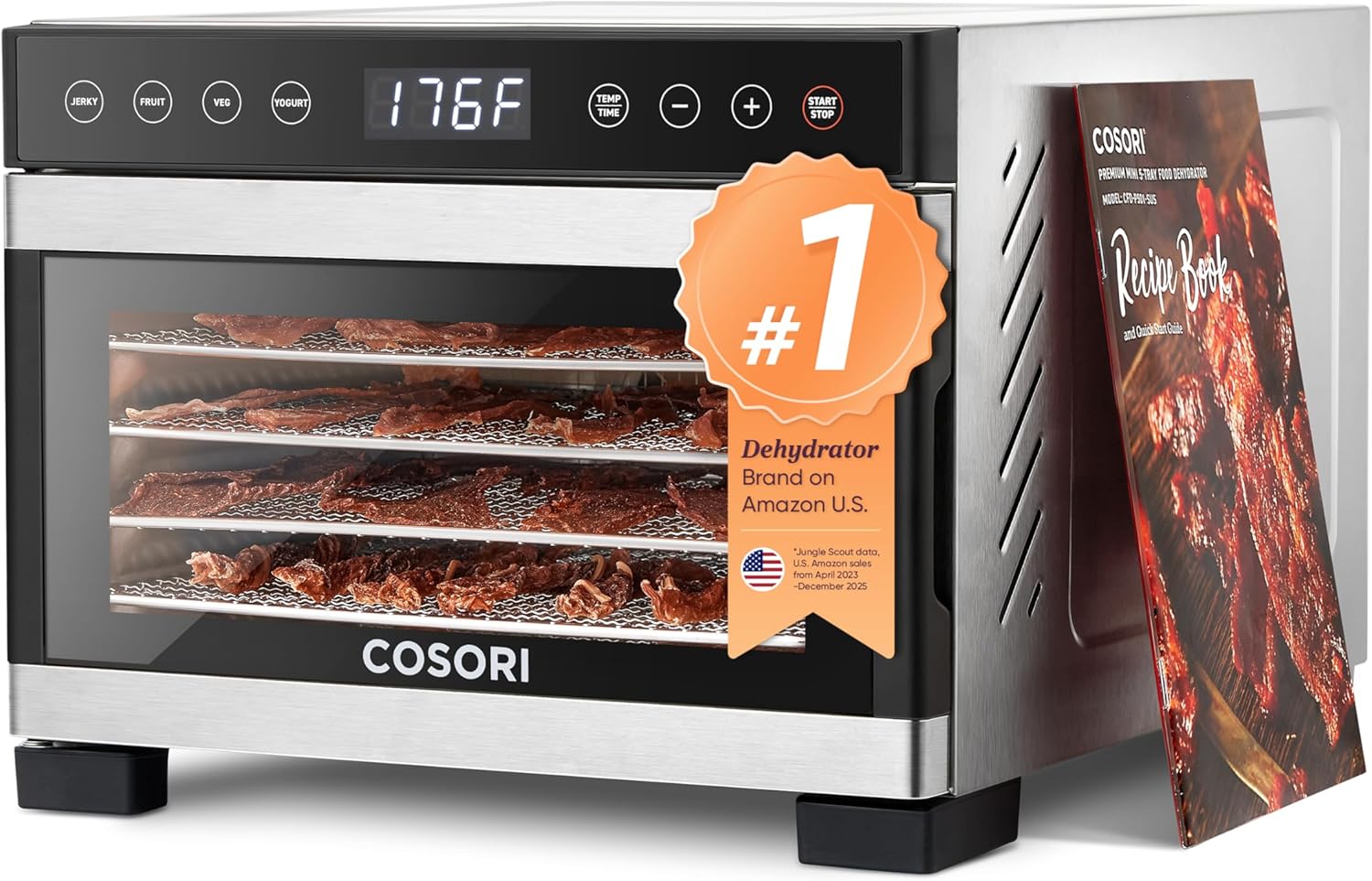
Temperature capabilities vary significantly across countertop dehydrators, directly impacting the types of foods you can safely prepare. Standard models offer ranges starting around 95 degrees Fahrenheit up to 158 degrees. Advanced machines reach higher thresholds like 176 or 180 degrees Fahrenheit, which USDA guidelines recommend for properly drying meat into safe beef jerky at home.
Control mechanisms also differ, ranging from simple manual dials and single-press buttons to precise digital displays with one-degree incremental adjustments. Selecting a control style depends on whether you prefer straightforward, no-fuss startup or granular temperature customization for delicate herbs, yogurts, and complex jerky recipes requiring exact heat levels.
Airflow Systems and Tray Rotation
Air circulation design determines whether you will need to manually rotate drying trays during long processing cycles. Base-mounted fans push warm air upward through stackable tiers, which can sometimes result in uneven drying if lower trays block airflow. Many modern dehydrators incorporate rear-mounted fans or scientifically tested circulation pathways to distribute heat evenly across every shelf.
Reviewing how air travels inside the housing helps you decide between hands-off convenience and traditional stacking setups. Units with advanced rear airflow eliminate the need to pause cycles and swap tray positions, saving time during lengthy overnight drying runs for large batches of fruit slices or homemade pet treats.
Capacity and Kitchen Counter Space
Countertop footprint and total drying surface area dictate where you can store and operate your dehydrator. Compact square models with 11-inch footprints fit neatly under standard kitchen cabinets, while wider rectangular configurations demand more horizontal surface space. Assessing available kitchen counter dimensions prevents storage friction and ensures the appliance fits comfortably.
Tray counts and vertical stacking flexibility also influence batch sizes. Dehydrators with expandable heights accommodate thicker food chunks like whole strawberries or chunky jerky strips. Balancing physical footprint against usable square footage ensures you purchase a machine that satisfies your snack-making volume without overcrowding your kitchen workspace.
Timers and Automated Convenience Features
Built-in timers introduce significant convenience for home cooks managing multi-hour drying sessions. Digital countdown timers ranging up to 48 hours allow users to program exact run times and walk away without monitoring the clock. Many advanced digital models feature automatic shutoff functions that power down the heating element once the timer expires.
Basic analog dial models lack automatic shutoffs, requiring manual supervision or external kitchen timers to prevent over-drying. Deciding between a simple dial interface and a programmable digital timer depends on your daily schedule and desire for automated convenience during overnight or away-from-home food preservation projects.
Frequently asked questions
Do I need to rotate trays while drying food in these dehydrators?
Whether you need to rotate trays depends on the specific airflow design of boilers or dehydrator models you choose. Units featuring base-mounted heaters sometimes require occasional tray rotation to ensure even drying across all levels if airflow gets partially blocked by dense food loads. However, many advanced models utilize rear-mounted fans or optimized airflow circulation systems designed to distribute warm air evenly across every tray automatically, eliminating the need to manually stop and swap tray positions during long drying cycles.
What temperature is required for making safe meat jerky at home?
When preparing homemade meat jerky, temperature control is a critical factor for food safety. The United States Department of Agriculture recommends heating meat to 165 degrees Fahrenheit during the dehydration process to eliminate harmful bacteria effectively. Consequently, you should look for dehydrator models capable of reaching maximum temperatures of 165 degrees Fahrenheit or higher, such as units with maximum limits extending up to 176 or 180 degrees, ensuring your meat jerky is thoroughly heated and dried.
Can I wash food dehydrator trays in the dishwasher?
Cleaning requirements vary by manufacturer guidelines and tray materials. Many plastic drying trays and removable lids included with countertop dehydrators are designated as dishwasher safe, typically recommended for placement on the top rack to prevent warping from high heating elements. Conversely, specialized components like mesh screens for herbs or certain stainless steel configurations may require gentle hand washing. Always review the specific product care instructions provided by the manufacturer before placing any components into an automated dishwasher cycle.
How long does it typically take to dehydrate fruits and vegetables?
Dehydration times vary widely depending on the moisture content of the food, slice thickness, ambient humidity, and the wattage of the dehydrating appliance. Most fruits and vegetables require anywhere from several hours up to a full day of continuous drying. Models equipped with digital timers and programmable settings up to 48 hours allow you to set precise durations for longer tasks. Transparent lids or clear trays also let you visually monitor the progress of your snacks without releasing accumulated heat.
What extra accessories usually come with food dehydrators?
Included accessories depend on the specific dehydrator model and brand package. Many standard units come with a set of stackable drying trays and a vented lid. Some advanced or specialized models include extra items such as fine mesh screens designed specifically for drying small herbs and loose leaves without falling through tray grates. Other packages may supply solid fruit roll sheets or fruit leather trays, allowing you to pour liquid fruit purees to create homemade chewy fruit snacks and healthy strips.