Appliances · Buying Guide
Best Stainless Steel Mesh Tea Infuser Options for Loose Leaf Brewing
Finding the right stainless steel mesh tea infuser transforms how you brew loose leaf tea, fragrant herbal blends, and cooking spices at home. Selecting a dependable strainer involves carefully evaluating physical dimensions, handle styles, and mesh density to ensure a proper fit for your favorite mugs, cups, or teapots without letting fine particles escape into your hot water.
Different physical configurations offer distinct daily advantages, ranging from extended chain models designed for deep pitchers to wide handled baskets that rest securely across standard cup rims. Exploring these practical attributes helps match your specific brewing habits with a durable infuser built entirely from food-grade stainless steel materials meant for repeated daily use.
As an Amazon Associate, StacyLaughs earns from qualifying purchases.
Buying guide
Evaluating Stainless Steel Material Grades
Choosing a stainless steel mesh tea infuser starts with carefully examining the metal grade used in its construction. Food-grade options like 304 or 18/8 stainless steel provide reliable corrosion resistance and prevent unwanted metallic tastes from transferring into delicate green, oolong, or black teas during extended hot water steeping sessions in your kitchen.
Premium metal construction also ensures that the strainer withstands daily hand washing or dishwasher cycles without degrading, warping, or retaining stubborn odors from heavily scented herbal blends. Prioritizing certified food-safe metal alloys guarantees long-term structural durability across years of regular beverage preparation routines at home or in the office.
Understanding Mesh Density and Hole Patterns
Mesh density directly influences how effectively a tea strainer prevents tiny leaf particles from escaping into your finished cup. Extra-fine etched or micron-sized holes are specifically engineered to trap powdery green tea bits, rooibos, and fine herbal fragments while still allowing heated water to circulate freely through the leaves.
Evaluating the perforation pattern helps you avoid gritty residue at the bottom of your mug. Models featuring precision punching maintain structural integrity while offering maximum open area for smooth liquid flow, ensuring a clean and enjoyable beverage experience regardless of the specific loose leaf blend you select.
Selecting Basket Capacity Versus Compact Ball Styles
The physical shape of your tea infuser dictates how much room loose leaves have to expand during the steeping process. Large-capacity baskets provide wide interior spaces that allow tightly rolled leaves like oolong to unfurl completely, releasing full flavor profiles without feeling cramped inside a restrictive container.
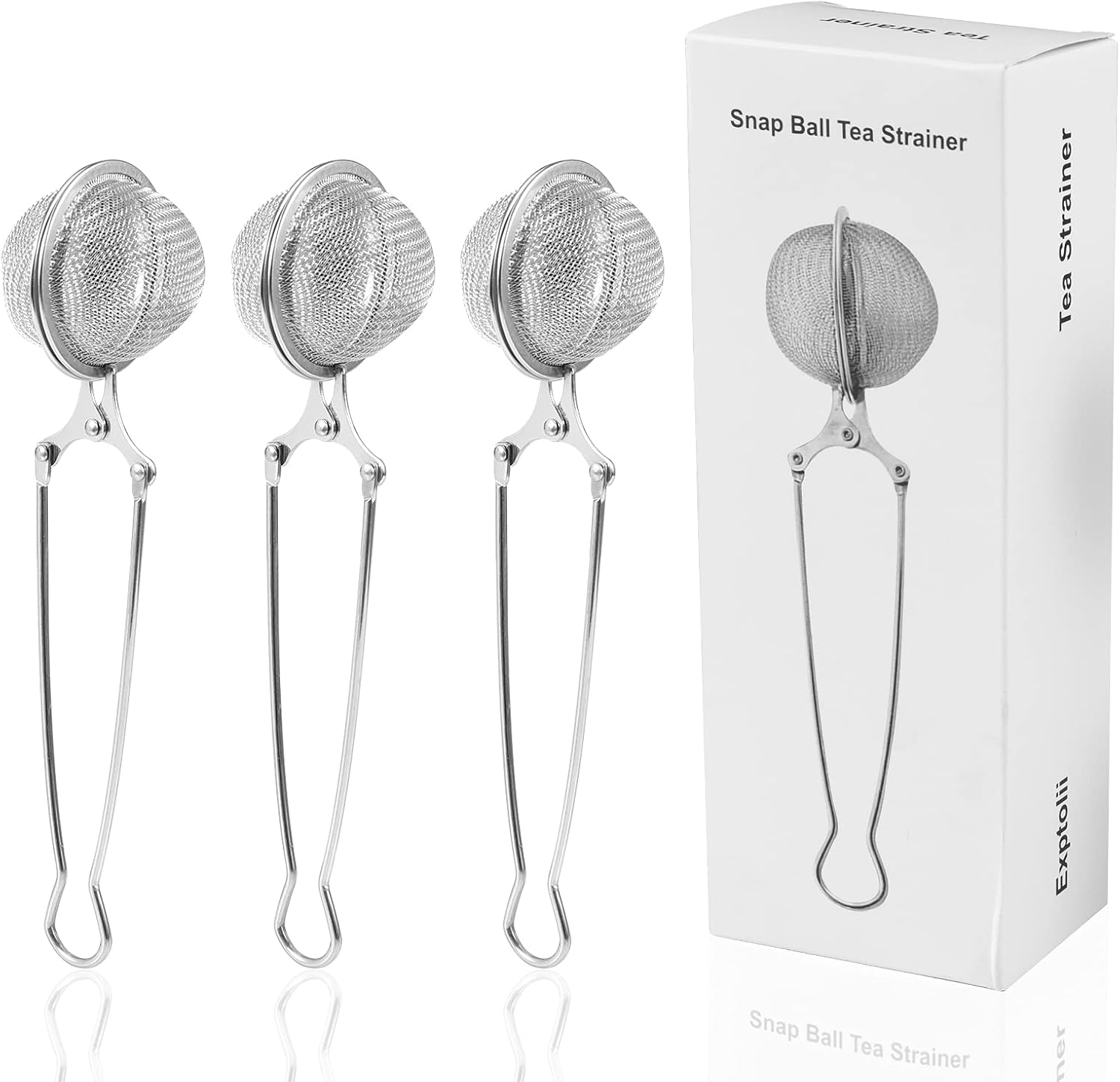
Conversely, compact snap ball strainers offer portable convenience for single servings or spice filtering, though their spherical chambers restrict maximum leaf expansion. Matching the internal volume of the infuser to your preferred tea types ensures optimal flavor extraction and prevents weak or unevenly brewed cups.
Examining Handle Design and Container Compatibility
Handle configuration plays a vital role in how securely a tea infuser rests across different mug and teapot rims. Double-handled baskets span wider openings to provide balanced stability, often featuring silicone touchpoints or nubs that protect your fingers from accidental burns when handling hot metal components.
Alternatively, extended chains with S-shaped hooks offer adjustable hanging heights suitable for deep pitchers and mason jars. Assessing your existing glassware collection before purchasing ensures that the chosen handle style fits your specific containers without sliding or tipping.
Using Lids and Drip Trays for Convenience
Accessories like matching lids and dedicated drip trays significantly enhance the practicality of a loose leaf tea strainer. A snug lid traps heat within the basket during steeping, preventing water temperature loss and helping aromatic compounds infuse more thoroughly into the surrounding liquid.
Once brewing finishes, turning that same lid upside down to serve as a drip tray eliminates messy countertop drips. Selecting infusers that bundle these functional components streamlines cleanup and keeps your preparation area tidy throughout busy daily routines.
Maintenance and Dishwasher Compatibility Guidelines
Maintaining a stainless steel mesh tea infuser requires understanding proper cleaning practices to prevent residue accumulation over time. Many food-grade stainless steel strainers are dishwasher safe, allowing for effortless sanitization after brewing strong black teas or oily spiced herbal blends.
Regular hand washing with mild soap also keeps the fine mesh clear of trapped particles. Following manufacturer maintenance guidelines ensures your strainer remains rust-free and odor-free, preserving optimal beverage taste for countless brewing sessions ahead.
Frequently asked questions
How do I clean fine mesh stainless steel tea infusers properly?
Cleaning a stainless steel mesh tea infuser is straightforward due to its durable metal construction. Most food-grade stainless steel strainers are completely dishwasher safe, allowing you to place them directly into machine cycles for thorough sanitization. Alternatively, you can wash the infuser by hand using warm water and mild dish soap immediately after steeping to prevent tea oils and microscopic leaf fragments from drying onto the delicate mesh. Avoid using abrasive scrubbing pads that might scratch the polished surface, ensuring your strainer remains smooth, clean, and entirely free from residual odors over years of daily use.
Can I use a stainless steel tea infuser for cooking spices?
Yes, many stainless steel tea infusers, particularly chain-attached balls and compact baskets, work exceptionally well for infusing loose spices and seasonings during cooking. You can place whole spices, herbs, or dried fruit pieces inside the mesh chamber and submerge them directly into soups, broths, or stews. The secure closure mechanisms keep seasoning particles contained while allowing flavors to disperse evenly throughout your dish. Afterward, removing the infuser eliminates the tedious task of fishing out individual whole spices, making post-cooking cleanup much faster and more efficient in busy home kitchens.
Will fine mesh tea strainers trap tiny rooibos or herbal leaves?
Quality stainless steel tea infusers featuring extra-fine etched holes or micron-sized perforated mesh are specifically designed to trap tiny leaves. Traditional paper filters often let fine rooibos, powdered green teas, and delicate herbal fragments pass through into the cup, creating gritty sediment. Precision-punched stainless steel mesh balances optimal water flow with tight particle containment, ensuring that only clear liquid passes into your mug. This tight filtration allows you to brew fine-leaved herbal and rooibos blends confidently without experiencing unwanted dregs at the bottom of your beverage container.
Do stainless steel handles become too hot to touch during steeping?
Bare stainless steel handles can absorb heat from boiling water when resting directly on hot container rims for extended periods. To address this, many modern tea infuser baskets incorporate stay-cool silicone touchpoints, insulated handles, or protective silicone nubs on their tips. These thermal barriers protect your fingers from accidental burns when lifting the strainer out of a hot mug or teapot. If your specific infuser model features all-metal handles without silicone coverings, using a small cloth or waiting a moment for the metal to cool slightly ensures safe handling.
What is the benefit of using a lid that doubles as a drip tray?
A dual-function lid provides two distinct practical advantages during the tea brewing process. First, placing the lid securely over the infuser basket while steeping traps heat inside the container, preventing warm air from escaping and helping tea leaves infuse more effectively. Second, once steeping is complete, turning that same lid upside down creates a convenient resting base or drip tray. This clever design catches excess water dripping from the wet mesh, preventing messy puddles on your kitchen counter, desk, or tabletop and keeping your beverage preparation area clean and tidy.