Appliances · Buying Guide

Best Urnex Rinza Milk Frother Cleaner Options and Dairy System Cleaners

Maintaining coffee equipment requires dedicated care, especially when preparing lattes, cappuccinos, and other milk-based beverages on a daily basis. Milk proteins, fats, and residual films steadily accumulate inside steam wands, automatic frothers, and internal milk circuits over time. Without routine cleaning, this persistent buildup leads to unpleasant odors, clogs, and restricted fluid flow across your entire coffee setup.

Selecting the right dairy cleaner ensures your espresso machine or standalone frother continues to deliver smooth, rich foam for every single cup. Various liquid formulas, concentrated drops, and effervescent tablets offer targeted maintenance solutions designed to dissolve stubborn milk residue safely and efficiently across multiple domestic and commercial machine brands without complex guesswork.

As an Amazon Associate, StacyLaughs earns from qualifying purchases.

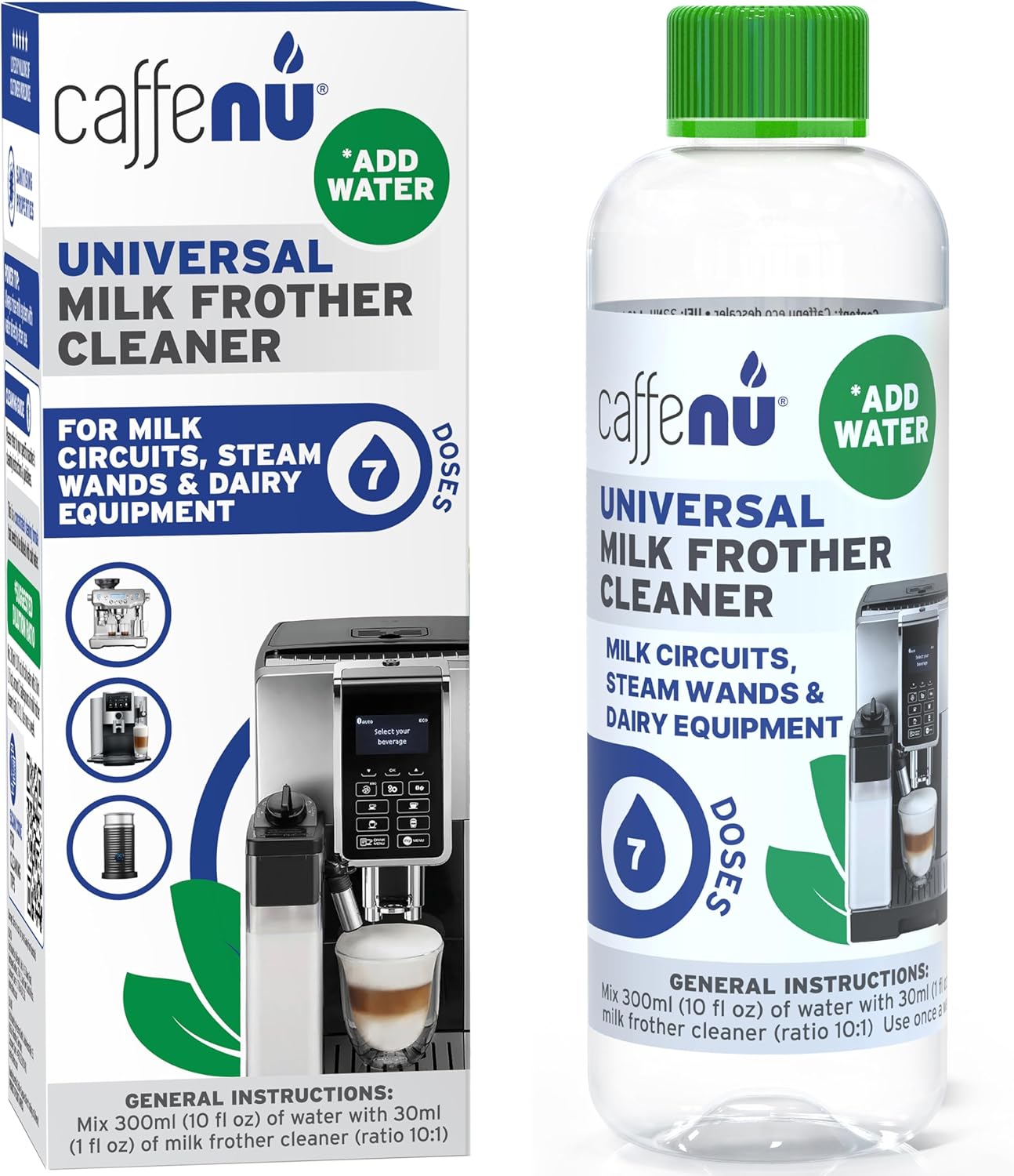
Caffenu Universal Milk Frother Cleaner Alkaline Formula 200ml
#1 Best Overall

Caffenu Universal Milk Frother Cleaner Alkaline Formula 200ml

The Caffenu Universal Milk Frother Cleaner utilizes an alkaline formula to break down stubborn milk proteins, fats, and oils inside compatible automatic milk circuits and steam wands. Packaged in a 200ml bottle, it provides seven measured doses for routine maintenance. The manufacturer recommends weekly cleaning to prevent clogs and rancid odors. It features two clear application methods for circuits or soaking detachable parts.

Best for Weekly routine milk circuit maintenance

Breaks down milk buildupSuitable for multiple brandsProvides seven routine dosesTargets milk protein residueEasy two cleaning methods
View on Amazon →

What stands out

  • Targeted alkaline formula effectively breaks down accumulated milk proteins, fats, and oils that contribute to blockages and odors.
  • Includes clear instructions for two distinct cleaning methods covering both internal automated milk circuits and soakable external parts.
  • Universal compatibility spans major espresso machine and milk frother brands including Jura, De'Longhi, Philips, Saeco, and Breville.

What to consider

  • Provides only seven total doses in the 200ml bottle, requiring more frequent repurchasing if you clean your dairy equipment multiple times per week.
  • Designed specifically for milk residue and does not function as a descaler for mineral deposits or an oil remover for brew groups.
Key specifications
Brand Name
Caffenu
Manufacturer
Caffenu
Number of Items
1
Capacity
200 ml
Color
White
Other Special Features of the Product
Universal Application, High Dose Count, Targeted Cleaning

The practical verdict

This cleaner is best for coffee owners seeking a targeted alkaline solution for weekly milk circuit upkeep across major machine brands. Avoid it if you require a high-capacity bulk bottle for daily commercial service or need a dual-purpose descaling agent. The primary trade-off is the modest seven-dose capacity per bottle, which demands regular replenishment during heavy maintenance routines, balanced by clear dual-method instructions that simplify weekly upkeep for home baristas managing diverse frothing equipment.

#2
Milk System Cleaning Tablets for Jura Automatic Coffee Machines 60 Count
Effervescent Cleaning Tablets

Milk System Cleaning Tablets for Jura Automatic Coffee Machines 60 Count

Best for Daily Jura machine tablet maintenance

Designed specifically for Jura automatic coffee machines, these phosphate-free cleaning tablets dissolve quickly to eliminate milk fats, proteins, and residues from tubes, frothers, and spouts. Each bottle includes sixty tablets, offering up to sixty days of daily maintenance. The gentle, odorless formula helps protect internal parts, maintains peak foam performance, and simplifies daily upkeep without requiring measurement or guesswork.

What stands out

  • Formulated specifically for Jura automatic coffee machines to maintain peak milk foam performance and clean internal tubes effectively.
  • Provides sixty pre-measured tablets per bottle, delivering up to sixty days of convenient daily cleaning without measuring liquids.
  • Phosphate-free and odorless formula dissolves rapidly in water, leaving no residual tastes or chemical odors behind in your beverages.

What to consider

  • Limited primarily to compatible Jura automatic machine systems, meaning it may not suit traditional manual steam wands or non-Jura brands.
  • Fixed single-tablet dosing prevents you from adjusting the cleaning solution concentration for heavily soiled milk frothers or larger commercial systems.
Key specifications

The practical verdict

This tablet set is best for Jura machine owners looking for a quick, pre-measured daily cleaning routine. Avoid it if you operate non-Jura equipment or prefer adjusting liquid concentrations for custom cleaning volumes. The main trade-off is the fixed single-tablet dose design which simplifies daily habits but restricts flexibility for heavily caked milk systems, weighed against the convenience of sixty fast-dissolving, odorless tablets that keep automated milk circuits running smoothly.

#3
Impresa Steam Wand Cleaner for Milk Frothers 32 Ounce Bottle
High-Capacity Wand Cleaner

Impresa Steam Wand Cleaner for Milk Frothers 32 Ounce Bottle

Best for High-volume steam wand care

The Impresa Steam Wand Cleaner comes in a large 32-ounce bottle delivering up to 192 uses for busy home kitchens and commercial cafes. It effectively removes mineral buildup and stubborn milk protein residue from traditional steam wands, automatic frothers, and stainless-steel pitchers. The straightforward cleaning process involves soaking, steaming, and rinsing to restore shine, eliminate odors, and ensure efficient beverage preparation.

What stands out

  • Delivers up to 192 uses from a single 32-ounce bottle, making it an economical choice for busy cafes and frequent home baristas.
  • Removes stubborn mineral buildup alongside milk protein residue, restoring a brilliant shine to traditional steam wands and stainless pitchers.
  • Accommodates both home and commercial environments, ensuring clean and efficient operation for various steaming and frothing setups.

What to consider

  • The large 32-ounce bottle size requires significant storage space in compact kitchen cabinets compared to smaller concentrated cleaning drops or compact tablet containers.
  • Manual cleaning steps require measuring capfuls, soaking equipment in hot water, and performing timed steaming cycles rather than relying on automated machine cycles.
Key specifications

The practical verdict

This cleaner is best for high-volume settings and heavy steam wand users wanting an economical, high-capacity bottle. Avoid it if you rely entirely on automated internal machine cleaning cycles or have minimal cabinet storage space. The main trade-off is the bulky 32-ounce container that requires dedicated storage room, balanced by an impressive 192-use yield and strong capability to strip away stubborn mineral and milk protein residues from traditional stainless-steel hardware.

#4
Urnex Puro Liquid Dairy Cleaner 33.6 Ounce 4 Pack
Multi-Pack Dairy Cleaner

Urnex Puro Liquid Dairy Cleaner 33.6 Ounce 4 Pack

Best for Bulk multi-pack dairy maintenance

Urnex Puro Liquid Dairy Cleaner is engineered to clean traditional and automatic milk steaming devices effectively. Supplied in a multi-pack configuration featuring a substantial package weight, this liquid cleaner targets stubborn dairy residues and milk proteins accumulated during daily beverage preparation. It provides reliable maintenance support for commercial and residential frothing equipment to maintain hygiene and consistent milk foam quality.

What stands out

  • Engineered to clean both traditional manual steam wands and complex automatic milk steaming devices with dependable efficiency.
  • Supplied in a multi-pack format to support ongoing maintenance schedules in busy environments without running out quickly.
  • Targets heavy dairy residue buildup to support proper hygiene and consistent milk texture across multiple beverage preparation cycles.

What to consider

  • The heavy multi-pack shipping weight requires careful handling and sturdy storage shelving compared to lightweight single-bottle cleaning solutions, which may overwhelm compact pantries.
  • Bulk purchasing requires a larger upfront commitment and dedicated storage space, making it less practical for casual users who rarely clean milk systems.
Key specifications

The practical verdict

This multi-pack cleaner is best for high-volume establishments or dedicated coffee enthusiasts who require a reliable bulk supply of dairy cleaning solution. Avoid it if you have limited storage space or only need a single bottle for occasional maintenance. The primary trade-off is the substantial multi-pack weight and storage footprint, weighed against the long-term convenience of having a continuous bulk supply ready for heavy-duty commercial or residential milk frother upkeep.

#5
Think Crucial Jura Milk System Cleaner Concentrated Liquid Formula
Concentrated Liquid Formula

Think Crucial Jura Milk System Cleaner Concentrated Liquid Formula

Best for Compact liquid Jura maintenance

Think Crucial JURA Milk System Cleaner features a concentrated liquid formula designed for Jura automatic machines with milk cleaning cycles, while also fitting other automated frothers. One compact six-ounce bottle delivers up to 71 cleaning cycles using a simple half-teaspoon dose. The sodium carbonate and surfactant blend breaks down milk fats and proteins instantly upon contact with water, eliminating dissolving wait times and supporting routine maintenance.

What stands out

  • Delivers up to 71 cleaning cycles from a compact six-ounce bottle using an efficient half-teaspoon recommended dose.
  • Liquid formula mixes instantly with water upon contact, avoiding the wait times associated with dissolving solid cleaning tablets.
  • Compatible with a broad range of Jura machine lines and other automatic machines featuring integrated milk system cleaning cycles.

What to consider

  • Requires manual measurement of liquid using a half-teaspoon amount for each cycle, introducing potential room for dosing error compared to pre-measured tablets.
  • Small six-ounce bottle requires careful placement to avoid misplacing it among larger kitchen supplies near your automated coffee station, despite its convenient storage profile.
Key specifications

The practical verdict

This concentrated liquid is best for owners of Jura and compatible automatic machines seeking a liquid formula with high cycle counts. Avoid it if you prefer solid pre-measured tablets that eliminate liquid measuring steps entirely. The main trade-off is the requirement to manually measure a half-teaspoon for each cycle, which introduces slight measurement effort, balanced by rapid water mixing and a compact bottle profile that stores neatly beside automated coffee machines.

Buying guide

Understanding Milk Residue Composition

Milk contains complex proteins, natural fats, and sugars that adhere tightly to stainless steel and plastic surfaces whenever you steam beverages. When exposed to heat, these proteins denature and bake onto steam wands or accumulate inside narrow internal tubing. Without proper intervention, this layer hardens over time, creating an ideal breeding ground for bacteria and stale odors. Recognizing how organic films form clarifies why standard dish soap falls short.

Specialized dairy cleaners utilize targeted chemical formulations to break down specific organic bonds rather than washing away surface grease. Alkaline agents effectively saponify fats and dissolve protein chains, restoring internal components to a hygienic state. Establishing a consistent cleaning schedule prevents cumulative buildup from restricting fluid pathways or altering the delicate flavor profiles of your daily lattes, ensuring your equipment operates smoothly for years.

Matching Formats to Your Machine Type

Coffee equipment configuration heavily influences whether you should select liquid solutions, concentrated drops, or compressed cleaning tablets. Fully automatic bean-to-cup machines with integrated cleaning cycles often accommodate tablets or measured liquid doses designed to flush internal circuits automatically. These automated cycles remove guesswork and streamline maintenance routines for busy households relying on push-button beverage preparation.

Traditional manual espresso setups with standalone steam wands require liquid cleaners mixed in pitchers for soaking and purging routines. Evaluating your specific machine architecture prevents purchasing incompatible products that cannot integrate with your automated programs or manual workflow. Matching the cleaner format to your daily habits ensures you can execute maintenance procedures quickly without disrupting your morning coffee preparation schedule.

Evaluating Dose Counts and Value

Assessing the total dose count per container helps determine the long-term value and practical convenience of any dairy cleaning product. High-capacity bottles offering dozens or hundreds of uses suit commercial cafes and heavy residential users who run cleaning cycles daily. These bulk options reduce purchase frequency and lower per-use maintenance costs for environments handling high beverage volumes.

Smaller bottles with lower dose counts provide manageable entry points for occasional users who clean their milk frothers on a weekly basis. However, buying smaller quantities frequently can increase overall maintenance expenses over time. Balancing your actual weekly cleaning frequency against package capacity ensures you secure a cost-effective supply that matches your consumption without cluttering your kitchen storage space.

Safe Storage and Handling Practices

Proper storage and handling of concentrated cleaning agents protect both household members and delicate kitchen surfaces from accidental chemical exposure. Cleaning liquids and tablets should always be stored securely in dry, cool locations well out of reach of children and pets. Reviewing manufacturer warning labels before opening any bottle provides essential guidance regarding protective gloves, eye safety, and immediate rinsing steps.

Keeping containers sealed tightly prevents moisture contamination, especially for effervescent tablets that can degrade prematurely when exposed to humid ambient air. Organizing your cleaning supplies near your coffee station ensures easy access while maintaining safe separation from food storage areas. Adhering to these basic storage protocols safeguards your cleaning inventory and maintains product efficacy across multiple maintenance cycles.

Distinguishing Dairy Cleaners from Descalers

A common maintenance mistake involves confusing milk system dairy cleaners with traditional mineral descaling solutions designed for boiler water circuits. Dairy cleaners specifically target organic milk proteins, fats, and residual films using alkaline compounds or specialized surfactants. They do not dissolve calcium or limescale deposits that accumulate inside internal heating elements from hard water minerals.

Conversely, acidic descalers lack the chemical properties required to break down baked milk fats effectively inside frothing tubes and steam wands. Maintaining healthy espresso equipment requires keeping both product types on hand to address different maintenance domains independently. Understanding this distinction prevents ineffective cleaning attempts and ensures every part of your machine receives appropriate chemical care.

Establishing a Sustainable Maintenance Schedule

Establishing a reliable, repeatable cleaning cadence is the single most effective way to prevent permanent residue buildup and equipment failure. Automatic milk systems often benefit from a daily rinse or tablet cycle executed immediately after your last beverage of the day. This simple habit prevents fresh milk residue from drying and hardening inside narrow tubes overnight.

Manual steam wands and detachable frother attachments require regular soaking in warm cleaning solutions to strip away stubborn baked-on films. Integrating these tasks into your weekly kitchen routine removes the friction associated with deep cleaning sessions. A consistent schedule preserves foam quality, eliminates stale odors, and extends the operational service life of your valuable coffee investment.

Frequently asked questions

Can I use dairy cleaners to descale my espresso machine's water boiler?

No, dairy cleaners are chemically formulated to target organic milk proteins, fats, and oils rather than inorganic mineral scale. They utilize alkaline compounds or specific surfactants designed specifically for milk circuits, steam wands, and frothing attachments. Using a dairy cleaner inside your water boiler will not remove calcium or limescale deposits left behind by hard water. For internal heating elements and water paths, you must use a dedicated acidic descaling solution formulated to dissolve mineral buildup safely without damaging internal brass or stainless-steel boiler components.

How frequently should I clean my automatic milk frother or steam wand?

The ideal cleaning frequency depends on your daily beverage volume and equipment design, but routine maintenance is essential. For automatic milk systems, running a cleaning cycle or using a cleaning tablet at the end of every active day prevents fresh milk from drying inside internal tubes. Traditional steam wands and detachable frother parts should undergo a thorough liquid soak at least once a week to strip away accumulated protein films. Establishing this disciplined schedule maintains optimal milk foam texture and prevents stubborn blockages.

Are cleaning tablets better than liquid milk system cleaners?

Neither format is universally superior, as each serves different machine designs and user preferences. Pre-measured cleaning tablets eliminate guesswork by delivering an exact dose per cycle, making them exceptionally convenient for compatible automatic bean-to-cup machines. Liquid cleaners offer greater dosing flexibility, allowing you to mix custom solutions for soaking manual steam wands, pitchers, and detachable frothing components. Your choice ultimately depends on whether your machine relies on automated tablet programs or manual pitcher soaking routines for daily hygiene upkeep.

What causes milk frothers to develop unpleasant odors?

Unpleasant odors in milk frothers typically stem from microscopic milk protein and fat residues trapped inside warm, humid internal circuits or steam wand tips. When left uncleaned, these organic remnants decompose rapidly, creating a breeding ground for bacteria and emitting rancid dairy smells. Regular cleaning with specialized alkaline or surfactant-based dairy cleaners breaks down these trapped protein films effectively. Flushing the system immediately after use and conducting weekly deep cleanings neutralizes odor sources and keeps your coffee tasting fresh.

Do these milk cleaners leave a chemical taste in subsequent coffee drinks?

Quality dairy cleaning formulas are designed to rinse away cleanly without leaving residual tastes, chemical odors, or harmful films in your beverages. Following the manufacturer's recommended rinsing steps—such as running clean water through automated circuits or thoroughly purging manual steam wands—ensures all active cleaning agents are completely removed. Using phosphate-free and odorless tablet or liquid formulas further minimizes any risk of lingering tastes. Always perform a thorough fresh-water rinse cycle before preparing your first post-cleaning latte or cappuccino.

Final thoughts

Maintaining a clean milk frother or steam wand is essential for preserving the rich texture and delicious flavor of your favorite coffee beverages. Whether you choose fast-dissolving tablets for automated Jura machines, concentrated liquid drops, or high-capacity bottles for busy cafes, selecting the right cleaner keeps your equipment hygienic and fully operational.

By establishing a consistent daily rinse habit and weekly deep-cleaning routine, you protect your coffee investment from stubborn clogs and unpleasant odors. Matching your cleaner format to your specific machine architecture ensures smooth maintenance without unnecessary guesswork.