Appliances · Buying Guide
Best Auto Body Cheese Grater Tools for Shaping Bondo and Filler
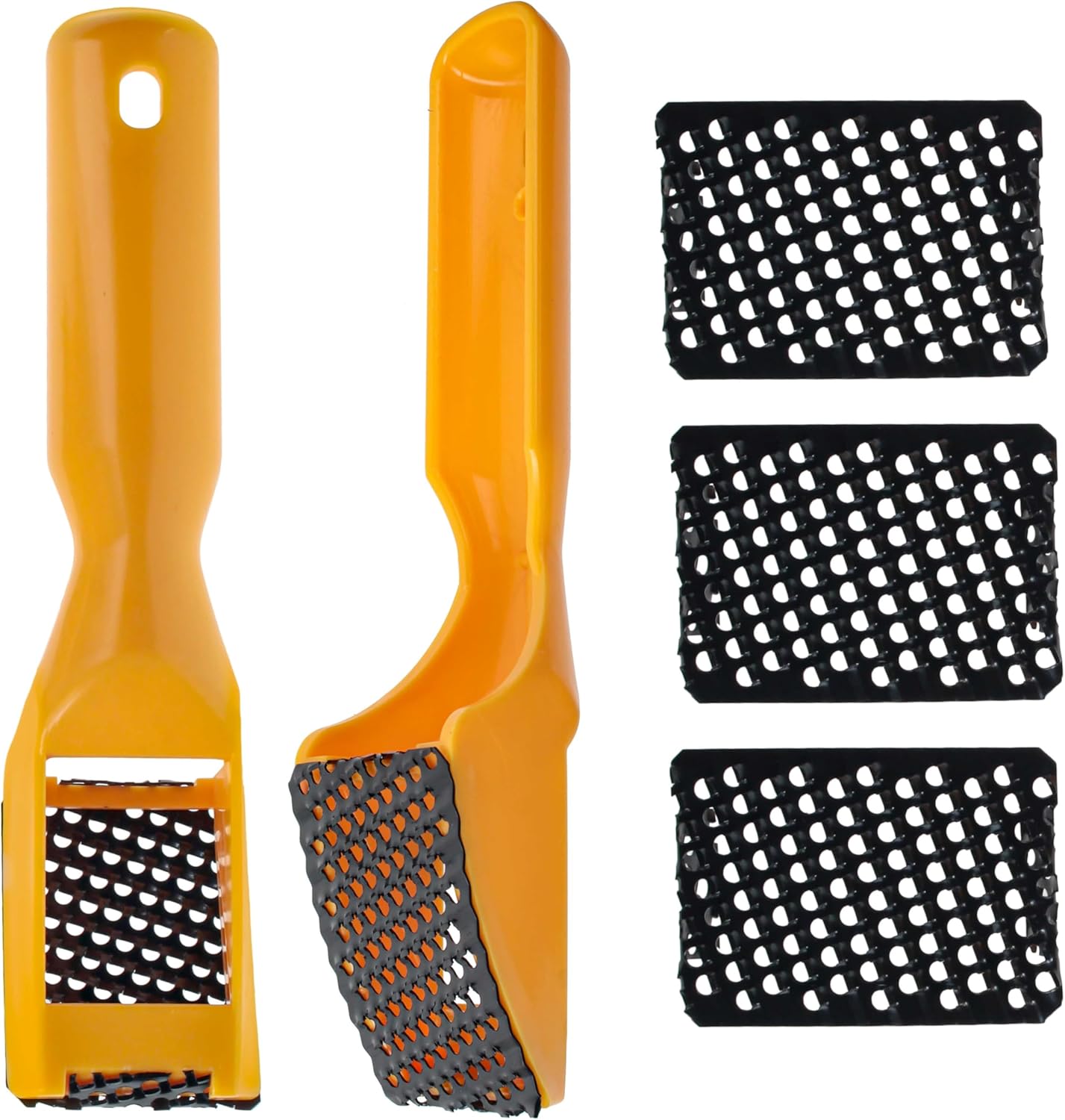
Finding the right auto body cheese grater tool helps professional technicians, metalworkers, and dedicated woodworkers shape body filler, wood, and soft metals smoothly. These specialized hand tools feature unique rasp-cut steel blades equipped with hundreds of tiny teeth designed to shave down material efficiently without clogging easily during intensive surface shaping tasks across multiple industries.
Whether you require full-length ten-inch holders featuring adjustable handles or bulk replacement blade packs for restricted workspaces, choosing the correct configuration improves overall surface preparation. Understanding blade styles, cutting widths, and handle positions ensures you select the optimal setup for automotive body repair, woodworking, drywall smoothing, and various professional fabrication requirements.
As an Amazon Associate, StacyLaughs earns from qualifying purchases.
Buying guide
Choosing Blade Lengths
Selecting the correct blade length depends heavily on your specific project dimensions and workspace geometry. Ten-inch shavers offer broad coverage for leveling large body filler panels, wide wood surfaces, and extensive drywall sections quickly. These larger tools maintain momentum across expansive areas, reducing the total number of passes required to achieve a flat baseline during early rough shaping phases.
Conversely, compact two-and-a-half-inch holders excel in tight corners, narrow channels, and intricate automotive crevices where larger frames cannot physically reach. Matching blade size to your workspace geometry ensures efficient material removal without unnecessary hand fatigue, awkward tool tilting, or accidental surface gouging on delicate surrounding components during detailed fabrication.
Evaluating Flat Versus Curved Profiles
Blade profiles dictate how effectively a tool conforms to different surface contours during active shaping work. Flat blades provide maximum stability when leveling broad, even planes on automotive body filler panels, tabletops, or drywall joints. Their rigid linear contact edge prevents unintended dips, ensuring a uniform flat foundation before final finishing stages begin across various hard substrates.
Half-round convex blades feature a curved geometry specifically designed to shape rounded car fenders, coves, and cylindrical wood items smoothly. Choosing the appropriate profile eliminates uneven ridges, prevents gouging, and minimizes subsequent sanding time across complex contoured projects in busy professional automotive or woodworking shops today.
Understanding Handle Design and Adjustments
Ergonomic handles significantly impact user comfort and control during repetitive scraping and planing operations. Adjustable three-position handles allow operators to modify the tool configuration for specialized file and plane tasks. This adaptability helps maintain optimal wrist alignment when transitioning between horizontal pushing and vertical pulling strokes across various demanding work surfaces daily.
A comfortable grip reduces hand fatigue during long hours of automotive body repair or furniture making. Inspecting how a holder securely attaches to the blade ensures safe operation under heavy manual pressure, preventing accidental slippage when tackling stubborn spots of hardened filler or dense wood materials.
Material Composition and Durability
Tool durability relies heavily on the quality of metal used in both the razor teeth and the holding frames. Alloy steel and stainless steel options resist bending, twisting, and premature wear during rigorous material removal tasks. These resilient materials withstand the abrasive nature of auto body fillers and fiberglass without losing structural integrity over extended periods.
Open-port rasp-cut teeth maintain their cutting edge effectively and resist clogging with plastic filler, plaster, or wood shavings. Selecting robust metal components guarantees long-term reliability in demanding automotive, drywall, and industrial shop environments where tools face constant heavy-duty use every single working day.
Stocking Replacement Blades
Having spare blades on hand prevents workflow interruptions when tiny rasp teeth eventually dull from continuous abrasive use on tough materials. Purchasing multi-packs of flat or half-round blades ensures you are always prepared for large-scale auto body shaping and woodworking projects without unexpected project halts or waiting for replacement shipments to arrive.
Replacement blades attach securely to compatible file holders, making blade swaps quick and efficient in busy professional shop environments. Keeping spares organized avoids project delays and maintains consistent cutting performance across every automotive repair, furniture making, or drywall smoothing job you undertake throughout the busy week.
Applications Across Multiple Industries
Surform shaver tools serve a wide variety of trades far beyond traditional automotive body and paint repair shops today. Woodworkers rely upon them for shaping curved furniture components, while drywallers utilize them for smoothing plaster edges and drywall seams efficiently during construction tasks. Their adaptable nature makes them essential workshop equipment.
Metalworkers, crafters, and fiberglass technicians also benefit significantly from the rapid material removal provided by open-port rasp-cut teeth. Choosing a versatile tool setup accommodates diverse project demands across multiple professional fields, ensuring adaptability whether shaping soft aluminum, plastics, laminates, or vinyl surfaces during daily shop operations.
Frequently asked questions
What is an auto body cheese grater used for?
An auto body cheese grater, formally known as a surform file or shaver, is used primarily to shape, form, and smooth automotive body filler such as Bondo before painting. The tool features a steel blade with hundreds of tiny rasp-cut teeth that shave away excess material quickly without loading up too fast. Beyond automotive repair, these versatile hand tools are commonly employed in woodworking for shaping furniture, smoothing drywall joints, trimming fiberglass, and working with soft metals, plastics, or vinyl.
How do you replace blades on a surform shaver holder?
Replacing blades on a surform shaver holder is a straightforward process that typically involves releasing the locking mechanism or tension lever on the handle frame. Once released, the old blade slides out of the mounting slots. You then align the new flat or half-round replacement blade with the holder tabs and secure the locking mechanism firmly. Always exercise extreme caution when handling these sharp rasp blades, as the hundreds of tiny open-port teeth can easily cause accidental cuts if mishandled during the swap.
Can you use surform shaver blades without a holder handle?
Surform shaver blades can technically be used with just your bare hands, but manufacturers advise extreme caution if you choose this method. The thin steel blades feature hundreds of sharp rasp-cut teeth designed to grab material aggressively. Operating without a handle removes the physical barrier between your fingers and the cutting surface, increasing the risk of injury. For safer and more efficient material removal, it is always recommended to mount these blades into a compatible file holder or handle frame during prolonged tasks.
What is the difference between flat and half-round surform blades?
Flat surform blades feature a straight cutting profile designed specifically for leveling broad, even planes on automotive body filler, flat wood panels, and drywall joints. Their rigid linear geometry provides stability and prevents accidental dips. In contrast, half-round convex blades feature a curved contour that allows technicians to shape rounded car fenders, coves, and cylindrical wood items smoothly. Choosing between these two blade styles depends entirely on whether your current project surface requires a flat foundation or contour shaping.
How do you prevent surform blades from clogging during use?
Surform blades utilize an open-port rasp-cut tooth design that inherently helps prevent material buildup by allowing shaved particles to pass through the blade openings rather than packing tightly between the teeth. To maintain optimal performance when working with sticky body fillers, soft plastics, or damp wood, periodically tap the back of the holder against a hard surface to dislodge debris. Keeping the teeth clean ensures consistent material removal and extends the overall working lifespan of the blade.