Appliances · Buying Guide
Best Blue Olive Oil Dispenser Options for Your Kitchen Counter
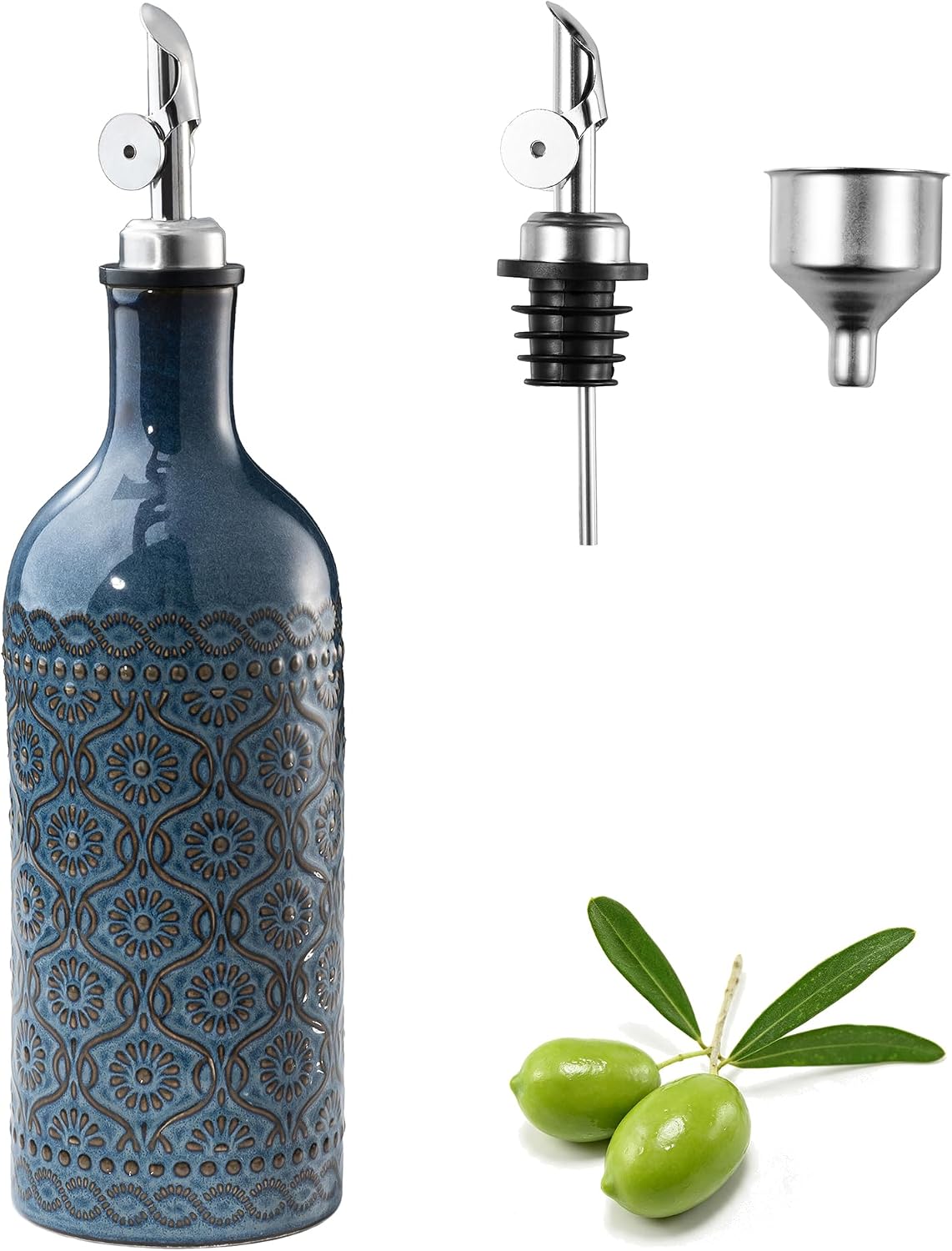
Choosing a blue olive oil dispenser brings a vibrant coastal or farmhouse touch to your kitchen counter while keeping cooking oils organized. These containers combine functional pouring spouts with charming blue hues, ranging from sleek glass designs to durable ceramic bottles that elevate everyday food preparation.
Finding the right dispenser depends on your counter space, preferred material, and cleaning routine. Whether you want a multi-pack set for oils and vinegars or a single statement piece with a handcrafted floral pattern, exploring the available options helps you select a functional tabletop addition.
As an Amazon Associate, StacyLaughs earns from qualifying purchases.
Buying guide
Material Selection (Glass vs. Ceramic)
Choosing between glass and ceramic dispensers depends largely on your personal kitchen aesthetic, handling preferences, and everyday visibility requirements. Transparent or colored glass models let you monitor remaining oil levels instantly without lifting lids, while opaque ceramic options provide complete shielding to block damaging environmental light completely from reaching your delicate cooking oils.
Both materials offer sturdy durability for daily cooking routines, but they handle kitchen storage environments differently. High-grade borosilicate glass withstands kitchen heat exceptionally well and resists corrosion over time, whereas thick glazed ceramics add a traditional farmhouse or rustic charm to your dining table setup while remaining completely impermeable against liquid seepage.
Capacity and Counter Footprint
Finding the right bottle capacity ensures you balance refill frequency with available counter space in your active kitchen environment. Smaller 17-ounce containers fit comfortably in tight preparation areas, but busy households might benefit from slightly larger designs to reduce how often you need to replenish the cooking oil during heavy meal preparation sessions.
Consider your vertical cabinet clearance as well, because taller dispensers exceeding ten inches in height may not fit easily on standard lower shelves or inside enclosed cupboards. Measuring your available countertop width helps prevent frustrating overcrowding, especially if you plan to use dual-bottle stainless steel wire racks or decorative multi-piece cruet trays.
Spout Mechanisms and Drip Control
Pour spouts dictate how accurately you can dispense cooking oil over fresh garden salads, hot cooking pans, and dinner table serving dishes. Gravity-controlled stainless steel nozzles open automatically when tilted and seal shut upright, minimizing unwanted exposure to ambient air and airborne dust between regular kitchen cooking uses.
Modern auto-flip designs provide similar hands-free convenience by preventing messy drips down the side of the container during busy meal prep sessions. Always review manufacturer care advice for your specific spout type, because certain polished metallic finishes require gentle hand washing to maintain their lustrous appearance over years of daily kitchen use.
Light Protection and Oil Freshness
Cooking oils degrade rapidly when exposed to direct sunlight and intense kitchen heat sources near active cooking stoves. Choosing an opaque ceramic bottle or a specially colored glass dispenser helps filter out harmful ultraviolet rays to preserve the natural flavor profile of extra virgin olive oil over extended storage periods.
Proper light protection significantly extends the practical shelf life of your favorite culinary oils, preventing them from turning rancid prematurely in brightly lit kitchen rooms. Carefully evaluating where you store your dispenser helps determine whether completely opaque materials are truly essential for maintaining optimal oil quality during your busy daily cooking routine.
Cleaning and Maintenance Requirements
Regularly keeping your oil dispenser clean ensures smooth pouring performance and prevents sticky oil buildup around the neck and spout area. Many ceramic and glass models feature dishwasher-safe bodies that simplify post-cooking cleanup routines for busy home chefs who want to save time after preparing large family meals every single evening.
However, delicate metallic spouts often require gentle hand washing separately to protect their specialized finishes and secure nozzle seals during everyday kitchen use. Always follow manufacturer cleaning guidelines regarding removable components and whether acidic liquids like vinegar are compatible with your chosen pourer assembly to prevent premature hardware wear.
Aesthetic Matching and Decor Styles
An attractive oil dispenser doubles as a charming decorative accent piece when left out on your kitchen counter or dining table setup. Rich navy blue spray finishes and Mediterranean-inspired hand-painted floral patterns complement rustic, boho, or modern farmhouse kitchen themes effortlessly while adding a vibrant pop of color to the room.
Carefully selecting a design that matches your existing tableware creates a cohesive visual look during family dinners and formal holiday gatherings. When empty, attractive ceramic cruets can even transition seamlessly into small decorative flower vases around the home for added multi-purpose versatility across your busy everyday indoor home kitchen living spaces.
Frequently asked questions
Can I put my blue olive oil dispenser in the dishwasher?
Cleaning compatibility varies depending on the specific model and materials used in its construction. Several ceramic and glass dispensers offer dishwasher-safe bodies that simplify post-cooking cleanup routines. However, many manufacturers explicitly recommend hand washing the removable pour spouts separately to protect polished metallic finishes, decorative coatings, and secure seals. Always review the specific product care instructions provided by the manufacturer before running any cruet or nozzle through an automatic dishwasher cycle to prevent accidental damage.
Are ceramic oil dispensers better at preserving olive oil than glass?
Ceramic oil dispensers provide complete opacity, which blocks all ambient light and helps prevent light-induced oxidation that can make cooking oils turn rancid over time. Glass bottles, especially those finished with protective navy blue sprays or colored coatings, also help filter out strong ultraviolet light compared to clear glass. While both materials protect your oils effectively when stored properly away from direct heat sources, opaque ceramics offer a slight edge in absolute light blockage for long-term freshness.
What should I consider regarding the capacity of an oil dispenser?
Selecting the right bottle capacity involves balancing your cooking habits with available kitchen counter space. Containers holding around 17 to 18 ounces provide a compact footprint that fits comfortably in tight areas while holding enough oil for regular daily meals without constant refilling. Larger 530 ml capacities reduce how often you need to replenish your stock, but they may require more lateral counter room or taller vertical cabinet clearance for convenient storage between cooking sessions.
Can I use vinegar in any blue oil dispenser?
While many kitchen dispensers accommodate both cooking oils and vinegars interchangeably, certain models feature specific material guidelines. For instance, manufacturer guidance for specific ceramic gold-spout dispensers advises against using acidic vinegar to protect the integrity of the metallic nozzle finish. Always check the included product guidelines before pairing vinegar with specialized spouts, or opt for a dedicated oil and vinegar set designed specifically to handle acidic condiments without compromising the pourer mechanism.
How do gravity-controlled spouts work on oil bottles?
Gravity-controlled pour spouts are engineered with a clever internal mechanism that opens automatically when you tilt the bottle downward to dispense oil over your food. As you return the cruet to an upright position, the weighted stopper or flap seals closed on its own. This automatic sealing action minimizes exposure to kitchen air, dust, and insects between cooking tasks, helping maintain a cleaner bottle neck while delivering a smooth, controlled drizzle during meal preparation.