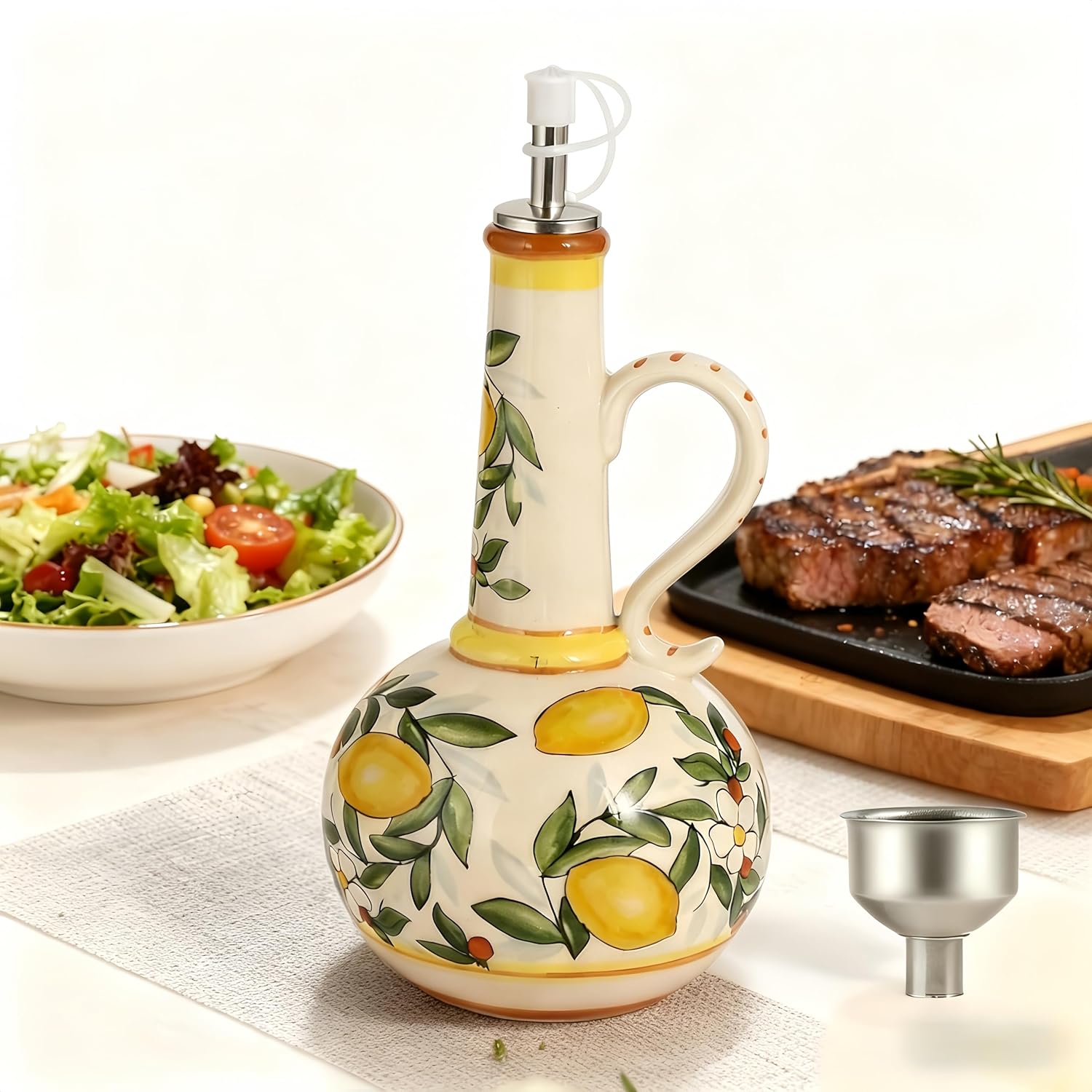
Appliances · Buying Guide
Best Ceramic Italian Olive Oil Dispenser for Kitchen Counters
Choosing a ceramic italian olive oil dispenser brings both practical function and traditional aesthetic charm to everyday cooking spaces. These containers protect cooking oils from harmful light exposure, helping to preserve flavor and freshness over time. Ceramic construction provides a sturdy alternative to clear glass, preventing light from degrading delicate culinary oils during extended storage on busy kitchen countertops.
Selecting the right bottle involves evaluating capacity, pouring mechanisms, and physical dimensions to match individual household cooking habits. Options range from hand-painted imported vessels to large-capacity stoneware containers equipped with stainless steel spouts. Understanding these features ensures the chosen dispenser integrates smoothly into daily kitchen routines while remaining easy to clean, maintain, and handle during meal preparation.
As an Amazon Associate, StacyLaughs earns from qualifying purchases.
Buying guide
Material Composition and Glaze Quality
Selecting a ceramic italian olive oil dispenser starts with understanding material composition and glaze quality. Stoneware and earthenware variants use dense clay bodies combined with interior and exterior glazes. An impermeable glaze prevents oil from seeping through porous ceramic walls, protecting kitchen surfaces from stains. Furthermore, opaque ceramic materials block ultraviolet and ambient light exposure, which normally accelerates oil degradation and rancidity.
Buyers should examine whether the glaze covers internal channels completely. Smooth glazed interiors also resist stubborn staining and lingering odors from vinegars or flavored oils. This ensures that switching between different condiments leaves no residual tastes. Premium ceramic construction combines lasting structural durability with reliable protection for sensitive cooking oils over extended periods.
Spout Mechanisms and Pour Control
The pouring spout dictates how precisely liquid flows from a ceramic italian olive oil dispenser during cooking tasks. Stainless steel spouts with rubber or silicone stoppers are common across many artisan and commercial models. Gravity-operated flip-top lids open automatically when tilted and close when upright, preventing dust accumulation. These mechanisms facilitate steady, controlled drizzles over salads and hot pans without creating messy drips.
Detachable spouts simplify cleaning routines by allowing users to wash metal tubes separately from heavy ceramic bases. Some designs incorporate self-closing covers that reduce air exposure between uses. Shoppers must evaluate whether gravity lids or manual caps best match their cooking style. Reliable pour control minimizes countertop cleanups and ensures accurate seasoning during meal preparation.
Capacity and Physical Dimensions
Evaluating capacity ensures a ceramic italian olive oil dispenser meets daily household cooking demands without constant refilling. Options range from compact eighteen-ounce models to larger twenty-three-ounce containers designed for busy kitchens. However, larger fluid capacity directly increases total bottle height and weight, which impacts physical handling comfort. Matching container size to available storage space prevents daily inconveniences.
Shoppers must measure vertical countertop clearance beneath overhead cabinets before purchasing taller dispensers. While slim profiles save horizontal surface area, heights exceeding ten inches may require repositioning shelves. Balancing volume requirements with physical dimensions guarantees that the chosen oil cruet fits comfortably into existing kitchen layouts while remaining easy to lift and tilt.
Cleaning and Maintenance Requirements
Maintenance routines vary significantly among different ceramic italian olive oil dispenser models depending on their manufacturing specifications. Many ceramic bodies support dishwasher cleaning, while artisan hand-painted variants strictly require manual hand washing to protect delicate decorative artwork. Users should review manufacturer care guidelines before purchasing to align with their preferred kitchen cleanup habits and appliance usage.
Removable stainless steel spouts generally require separate manual rinsing to clear residual oil from internal valves. Regular cleaning prevents sticky buildup around the stopper base and maintains smooth pouring performance over time. Selecting a model with compatible maintenance requirements ensures long-term hygiene and preserves the exterior appearance of decorative kitchen containers without excessive effort.
Handle Design and Grip Ergonomics
Handle integration significantly influences the daily usability of a ceramic italian olive oil dispenser during active cooking sessions. Models featuring integrated loop handles allow cooks to maintain a firm grip when lifting heavy, oil-filled containers. Conversely, handleless designs rely on embossed surface textures or tapered body shapes to prevent slipping when hands are wet or greasy.
Evaluating grip ergonomics depends heavily on individual hand size and the total weight of the filled bottle. Wider bases combined with sturdy handles improve upright stability on crowded dining tables. Shoppers should assess whether an integrated handle or a textured exterior provides the most secure and comfortable pouring experience for their household cooking routines.
Aesthetic Style and Kitchen Integration
Aesthetic appeal remains a primary reason homeowners choose a ceramic italian olive oil dispenser over plain glass or plastic bottles. Hand-painted floral patterns, Mediterranean motifs, and embossed relief designs transform functional oil containers into striking kitchen decor pieces. These artistic elements complement farmhouse, rustic, and classic interior themes while adding charm to open countertops and dining tables.
Selecting a decorative style involves matching the bottle artwork with existing tableware and kitchen color palettes. Artisanal pieces featuring traditional regional patterns offer unique visual character for hosting guests or daily display. Integrating an attractive oil cruet elevates tabletop presentation while keeping essential cooking condiments conveniently accessible during meal preparation and serving.
Frequently asked questions
Does a ceramic italian olive oil dispenser keep oil fresh?
Yes, ceramic materials protect cooking oils by blocking light exposure, which is a primary factor in oil degradation and rancidity. Opaque pottery walls shield the contents from ultraviolet rays far better than clear glass containers. Additionally, spouts equipped with self-closing covers or flip-top lids reduce air exposure. This combination helps maintain the natural flavor, aroma, and nutritional quality of olive oil over extended storage periods on your kitchen counter.
Can I put my ceramic olive oil dispenser in the dishwasher?
Dishwasher compatibility depends entirely on the specific manufacturing guidelines for each model. Some machine-made ceramic dispensers feature dishwasher-safe construction for convenient cleanup. However, many hand-painted artisan containers explicitly require manual hand washing to protect delicate exterior artwork and glazes. You should always review the manufacturer care instructions provided with your specific product before placing any ceramic container or stainless steel spout into an automated dishwasher cycle.
How do I prevent leaks from the pour spout?
Preventing leaks starts with ensuring the rubber or silicone stopper is firmly inserted into the bottle opening. For models with self-closing or gravity mechanisms, proper alignment during insertion is essential to keep the stopper secure during tilting. Additionally, wiping the rim of the bottle after refilling prevents residual oil from interfering with the seal. Regularly cleaning the removable stainless steel spout also prevents sticky buildup that can affect pouring precision.
What is the advantage of choosing ceramic over glass?
Ceramic containers provide complete opacity, blocking all light exposure to safeguard sensitive cooking oils from oxidation. While clear glass lets light pass through and degrade oil quality, dense ceramic walls offer total light protection. Furthermore, ceramic dispensers often feature decorative hand-painted patterns, embossed textures, and traditional artisan styling that enhance kitchen decor. They also provide durable structures that resist accidental knocks while adding a classic Mediterranean aesthetic to countertops.
How do I choose the right capacity for my needs?
Choosing the right capacity depends on your household cooking frequency and available countertop space. Smaller eighteen-ounce options offer compact profiles that fit easily beneath low overhead cabinets and suit everyday cooking needs. Larger twenty-three-ounce containers accommodate higher volumes of oil or vinegar, reducing the frequency of refilling tasks. Consider how often you use cooking oil and measure your available vertical clearance before selecting a specific bottle size.