Appliances · Buying Guide
Best Ceramic Olive Oil Dispenser Options for Daily Kitchen Countertops
Outfitting a kitchen workspace with a ceramic olive oil dispenser brings a reliable blend of classic style and practical utility to daily cooking routines. These dedicated containers utilize opaque ceramic, porcelain, and stoneware materials specifically designed to help shield cooking oils, vinegars, and liquid condiments from direct light exposure. Protecting these liquids helps preserve their overall flavor profiles during everyday meal preparation.
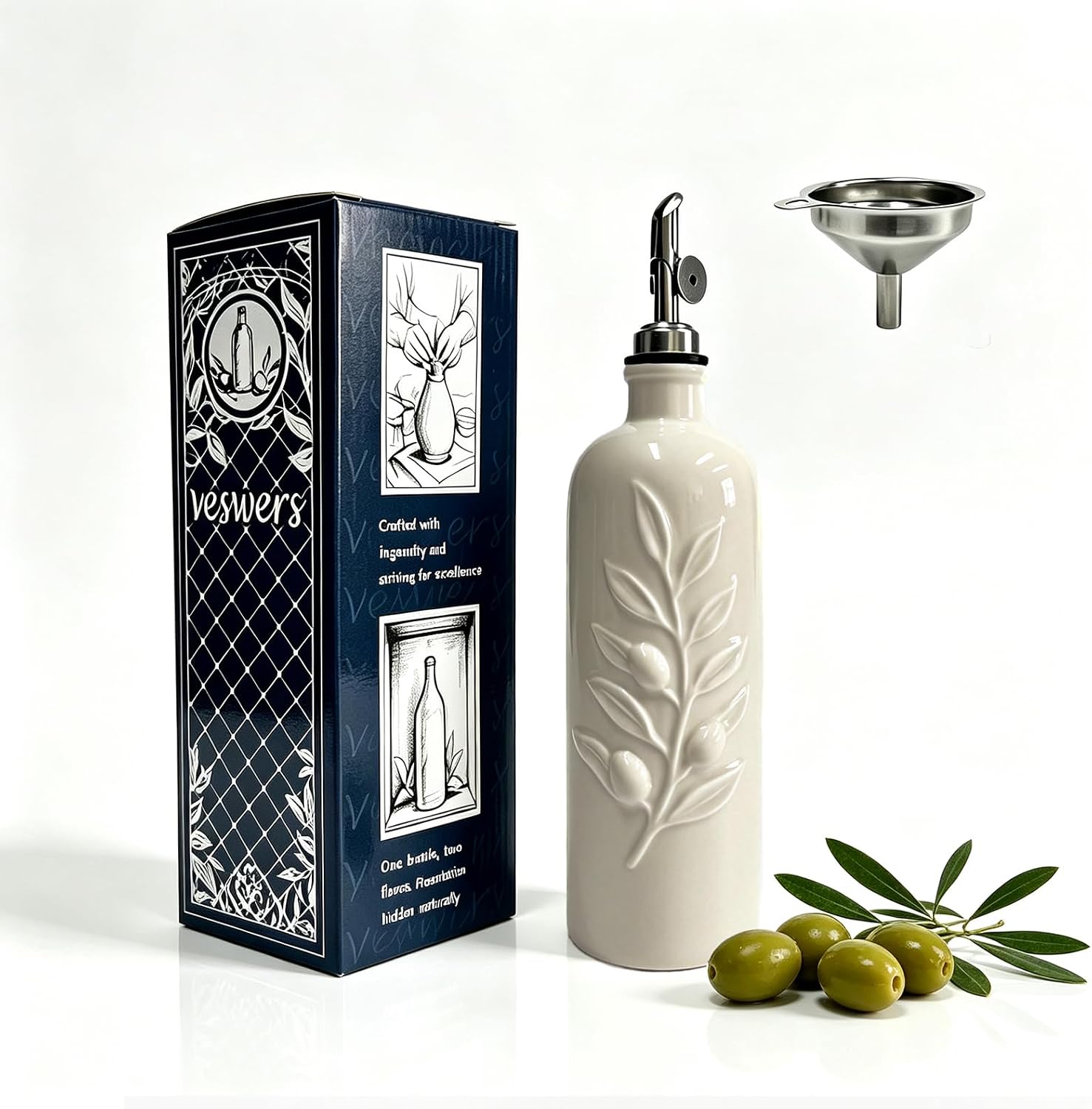
Selecting the right model involves closely evaluating overall fluid capacity, spout mechanisms, handle configurations, and routine cleaning requirements. Available choices range from handled carafes featuring hand-painted floral patterns to slim relief-patterned bottles equipped with automatic gravity-controlled stainless steel spouts designed for smooth, controlled, and mess-free dispensing right on the kitchen counter or dining table.
As an Amazon Associate, StacyLaughs earns from qualifying purchases.
Buying guide
Material Composition and Light Protection
Ceramic and porcelain material compositions serve as foundational choices for kitchen cruets because they naturally block ultraviolet rays and direct ambient light. Unlike clear glass containers, opaque ceramic bodies prevent light-induced oxidation from altering the taste, quality, and chemical composition of delicate extra virgin olive oils or flavored vinegars over extended storage periods on your countertop.
Choosing a model with an impermeable glazed interior prevents oil seepage through the porous clay body during daily storage. High-fired ceramics maintain structural stability and resist moisture absorption, ensuring long-term durability. Verifying these material traits helps secure your liquid condiments against premature spoilage while maintaining a pristine appearance across multiple years of regular kitchen meal preparation.
Spout Mechanisms and Drip Control
The pouring spout plays a critical role in daily kitchen efficiency and cleanliness. Modern ceramic dispensers frequently utilize stainless steel pourers equipped with gravity-based mechanisms that automatically open when tilted and seal tightly when returned to an upright position. This design eliminates manual cap handling while helping prevent dust entry, accidental spills, and sticky residue buildup on the exterior bottle surface.
Detachable metal spouts also simplify routine cleaning by allowing quick removal for washing. When evaluating options, look for spouts featuring secure sealing rings that create a snug fit inside the ceramic neck to prevent leaks during sudden tilting movements. A well-designed spout transforms everyday oil drizzling into a smooth, controlled, and mess-free experience across various recipes.
Ergonomics and Handle Configurations
Handle configurations significantly impact how comfortably you can manage a full oil cruet during fast-paced cooking tasks. Models featuring integrated side handles provide a secure grip, reducing the risk of accidental drops when your hands are wet or greasy. These handled designs offer traditional aesthetic appeal while accommodating users who prefer holding a distinct structural extension rather than gripping a smooth cylinder.
Conversely, handle-free cylindrical bottles present a streamlined profile that fits effortlessly into tight cabinet spaces or crowded spice racks. Evaluating your personal gripping preferences and available storage area helps determine whether a handled carafe or a sleek handle-free bottle best suits your daily culinary workflows and kitchen layout constraints.
Capacity and Countertop Footprint
Fluid capacity directly dictates how frequently you will need to refill your dispenser from bulk oil containers. Options ranging from 18 to 20 fluid ounces provide an optimal balance between maintaining a generous supply and occupying minimal countertop space. A larger capacity reduces refilling interruptions during heavy cooking sessions, whereas slightly more compact silhouettes conserve valuable surface area in smaller kitchens.
Consider your typical oil consumption rate alongside available storage dimensions before purchasing. Verifying both height and width ensures the container fits comfortably beneath upper cabinets or inside designated pantry shelves without requiring awkward maneuvering or risking accidental tipping during daily meal preparation routines.
Maintenance and Cleaning Requirements
Maintaining hygiene inside an oil dispenser requires understanding its specific cleaning guidelines and material care instructions. Many ceramic cruets feature dishwasher-safe construction, allowing the main body and removable spouts to undergo thorough automated washing. This simplifies the removal of residual oil films and prevents rancidity build-up within the container over months of continuous daily use.
Other models specify hand wash only requirements to protect delicate surface glazes or hand-painted decorative patterns from fading. Reviewing manufacturer care recommendations ensures you select a maintenance routine that matches your household preferences while keeping your kitchen accessories sanitary and visually appealing over time.
Aesthetic Style and Kitchen Integration
Selecting a ceramic oil dispenser also involves coordinating its visual design with your existing kitchen decor and dining table aesthetics. Available options range from embossed relief patterns and honeycomb textures to Mediterranean-inspired hand-painted floral motifs and vintage-style porcelain frames. These decorative finishes allow the container to double as an attractive table accessory during family dinners or outdoor gatherings.
Choosing a design that complements your farmhouse, rustic, or modern kitchen theme enhances overall room cohesiveness. Matching the exterior color and texture to surrounding tableware transforms a purely functional cooking tool into a charming decorative accent that elevates your everyday dining and entertaining experiences effortlessly.
Frequently asked questions
Do ceramic olive oil dispensers protect oil from light degradation?
Yes, ceramic and porcelain dispensers are specifically constructed from opaque materials that effectively block ultraviolet rays and direct light exposure. Unlike transparent glass containers, this opaque barrier prevents light-induced oxidation from degrading the flavor, quality, and chemical integrity of extra virgin olive oils over time. By keeping ambient light away from the stored liquid, ceramic cruets help preserve the freshness and taste profiles of your cooking oils, vinegars, and liquid condiments during everyday kitchen storage.
How do automatic gravity spouts function on these dispensers?
Automatic gravity spouts utilize a weighted internal mechanism or hinged design that opens automatically when the bottle is tilted for pouring and closes seamlessly when returned to a vertical position. This intuitive feature eliminates the need for manual cap removal or replacement during meal preparation. Furthermore, the self-closing action helps prevent dust, insects, and air exposure from entering the container while minimizing exterior drips and sticky residue buildup on the bottle neck and countertop surface.
Are ceramic oil bottles safe to clean in an automatic dishwasher?
Cleaning compatibility varies depending on the specific model and manufacturing process. Many ceramic oil dispensers feature dishwasher-safe construction for both the main body and detachable stainless steel spouts, allowing for convenient automated washing to remove oil residue. However, certain decorative models specify hand wash only requirements to protect delicate hand-painted patterns or specialized exterior glazes from fading. Always review the manufacturer care instructions provided with your specific product before placing items in the dishwasher.
Why is an impermeable glazed interior important for a ceramic cruet?
An impermeable glazed interior prevents cooking oils from seeping into the porous clay structure of the ceramic body. Raw or unglazed ceramic materials can absorb liquids over time, leading to rancidity, unpleasant odors, and structural weakening. High-fired ceramic bottles coated with an interior glaze maintain absolute impermeability, ensuring that your oils remain completely contained and fresh. This protective barrier also makes routine rinsing and washing significantly easier between successive refills of different cooking liquids.
Can I store other liquids besides olive oil in these ceramic dispensers?
These ceramic dispensers are highly versatile and suitable for storing a wide variety of kitchen liquids beyond olive oil. Many users successfully utilize them for balsamic vinegar, cooking wine, soy sauce, infused oils, and sweet coffee syrups. The opaque material properties and tight-fitting spouts help protect these diverse condiments from light and air exposure. However, when switching between strongly flavored liquids like vinegar and oil, thorough washing and drying are recommended to prevent flavor cross-contamination.