Appliances · Buying Guide
Best Cheese Grater and Slicer Options for Quick Kitchen Prep
Preparing ingredients for everyday meals often requires efficient tools to handle blocks of cheese, crisp vegetables, and firm roots without demanding excessive arm strength or complicated setup routines. Selecting the right manual shredder or multi-blade preparation tool depends heavily on your kitchen counter space, the types of food you regularly cook, and how quickly you want cleanup to finish after dinner.
Modern food preparation implements range from hand-crank rotary drums to traditional stainless steel box designs and multi-blade mandoline setups. Each configuration brings specific mechanical advantages to your countertop, allowing home cooks to process large quantities of ingredients while keeping fingers safely away from sharp edges. Reviewing these design differences helps match a specific tool to your daily cooking habits.
As an Amazon Associate, StacyLaughs earns from qualifying purchases.
Buying guide
Selecting the Right Blade Configuration
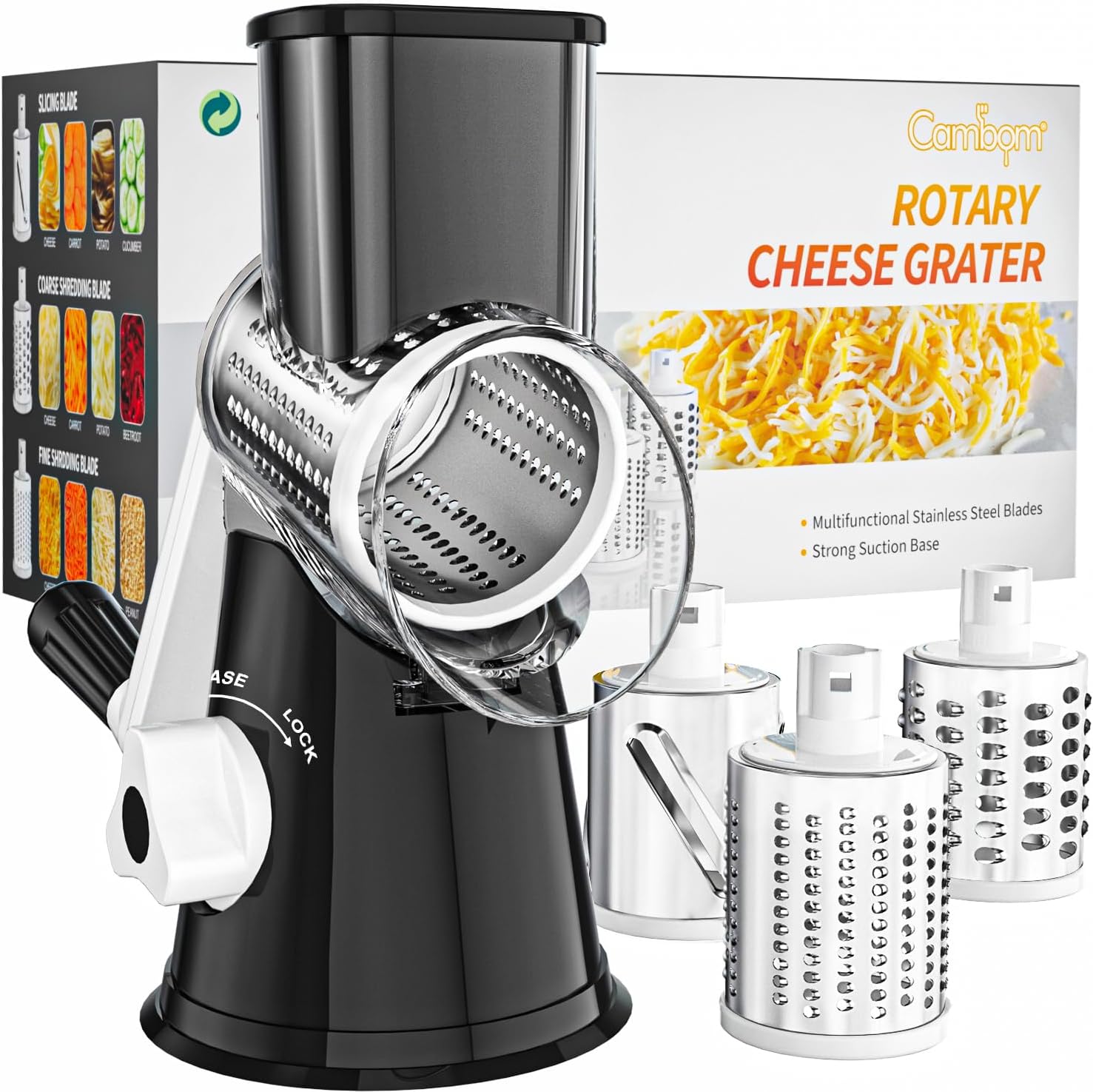
Choosing a manual kitchen preparation tool begins with carefully evaluating the variety of blade attachments required for your daily recipes and cooking habits. Some units feature traditional four-sided stainless steel surfaces for coarse, medium, and fine grating, while mechanical drum models rely on interchangeable cylindrical inserts. Assess whether you primarily need simple cheese shredding or versatile slicing options for cucumbers, root vegetables, and baking ingredients.
Matching your typical menu items to the correct blade selection ensures your kitchen tool remains actively useful rather than sitting unused in a crowded cabinet. Multi-blade systems expand your cooking capabilities by offering specialized textures like wavy cuts, fine parmesan powders, and thick vegetable ribbons without requiring separate standalone gadgets for every single food type.
Understanding Countertop Stability Mechanisms
Physical stability during active food processing remains a core priority when you are shredding firm blocks of cheese or hard root vegetables with manual kitchen tools. Many rotary drum models utilize heavy-duty suction cup bases designed to anchor securely onto smooth horizontal surfaces like polished marble or glass countertops. Verifying your kitchen counter material prevents unexpected sliding during vigorous hand-crank rotation.
Alternatively, traditional box graters and flat mandoline slicers often rely on non-slip rubberized or thermoplastic elastomer base pads to maintain steady friction against wooden or laminate counters. Selecting the appropriate stabilization style depends entirely on your specific kitchen countertop finish, ensuring safe and balanced food preparation without requiring constant manual readjustment or slipping accidents.
Evaluating Safety Features and Finger Protection
Protecting your hands from sharp stainless steel cutting edges is an essential consideration for every home cook when preparing ingredients. Rotary drum graters isolate fingers inside enclosed hopper chambers, utilizing a mechanical food pusher to guide blocks of cheese or vegetables downward toward the active blade safely. This physical configuration keeps skin entirely away from direct contact points during high-speed rotation.
Flat mandolines and traditional box graters often expose cutting edges more directly, requiring specialized accessories such as protective cut-resistant gloves or ergonomic fingerguards to prevent accidental injuries. Reviewing these built-in safety mechanisms helps households with enthusiastic beginner cooks or older family members select a kitchen preparation tool that matches their personal comfort level and safety requirements.
Material Composition and Durability Factors
The long-term durability of a kitchen shredder depends heavily on the grade of materials used throughout its structural construction. High-quality models integrate robust stainless steel blades that resist rust and maintain their sharp cutting edges over extended periods of frequent use. Food-grade, BPA-free ABS plastics provide a lightweight housing structure without ever compromising daily structural integrity during food preparation.
Examining the material specifications ensures that your chosen tool withstands regular exposure to moisture, friction, and acidic foods like tomatoes or citrus juices. Durable metal and robust plastic components also prevent cracking under the physical pressure exerted during manual hand-cranking or heavy downward slicing motions required for dense root vegetables.
Cleanup Routines and Dishwasher Compatibility
Efficient cleanup routines make frequent meal preparation much more enjoyable in busy household environments where time is always limited. Many modern rotary graters and box shredders feature tool-free disassembly, allowing you to separate drums, handles, and plastic frames rapidly for thorough washing under running tap water. Top-rack dishwasher compatibility significantly simplifies regular maintenance after processing sticky cheeses or colorful vegetables.
Checking whether individual components require hand washing or tolerate standard low-temperature dishwasher cycles protects the sharpness of delicate metal blades over time. Choosing a design with minimal internal crevices also prevents food particles from becoming trapped in hard-to-reach corners, saving valuable minutes during post-dinner kitchen cleanup tasks every single evening.
Storage Footprint and Kitchen Cabinet Fit
Countertop and cabinet storage space represents a major deciding factor when adding any new kitchen gadget to your existing culinary collection. Vertical rotary shredders often feature relatively compact bodies that slide easily into standard lower drawers, though their upright height requires checking upper cabinet clearance. Traditional box graters offer slim flat profiles that slip neatly beside baking sheets and cutting boards.
Units that include dedicated blade storage cases help keep multiple cutting discs neatly organized together and prevent accidental finger cuts when rummaging through crowded drawers. Evaluating your available storage space before purchasing ensures your chosen food preparation tool integrates smoothly into your kitchen layout without causing unnecessary clutter on counters or shelves.
Frequently asked questions
Can rotary cheese graters handle hard cheeses like Parmesan?
Yes, many hand-crank rotary graters are specifically engineered to process moderately firm and hard cheeses like cheddar, mozzarella, parmesan, and romano efficiently. The stainless steel drums and rotating handles allow users to generate fine or coarse cheese shreds quickly without applying excessive manual force. However, extremely soft or unaged cheeses may sometimes stick to the interior barrel walls, so selecting the appropriate fine or coarse blade attachment is recommended for optimal performance across different cheese varieties.
How do suction cup bases stay attached to countertops?
Suction cup bases rely on a clean, smooth, non-porous horizontal surface such as polished marble, granite, or glass to create a reliable vacuum seal. Users typically engage a locking lever or twist mechanism at the base to purge air, anchoring the device firmly during active hand-cranking. It is important to wipe both the countertop and suction pad free of debris, dust, or moisture before mounting to ensure maximum stability and prevent unwanted shifting during food preparation.
Are these food preparation tools safe for dishwasher cleaning?
Most featured rotary graters, box graters, and mandoline slicers offer top-rack dishwasher safe components constructed from BPA-free plastics and stainless steel. However, manufacturers frequently recommend using normal or low-temperature cycles and avoiding high-heat drying settings to preserve the sharpness of steel blades over extended periods. For quick daily maintenance, rinsing detachable parts under a stream of warm running water immediately after use is also widely accepted and effective.
What is the difference between a rotary grater and a box grater?
A rotary grater uses an enclosed cylindrical drum and a hand crank to process ingredients while a food pusher keeps fingers safely distanced from the metal teeth. In contrast, a traditional box grater features rigid stainless steel cutting surfaces on multiple exterior sides, requiring manual downward sliding motions where hands pass closer to the open blades. Rotary models generally speed up repetitive shredding tasks, while box graters offer straightforward multi-sided versatility and integrated catch containers.
Do I need to pre-cut vegetables before using a mandoline or rotary slicer?
Pre-cutting requirements depend largely on the feed chute dimensions of your specific shredder or slicer model. Units equipped with oversized drums and wide output chutes allow users to load larger vegetable pieces like potatoes or zucchini without extensive preliminary chopping. Smaller handheld mandolines or compact vertical hoppers may require you to halve or quarter long vegetables so they fit comfortably within the designated safety guard or input opening before slicing begins.