Appliances · Buying Guide
Best cheese grater dollar tree upgrades for everyday kitchen prep
Finding reliable kitchen tools often leads shoppers to look for budget options, prompting many to explore choices similar to a cheese grater dollar tree selection for basic meal preparation tasks. While basic retail options offer quick utility, upgrading to structured mechanical graters or specialized handheld designs can transform how you process blocks of cheese, fresh vegetables, and firm fruits.
Understanding the physical construction, blade configurations, and stabilization methods of different kitchen graters helps you choose a tool that matches your cooking style. Whether you prefer hand crank drum systems with suction bases or classic multi-sided box designs with attached storage containers, reviewing specific attributes ensures you select a practical instrument for your daily culinary routines.
As an Amazon Associate, StacyLaughs earns from qualifying purchases.
Buying guide
Choosing Blade Materials
Selecting the right blade material determines how long your kitchen tool maintains its sharpness and resists rust during regular food preparation tasks. Premium stainless steel grades such as 430 and 304 offer robust performance when processing hard cheeses, dark chocolate, and firm vegetables like carrots or potatoes without bending under pressure. Durable metals ensure clean cuts every single time you cook.
Understanding these material distinctions ensures you invest in a durable instrument that withstands frequent washing cycles without degrading. Quality metal construction prevents dulling over time, providing consistent shredding results for all your favorite homemade recipes.
Evaluating Base Stability Options
Base stability is a critical factor when operating mechanical rotary graters or traditional box models on your kitchen counters. Suction cup bases lock securely onto smooth surfaces like glass, marble, and quartz to prevent slipping while you turn handles or press food downwards. Ensuring your countertop compatibility prevents frustrating movements during fast food processing sessions.
Alternatively, non-slip rubberized rings provide reliable traction for stationary box graters on standard laminate or wood surfaces. Assessing your counter material helps you choose the most secure stabilization method available.
Understanding Mechanism Types
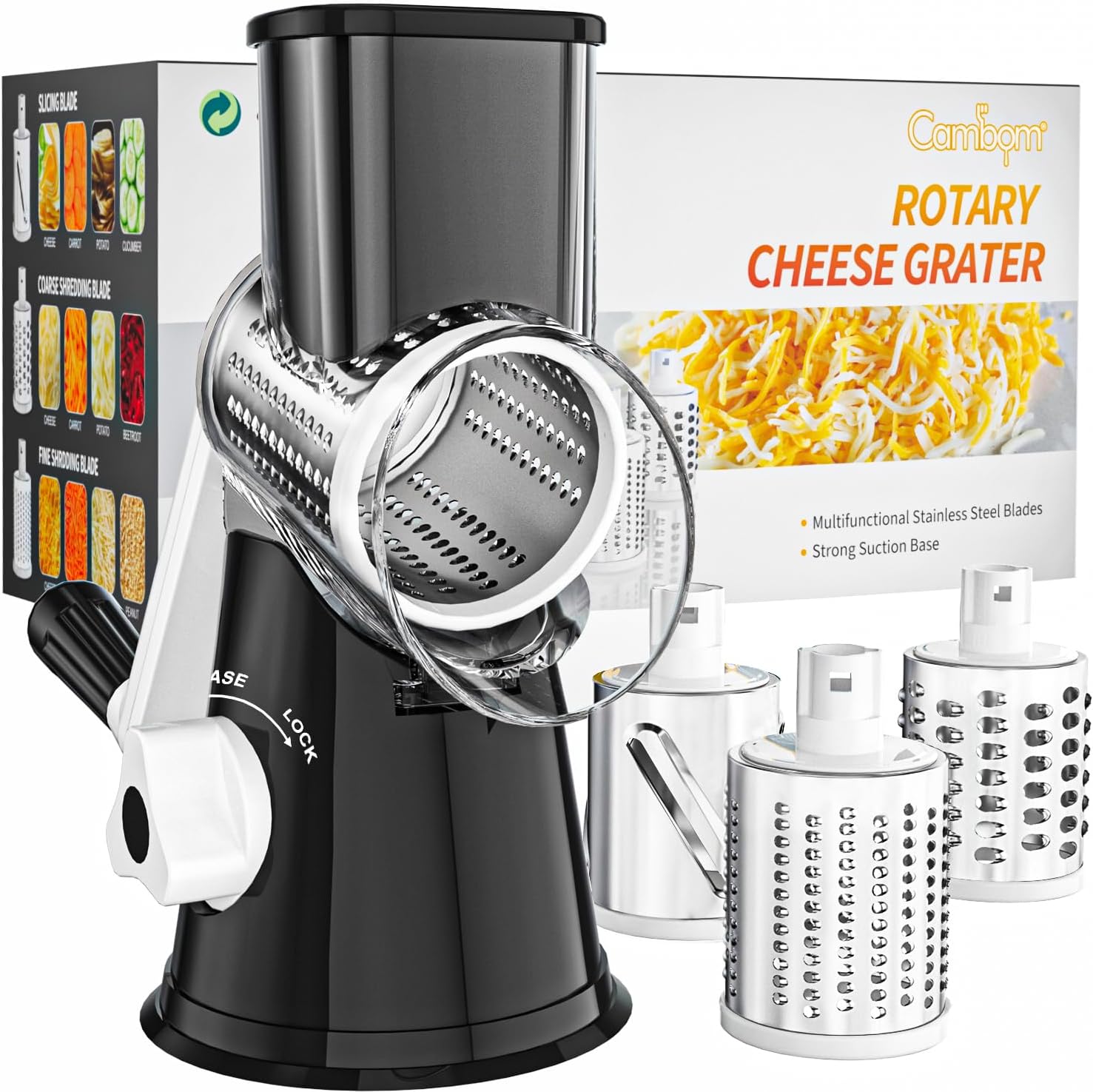
Hand-crank rotary models and traditional multi-sided box designs offer completely different physical experiences during meal preparation. Rotary units utilize hand cranks and rotating drums to process cheese quickly with minimal physical effort, keeping your fingers safely away from sharp cutting edges. They suit cooks seeking speed.
Traditional box graters rely on manual stroke movements across stationary stainless steel panels, giving you direct tactile feedback over every single pass. Choosing between these styles depends on your personal comfort preferences.
Cleaning And Maintenance Requirements
Proper cleaning routines keep your kitchen tools hygienic and extend their functional lifespan through years of daily cooking activities. Many modern grating units feature detachable components that separate quickly without tools, allowing for fast rinsing under running water or convenient placement on top dishwasher racks. Removable drums streamline maintenance.
Following manufacturer guidelines ensures that plastic housings and stainless steel blades remain undamaged by harsh detergents or high heat cycles over extended periods of regular household use.
Storage And Cabinet Fit Considerations
Storage space inside cabinets and drawers influences which kitchen grater fits best in your home environment. Countertop rotary assemblies often feature taller vertical profiles that require specific shelf clearance, whereas multi-drum units frequently offer nesting cone designs that slip easily into shallow drawers alongside other kitchen utensils and tools.
Box graters take up minimal flat footprint area but require careful placement to protect exposed side blades from contacting adjacent items during storage.
Versatility Across Ingredients
Selecting a versatile tool allows you to process a wide variety of ingredients beyond standard cheddar and mozzarella cheese blocks. Multi-blade systems and four-sided box graters successfully handle hard cheeses like parmesan, fresh vegetables like zucchini and cucumbers, nuts, and chocolate shavings for baking projects.
Reviewing included drum options or surface textures ensures your chosen grater supports all the specific culinary tasks required for your favorite recipes and meal planning routines.
Frequently asked questions
Can rotary cheese graters handle hard cheeses like parmesan?
Yes, rotary cheese graters equipped with stainless steel fine drums or coarse blades process hard cheeses like parmesan, romano, and aged cheddar efficiently. The mechanical hand-crank mechanism applies even pressure, turning solid cheese blocks into fluffy shreds or fine powders without straining your hands. This makes them ideal for topping pasta dishes, pizzas, and salads quickly. Always check your specific model's drum options to ensure you select the correct fine or coarse attachment for hard cheese blocks.
Are suction base graters suitable for wooden countertops?
Suction base rotary graters are generally not suitable for wooden or textured countertops because wood grain prevents the suction cup from forming an airtight seal. These powerful bases perform best on smooth, non-porous surfaces such as glass, marble, quartz, and smooth laminate. If your kitchen features wooden countertops, you may need to place a smooth cutting board down first or consider a traditional stationary box grater with a rubberized base ring instead of a suction mechanism.
How do I clean a rotary cheese grater safely?
Cleaning a rotary cheese grater safely involves disassembling the removable parts, such as the handle, food pusher, transparent barrel, and stainless steel drums, according to the manufacturer instructions. Most parts on modern rotary units are top-rack dishwasher safe for easy sanitization. If hand washing, use a brush to clean around the stainless steel blades carefully, keeping your fingers away from sharp cutting edges. Always dry all metal components thoroughly before storing them away.
What is the difference between box graters and rotary graters?
Box graters are stationary tools with multiple flat stainless steel grating surfaces on each side, requiring you to slide food up and down manually while holding an ergonomic handle. Rotary graters use an enclosed rotating drum driven by an external hand crank and a food pusher, which processes ingredients faster while keeping your fingers entirely away from exposed blades. Box graters offer multiple stationary surface textures, whereas rotary models focus on rapid hand-cranked batch processing for cheese and vegetables.
Can I store leftover cheese inside a rotary grater?
Certain specialized rotary grater designs include built-in storage features, such as an interior silicone seal and an adjustable window cover, allowing you to store leftover semi-soft cheese directly inside the unit in the refrigerator. However, most standard countertop rotary graters with open barrels and suction bases are not designed for food storage and require you to transfer freshly grated cheese into separate containers or bags. Always review the product specifications to determine if a specific model includes integrated storage capabilities.