Appliances · Buying Guide
Best Cheese Grater for Hard Cheese Options for Your Kitchen
Finding the right cheese grater for hard cheese transforms how you prepare meals at home, making it simple to add fresh Parmesan, Romano, or Pecorino to your favorite pasta dishes, soups, and green salads. Unlike pre-bagged alternatives, freshly grated cheese melts rapidly and delivers a much stronger, more authentic flavor profile to every recipe you serve.
The market offers numerous manual, rotary, and electric designs tailored specifically to handle dense textures without clogging or slowing you down. Selecting the ideal tool depends heavily on your available countertop space, frequency of use, and whether you prefer a traditional handheld rasp or a stable crank-operated shredder for daily food preparation tasks.
As an Amazon Associate, StacyLaughs earns from qualifying purchases.
Buying guide
Choosing the Right Grating Mechanism
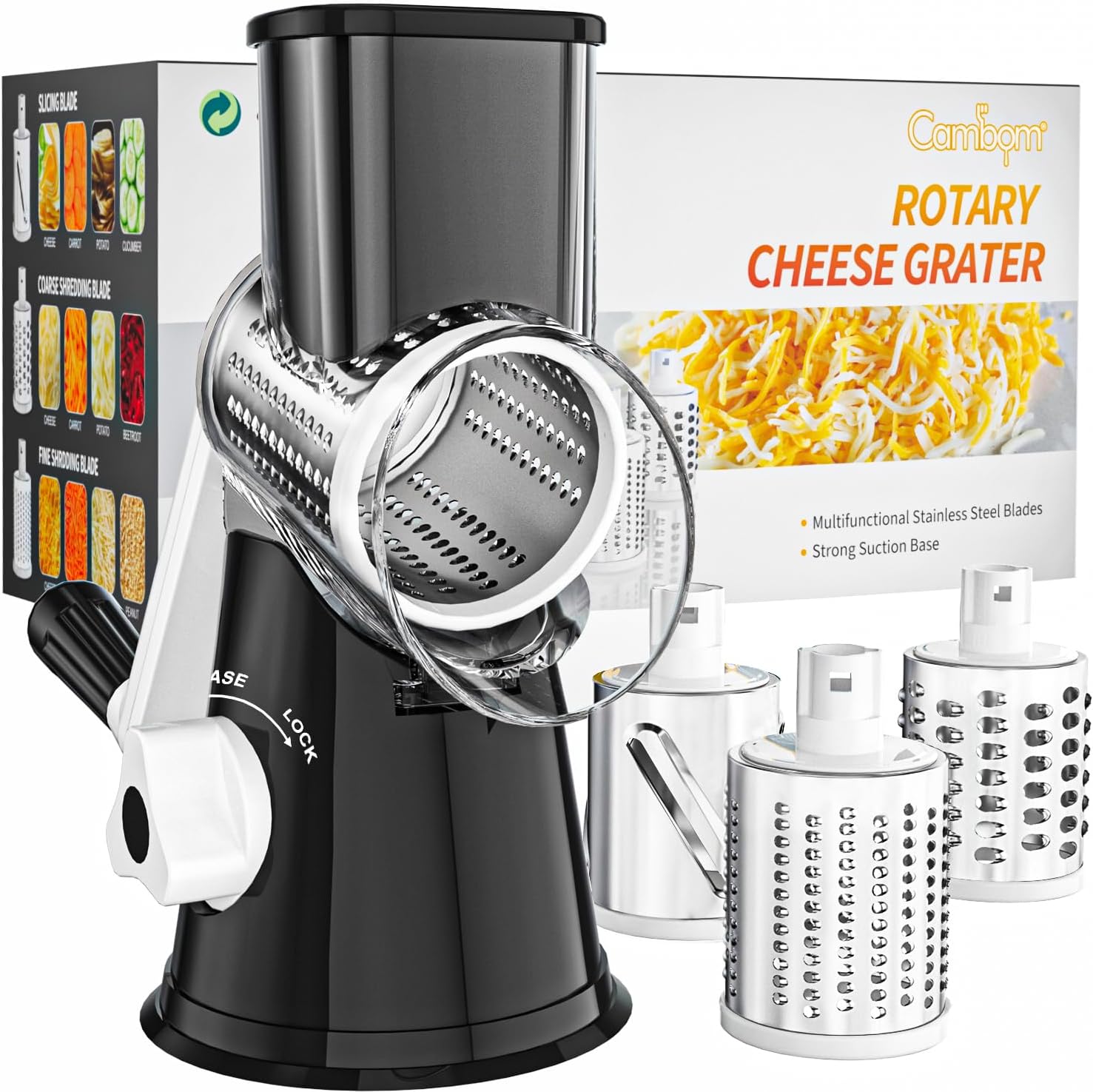
Selecting a cheese grater for hard cheese begins with evaluating how the mechanism operates. Manual rasps provide direct handheld control over dense blocks, allowing you to govern speed and pressure precisely. Rotary crank models and electric motorized units transfer mechanical advantage to rotating drums, drastically reducing the physical effort required to process large quantities of hard cheeses like Parmesan or Romano without straining your wrists.
Consider your typical cooking volume when deciding between simple handheld rasps and complex crank systems. Handheld units store easily in shallow drawers and clean in seconds, whereas rotary devices excel when you need bowls of fluffy cheese for large pasta dinners. Matching the mechanism to your routine ensures long-term satisfaction.
Blade Materials and Durability
The longevity of any grating tool depends heavily on its blade construction. High-grade stainless steel, such as 430 stainless steel or specialized etched surfaces, resists rust and maintains sharpness through countless uses with dense cheeses, nuts, and chocolate. Avoid low-quality metals that dull quickly or bend under pressure when you press hard cheeses against the cutting surface during food preparation tasks.
Etched blades offer razor-sharp cutting edges that shear cheese cleanly rather than tearing it. This distinction creates a lighter, fluffier texture that melts instantly upon contact with hot foods. Investing in robust stainless steel components ensures your kitchen tool remains reliable year after year.
Countertop Stability and Base Design
Operating a rotary cheese grater requires dependable stability to prevent slipping during use. Many tabletop models feature powerful suction cup bases designed to anchor securely onto clean, smooth surfaces like marble, glass, or polished laminate. When the suction mechanism engages properly, you can crank the handle smoothly with one hand while feeding cheese with the other without risking movement.
Buyers must verify their kitchen counter textures before purchasing suction-based units. Textured tile or wood grain surfaces often prevent suction pads from forming a solid seal. Traditional handheld rasps or models with rubber footings offer better alternatives if your kitchen lacks smooth workspace areas.
Storage and Container Features
Storage convenience influences how often you will reach for your cheese grater. Some rotary models integrate transparent barrels or built-in storage compartments equipped with silicone seals. These seals keep leftover cheese fresh inside the refrigerator without requiring extra containers or plastic wrap, streamlining your cleanup routine after preparing evening meals for the family.
In contrast, traditional handheld flat rasps take up minimal drawer space but lack collection containers, requiring you to grate directly over plates or cutting boards. Evaluate your kitchen storage layout to decide whether a compact hanging rasp or a lidded rotary drum unit fits best.
Manual Versus Electric Operation
Deciding between manual crank systems and cordless electric graters depends on personal preference and daily kitchen convenience. Manual models give you absolute tactile feedback and require no batteries or charging stations, making them instantly ready for use at any moment. They also allow complete control over the speed at which hard cheeses pass across the stainless steel blades.
Cordless electric graters eliminate physical cranking entirely, utilizing motorized drums to process hard cheeses with a simple one-touch button. These powered units work exceptionally well for individuals with hand fatigue, though they depend on battery charging and have strict compatibility limits regarding soft cheeses.
Cleaning and Maintenance Requirements
Proper cleanup is essential for maintaining hygiene and preventing food residue buildup on your grating tools. Many modern graters feature dishwasher-safe construction or detachable parts that separate easily for thorough washing under running water. Stainless steel components resist staining, but intricate rotary drum housings may require specialized cleaning brushes to clear stubborn cheese particles from tight crevices.
Following manufacturer maintenance guidelines ensures your grater remains in pristine condition over time. Simple handheld rasps typically rinse clean instantly under a tap, whereas multi-part crank shredders require disassembly into individual pieces. Reviewing cleaning demands before buying helps prevent frustration during daily kitchen cleanup tasks.
Frequently asked questions
Can I use these graters for soft cheeses like cheddar?
Most rotary and electric graters designed for hard cheeses specify limitations regarding softer varieties like cheddar. Soft cheeses tend to gum up mechanical drums, smear along blades, or cause jamming within enclosed barrels. Cordless electric units explicitly warn against soft cheese usage because the high-powered motor and tight tolerances are calibrated specifically for dense, aged cheeses like Parmesan, Romano, and Pecorino. If you frequently need to shred cheddar, standard manual box graters or specialized soft cheese tools remain much safer and more effective choices for your kitchen tasks.
How do I secure a rotary grater to my countertop?
Countertop rotary graters frequently utilize a suction cup base to anchor the unit during hand-cranking operations. To achieve a secure hold, ensure your countertop surface is completely clean, smooth, and non-porous, such as polished marble, glass, or smooth laminate. Press the base firmly downward and engage the locking mechanism or lever if provided by the specific model. Textured tile, wood grain, or uneven surfaces will prevent the suction pad from creating the necessary vacuum seal, causing the machine to slip during food preparation.
Are these cheese graters dishwasher safe?
Cleaning requirements vary depending on the specific model and manufacturer instructions. Many stainless steel rasps and plastic rotary components are constructed as top-rack dishwasher safe, allowing for effortless post-meal cleanup. However, some multi-part crank shredders or motorized electric units feature detachable drums that benefit from hand washing with a brush to remove trapped cheese particles from tight crevices. Always consult the manufacturer product guidelines provided with your specific tool to determine the correct washing method and prevent potential damage to plastic parts or blades.
What is the advantage of etched stainless steel blades?
Etched stainless steel blades offer superior sharpness compared to traditional stamped metal graters. The chemical etching process creates razor-sharp cutting edges that shear hard cheeses into fine fluff rather than crushing or tearing the block. This precise cutting action produces freshly grated cheese that melts almost instantly upon contact with hot foods like pasta dishes or soups. Additionally, etched blades resist clogging, making them much easier to rinse clean under running water immediately after use in your daily cooking routine.
Can I grate items other than cheese with these tools?
These versatile kitchen tools handle a wide variety of dry and firm ingredients beyond cheese. Many models work exceptionally well for grating chocolate blocks into baking flakes, shredding firm nuts like almonds and peanuts, or zesting citrus rinds such as lemons, limes, and oranges without hitting the bitter white pith. Rotary slicer attachments can also process firm vegetables like carrots, cucumbers, and potatoes depending on the specific blade options included with your selected grater model. Always check the manufacturer guidelines for each accessory blade.