Appliances · Buying Guide
Best Cheese Grater With Crank Options for Fast Kitchen Prep
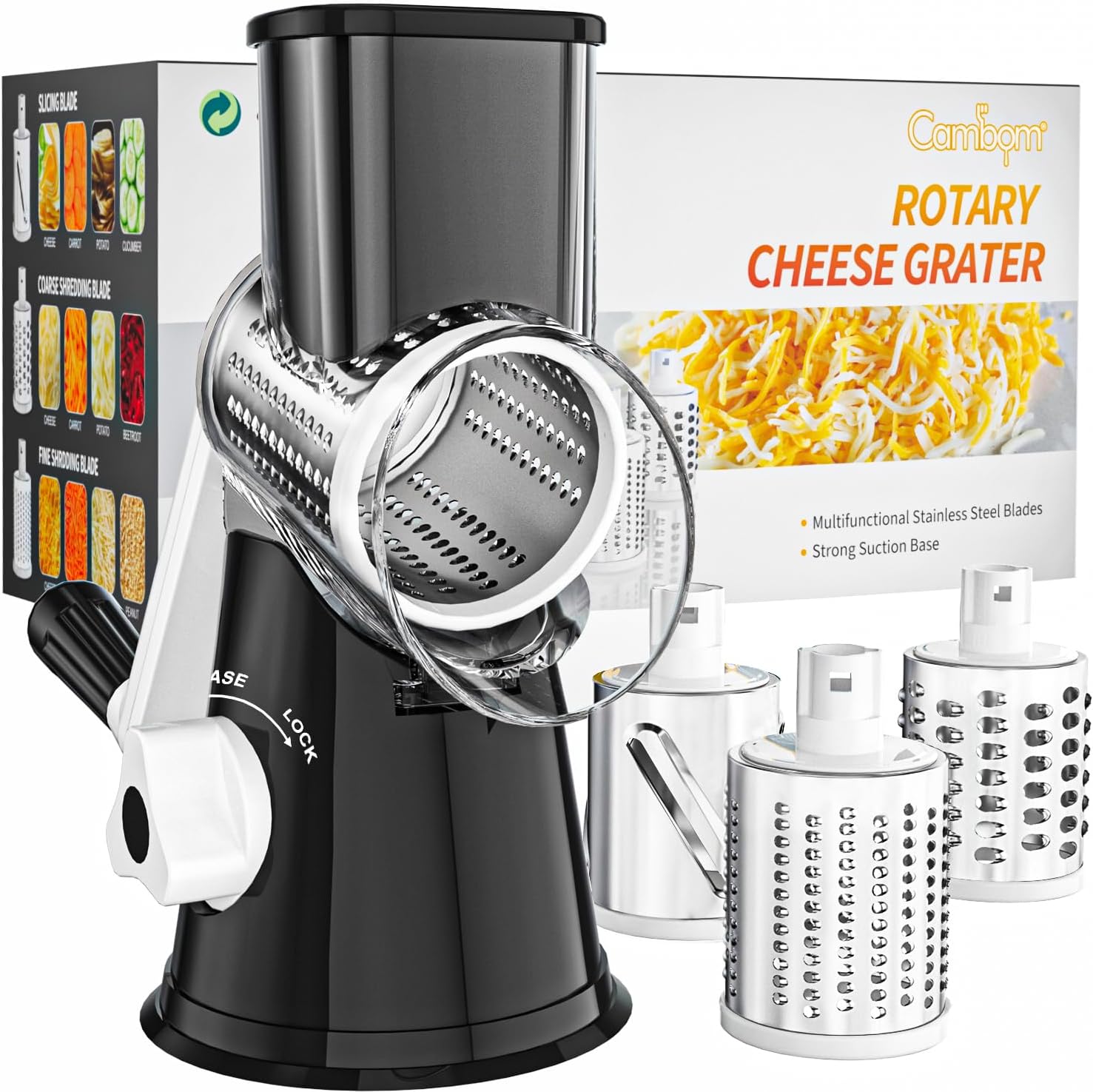
Preparing fresh ingredients for daily meals often requires grating cheese, slicing vegetables, or grinding nuts. Traditional flat box graters expose hands to sharp edges and demand repetitive manual effort. A cheese grater with crank mechanism changes this dynamic completely by employing a rotary handle and interchangeable stainless steel blades to process various foods much faster than standard methods.
These manual kitchen tools rely on reinforced suction bases or secure structural designs to keep units steady on smooth countertops during operation. Selecting the right model involves looking at available blade variations, cleaning methods, and physical dimensions to match your specific cooking style and storage space limitations in the kitchen.
As an Amazon Associate, StacyLaughs earns from qualifying purchases.
Buying guide
Blade Selection and Variety
Choosing a cheese grater with crank requires examining the included blade options carefully before purchase. Many standard manual models offer interchangeable stainless steel drums designed for coarse shredding, fine grating, and flat slicing. Selecting a unit with multiple blade attachments expands your ability to process hard cheeses, fresh vegetables, chocolate, and nuts for a wide variety of household recipes.
Reviewing these available cutting attachments ensures the kitchen tool matches your daily cooking habits and meal preferences. Units featuring extra blade variations like wavy cuts or fine grinding provide greater processing flexibility on the counter. Matching the drum selection to your preferred ingredients prevents frustration during routine food preparation tasks.
Countertop Stability Mechanisms
Countertop stability remains a primary factor when operating any manual rotary shredder under pressure. Models frequently rely on reinforced suction bases designed to lock securely onto smooth, non-porous surfaces such as glass or polished marble. This suction mechanism prevents the appliance from sliding, tilting, or shifting during fast crank rotation tasks, protecting your fingers from exposed edges.
Buyers must carefully evaluate their specific kitchen counter materials before selecting a suction-based grater. Textured, tiled, or wooden countertops often prevent proper suction engagement, reducing overall operational stability significantly during heavy use. Alternatively, handheld models rely on manual grips instead of suction pads, requiring steady two-handed support during active food grating sessions.
Material Composition and Safety
Material safety governs both food contact components and structural durability in modern kitchen tools. Most rotary graters utilize food-grade, BPA-free plastic bodies paired with robust stainless steel blades that resist rust and dulling over extended periods of frequent cooking. This reliable material combination ensures safe food processing for daily family meals without any chemical concerns.
Design safety also involves protecting hands from sharp cutting surfaces during active operation. Enclosed drum barrels and included plastic food pushers keep fingers safely away from spinning blades, unlike traditional flat box graters. Verifying these protective physical features helps ensure confident kitchen use for all household members during busy meal preparation tasks.
Cleaning and Maintenance Needs
Cleaning convenience strongly influences how frequently a kitchen tool gets used for daily cooking tasks in any busy household. Many hand crank grater models feature fully detachable components that rinse clean under running water or fit safely on top dishwasher racks. Removable parts prevent food particles from trapping in hidden corners during messy food preparation sessions.
Following manufacturer maintenance guidelines preserves blade sharpness and extends overall product lifespan across many months of regular use. Avoiding high-heat drying cycles in dishwashers protects stainless steel cutting edges and plastic housings from warping or degradation. Selecting a model with easily accessible parts simplifies post-meal cleanup significantly for busy home cooks.
Storage Footprint Considerations
Storage footprint considerations matter when kitchen cabinet and drawer space is limited in your home kitchen. Rotary graters vary significantly in physical dimensions, with some tall vertical units requiring careful placement or partial disassembly to fit on standard shelves. Compact designs and included storage cases help keep accessory blades organized safely out of the way between uses.
Assessing your available storage areas thoroughly before buying ensures the appliance fits comfortably in your specific kitchen environment. Models with detachable handles and compact bodies reduce spatial requirements inside drawers significantly without sacrificing functionality. Evaluating these physical dimensions prevents storage conflicts with your other kitchen gear.
Feed Chute and Barrel Design
The specific feed chute and wide output barrel design dictates how smoothly various ingredients pass through the mechanism during active kitchen operation. Oversized drums and generous openings allow home cooks to load larger food pieces without extensive pre-cutting, saving valuable preparation time during busy cooking sessions and daily meal planning routines.
Additionally, transparent barrels featuring inclined curvatures help reduce food jamming by guiding shredded items downward efficiently into waiting collection containers placed below the unit. Examining these structural design details ensures a much smoother grating experience when processing sticky cheeses, nuts, or dense vegetables for your favourite family recipes.
Frequently asked questions
How do suction base cheese graters stay stable on countertops?
Suction base rotary cheese graters achieve stability by employing a powerful suction mechanism located at the bottom of the unit. When placed on clean, smooth, and non-porous surfaces such as glass, laminate, or polished marble, turning a locking lever or pressing down activates the suction pad. This creates a tight seal that anchors the appliance firmly to the counter, preventing sliding, shifting, or tilting while you turn the hand crank and push food through the cutting drum.
Can a hand crank cheese grater handle hard cheeses and nuts?
Yes, most hand crank cheese graters with stainless steel blades can process hard cheeses like Parmesan and Romano, as well as nuts such as almonds and peanuts. The durable 430 stainless steel drums are built to tackle firm textures efficiently without dulling quickly. However, users should select the appropriate blade attachment, such as a fine grating or grinding drum, to ensure smooth processing of dense items like nuts and hard cheeses without placing excessive strain on the hand crank handle.
Are these rotary cheese graters safe to put in the dishwasher?
Many rotary cheese graters feature dishwasher-safe components, typically designated as top-rack safe for plastic parts and stainless steel drums. It is important to follow manufacturer maintenance guidelines, which often recommend avoiding high-heat drying cycles to prevent warping plastic housings or dulling cutting edges. Hand washing with warm soapy water and a brush is also widely accepted and provides an effective way to clean food residue from detachable parts without exposing them to intense dishwasher heat.
What is the advantage of a transparent barrel with an inclined curvature?
A transparent barrel with an inclined curvature offers significant benefits during food preparation by helping to reduce food jamming inside the shredder. The angled design naturally guides grated cheese, vegetables, or nuts downward toward the output chute as you turn the crank, preventing ingredients from sticking or accumulating inside the drum. Additionally, the transparent material allows home cooks to monitor the processing progress visually, ensuring ingredients move smoothly through the unit without unexpected blockages during continuous shredding tasks.
How do I choose between a suction base model and a handheld rotary grater?
Choosing between a suction base model and a handheld rotary grater depends primarily on your countertop surfaces and food preparation volume. Suction base units lock onto smooth counters, keeping your hands entirely away from blades and allowing fast, effortless cranking for larger batches of cheese or vegetables. Handheld models lack suction pads, requiring two-handed support, but they often incorporate onboard storage seals and allow direct grating over plates. Consider your counter texture and storage space when selecting your preferred design.