Appliances · Buying Guide
Best Cheese Grater With Hand Crank Options for Quick Kitchen Prep
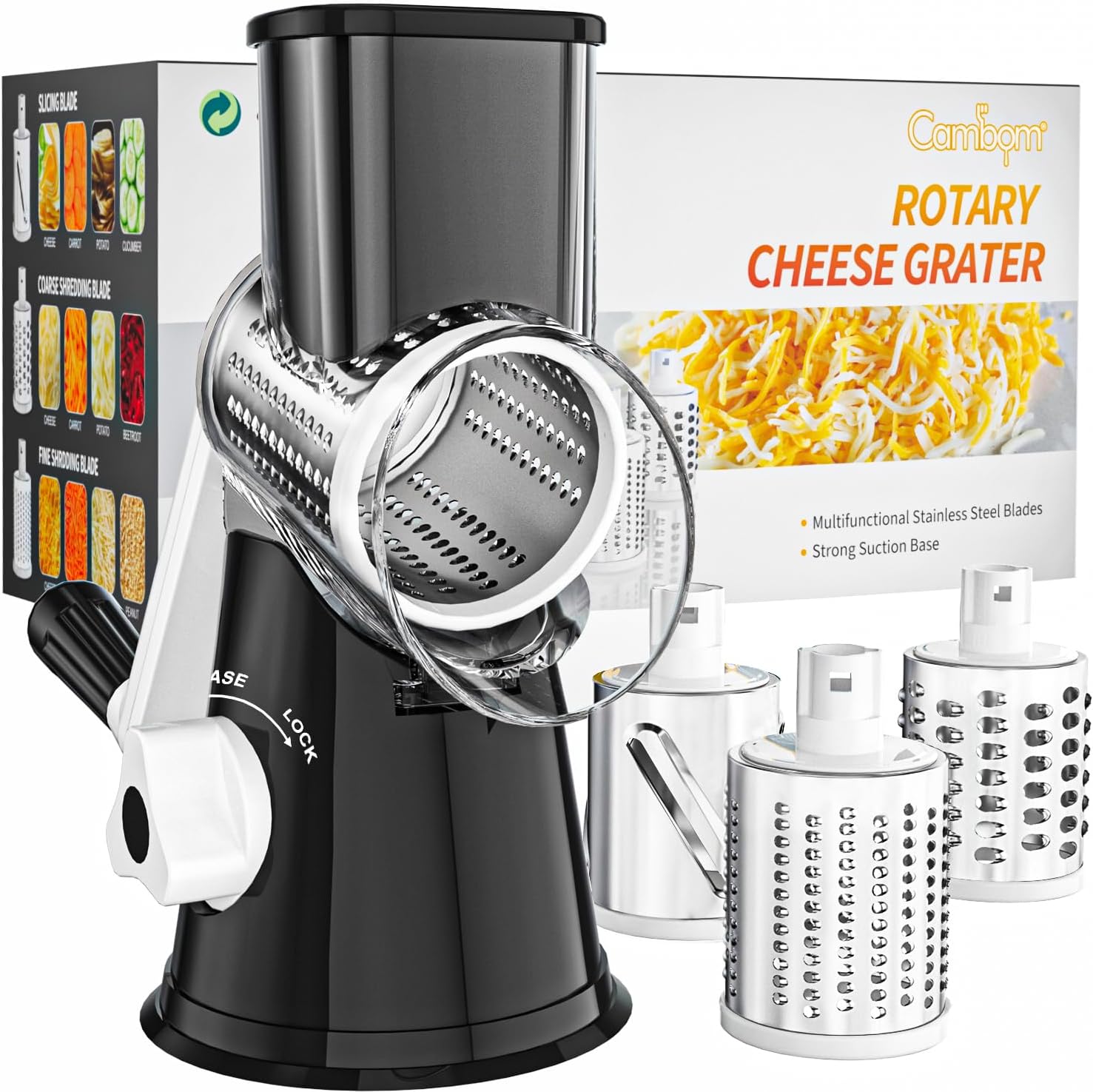
Preparing fresh blocks of cheese or firm vegetables for daily meals can quickly tire your wrists using traditional box graters. A rotary cheese grater with hand crank brings a mechanical advantage to your countertop, turning repetitive manual scraping into a fast, effortless motion. These devices use interchangeable stainless steel drums driven by a simple turning handle.
Choosing the right model depends on your counter space, the variety of ingredients you frequently prep, and how many blade options you require for different recipes. By looking closely at suction stability, drum design, and cleanup steps, you can find a manual shredder that matches your kitchen routine without causing unnecessary frustration.
As an Amazon Associate, StacyLaughs earns from qualifying purchases.
Buying guide
Countertop Compatibility and Suction Bases
The foundation of any manual rotary grater relies heavily on its ability to anchor securely to your kitchen counter surface. Most models use a powerful suction base that clamps down onto smooth materials like granite, marble, glass, and quartz. Testing your counter surface before purchasing ensures the suction mechanism will hold firm during vigorous cranking sessions without slipping or tilting sideways.
If your kitchen features textured laminate, butcher block, or untreated wood, standard suction bases will fail to create the necessary vacuum seal. Selecting a model that matches your physical kitchen setup prevents frustrating sliding incidents while you process dense blocks of cheese or firm root vegetables. Always verify whether your primary prep area provides the smooth finish required for secure suction anchoring.
Blade Variety and Cutting Options
Different recipes call for distinct textures, making blade versatility an essential consideration when choosing a rotary grater. Standard units typically include three interchangeable stainless steel drums dedicated to fine shredding, coarse shredding, and flat slicing. These drums let you transition seamlessly from dusting pasta with parmesan to preparing potato slices for homemade vegetable bakes.
Advanced models expand your culinary capabilities by offering up to five specialized blades, adding options like thick slicing, thin shredding, and wavy cuts. Consider which ingredients you prep most frequently to determine whether a basic three-blade setup suffices or if an expanded five-blade collection provides better value for your cooking habits. Matching blade selections to your favorite meals avoids cluttering drawers with unused attachments.
Feed Chute Size and Pre-Cutting Needs
The dimensions of the feeding hopper dictate how much prep work is required before you start turning the crank. Units featuring oversized drums and wider output chutes allow you to load larger chunks of cheese or whole vegetables with minimal pre-cutting. This design feature drastically reduces the time spent slicing ingredients down to fit narrow openings before grating.
Compact graters often feature narrower feed chutes that require you to cut blocks of cheese or carrots into smaller baton shapes beforehand. While smaller chutes keep fingers safely away from internal mechanisms, they add extra prep steps to your cooking routine. Evaluate how much time you want to spend dicing ingredients prior to loading them into the shredder hopper.
Ergonomics and Crank Operation Effort
Hand-cranked mechanisms rely entirely on rotational force, making the handle design a vital factor for overall user comfort. Models engineered with smooth-turning cranks reduce the physical grip strength needed to rotate the stainless steel drums through dense food blocks. This design consideration benefits cooks who experience hand fatigue or limited wrist mobility during meal preparation tasks.
An enclosed drum configuration further protects your knuckles from accidental scrapes that frequently occur with traditional flat box graters. Look for ambidextrous handle designs if you share kitchen duties with left-handed family members to ensure comfortable operation for everyone. Prioritizing ergonomic features transforms routine grating chores into a fast, painless activity for all household members.
Cleaning Methods and Dishwasher Safety
Keeping your kitchen tools sanitary is much easier when every component detaches completely without requiring specialized tools. Rotary graters with fully removable barrels, blades, and pushers let you rinse food particles away effortlessly under running tap water. Many modern units feature top-rack dishwasher-safe plastic bodies and stainless steel drums, saving valuable cleanup time after family dinners.
When utilizing dishwasher cycles for maintenance, checking manufacturer guidelines regarding heat exposure helps preserve blade sharpness and prevents plastic warping. Avoiding high-heat drying cycles extends the lifespan of colorful ABS bodies and keeps stainless steel cutting edges performing consistently over years of regular use. Choosing a model with straightforward disassembly ensures quick daily upkeep without hidden food traps.
Storage Footprint and Nesting Design
Kitchen storage space is often at a premium, making the physical storage footprint of a rotary grater an important selection factor. Some models feature innovative nesting drums where the cone-shaped stainless steel blades stack neatly inside one another when not in use. This clever design significantly reduces the overall space required inside crowded kitchen drawers or cabinets.
Expanded multi-blade systems often come bundled with dedicated storage cases that keep extra attachments organized and protected from damage. If your kitchen features limited cabinet real estate, evaluating how the main unit and its accessories disassemble and store will prevent countertop clutter. Balancing overall capacity with smart nesting capabilities ensures your new kitchen tool fits seamlessly into your existing storage layout.
Frequently asked questions
How do I keep the suction base from sliding on my countertop?
To ensure the suction base locks securely, start by wiping both the countertop surface and the rubber suction pad with a clean, damp cloth to remove any dust or grease residue. Place the unit firmly down on a smooth, non-porous surface such as glass, marble, granite, or quartz, and turn the locking knob or lever to engage the vacuum seal. Avoid placing the suction base on textured laminate, tile grout lines, or natural wood surfaces, as these materials allow air to seep underneath and break the suction grip during vigorous hand cranking.
Can I put all the parts of a rotary cheese grater in the dishwasher?
Most rotary cheese grater models feature components that are top-rack dishwasher safe, including the stainless steel drums, transparent barrels, and food pushers. However, you should always consult the specific manufacturer guidelines provided with your unit before placing plastic bodies or blades into a dishwasher. When washing plastic parts, selecting a normal or low-temperature cycle while avoiding high-heat drying settings helps prevent warping and preserves the sharpness of the stainless steel cutting edges over extended periods of regular kitchen use.
Do I need to pre-cut cheese and vegetables before loading them into the hopper?
The amount of pre-cutting required depends directly on the feed chute dimensions of your specific rotary grater model. Units equipped with oversized drums and wide output chutes can easily accommodate larger blocks of cheese or whole vegetables with minimal preparation. Conversely, models featuring narrower feed hoppers require you to cut blocks of cheese or root vegetables into smaller baton shapes so they fit comfortably inside the opening. Checking your model's chute size beforehand helps you plan your food preparation workflow efficiently.
Are rotary cheese graters safe for people with limited grip strength or arthritis?
Many rotary cheese graters are designed with ergonomic, easy-turn hand cranks that require very little grip strength compared to traditional flat box graters. The mechanical advantage of the rotating drum allows users to process cheese and firm vegetables smoothly without straining their wrists. Additionally, the enclosed drum design and food pusher keep fingers safely away from the sharp stainless steel blades at all times. This makes manual crank graters an accessible choice for older cooks or individuals managing hand mobility challenges.
How do I prevent food from jamming inside the transparent barrel?
Food jamming typically occurs when ingredients are pushed down too aggressively or when soft, overly warm cheese sticks to the inner walls of the barrel. To minimize jamming, choose chilled or moderately firm cheeses straight from the refrigerator rather than room-temperature blocks. Some modern rotary graters incorporate transparent barrels with an inclined curvature specifically engineered to guide shredded food smoothly toward the output chute and prevent clogging. Maintaining steady, moderate turning speed while applying gentle pressure with the food pusher also ensures consistent results.