Appliances · Buying Guide
Best Cooking Thermometer with Probe Options for Precision Grilling and Baking
Finding the right cooking thermometer with probe can transform how you handle everyday kitchen tasks, backyard barbecues, and slow-roasted meats. Whether you are monitoring a delicate candy mixture on the stovetop or tracking a massive turkey in a smoker, having accurate internal temperature readings removes the guesswork from meal preparation. Different cooking setups demand different monitoring styles, ranging from wired digital base units to Bluetooth-enabled wireless apps and quick-read handheld tools.
Selecting an appropriate device depends heavily on your preferred cooking methods, how closely you need to watch the heat, and whether you prefer physical base stations or smartphone integrations. By evaluating key features such as temperature ranges, probe counts, response times, and display layouts, you can find a reliable tool that matches your culinary routine without unnecessary complications.
As an Amazon Associate, StacyLaughs earns from qualifying purchases.
Buying guide
Understanding Temperature Ranges
When selecting a cooking thermometer with probe, examining the upper and lower temperature thresholds is essential for matching your cooking style. Different culinary techniques demand vastly different heat tolerances, ranging from delicate candy making on the stovetop to blazing hot smoker grates and high-heat roasting ovens. Standard models often cover measuring ranges starting around zero or fourteen degrees up to five hundred seventy-two degrees Fahrenheit.
Specialized probes designed for extreme grilling environments can handle even higher limits, reaching over seven hundred degrees. Ensuring your chosen device safely accommodates your specific heat levels prevents equipment damage during high-temperature searing or extended smoking sessions. Always match the tool specifications to your most demanding kitchen recipes and outdoor cooking habits.
Evaluating Probe Counts and Types
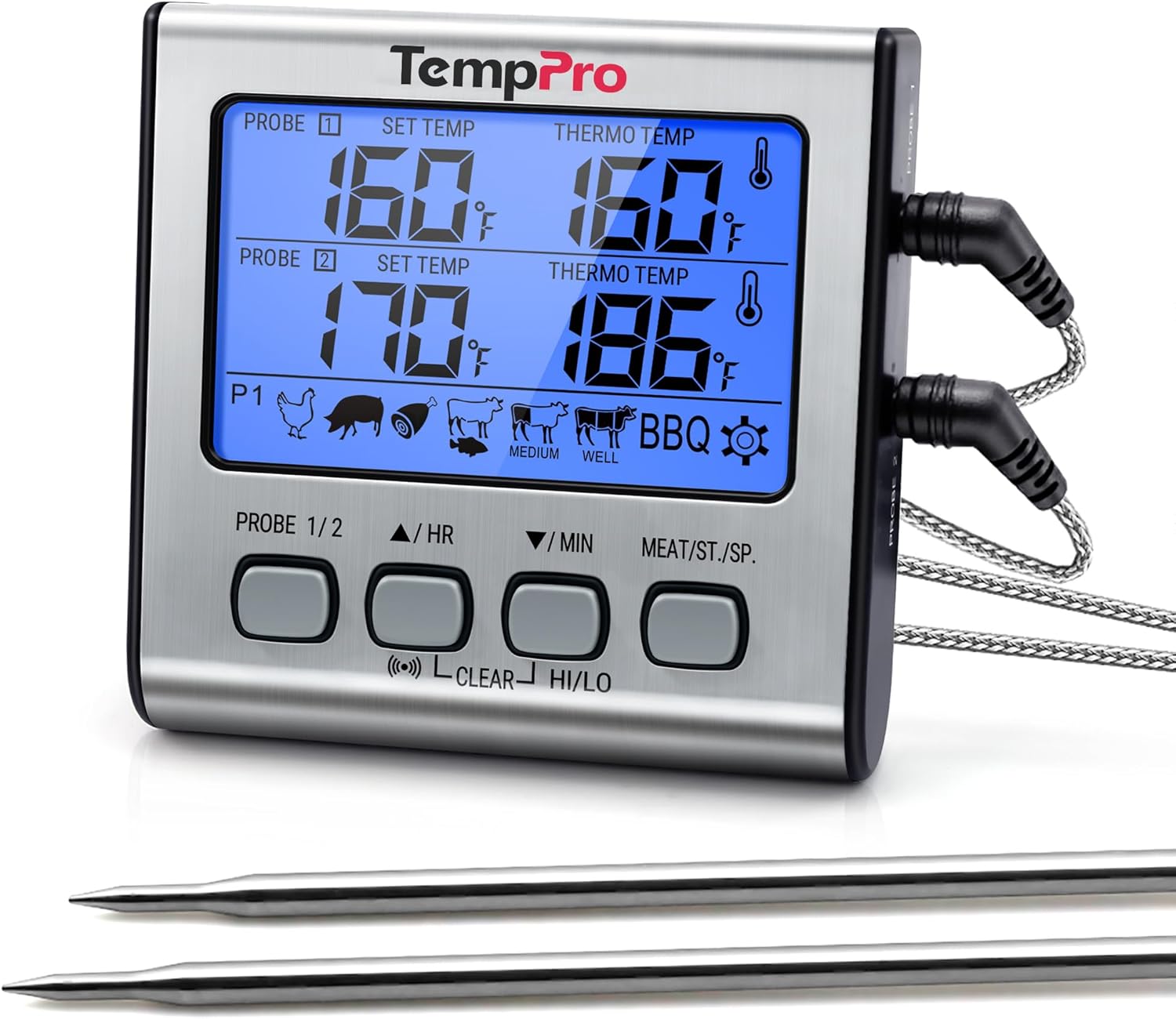
The number of probes included with a thermometer determines how many items you can monitor simultaneously during busy meal preparation. Single-probe units work wonderfully for basic roasting tasks, while dual-probe variants let you track two separate cuts of meat or monitor both food internal temperature and ambient grill heat at the exact same time. This helpful capability completely eliminates the need to constantly swap devices.
Additionally, consider whether you prefer a folding instant-read probe for quick surface checks or a wired stainless steel probe designed to remain safely inside the oven during long cooking cycles. Each probe style serves a distinct purpose in daily cooking routines and recipe execution.
Wired Versus Wireless Connectivity
How you receive temperature data significantly impacts your overall mobility and day-to-day convenience in the busy kitchen or backyard patio environment. Traditional wired models securely connect the metal probe to a stationary base unit resting nearby on a kitchen countertop or metallic surface. This setup keeps your data visible locally through clear physical screens and audible alarms without requiring external devices or complicated pairing procedures.
Conversely, Bluetooth-enabled wireless thermometers transmit real-time temperature readings directly to smartphone applications across extended distances. This wireless approach gives you the helpful freedom to step away from the active grill or oven, tending to other household chores while monitoring meal progress remotely on your mobile device.
Display Readability and Mounting Choices
Reading your temperature data quickly and clearly prevents cooking errors in varied lighting conditions throughout your home. Look for units featuring large LCD screens equipped with built-in backlights, which ensure effortless visibility whether you are cooking under a bright midday sun or inside a dimly lit evening kitchen. Clear numerical digits reduce reading errors during fast-paced meal preparation tasks.
Furthermore, carefully evaluate the physical mounting options provided by the thermometer body. Magnetic backs, built-in tabletop stands, and integrated hanging hooks allow you to position the display unit securely on refrigerators, counters, or kitchen walls, keeping the screen in plain sight and within easy reach at all times.
Preset Temperatures and Alarm Functions
Built-in programming features can significantly streamline your everyday cooking process by removing the need to memorize standard internal meat temperatures for different proteins. Many digital thermometers include convenient USDA preset temperature options for popular meats such as beef, chicken, pork, and fish, greatly simplifying routine meal planning. You can also easily adjust these preset values manually to match your personal culinary preferences and specific family recipes.
Timers and adjustable audible alarm functions further enhance overall usability by notifying you with sharp beeps or visual flashes when your food finally reaches the target temperature or when an outdoor smoker drifts outside its designated heat range during long cooking sessions.
Maintenance and Cleaning Practices
Keeping your cooking thermometer in proper working condition requires adhering carefully to manufacturer maintenance and cleaning guidelines after every meal preparation. Most probe designs specify simple wipe-clean instructions to protect internal electronic sensors and delicate wiring from moisture damage. Avoiding full immersion in water is particularly important for plastic-bodied units to prevent liquid from seeping into battery compartments or sensitive digital display areas during washup.
Proper storage, such as using integrated hanging holes, tabletop stands, or convenient magnetic backs when not actively in use, protects the stainless steel probes and attached cables from unnecessary bending or accidental wear between busy cooking sessions in your home kitchen.
Frequently asked questions
Can I leave the wired probe inside the oven or grill during the entire cooking process?
Yes, the wired stainless steel probes included with these cooking thermometers are specifically designed to withstand high oven and grill temperatures while remaining inserted in the meat throughout the entire cooking cycle. The heat-resistant cables safely exit the closed oven door or smoker lid, connecting to the external base unit so you can monitor internal progress continuously without opening the cooker and losing valuable heat. However, you should always check the maximum temperature limits specified by the manufacturer for each particular probe model to prevent overheating and potential sensor damage during intense searing tasks.
How do I ensure my digital meat thermometer maintains accurate temperature readings over time?
Maintaining accuracy involves following proper calibration procedures and cleaning guidelines provided by the manufacturer. Some models feature a dedicated calibration button that allows you to quickly adjust the temperature readings using a standard ice water mixture if you suspect a slight drift. Additionally, wiping down the stainless steel probes with a damp cloth after each use prevents food residue buildup, while avoiding complete immersion in water protects the internal electronic components and battery housing from moisture-related performance issues.
What is the benefit of having a dual probe setup on a cooking thermometer?
A dual probe setup offers significant versatility by allowing you to monitor two separate items simultaneously, such as two different cuts of meat roasting in the same oven. Alternatively, you can use one probe to track the internal temperature of your food while placing the second probe nearby on the grill grate to monitor the ambient cooking temperature of your smoker or BBQ pit. This dual-monitoring capability helps you manage heat levels and cooking progress across multiple zones without needing to juggle separate devices or constantly swap probes around.
What is the difference between a folding instant-read thermometer and a wired probe model?
A folding instant-read thermometer features a pointed stem attached directly to the main body, allowing you to quickly spot-check food temperatures in seconds by inserting it into the item and reading the screen. These tools are ideal for fast evaluations across various kitchen tasks. In contrast, a wired probe model uses a long stainless steel probe connected via a cable to a separate base unit. This wired design remains stationary inside the food during long baking or smoking cycles, providing continuous tracking and remote alerts.
How do Bluetooth wireless cooking thermometers operate compared to standard digital units?
Bluetooth wireless cooking thermometers use a built-in wireless transmitter to send real-time temperature data directly to a smartphone application running on your mobile device. This connection typically extends across several hundred feet, enabling you to monitor your meal from another room or yard without standing directly beside the grill or oven. Standard digital units, on the other hand, rely entirely on physical base stations positioned near the cooking area, displaying temperatures on built-in screens and sounding local audible alarms when targets are reached.