Appliances · Buying Guide
Best Digital Cooking Thermometer with Probe Options for Every Kitchen
Choosing a reliable digital cooking thermometer with probe setup transforms how you manage everyday kitchen tasks, outdoor barbecues, and complex baking projects. Modern tools provide rapid temperature detection to prevent overcooking and ensure food reaches appropriate levels safely. Whether you manage a smoking session over several hours or quickly check a pan of hot oil, having the right device simplifies the process significantly.
Different designs cater to distinct cooking styles, ranging from instant-read folding units to wired models meant for prolonged oven use. Evaluating physical attributes like response time, probe length, display clarity, and mounting options helps match a tool to your specific habits. Reviewing available features ensures you select a practical device that fits smoothly into your routine without unnecessary complications.
As an Amazon Associate, StacyLaughs earns from qualifying purchases.
Buying guide
Response Time and Sensor Accuracy
Selecting a digital cooking thermometer with probe requires looking closely at how quickly the sensor delivers a reading. Fast response times ranging from half a second to two seconds help minimize heat loss when checking items on a hot grill or in a crowded oven. Industrial thermocouple sensors often provide superior precision for delicate tasks.
Accuracy specifications matter just as much as speed. A deviation of half a degree or one degree Fahrenheit ensures you can trust the measurements for sensitive meats and candies. Evaluating these technical attributes helps you choose a dependable tool that matches your specific culinary requirements without unnecessary guesswork or delays during busy cooking sessions.
Probe Styles and Cable Lengths
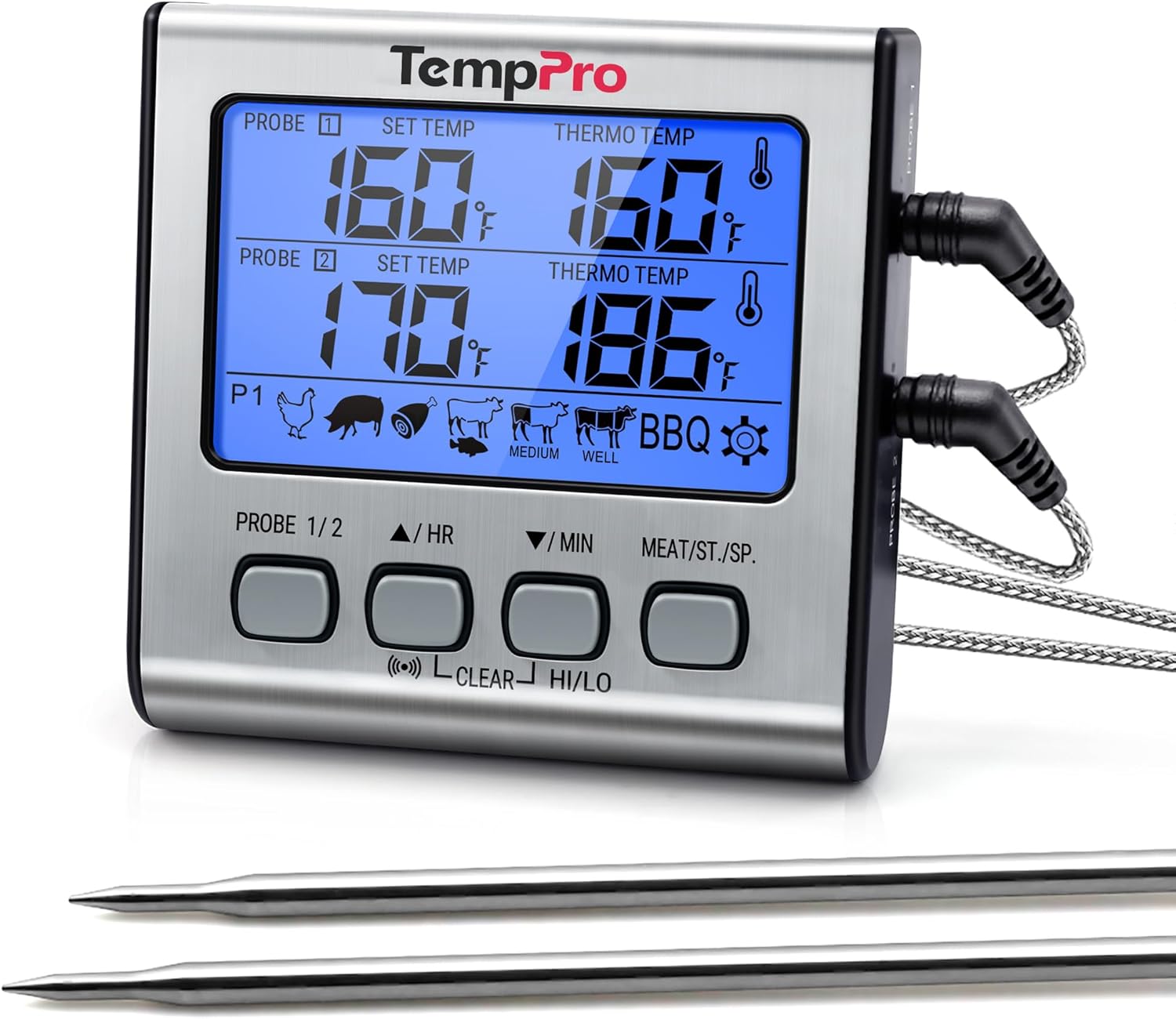
The physical configuration of the probe dictates how you interact with your food during cooking. Folding pocket units offer great portability for quick spot checks on the stovetop or outdoor grill. On the other hand, wired probe models use stainless steel cables to connect the food tip to an external base unit.
Cable length plays an important role when dealing with large smokers or deep ovens. A forty-inch mesh cord allows the display unit to sit safely outside the direct heat zone while the probe remains inside the roasting meat. Assessing your typical cooking vessel ensures you select the right physical layout for safe and comfortable temperature monitoring.
Temperature Ranges and Heat Resistance
Different cooking methods demand vastly different temperature thresholds from your equipment. General kitchen tasks like baking or checking liquids require moderate ranges, while deep frying and grilling push sensors much higher. Reviewing the upper temperature limits ensures the device can handle intense heat without internal component failure or inaccurate readings.
Wired probes often feature specialized heat resistance for both the metal tip and the connecting cable, sometimes enduring up to seven hundred degrees Fahrenheit. This durability is essential for long smoking sessions where the probe stays inside a hot environment for hours. Matching the temperature range to your cooking habits prevents premature wear.
Waterproofing and Cleanup Convenience
Kitchen environments involve plenty of moisture, spills, and food residue that make cleaning a regular chore. Choosing a thermometer with an IP67 waterproof rating allows you to rinse the device directly under running water without damaging internal electronics. This feature simplifies post-cooking cleanup significantly after handling greasy meats or sticky barbecue sauces.
Materials like durable plastics and stainless steel withstand routine washing much better than vulnerable electronic housings. Reviewing the manufacturer care instructions helps maintain the structural longevity of your tool. Opting for a waterproof design ensures you can maintain proper hygiene standards effortlessly after every single use in both indoor and outdoor cooking settings.
Display Clarity and Backlight Options
Reading temperatures accurately depends heavily on the physical design and illumination of the screen. Large digits paired with bright backlights make it easy to check values in dim lighting conditions, such as evening backyard barbecues or dark kitchen ovens. Auto-flip screens further enhance everyday convenience by adjusting the text orientation for different viewing angles.
Some advanced models incorporate motion-sensing mechanisms that wake the digital display automatically when picked up, conserving battery life while keeping information instantly accessible. Evaluating screen attributes prevents eye strain and reduces mistakes caused by misreading numbers during fast-paced cooking tasks where precise timing is critical for achieving optimal food texture and safety.
Storage and Mounting Features
Keeping your thermometer accessible on busy countertops or near cooking stations prevents clutter and everyday frustration. Built-in magnets allow the device to attach securely to refrigerators, stoves, or metal grills for instant grabbing. Hanging holes and folding kickstand options provide alternative storage methods for kitchens lacking suitable metal surface areas for mounting.
Considering how you store your equipment ensures it remains protected from accidental drops or damage in crowded drawers. Compact folding designs take up minimal space, whereas wired models require neat cable management to prevent tangles. Selecting convenient storage features streamlines your kitchen workspace and keeps your tools ready for action.
Frequently asked questions
How do I clean a waterproof digital cooking thermometer with probe safely?
Cleaning a waterproof thermometer involves following the manufacturer care instructions, which typically recommend rinsing the unit under running water for models with an IP67 rating. You should use warm water and mild dish soap to remove grease or food residue from the probe and outer housing. Avoid submerging non-waterproof battery compartments or wired base units entirely if the manual advises against it. Always dry the device thoroughly with a clean towel before storing it away in a drawer or attaching it to a magnetic surface.
Can I leave a folding digital thermometer inside the oven during cooking?
Folding pocket thermometers with plastic housings and digital displays are generally designed for quick spot checks rather than continuous placement inside a hot oven or closed smoker. Leaving a standard folding unit inside high heat environments can melt the plastic casing and ruin the internal electronic components. If you need continuous monitoring throughout a long roasting process, you should use a dedicated wired probe thermometer where only the stainless steel probe and heat-resistant cable remain inside the oven while the base sits outside.
What is the advantage of using a dual probe thermometer for barbecue?
A dual probe thermometer allows you to monitor two separate food items simultaneously, such as a brisket and pork shoulder, or track one cut of meat alongside the ambient temperature of your smoker or grill. This capability gives you complete visibility over your cooking environment without needing to juggle multiple devices or constantly swap single probes. Furthermore, models featuring high and low temperature range alarms will beep to alert you if your smoker fire begins to fade or flare up unexpectedly.
How often should a digital food thermometer be recalibrated?
Recalibration frequency depends on how often you use the thermometer and whether it has experienced any heavy drops or extreme temperature shocks. Many modern digital models arrive pre-calibrated from the factory and include simple instructions or dedicated buttons to perform manual adjustments if you notice minor reading discrepancies over time. Checking accuracy periodically using an ice water bath or boiling water test ensures your readings remain dependable for cooking safety and precision.
Why does response time matter when choosing a meat thermometer?
A fast response time allows you to know the exact temperature of your food almost instantly, which is especially important when you are holding a hot oven door open or standing over a blazing grill. Quicker readings minimize the amount of heat lost from the cooking vessel and keep your hands away from high temperatures for shorter periods. Industrial thermocouple sensors achieve readings in half a second to two seconds, providing superior efficiency compared to older dial models that require a lengthy stabilization wait.