Appliances · Buying Guide
Best Extra Large Strainer with Handle Options for Every Kitchen Task
Finding the right extra large strainer with handle makes daily meal preparation much simpler when draining large batches of pasta, washing fresh garden vegetables, or sifting dry baking ingredients. Selecting a dependable model depends heavily on your specific sink dimensions, available cabinet storage space, and the types of food you regularly prepare for family meals at home.
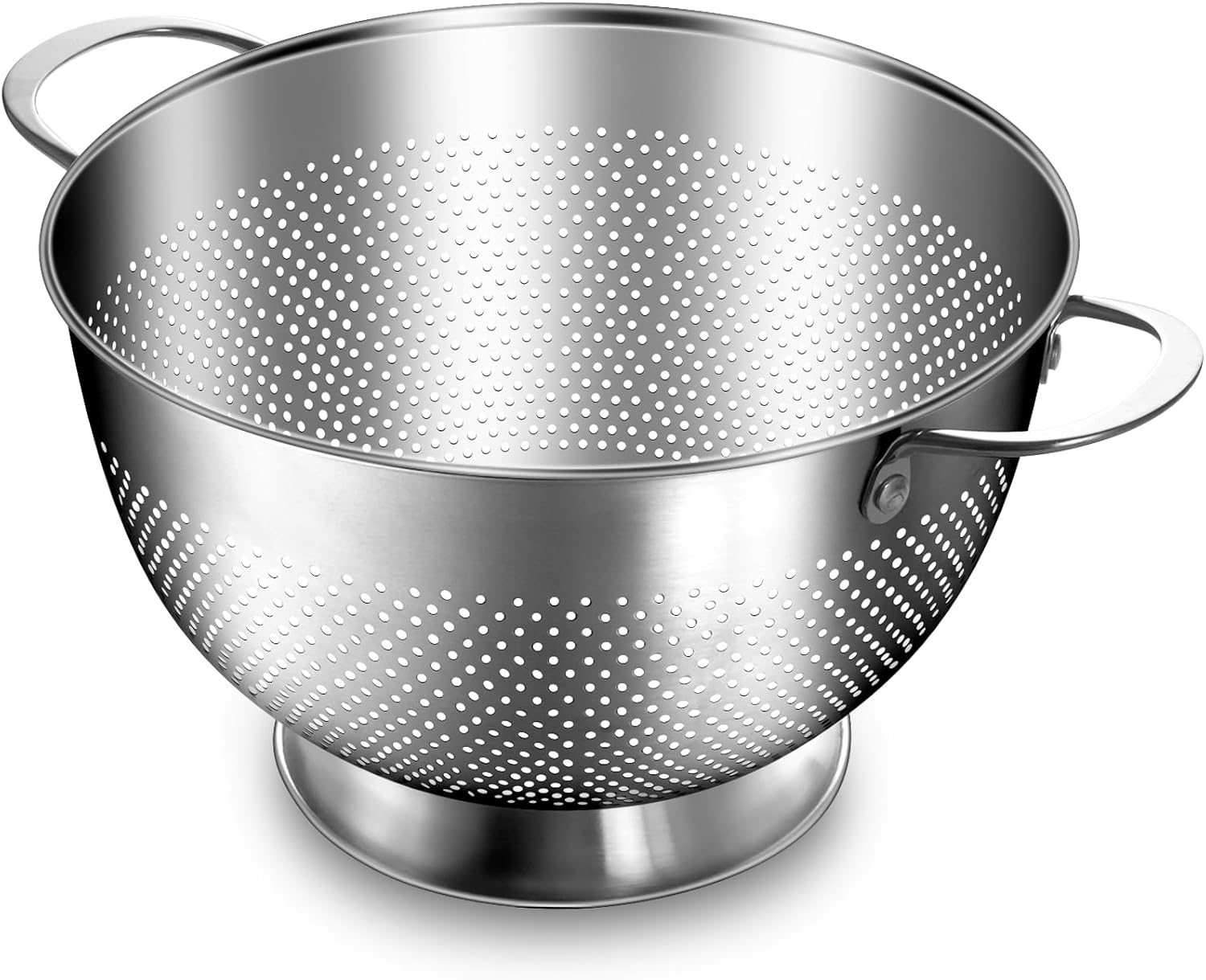
Stainless steel construction offers dependable durability, excellent rust resistance, and straightforward maintenance for busy cooking routines. Reviewing key design attributes like secure handle styles, stable base types, and deep basket capacities helps match the right tool to your specific kitchen workflow and dishwashing preferences.
As an Amazon Associate, StacyLaughs earns from qualifying purchases.
Buying guide
Material Quality and Food Safety
Choosing a kitchen strainer crafted from premium food-grade stainless steel ensures long-lasting durability and reliable corrosion resistance. High-grade metal prevents unwanted metallic tastes from transferring to your food, keeping delicate fresh ingredients completely pure. Stainless steel withstands daily exposure to water, acidic food juices, and frequent washing without degrading its structural integrity or smooth surface finish over time.
Selecting models explicitly built free of lead, cadmium, and BPA provides essential peace of mind during everyday meal preparation for your family. Quality metal construction also resists rust over years of heavy use, making it a dependable, long-term investment for any busy home kitchen. Always verify food-grade compliance attributes before purchasing your next kitchen strainer.
Capacity and Sizing Requirements
Evaluating your typical portion sizes helps determine the ideal strainer capacity for your household needs. Smaller three to five-quart options work wonderfully for standard vegetable rinsing and everyday pasta dinners for small families. Larger six-quart or expandable models accommodate massive batches of food easily, serving multi-person households and busy home cooks who prepare large meals in one go.
Matching the basket dimensions to your primary sink size prevents awkward placement issues during active draining tasks. Oversized or expandable strainers require adequate basin width to rest securely, while compact handheld sieves fit easily into small sinks. Assessing your typical cooking volume ensures you select a tool that matches your actual kitchen routine.
Handle Design and Ergonomic Safety
Secure handle construction directly impacts safety and comfort when lifting heavy, water-filled colanders from the sink basin. Riveted handles provide permanent attachment strength, ensuring the bowl stays securely connected to the grips under heavy food loads. Models featuring protective housing around sliding joints or wide hooks help prevent accidental slips and finger cuts during busy cooking sessions.
Ergonomic non-slip grips offer superior traction when your hands are wet from washing fresh vegetables or draining boiling pasta water. Evaluating how handles attach and feel in your hand guarantees comfortable lifting and shaking without physical strain. Choosing well-designed, sturdy handles transforms routine kitchen chores into safe, manageable daily tasks for every home cook.
Drainage Hole Patterns and Mesh Types
The style of drainage openings determines how efficiently liquids escape from your food during meal preparation. Micro-perforations and tiny closely spaced holes allow water to empty rapidly without requiring you to tilt the bowl aggressively. These fine patterns prevent tiny food items like orzo, rice, and spaghetti from slipping through during heavy straining tasks.
Alternatively, specialized extra-fine mesh constructions with multi-layer weaves excel at sifting dry baking ingredients or filtering fine grains like quinoa. Selecting the correct perforation style depends on whether you primarily drain chunky vegetables or sift powdery flour. Matching the mesh design to your ingredients ensures smooth, hassle-free cooking and baking results every single time.
Base Construction and Counter Stability
Stable base designs prevent accidental tipping when you fill colanders on kitchen countertops before washing. Raised feet, solid ring bases, and elevated resting rims keep the bowl upright and secure during heavy filling tasks. These features also elevate food above pooling sink water, ensuring cleaner food preparation and completely dry kitchen countertops.
Choosing between a solid ring base and three-legged raised designs depends on your preferred workflow and cabinet storage setup. Ring bases offer complete circular stability, while multi-foot configurations distribute weight evenly across sink floors. Evaluating base stability helps avoid messy kitchen spills when handling heavy pots of steaming pasta.
Storage and Maintenance Considerations
Kitchen strainers must fit comfortably within your available cabinet storage and dishwasher space after meal completion. Nesting designs allow colanders to stack neatly inside standard mixing bowls, saving valuable cupboard room. Evaluating the overall outer dimensions and handle spans ensures your chosen strainer fits smoothly into your daily dishwasher load.
Stainless steel models offer easy maintenance through dishwasher-safe construction or quick cleaning under running tap water. Selecting durable materials that resist warping and staining guarantees long-term performance without complicated upkeep routines. Prioritizing easy-to-clean designs ensures your strainer remains hygienic, beautiful, and ready for your next kitchen cooking adventure.
Frequently asked questions
Can I put stainless steel strainers in the dishwasher for cleaning?
Yes, all the featured stainless steel strainers and colanders listed in this review are designed to be dishwasher safe, providing a fast and hygienic cleaning process. Placing them in the dishwasher removes food residues easily without requiring manual scrubbing. If you prefer hand washing, simply rinse the metal basket under running tap water with mild dish soap, and it will quickly look as good as new. The durable stainless steel construction resists rust and maintains its smooth finish through repeated dishwasher cycles, making cleanup effortless after preparing large family meals.
Will stainless steel colanders affect the taste of my food?
Premium food-grade stainless steel construction ensures that your colander will never affect the taste of your food. These strainers are manufactured using first-class metals that are completely free of harmful contaminants like lead, cadmium, and BPA. Because the material is non-reactive and rust-resistant, you can safely wash acidic ingredients like tomatoes, citrus fruits, and berries without worrying about metallic flavors transferring to your meal. This makes stainless steel an exceptionally safe, reliable, and flavor-neutral choice for all your everyday kitchen straining and food preparation tasks.
How do I choose between an over-the-sink strainer and a traditional bowl colander?
Choosing between an over-the-sink strainer and a traditional bowl colander depends heavily on your sink dimensions and preferred cooking workflow. Over-the-sink models feature expandable handles and resting legs that span across large sink basins, keeping your hands free while rinsing bulky vegetables or draining pasta. Traditional bowl colanders utilize solid ring bases or raised feet to stand steadily on countertops and inside mixing bowls, offering excellent versatility for filling, sifting, and countertop food prep. Assess your available sink width and counter space to find the best fit.
What is the difference between micro-perforations and fine mesh sieves?
Micro-perforations feature tiny, closely spaced holes punched directly into solid stainless steel bowls, allowing liquids to drain rapidly while keeping pasta and vegetables securely contained. They are ideal for everyday draining tasks because they resist warping and clean easily. In contrast, fine mesh sieves use tightly woven wire dual layers, such as thirty mesh designs, which create an extremely fine barrier. These fine mesh tools are specifically tailored for sifting powdery flour, powdered sugar, and filtering tiny grains like quinoa or rice without letting small particles slip through.
Do riveted handles provide better durability than welded handles?
Riveted handles offer exceptional mechanical strength because metal rivets physically lock the handles securely to the main bowl body. This robust attachment method prevents handles from coming loose or breaking off when you lift heavy, water-filled colanders loaded with cooked pasta or dense vegetables. While welded joints can sometimes weaken under heavy weight loads or freak accidents, solid riveted handles provide a firm and dependable grip that withstands years of active daily use. Checking for riveted handle construction ensures long-lasting safety and durability in your kitchen tools.