Appliances · Buying Guide
Best Food Mill for Mashed Potatoes and Smooth Purees
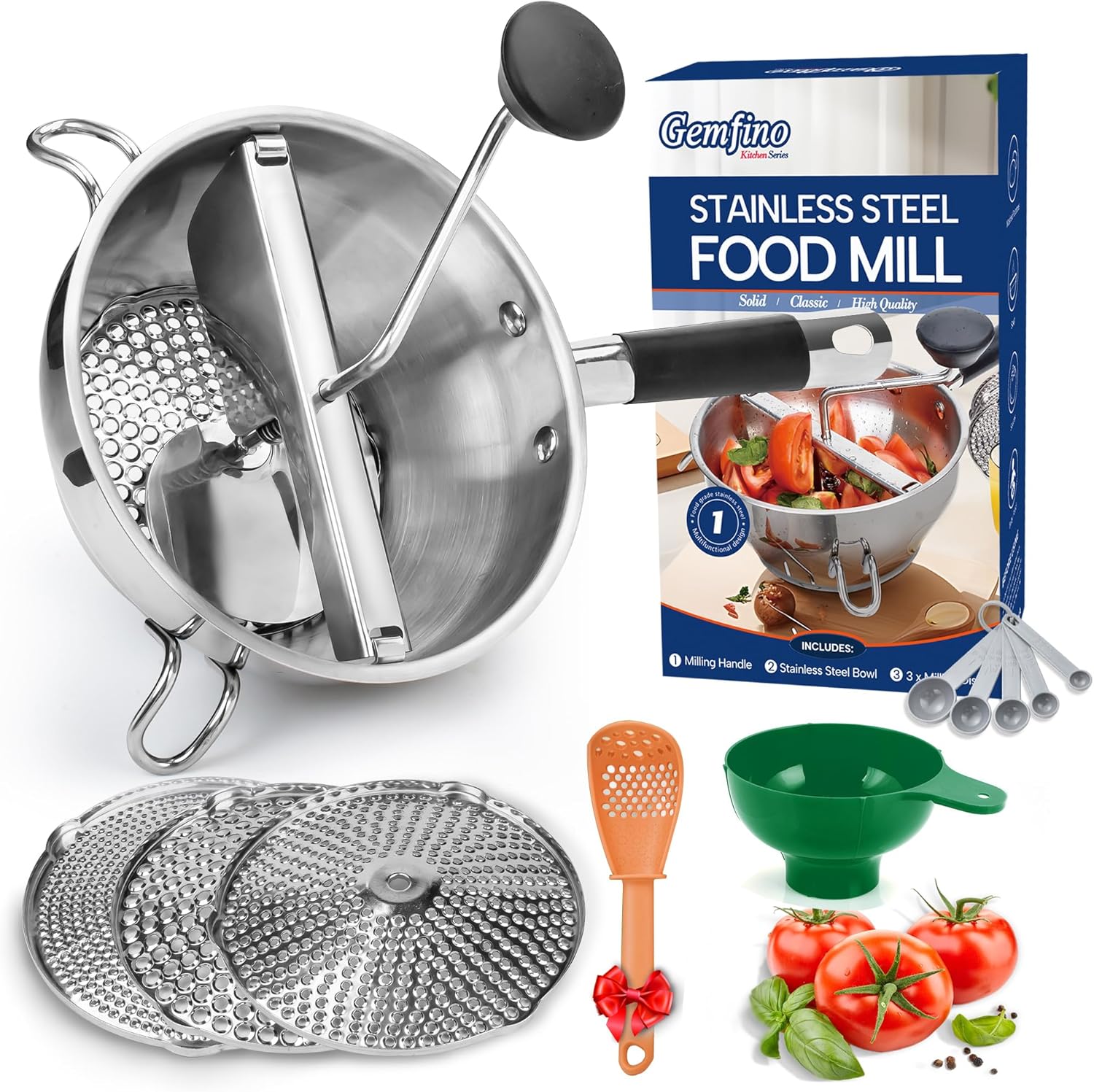
Preparing homemade mashed potatoes and smooth fruit purees requires kitchen tools that separate unwanted skins, seeds, and tough fibers from soft cooked flesh without heavy physical straining. A manual food mill relies on an ergonomic hand crank and interchangeable stainless steel discs to press ingredients through calibrated mesh holes while trapping coarse particles behind.
Selecting the right manual food mill depends on batch sizes, disc counts, and comfortable handling features like non-slip silicone grips or secure pot support hooks. Whether you are processing a single dinner side dish or managing a large harvest preserving session, understanding these physical design attributes helps match a mechanical puree maker directly to your daily cooking routine.
As an Amazon Associate, StacyLaughs earns from qualifying purchases.
Buying guide
Material Durability and Construction
Selecting a manual food mill starts with examining the primary body materials used in its construction. Stainless steel frames offer robust resistance against rust, corrosion, and staining from acidic ingredients like tomatoes and citrus fruits. Unlike plastic alternatives, heavy-duty metal components withstand frequent use across multiple canning seasons without cracking or warping under pressure.
While metal structures provide long-term reliability, they also add physical weight to the kitchen tool. Evaluating how the body material interacts with hot cooked foods helps ensure safe, dependable handling. High-grade steel maintains structural integrity under heavy torque, though certain designs incorporate protective exterior layers or silicone grips to manage heat transfer during intensive potato mashing sessions.
Disc Selection and Texture Control
The versatility of a food mill depends heavily on the number and variety of included interchangeable grinding discs. Fine, medium, and coarse stainless steel plates allow you to adjust the final texture of your homemade mashed potatoes, baby food, or fruit purees. Having multiple disc options ensures you can move from rustic, chunky apple sauces to silky smooth vegetable purees effortlessly.
Spring-loaded levers or simple drop-in mechanisms make swapping these metal plates straightforward during active food preparation tasks. Consider how many distinct texture variations your favorite recipes require before choosing a model. Units featuring four separate discs offer granular adjustments, while standard three-disc configurations cover essential everyday requirements for family dinners and seasonal canning.
Capacity and Batch Size Considerations
Matching the bowl capacity of a food mill to your typical cooking volume prevents unnecessary interruptions during meal prep. Smaller bowls around two quarts work efficiently for quick side dishes and daily family meals. Larger hoppers accommodate bulk produce during autumn harvests, significantly reducing the frequency of stopping to empty accumulated skins and seeds from the milling chamber.
Keep in mind that larger capacities often correspond to wider overall frames and increased empty weights. Assess your typical portion sizes and available storage space to find the right balance for your kitchen. A moderate bowl size offers easy maneuverability over standard pots, whereas high-capacity units demand dedicated cabinet space and careful two-handed positioning during use.
Stability and Pot Support Designs
A secure mounting system keeps the food mill completely steady while you turn the hand crank. Dual support hooks or non-slip legs anchor the device firmly across the rims of various mixing bowls and cooking pots. This mechanical stability prevents the mill from sliding or tipping over when applying downward pressure to stubborn potato chunks or firm root vegetables.
Look for designs featuring reinforced welded hooks or structured support arms that grip pot edges safely during use. Proper resting points relieve your arms from supporting the entire weight of the apparatus, allowing you to focus physical energy entirely on rotating the handle and processing food smoothly through the perforated metal mesh filter.
Handle Ergonomics and Crank Operation
The physical comfort of a manual food mill relies heavily on its handle and crank design. Ergonomic handles covered in soft silicone prevent hand fatigue and provide a secure, non-slip grip during extended batch cooking sessions. Rounded rotating cranks make turning the internal blade smoother, actively reducing strain on your wrists and forearms over long periods of active food preparation.
Spring-loaded mechanisms attached to the crank also help maintain consistent downward pressure against the interchangeable grinding disc. Evaluating how the handle feels in your palm ensures you can process large quantities of cooked potatoes comfortably without experiencing hand fatigue or grip slippage during busy kitchen tasks and canning projects.
Maintenance and Dishwasher Compatibility
Keeping a manual food mill clean after processing starchy mashed potatoes or sugary fruit jams requires straightforward disassembly procedures. Models featuring quick-release levers or spring-loaded mechanisms allow you to remove grinding discs rapidly without struggling with tight mechanical fasteners. Durable stainless steel construction resists food staining and permits thorough washing in standard home dishwashers for ultimate convenience.
Reviewing specific manufacturer care instructions ensures your kitchen equipment stays in optimal working condition over years of frequent use. Removable parts eliminate hidden crevices where sticky food residue might otherwise accumulate, helping maintain strict hygiene standards for homemade baby food preparation, seasonal canning projects, and everyday family meals alike.
Frequently asked questions
How do I choose the right disc size for mashed potatoes?
Choosing the correct disc size for mashed potatoes depends on whether you prefer a rustic texture or a silky, ultra-smooth consistency. Medium and coarse stainless steel discs are typically ideal for potatoes because they let small bits pass through without turning the starch into a gluey paste. Fine discs work better for smooth fruit purees and baby food, but they can sometimes over-process potatoes and create an undesirable sticky consistency. Experimenting with medium and coarse plates during your first batch helps identify the exact mouthfeel your family prefers for dinner.
Can I put a manual food mill in the dishwasher?
Many stainless steel manual food mills are constructed with dishwasher-safe materials, allowing for easy cleanup after processing sticky ingredients like jams, sauces, and mashed potatoes. However, checking the specific manufacturer care instructions for your exact model is essential to prevent any potential wear on silicone handles, protective coatings, or spring-loaded components. Disassembling the unit into its individual components—such as removing the grinding disc and crank handle—ensures water and detergent can reach every surface during the dishwasher cycle for thorough cleaning results.
Do I need to peel potatoes before running them through a food mill?
One of the primary benefits of using a manual food mill is its ability to separate skins, seeds, and tough cores automatically as you turn the crank. For many recipes, you can cook potatoes thoroughly until tender and load them directly into the hopper without spending valuable time peeling every single tuber beforehand. The internal blade presses the soft flesh through the perforated stainless steel disc while trapping potato skins and coarse fibers behind, saving you significant prep time during big family meal or holiday cooking sessions.
How do support hooks keep the food mill stable?
Support hooks and non-slip legs are engineered to rest securely over the rims of various mixing bowls, stockpots, and saucepans. This physical design creates a stable mounting structure that anchors the entire unit in place while you apply manual force to the rotating hand crank. By bridging across the top of your container, the hooks prevent the mill from sliding or tipping sideways when pressing dense cooked ingredients like potatoes. This relieves your arms from holding the bowl weight, letting you focus entirely on turning the crank.
Why is my food mill making my potatoes sticky?
Potatoes contain a high concentration of starches that can easily rupture and release a glue-like texture when overworked or processed too aggressively. If your food mill produces sticky mashed potatoes, you might be using a disc with excessively fine holes or applying too much downward pressure with the hand crank. Switching to a coarser stainless steel disc and turning the handle gently without mashing the potatoes beforehand can prevent this starch breakdown, resulting in a lighter, fluffier texture for your dinner side dishes.