Appliances · Buying Guide
Best Food Thermometers for Liquids to Enhance Beverage and Cooking Precision
When preparing hot beverages, delicate candies, or boiling stocks, monitoring liquid temperatures accurately is essential for achieving consistent culinary results. Whether you are steaming milk for morning coffee, melting chocolate, or checking deep-frying oil, having a reliable thermometer prevents costly mistakes and ensures proper food safety standards are met.
This guide examines five distinct liquid and food thermometers available on the market, detailing their core physical attributes, response speeds, and practical applications. By evaluating specific probe lengths, display features, and waterproof builds, you can select the most appropriate measuring tool to match your everyday kitchen tasks.
As an Amazon Associate, StacyLaughs earns from qualifying purchases.
Buying guide
Evaluating Response Speed for Active Cooking Tasks
When selecting a thermometer for liquids, response speed determines how quickly you receive thermal feedback while stirring boiling pots or frothing milk. Fast-reading digital models deliver results in one to four seconds, allowing you to catch temperature peaks without holding your hand over steam for extended periods.
Slower digital or analog options require a brief waiting period for the sensor to stabilize inside the liquid. Consider your primary cooking style when evaluating speed needs, as rapid candy making or deep frying benefits greatly from instantaneous data updates.
Understanding Temperature Ranges and Measurement Precision
Different culinary applications demand vastly different thermal thresholds, ranging from freezing cold mixtures up to hot frying oils. Most digital food thermometers span from negative fifty degrees to three hundred degrees Celsius, covering everyday boiling, baking, and grilling requirements easily.
Specialized beverage thermometers often feature narrower ranges scaled specifically for milk foam and chocolate work. Always verify that the selected tool encompasses the minimum and maximum temperatures required for your specific recipes.
Probe Length and Immersion Depth Considerations
The physical length of the probe dictates how safely you can measure deep pots of soup, boiling jam, or hot oil without risking steam burns. Probes measuring five inches or longer keep your fingers comfortably away from the liquid surface during active stirring.
Shorter immersion depths work well for shallow beverage pitchers or small containers. Ensure the probe length matches the depth of the cookware you use most frequently to avoid awkward measuring angles.
Waterproof Ratings and Cleanup Convenience
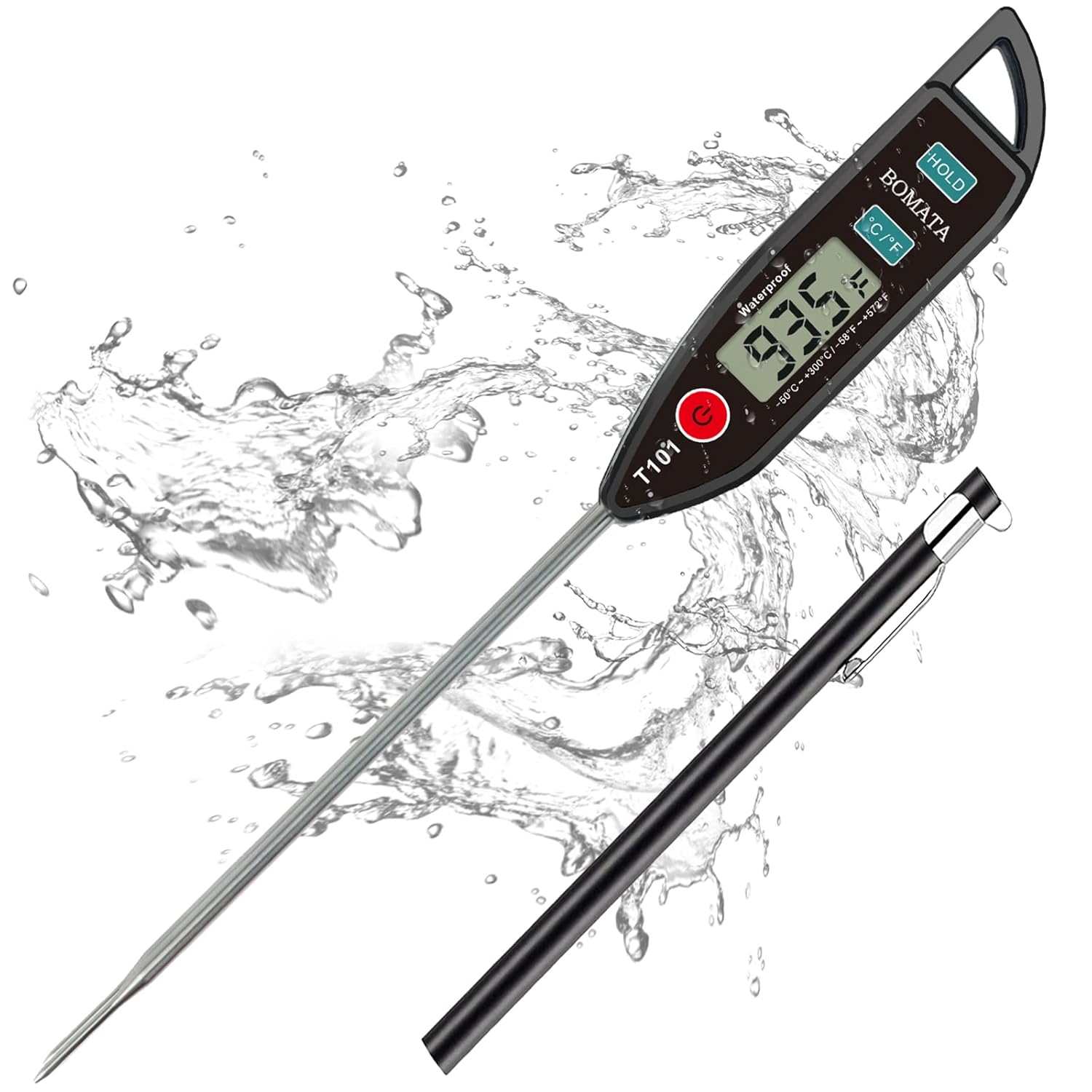
Liquid thermometers are constantly exposed to moisture, splatters, and spills during routine kitchen work. Models featuring official waterproof ratings like IPX6 or IPX7 permit direct rinsing under running tap water to remove oil and food residues effectively.
Non-waterproof or wipe-clean analog units require more cautious cleaning around the dial face to prevent moisture ingress. Select a waterproof build if you frequently measure messy liquids or need effortless cleanup after every session.
Display Readability and Screen Technology
Clear digital screens with large numerals eliminate guesswork when monitoring fast-moving temperatures in low-light kitchens or outdoor grilling areas. Backlit displays offer a distinct advantage during evening cooking sessions or inside dimly lit cooking spaces.
Traditional analog dials provide a battery-free viewing experience with fixed numbers arranged around a circular face. Choose the screen format that matches your personal preference for digital clarity versus mechanical simplicity.
Storage Options and Power Management Features
Convenient storage features such as built-in magnets, hanging holes, and protective sheaths help keep your thermometer accessible and undamaged inside busy kitchens. Magnetic backs attach directly to refrigerator doors, while hanging hooks fit standard wall racks.
Power conservation is equally important for battery-operated devices. Look for automatic shut-off functions that power down the unit after several minutes of inactivity to extend battery life between replacements.
Frequently asked questions
Can I leave a digital liquid thermometer inside a pot while cooking on the stove?
Most instant-read digital food thermometers are designed for spot-checking temperatures rather than continuous in-oven or in-pot monitoring. Leaving a digital probe exposed to direct burner heat for prolonged periods can damage the internal electronic components and plastic housing. Always check the manufacturer guidelines for your specific model to determine if it is rated for continuous immersion in hot cooking vessels or if it should be removed immediately after taking a reading.
What is the difference between a dial thermometer and a digital thermometer for liquids?
Dial thermometers operate mechanically using internal bimetallic strips, meaning they require no batteries and often include clips for attaching directly to beverage pitchers or pans. Digital thermometers rely on electronic sensors powered by batteries to deliver rapid numerical readouts on an LCD screen, often including features like backlights, temperature hold buttons, and wide thermal ranges. Your choice depends on whether you prefer battery-free analog simplicity or fast digital precision.
How do I properly clean and maintain a waterproof food thermometer?
Waterproof thermometers with ratings such as IPX6 or IPX7 can be rinsed directly under running tap water to remove food residues, oils, and milk stains. Use mild dish soap and warm water for cleaning, followed by wiping the stainless steel probe dry with a clean cloth before storage. Never submerge non-waterproof models entirely in water, and adhere strictly to hand wash only instructions provided by the manufacturer to protect the internal seals.
Why does probe length matter when measuring hot liquids?
A longer probe, typically around five inches in length, keeps your hands and fingers safely away from steam, boiling water, and hot splashing oil during measurement. This physical distance helps prevent accidental burns when stirring deep pots or checking hot candy mixtures. Shorter probes work well for shallow cups or beverage pitchers, but longer stainless steel designs offer superior hand protection during high-heat stove tasks and outdoor grilling sessions.
Do digital thermometers require regular calibration for accurate liquid measurements?
Most consumer digital food thermometers arrive pre-calibrated from the factory to maintain strict accuracy tolerances within a fraction of a degree. While some advanced commercial units allow manual resetting, many everyday digital models are factory sealed for water resistance and do not feature user adjustment mechanisms. If you suspect your thermometer is reading incorrectly, performing an ice-water test is a common way to verify its baseline accuracy against freezing water.