Appliances · Buying Guide
Best Geedel Rotary Cheese Grater Picks for Quick Kitchen Prep
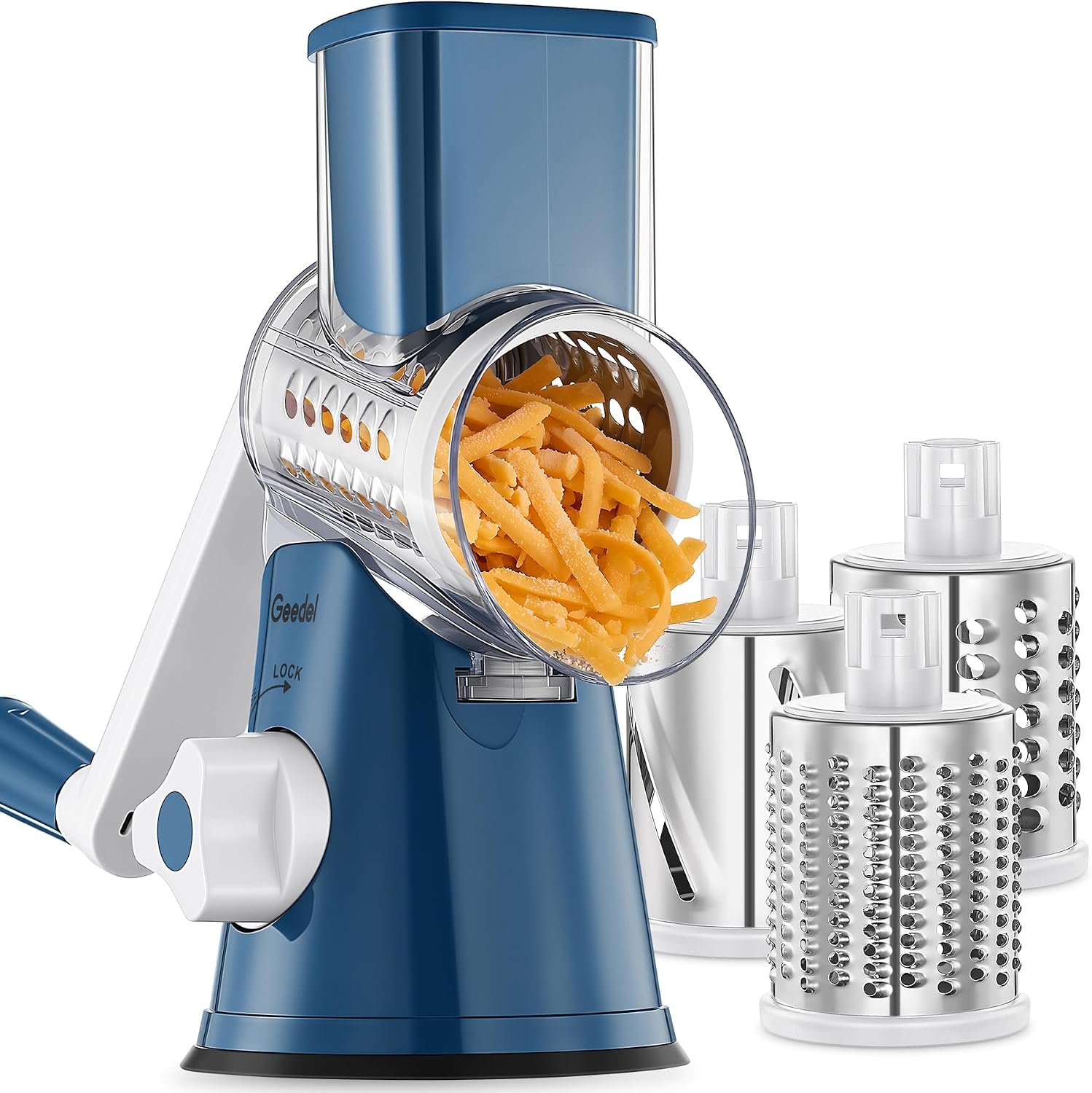
Preparing fresh ingredients at home often requires reliable kitchen tools that make manual cutting much faster and safer for everyday meal routines. A geedel rotary cheese grater features a mechanical hand crank design to process blocks of hard cheese, crunchy nuts, and fresh vegetables without exposing your fingers to sharp cutting edges during operation.
Different food preparation tasks require varying numbers of interchangeable blades and suction stability, ranging from standard three-blade setups to heavily upgraded configurations featuring wider chutes and multiple slicing options. Evaluating these distinct physical traits ensures you select a manual shredder that perfectly matches your household cooking habits, ingredient types, and available counter space.
As an Amazon Associate, StacyLaughs earns from qualifying purchases.
Buying guide
Blade Options and Variety
Choosing the right rotary cheese grater starts with evaluating the number and type of interchangeable blades included. Standard models feature three basic stainless steel inserts for slicing, shredding, and grinding. Upgraded versions expand this selection up to five blades, adding specialized options like wavy slicing or crushing. Assessing your recipes ensures you select a blade count matching your cooking requirements.
Reviewing blade material is critical for kitchen durability. All featured Geedel models utilize stainless steel blades designed to resist rusting and maintain performance. However, storing multiple blades safely requires organization when transitioning to larger configurations. Consider your available cabinet space before committing to higher blade counts.
Countertop Stability and Suction Bases
Maintaining stability during manual cranking is essential for safe and efficient food preparation. Most rotary graters rely on a suction base designed to anchor the unit securely onto smooth, clean countertops made of materials like glass or marble. A powerful suction grip prevents the device from shifting or lifting while you turn the hand crank, reducing accidental spills during heavy shredding sessions.
Buyers must verify their countertop surfaces before purchasing a suction-anchored kitchen tool. Textured, porous, or unpolished surfaces often prevent suction cups from forming a reliable seal, causing the grater to slide during active use. Upgraded models feature reinforced suction cups or enhanced locking mechanisms to improve grip reliability. Always test your counter surface compatibility to ensure stable, hands-free base anchoring.
Chute Size and Feeding Efficiency
The physical dimensions of the feeding inlet and outlet significantly impact your overall food preparation speed. Standard rotary graters feature narrower chutes that require you to slice larger blocks of vegetables or cheese into smaller pieces prior to feeding. Upgraded wide-chute models expand inlet openings by approximately thirty percent, allowing you to process larger uncut vegetable portions directly without extensive preliminary cutting.
Evaluating your typical ingredient sizes helps determine whether a standard or wide chute best suits your workflow. If you frequently process whole carrots, zucchini, or large cheese blocks, a wider inlet saves valuable preparation time and minimizes manual pre-cutting chores. However, wider units may occupy slightly more physical space on your countertop or inside storage cabinets during non-use periods.
Safety Features and Hand Protection
Kitchen safety remains a primary consideration when handling sharp metal cutting blades during meal preparation. Quality rotary cheese graters incorporate enclosed barrel designs and specialized physical barriers to keep your fingers safely away from rotating edges. The handle mechanism replaces direct hand contact with the blade surface, while an included food pusher allows you to press ingredients safely down the feeding chute.
Reviewing these protective design elements ensures you can grate hard cheeses and dense vegetables without risk of accidental cuts. The separation between the user's hands and the active cutting area makes manual crank graters a safer alternative to traditional flat box graters. Always utilize the provided food pusher rather than bare fingers during the final stages of grating small food ends.
Cleaning and Maintenance Requirements
Regular cleaning is vital for maintaining hygiene after processing dairy products, nuts, and fresh produce. Rotary cheese graters featuring fully detachable components simplify this maintenance routine by allowing you to take apart the feeding jar, barrel, handle, and blades in seconds. Quick manual rinsing under a stream of running water removes residual food particles effectively without requiring complex disassembly tools.
Many modern rotary graters offer top-rack dishwasher safety for added convenience during cleanup. Manufacturer cleaning guidance typically recommends placing detachable plastic and stainless steel parts on the top dishwasher rack to prevent warping or damage. Always follow these specific maintenance instructions to preserve the integrity of food-grade ABS housings and maintain sharp stainless steel cutting edges over years of frequent culinary use.
Storage Footprint and Cabinet Space
Kitchen storage capacity often dictates which model fits best in your home environment. Standard three-blade rotary graters feature compact vertical dimensions and narrow profiles that easily slip into standard cabinets or pantry shelves. Upgraded multi-blade versions with wider chutes or five interchangeable metal inserts may require slightly more dedicated storage space to keep all loose accessories organized together.
Consider how your chosen model disassembles and whether its blades stack neatly for compact storage. Some multi-blade units allow metal inserts to stack together within a dedicated storage footprint, minimizing clutter inside your kitchen drawers. Assessing your available storage space alongside your preparation needs ensures you select a kitchen tool that delivers high utility without creating permanent countertop or cabinet overcrowding.
Frequently asked questions
How does a rotary cheese grater protect your hands during operation?
A rotary cheese grater protects your hands by utilizing an external hand crank and a dedicated food pusher, completely eliminating direct contact with the internal stainless steel blades. Instead of holding the food against an exposed cutting surface like traditional box graters, you place ingredients inside the feeding jar and use the plastic pusher to guide them downward. The rotating handle mechanism turns the internal barrel safely away from your fingers, ensuring secure operation even when processing hard cheeses or dense root vegetables at high speeds.
Can these rotary graters handle hard cheeses like Parmesan?
Yes, these rotary graters are specifically designed to process both soft and hard cheeses like Parmesan efficiently. The internal cutting components consist of food-grade 430 stainless steel blades that remain sharp and durable during continuous rotation. When turning the hand crank, the ultra-sharp metal blades slice or shred hard cheese blocks into fluffy shreds or fine powder within seconds, saving significant preparation time compared to manual grating methods while preventing arm strain and messy crumbs on your kitchen counter.
What types of countertop surfaces work best with the suction base?
The powerful suction base on these rotary graters works best on clean, smooth, non-porous surfaces such as polished marble, glass, or smooth laminate countertops. A clean and flat surface allows the rubber suction cup to create a tight, airtight seal that firmly anchors the entire unit during active hand-cranking. Textured, wooden, tiled, or uneven surfaces prevent the suction mechanism from forming a proper vacuum seal, which may cause the grater to shift or slide during vigorous vegetable slicing or cheese shredding tasks.
Are all parts of the rotary cheese grater dishwasher safe?
All components of these rotary cheese graters are fully detachable and designated as top-rack dishwasher safe for easy cleaning. Manufacturer cleaning guidelines indicate that you can safely place the feeding jar, handle, food pusher, suction base, and interchangeable stainless steel blades onto the top rack of a standard household dishwasher. Alternatively, you can quickly rinse all detachable parts under a stream of running water for a few seconds to remove everyday food residue and maintain hygienic daily maintenance.
What is the difference between three-blade and five-blade models?
The primary difference between three-blade and five-blade models lies in the variety of cutting textures and food preparation options available. Standard three-blade graters typically include a slicing blade, a shredding blade, and a grinding blade suitable for basic cheese, nut, and vegetable tasks. Upgraded five-blade versions introduce additional cutting inserts such as extra fine shredding, crushing, or wavy slicing blades. While three-blade units offer streamlined simplicity for everyday cooking, five-blade configurations provide greater versatility for specialized recipes and diverse ingredient textures.