Appliances · Buying Guide
Best Hand Crank Meat Tenderizer Options for Home Kitchens
Preparing tough cuts of meat like venison, flank steak, and brisket requires the right mechanical leverage to break down tough connective fibers without completely destroying the natural texture. A hand crank meat tenderizer provides precise manual operation, letting home cooks, hunters, and professional butchers process meat efficiently for various recipes.
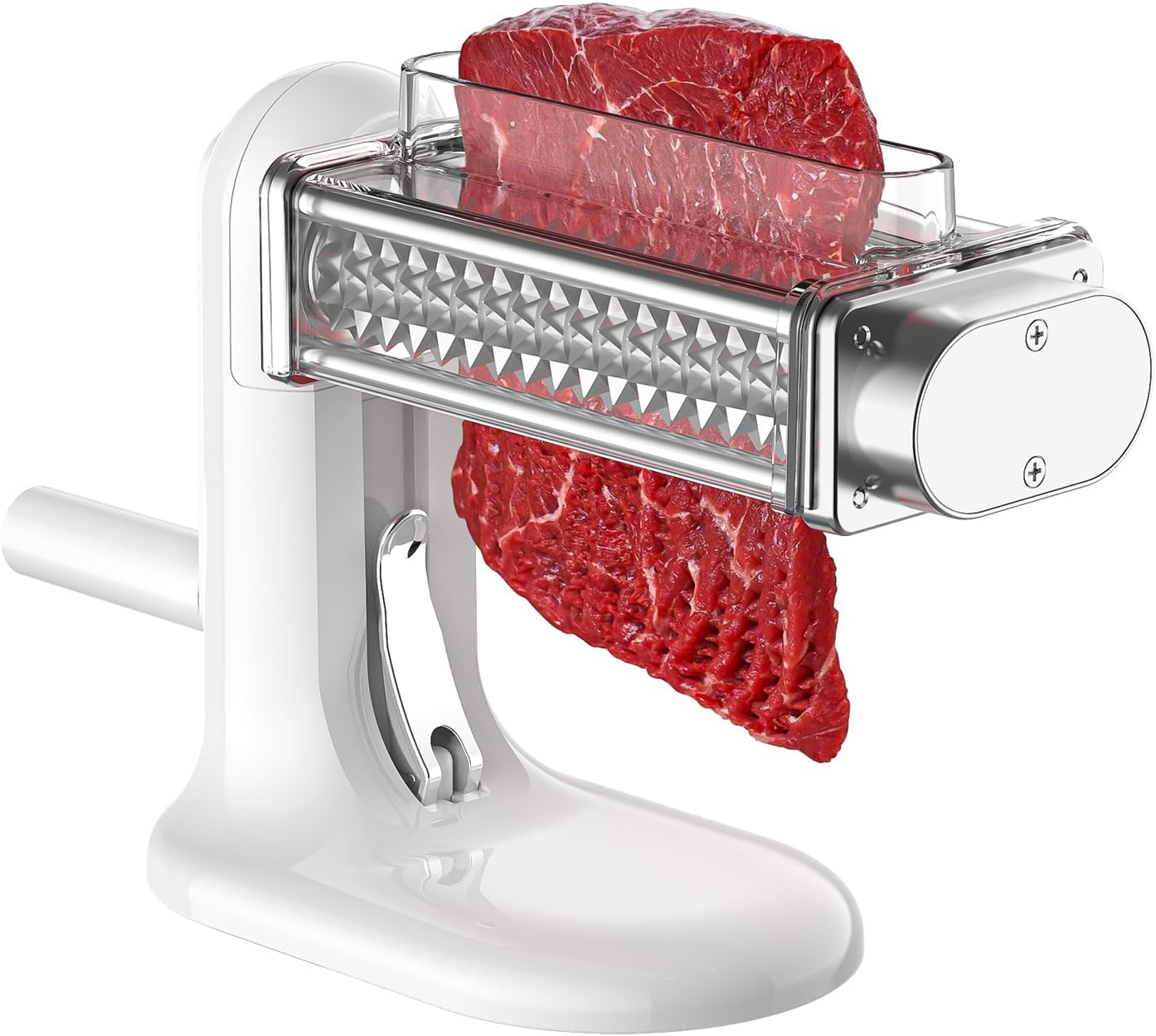
These manual machines use rotating stainless steel or cast iron blades and spikes to pierce muscle tissue, helping marinades penetrate deeply and reducing overall cooking times on the grill or in the oven. Selecting the right model depends heavily on feed chute dimensions, blade configurations, mounting styles, daily cleaning requirements for food safety, and various designs offering specialized features ranging from adjustable spacing to dual-function slicing capabilities.
As an Amazon Associate, StacyLaughs earns from qualifying purchases.
Buying guide
Material Construction and Durability
Selecting a hand crank meat tenderizer begins with evaluating its primary material construction. Models frequently feature heavy-duty cast aluminum, traditional cast iron, or premium 304 stainless steel. Stainless steel options resist rust effectively and withstand demanding environments, making them highly suitable for frequent use with wild game, beef, and red meat.
Cast iron provides traditional rigidity and weight, though it requires diligent hand washing and specific maintenance to prevent corrosion over time. Aluminum builds offer a moderately lighter alternative while still supporting robust food-grade coatings for hygiene. Assessing your kitchen environment helps determine which metal composition best matches your food preparation frequency and cleaning habits.
Feed Chute Capacity and Dimensions
The dimensions of the feed port directly dictate the maximum size of meat cuts you can process without extensive preliminary slicing. Available options range from compact openings accepting half-inch thick strips up to wide 5.8-inch and 7-inch chutes designed for large steaks, briskets, and venison. Matching the chute size to your typical cooking ingredients ensures smooth workflow execution.
If you frequently process wild game or large portions, a wider opening significantly reduces total preparation time by eliminating the need for extensive trimming. Conversely, smaller openings work well for standard home portions but require careful pre-cutting of thicker cuts before feeding them through the rotating mechanical rollers. Considering these physical limits prevents jams during operation.
Mounting Styles and Countertop Stability
Maintaining stability during manual cranking is essential for safety and ease of use. Tenderizers typically employ one of three stabilization methods: slip-free suction bases, edge-mounting C-clamps, or heavy freestanding bodies that rely heavily on their own weight. Selecting the right mounting style depends entirely on your available kitchen surfaces and portability needs during food preparation.
Suction bases anchor securely to smooth glass or polished countertops, preventing wobbling during active rotation. C-clamps attach firmly to table edges up to one and a half inches thick, offering a secure workstation feel. Heavy standalone units stay put via sheer gravity but demand dedicated counter space. Reviewing your table thickness ensures a proper, safe mount.
Blade Configurations and Special Functions
The internal blade assembly determines how the machine alters the meat structure. Standard configurations use rows of sharp metal spikes to physically pierce tough muscle fibers, helping liquid marinades absorb much deeper. Some advanced models include dual-function setups with separate blade sets dedicated exclusively to slicing uniform jerky strips.
Other variations feature adjustable spacing options, allowing users to modify the distance between pins to accommodate different meat thicknesses and cuts. Understanding these mechanical differences helps buyers choose a tool optimized for specific daily goals, whether making dried snack strips or tenderizing thick steaks for outdoor grilling events. This versatility expands preparation possibilities.
Cleaning and Maintenance Protocols
Proper hygiene requires regular, thorough cleaning after every single processing session. Most manual tenderizers feature detachable components and removable comb systems designed to clear trapped meat residue from hidden areas surrounding the sharp blades. Paying close attention to these removable parts prevents bacterial buildup and maintains safe food preparation standards. Careful handling during washing prevents accidental cuts from exposed edges.
Manufacturers universally recommend hand washing only with warm water and mild soap, explicitly prohibiting automatic dishwasher cycles to protect specialized coatings and prevent metal corrosion. Cast iron variants frequently require protective oil or silicone sprays to preserve their outer finish and ensure long-term mechanical reliability across years of regular kitchen use.
Processing Limitations and Meat Types
Understanding what types of meat a tenderizer can process safely prevents equipment damage and frustrating operational jams in the kitchen. These hand-crank machines are engineered primarily for tough red meats like beef, pork, lamb, and wild venison. Recognizing these structural boundaries ensures proper tool selection for your specific culinary recipes. Consulting manufacturer guidelines helps clarify compatibility for unique culinary tasks.
Soft meats such as fish or poultry are generally unsuitable for these mechanical rollers because of their delicate textures. Additionally, frozen meat with rock-hard centers or active bones must be partially thawed and deboned before processing to avoid bending or breaking the precision blades and internal metal gears during active hand cranking. Proper preparation safeguards the investment.
Frequently asked questions
Can I put my hand crank meat tenderizer in the dishwasher?
Manufacturers explicitly state that hand crank meat tenderizers are not dishwasher safe. You must hand wash all removable components using warm water and mild soap. Putting aluminum, cast iron, or coated metal parts into an automatic dishwasher can damage the specialized protective finishes, strip coatings, and cause corrosion or rusting. Hand washing also allows you to carefully clean around the sharp blades and detachable comb systems without risking damage from harsh dishwasher detergents and high heat cycles.
Will these machines work on frozen meat straight from the freezer?
Rock-hard meat taken directly from deep-freeze storage cannot be processed immediately. You must partially thaw the meat before feeding it through the machine. Attempting to run frozen, solid blocks of meat through the precision blades or gears can cause severe jams, bend stainless steel pins, or crack the internal gear structures. Partially thawing and ensuring all bones are completely removed protects the equipment and guarantees smoother, safer manual operation during food prep.
What types of meat are best suited for a hand crank tenderizer?
These manual machines excel at processing tough red meats such as beef, pork, lamb, and wild venison. The rotating blades and spikes physically sever tough connective tissues, making them ideal for preparing flank steak, briskets, and schnitzels. However, you should avoid using softer meats like fish or poultry, as their delicate structures do not process correctly through the heavy-duty rollers and can create a messy, unusable texture instead of a properly softened cut.
How do I keep my cast iron or metal tenderizer from rusting?
Preventing rust requires diligent post-cleaning maintenance, especially for cast iron models. After thoroughly diswashing and rinsing all parts with warm water, you must dry every component completely to eliminate residual moisture. For cast iron units specifically, manufacturers often recommend spraying the dried surfaces with a food-grade silicone spray or applying a light coat of oil to maintain the protective finish and prevent corrosion over time during periods of prolonged storage in kitchen cabinets.
What is the difference between a standard tenderizer and a 2-in-1 jerky slicer model?
A standard manual tenderizer features a single set of blades designed exclusively to pierce muscle fibers, tenderizing steaks and roasts without flattening them like a traditional mallet. In contrast, a 2-in-1 model includes two distinct sets of stainless steel blades—one set for standard tenderizing and a second set featuring more numerous blades engineered specifically to quickly cut meat into even, uniform strips for making homemade beef jerky, expanding your food preparation capabilities.