Appliances · Buying Guide
Best Wooden Kitchen Utensils for Everyday Cooking Tasks
Upgrading your cookware accessories often brings up questions about surface protection and daily durability in busy kitchens. Wooden kitchen utensils provide a classic, non-reactive option for stirring, flipping, and serving without scratching delicate pots and pans. Natural wood materials offer a solid, balanced feel during stovetop preparation, keeping your hands comfortable while managing hot meals.
Exploring different available sets reveals variations in piece counts, wood types like teak and acacia, and included storage holders or rests. Understanding these specific material and design attributes helps home cooks select the right tool collection for their kitchen setup, ensuring dependable performance across a wide variety of everyday cooking and baking tasks.
As an Amazon Associate, StacyLaughs earns from qualifying purchases.
Buying guide
Wood Material Selection (Teak vs. Acacia)
Selecting between teak and acacia wood involves understanding the natural characteristics of each material for daily kitchen tasks. Teak wood features high natural oil content and high density, offering exceptional water resistance and long-lasting durability for heavy-duty stovetop cooking. Acacia wood provides vibrant aesthetic tones, sturdy performance, and reliable strength for daily mixing, stirring, and serving routines across various recipes.
Both wood types protect delicate non-stick cookware surfaces effectively when crafted with smooth, burr-free edges and balanced grips. Buyers should carefully examine their personal aesthetic preferences, kitchen decor, and cooking frequency when choosing between these two resilient natural options to ensure long-term satisfaction and utility.
Piece Count and Variety
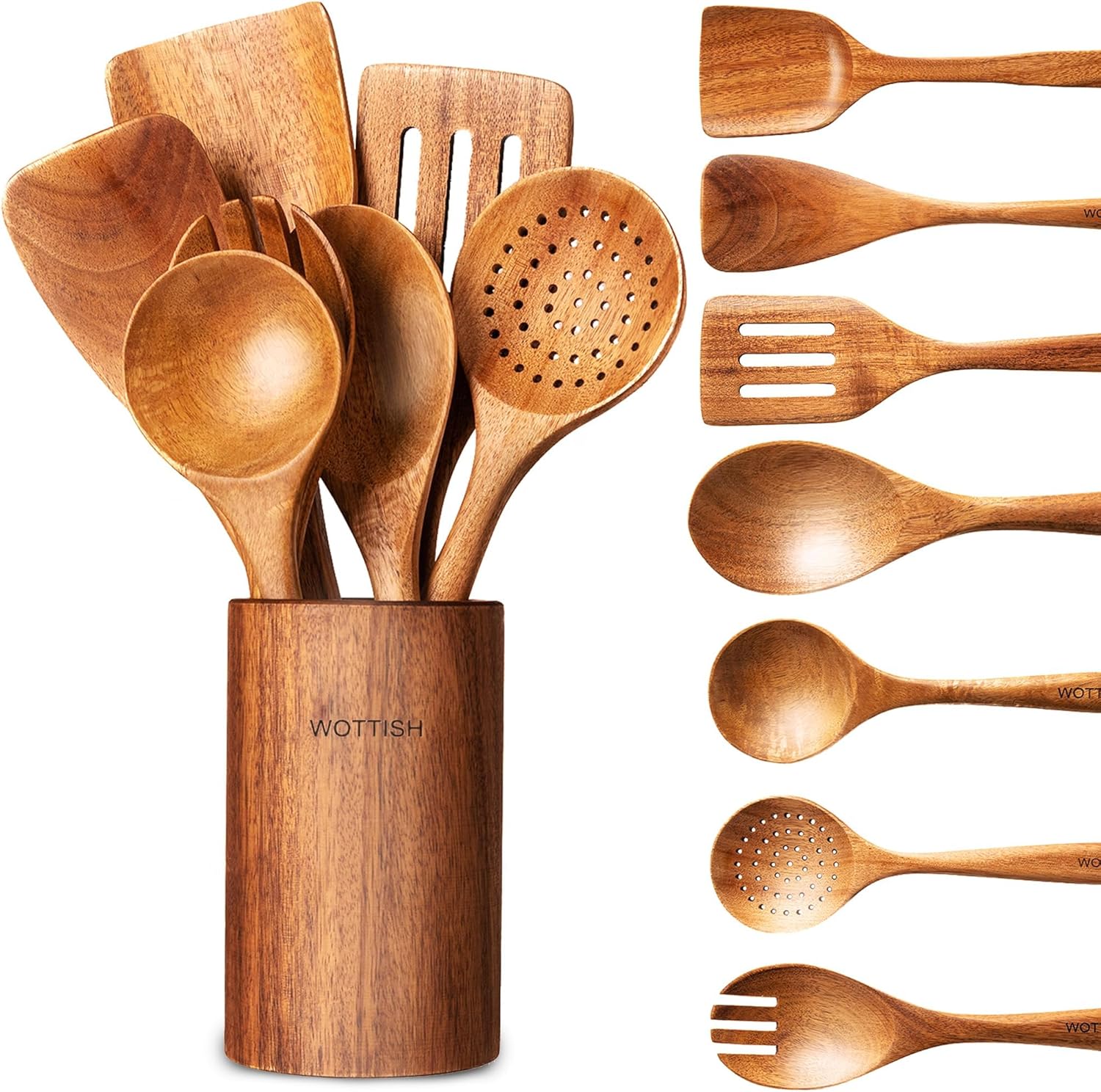
Assessing piece counts helps ensure you have the right tools for diverse culinary projects and daily meal preparation routines in your home kitchen. Sets range from eight pieces up to twelve pieces, including everyday essentials like flat spatulas, wok turners, soup ladles, and spaghetti pasta servers. Larger assortments provide specialized items such as skimmers, seasoning spoons, and salad forks for added versatility.
Consider your typical cooking habits, household size, and recipe complexity to determine if a compact collection or a comprehensive assortment fits your kitchen style best. Having extra specialty utensils readily available prevents scrambling during multi-course meal preparation and active stovetop cooking tasks throughout the week.
Surface Protection for Cookware
Protecting expensive non-stick pots and pans requires kitchen tools featuring smooth, rounded, and burr-free edges. Unlike metal spoons, natural wood utensils glide gently over delicate ceramic, stainless steel, and non-stick surfaces without causing unsightly surface scratches. This gentle contact preserves your cookware investment over years of daily stirring, turning, and scraping tasks on the stovetop.
Selecting solid wood pieces ensures you can scrape up pan fond or mix thick batters firmly while keeping delicate pan coatings completely intact. Prioritizing smooth finishes safeguards your cookware during every culinary endeavor, giving you total confidence while preparing hot family meals every single day of the week.
Heat Resistance and Comfort
Stovetop cooking demands quality utensils that withstand high temperatures without melting, warping, or deforming like plastic or silicone alternatives can do. Natural teak and acacia wood options offer dependable heat resistance, frequently handling temperatures up to four hundred fifty degrees Fahrenheit safely when left resting in hot pans during active cooking routines.
Long, well-balanced handles provide a secure and comfortable grip while keeping your hands safely away from boiling liquids, hot steam, and heated pan edges. Ergonomic wooden designs significantly reduce hand fatigue during extended cooking sessions and heavy-duty recipe preparation across your weekly meal schedule without transferring heat.
Cleaning and Maintenance Care
Maintaining natural wooden kitchen utensils requires consistent hand washing routines rather than automatic dishwasher cleaning cycles that can severely damage wood items. Using warm water, mild dish soap, and thorough air drying helps preserve the smooth finish, clear protective coating, and natural wood grain over years of regular kitchen use.
Avoiding prolonged soaking in standing water prevents the natural wood material from cracking, splitting, warping, or losing its structural integrity over time. Proper post-use maintenance care ensures your wooden spoons, turners, and spatulas remain functional, beautiful, and reliable for your next culinary creation at home every single day.
Storage and Organization Options
Keeping your kitchen organized involves choosing how to store your wooden utensil set conveniently between daily cooking sessions. Many available sets include matching countertop holders featuring bottom drainage openings to manage residual water effectively. Alternatively, individual handle hanging holes allow for wall rack display and easy accessibility during busy cooking tasks.
Evaluating your available counter space and kitchen dimensions helps determine whether a dedicated storage caddy or hanging setup works best for your layout. Keeping your essential tools easily accessible streamlines daily meal preparation and keeps your cooking area tidy and efficient throughout the week.
Frequently asked questions
Can wooden kitchen utensils be cleaned in the dishwasher?
No, wooden kitchen utensils should not be cleaned in an automatic dishwasher. Manufacturers consistently advise hand washing natural wood items using warm water and mild dish soap. Dishwasher cycles expose wood to excessive heat and prolonged moisture, which can cause the material to crack, split, warp, or lose its smooth protective finish. Promptly washing by hand and drying thoroughly with a towel or air drying helps preserve the integrity and appearance of your teak or acacia wood tools over years of daily kitchen use.
Will wooden spoons scratch non-stick pots and pans?
No, wooden spoons and spatulas are specifically designed to be gentle on non-stick cookware surfaces. Unlike metal utensils that feature sharp edges and hard metallic contacts, quality wooden cooking tools have smooth, rounded, and burr-free edges. This smooth wooden texture allows you to glide across delicate ceramic, stainless steel, cast iron, and non-stick pans while stirring, mixing, flipping, or scraping up food without causing unsightly surface scratches or damaging your expensive cookware investment during daily meal preparation tasks.
What is the difference between teak wood and acacia wood utensils?
Teak wood and acacia wood both offer durable, plastic-free solutions for daily cooking, but they possess distinct natural properties. Teak wood is known for its high organic oil content and density, providing exceptional water resistance and long-lasting durability in a kitchen environment. Acacia wood features vibrant natural grain patterns and sturdy performance, delivering an aesthetically pleasing touch to stovetop preparation. Both wood types provide balanced handles and non-stick-safe surfaces, so the choice often comes down to your personal aesthetic preference and desired grain appearance.
How should I store my wooden kitchen utensil set?
You can store your wooden kitchen utensil set using either the included matching countertop holder or the integrated handle hanging holes. Many sets feature dedicated storage caddies equipped with bottom drainage openings to help reduce water buildup after washing. Alternatively, if your set does not include a holder or if counter space is limited, you can hang the individual tools on a wall rack or utensil bar using the pre-drilled holes located at the end of each handle for easy access.
Do wooden cooking utensils affect the taste of food?
No, natural wooden cooking utensils are non-reactive and will not transfer any chemical, plastic, or metallic taste to your food. Unlike certain metal or lower-quality plastic tools that might react with acidic ingredients or leach unwanted flavors into hot dishes, solid teak and acacia wood maintain a neutral surface. This non-reactive characteristic ensures that your soups, sauces, batters, and sautés retain their authentic flavors while you stir, mix, and serve meals safely during everyday stovetop cooking routines.