Appliances · Buying Guide
Best Heat Proof Rubber Spatula Options for Baking and Cooking

Finding the right heat proof rubber spatula can simplify daily mixing, scraping, and high-temperature cooking tasks in any home or professional kitchen. Whether you are folding thick batters, stirring hot caramel, or scraping down the sides of a large mixing bowl, having a dependable utensil prevents frustration. Modern silicone spatulas bridge the gap between delicate non-stick surface care and robust thermal resistance, ensuring you can cook without worrying about melting or warping.
Different kitchen projects demand specific tool lengths, head flexibilities, and handle designs. Some cooks prefer a compact 9.5-inch scraper for everyday bowl work, while others need an extra-long handle to keep hands away from deep pots or boiling liquids. Reviewing the available options based on physical dimensions, material builds, and temperature thresholds helps you select a tool that matches your exact cooking habits and cookware collection.
As an Amazon Associate, StacyLaughs earns from qualifying purchases.
Buying guide
Thermal Resistance Ratings
Evaluating the maximum temperature threshold is crucial when choosing a heat proof rubber spatula. Many standard kitchen tools begin to warp or degrade when exposed to intense stovetop heat, high-temperature sugar work, or hot pan resting. Selecting a utensil rated between 500 and 600 degrees Fahrenheit ensures that accidental contact with hot surfaces or active cooking pans will not cause melting or release unpleasant odors.
Always match your typical cooking habits to the specified temperature limits. If you primarily mix cold batters or room-temperature ingredients, extreme heat ratings are less critical. However, enthusiastic home cooks who frequently stir bubbling sauces, caramel, or fried dishes benefit greatly from investing in high-threshold silicone models. Verifying these thermal specifications prevents unexpected kitchen mishaps and extends the overall lifespan of your daily preparation tools.
Handle Length and Reach
Handle length directly influences how comfortably you can interact with different pots, bowls, and baking dishes. Shorter models around 9.5 inches provide excellent control for standard mixing bowls, shallow pans, and everyday countertop food preparation tasks. They allow your hand to stay close to the working area, offering precise maneuverability when spreading frostings or whipping up light cake batters.
Conversely, longer handles measuring over 11 or 13 inches keep your hands safely away from deep soup pots, tall stock vessels, and boiling liquids. When working with large batches of food, an extended reach prevents steam burns and makes scraping the bottom of deep containers much easier. Consider the depth of your primary cookware collection before deciding on a compact or long-handled spatula configuration.
Construction Style and Seams
Construction style plays a significant role in long-term kitchen hygiene and tool durability. Seamless one-piece silicone designs eliminate any gaps or crevices where food particles, moisture, and bacteria could otherwise accumulate during food preparation. This solid molding approach ensures that the handle and head remain permanently joined, removing the risk of the head detaching unexpectedly into thick mixtures.
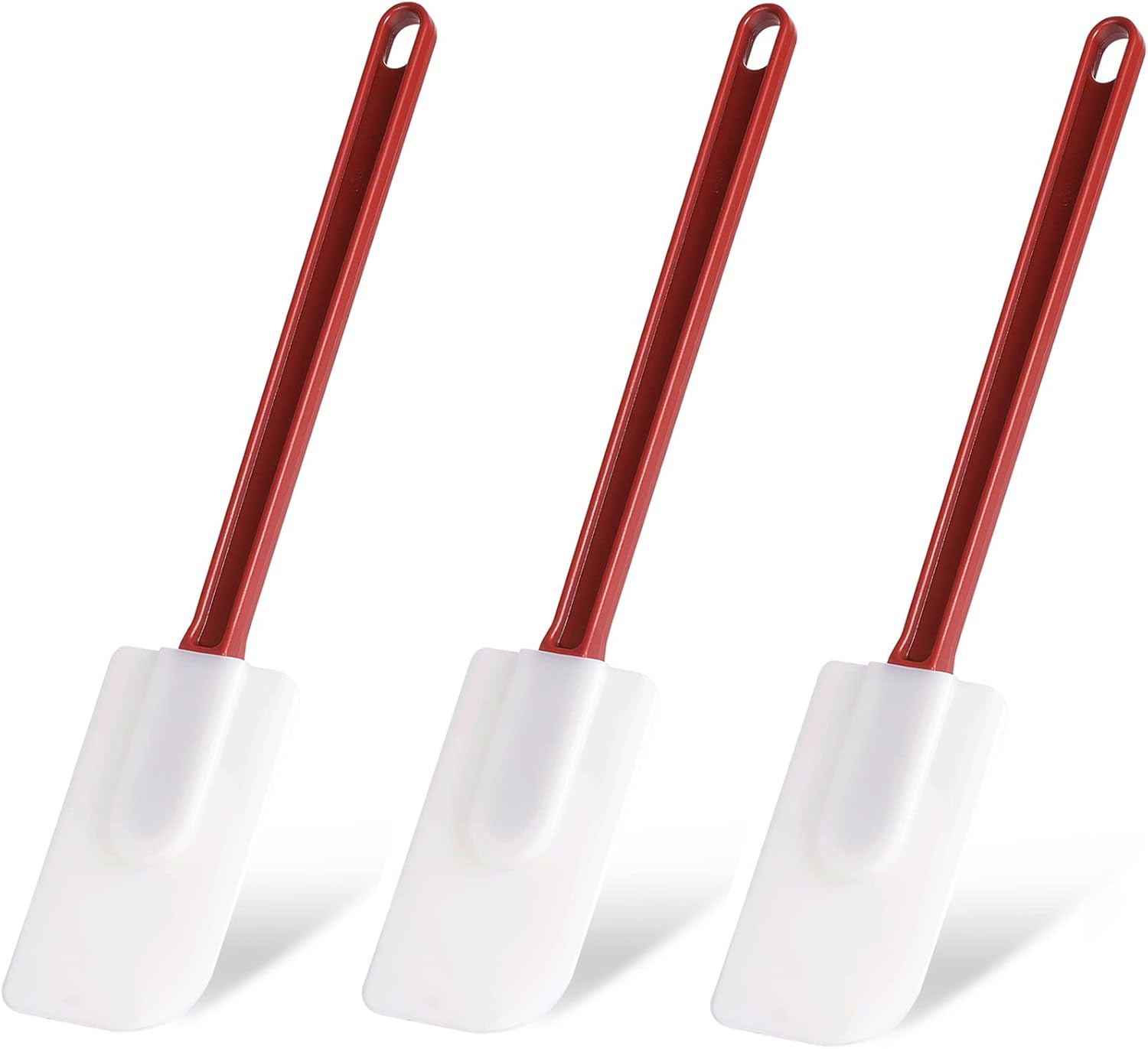
Two-piece models typically pair a silicone head with a rigid nylon or plastic handle, offering a distinct flex profile and cool-touch benefits. While these multi-part tools require a bit more attention around the connection joint during cleanup, they often provide superior rigidity for specific mixing tasks. Reviewing how a spatula is put together helps you choose a balance between easy sanitation and preferred handle stiffness.
Blade Flexibility and Core Support
The ideal balance of blade flexibility and core support depends heavily on your specific baking and cooking routines. A flexible, thin edge is essential for conforming to the curved interiors of mixing bowls, allowing you to scrape away every last drop of batter or sauce efficiently. Without sufficient pliability, leaving behind remnants on bowl sides becomes a frustrating daily occurrence during kitchen prep.
At the same time, an internal core structure provides the necessary rigidity to fold heavy ingredients like dense doughs or thick mashed potatoes without bending the handle. Spatulas lacking adequate internal support can collapse under pressure, making strenuous mixing tasks unnecessarily difficult. Look for tools that combine a pliable edge with a firm inner core to handle both delicate scraping and heavy stirring.
Cookware Compatibility and Safety
Protecting your investment in non-stick pots and pans requires utensils crafted from gentle materials. High-grade silicone rubber blades provide a soft barrier that leaves metal and coated cookware completely unmarked, preventing unsightly scratches during active frying or sauce reduction. Choosing food-safe, BPA-free materials also ensures peace of mind when your cooking tools make direct, prolonged contact with family meals.
Certifications like NSF standards offer additional reassurance regarding commercial food safety and sanitation compliance in professional or demanding home environments. While standard home baking tools perform adequately for occasional tasks, verifying that your chosen rubber spatula is explicitly rated for food contact helps maintain high hygiene standards. Prioritizing safe material compositions protects both your expensive cookware surfaces and the overall quality of your culinary creations.
Maintenance and Cleaning Needs
Keeping your kitchen utensils clean should be a straightforward process that does not require excessive scrubbing or special care routines. Many modern silicone spatulas are commercial dishwasher safe, allowing you to toss them in with regular loads after finishing dinner preparation. Smooth surface finishes and integrated designs further simplify cleaning by preventing sticky residues or oils from clinging stubbornly to the tool body.
Pay attention to whether a tool features stain-resistant properties to keep your spatulas looking pristine even after working with vibrant ingredients like tomato sauces or turmeric. Proper maintenance also involves inspecting connection joints on multi-piece models to ensure no moisture lingers unseen. Choosing low-maintenance utensils saves valuable time after meals, letting you clean up quickly and maintain a hygienic kitchen environment effortlessly.
Frequently asked questions
Can I leave a heat proof rubber spatula sitting in a hot pan while cooking?
While many heat proof rubber spatulas are rated to withstand high temperatures up to 500 or 600 degrees Fahrenheit, leaving any utensil resting directly against a scorching pan bottom for extended periods is generally discouraged. Direct contact with superheated metal elements can exceed normal ambient cooking heat and potentially compromise the silicone material over time. It is always safer to use built-in clean rest features or resting spoons when the tool is not actively being used for stirring or flipping.
Are silicone rubber spatulas safe for use with non-stick cookware?
Yes, silicone rubber spatulas are exceptionally well-suited for non-stick pots and pans. The soft, flexible nature of food-grade silicone ensures that the edges glide smoothly across coated cooking surfaces without leaving scratches, scuffs, or marks. Unlike metal utensils that can permanently ruin expensive non-stick coatings, silicone provides a gentle barrier that lets you scrape, stir, and fold ingredients efficiently while preserving the integrity of your cookware collection for years of reliable daily use.
What is the difference between one-piece and two-piece spatula designs?
One-piece spatulas feature a seamless molded construction where the handle and blade are integrated into a single unit, eliminating crevices where food particles and bacteria can hide. This design simplifies cleaning and prevents the head from detaching. Two-piece spatulas typically combine a silicone head with a rigid nylon handle, offering a distinct flex profile and cool-touch handling. While two-piece tools require careful cleaning around the connection joint, they often provide extra firmness for heavy mixing.
How do I clean and maintain my silicone rubber spatula?
Cleaning a silicone rubber spatula is straightforward because most modern options are commercial dishwasher safe. For quick cleanups between cooking steps, a simple wipe with a damp soapy sponge removes oils and food residues easily. To maintain optimal condition, choose stain-resistant materials that prevent discoloration from vibrant ingredients like tomato sauce. Always ensure multi-piece tools are thoroughly cleaned around connection joints, and store your utensils using hanging holes or drawer organizers to keep them ready.
How do I choose the correct spatula length for my kitchen tasks?
Selecting the right spatula length depends heavily on the depth of your cookware and mixing bowls. Shorter models around 9.5 inches provide excellent control and precision for standard baking bowls, shallow pans, and countertop food prep. If you frequently cook large batches in deep stockpots or tall vessels, choosing an extended handle measuring 11 to 13 inches keeps your hands safely away from steam and hot liquids while easily reaching the bottom corners of deep containers.