Appliances · Buying Guide
Best Heavy Duty Can Opener Options for Large and Small Kitchens
Finding the right kitchen tool for daily food preparation can significantly change your cooking routine, especially when tackling bulky ingredients or high-volume meals. A dependable manual device reduces hand strain and speeds up food preparation across various culinary settings, making routine kitchen tasks much easier to handle without excessive physical effort or operational difficulty during heavy daily cooking sessions.
Selecting a reliable model depends heavily on handle comfort, mechanism style, and specific container size requirements. Whether managing large commercial quantities or routine household cooking, understanding core physical design features ensures a practical choice that matches everyday kitchen demands without unnecessary complications or premature wear.
As an Amazon Associate, StacyLaughs earns from qualifying purchases.
Buying guide
Evaluating Material Composition and Durability
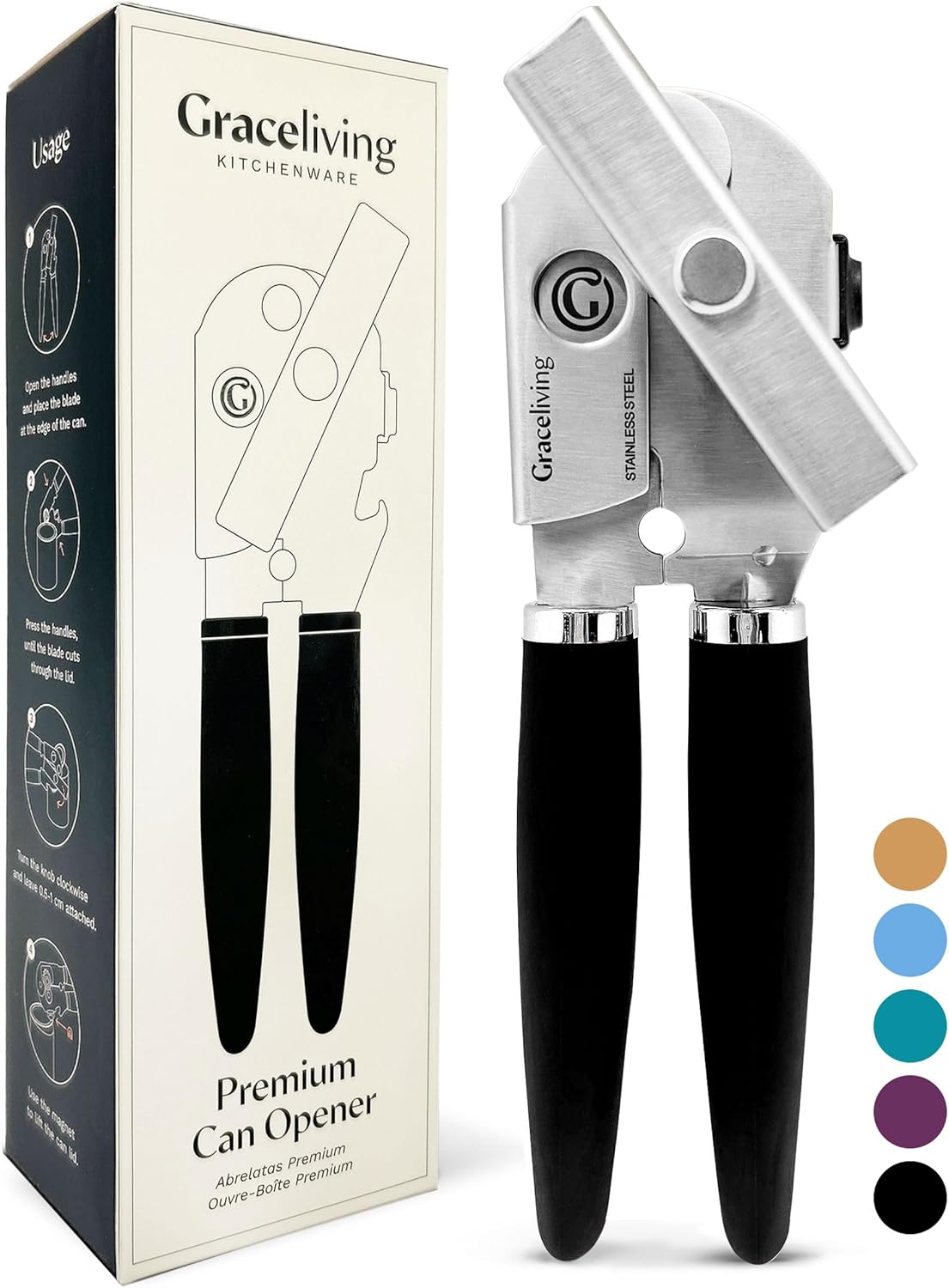
When choosing a heavy-duty can opener, material composition plays a vital role in determining long-term performance. Stainless steel and high-carbon steel components resist rust, daily wear, and structural bending under pressure. Selecting robust materials ensures the tool withstands frequent high-volume food preparation tasks without compromising mechanical integrity or safety in busy professional and home kitchen environments alike.
Reviewing the specific grade of metal used in the frame and blades helps prevent premature replacement and saves money. Reinforced metal structures provide consistent opening results across hundreds of uses. Prioritizing solid construction standards guarantees that the device remains dependable even when tackling tough commercial containers or regular everyday household provisions.
Understanding Handle Ergonomics and Leverage
Handle design directly impacts physical comfort and the amount of force required during operation. Extended handles and soft-grip non-slip coatings provide greater leverage, making it easier to rotate mechanisms smoothly. These ergonomic features reduce hand strain and fatigue, which is especially beneficial during repetitive tasks or when opening multiple containers in a single session.
Users with limited hand strength or arthritis benefit significantly from thoughtfully engineered grip layouts. Textured surfaces prevent slipping while providing secure control throughout the opening process. Evaluating the physical dimensions and tactile finish of the handles ensures a comfortable user experience regardless of the volume of food being prepared.
Assessing Cutting Wheel Precision and Edge Quality
The cutting wheel is the central functional component responsible for piercing metal cleanly and maintaining smooth rotation. High-carbon steel blades deliver sharp, consistent performance that minimizes friction. A precise wheel design prevents jagged edges and metal shavings from falling into food, ensuring safer handling and easier scooping of ingredients once the container lid has been successfully removed.
Inspecting how the wheel interacts with the gear system reveals much about operational smoothness. Hardened cutting edges maintain their sharpness over extended periods, reducing the physical effort needed to pierce heavy lids. Choosing models with engineered precision wheels guarantees clean cuts and reliable daily functionality.
Comparing Manual Operation Versus Crank Mechanisms
Operating mechanisms vary between traditional handheld twisting knobs and larger hand-crank systems. Standard knobs rely on a direct rotation approach suited for everyday household tasks. Conversely, gear-driven hand cranks offer mechanical advantage, allowing users to turn smoothly through full circles with minimal resistance. This makes crank designs popular for handling bulky commercial containers efficiently.
Choosing between these styles depends heavily on your typical batch sizes and storage preferences. While standard knobs fit easily into standard kitchen drawers, crank mechanisms often require designated counter space or foldable features. Matching the operation mode to your cooking habits ensures optimal convenience.
Considering Size Compatibility for Containers
Container dimensions dictate which opening tool will perform best in your kitchen space. While some devices are engineered specifically for extra-large commercial #10 cans, others are tailored for versatile mixed sizing. Reviewing manufacturer size recommendations prevents compatibility issues, ensuring that your chosen tool accommodates your pantry inventory without operational hiccups or jams.
Certain heavy-duty models explicitly state restrictions regarding petite goods or small tuna containers. Knowing these physical limitations helps buyers select a tool that aligns perfectly with their actual grocery habits. Matching the opening mechanism to your container range prevents frustration and wasted preparation time.
Examining Maintenance Requirements and Cleaning Care
Proper maintenance extends the functional lifespan of any metal kitchen tool. Many stainless steel models require hand washing and thorough drying to prevent moisture accumulation and preserve their brushed exterior finishes. Avoiding prolonged soaking protects precision gears and keeps blades functioning smoothly over years of consistent daily use in busy culinary spaces.
Reviewing manufacturer care guidelines ensures you follow correct cleaning procedures without damaging specialized components. Simple habits like drying immediately after washing maintain rust-resistant properties. Adhering to these maintenance recommendations safeguards your investment and guarantees reliable performance during every meal preparation session.
Frequently asked questions
Can heavy-duty can openers handle both large and small containers?
Many heavy-duty models are engineered to accommodate various container sizes, but specific design limitations often apply. For instance, certain extra-large commercial crank openers are specifically customized for massive #10 cans and may not work effectively on petite items like small tuna cans. Conversely, other handheld stainless steel versions handle a broader mix of standard and large sizes easily. Always check the manufacturer guidelines regarding container dimensions to ensure the tool matches your specific pantry inventory and daily food preparation requirements before making a final purchasing decision.
Are magnetic lid lifters effective at keeping metal away from food?
Yes, built-in magnetic lid lifters are designed to attach securely to severed metal tops as the cutting wheel completes its rotation. This feature lifts the sharp lid away from your hands and prevents it from falling directly into the food contents, supporting a cleaner and more hygienic cooking process. While not all heavy-duty models include magnets, those equipped with this technology eliminate the need to use separate knives or fingers to retrieve sharp lids, thereby improving overall safety and convenience during high-volume meal preparation tasks.
What is the proper way to clean and maintain a stainless steel can opener?
Maintaining stainless steel kitchen tools typically requires hand washing rather than placing them in an automated dishwasher. Manufacturers usually advise avoiding prolonged soaking in water to protect precision gears, internal springs, and rust-resistant finishes. After washing with mild soap, it is essential to dry the entire device thoroughly with a clean towel before storing it away. Following these manufacturer-recommended cleaning and maintenance steps prevents moisture accumulation, preserves sharp cutting edges, and extends the overall operational lifespan of your heavy-duty kitchen opener.
Why do some heavy-duty openers feature extra-long handles or cranks?
Extra-long handles and oversized hand cranks are engineered to provide significantly greater mechanical leverage during operation. This physical design reduces the amount of grip strength and physical force required to rotate the cutting wheel, making the opening process much smoother. Such ergonomic enhancements are especially beneficial for individuals with limited hand strength, arthritis, or those who regularly tackle high-volume prep involving large commercial containers. By maximizing leverage, these tools minimize hand fatigue during prolonged or repetitive kitchen tasks.
Do manual heavy-duty openers require a lot of storage space?
The storage footprint of a heavy-duty manual opener depends heavily on its physical construction and handle length. All-steel commercial-grade models and specialized crank systems often feature larger dimensions and extended frames, meaning they require more room in drawers or cabinets compared to standard compact kitchen gadgets. However, some models incorporate foldable designs or streamlined profiles to help optimize storage in crowded kitchens. Reviewing the item dimensions and structural layout helps you determine whether the tool will fit comfortably inside your available kitchen storage spaces.