Appliances · Buying Guide
Best Heavy Duty Potato Masher Options for Every Kitchen
Finding the right tool for preparing root vegetables, soft fruits, and homemade baby food requires looking closely at build quality and structural materials. A reliable heavy duty potato masher transforms everyday meal preparation by reducing hand strain and delivering consistent, lump-free textures without requiring electricity, motors, or complex mechanical setups in busy home kitchens daily.
Across the market, options range from traditional open mashing plates to high-capacity pressing tools built with solid stainless steel and ergonomic grips. Evaluating these kitchen utensils based on your specific cooking habits ensures you select a dependable device that matches your preferred recipes, available storage space, and daily cleanup routines for long-term kitchen use.
As an Amazon Associate, StacyLaughs earns from qualifying purchases.
Buying guide
Material Composition and Durability
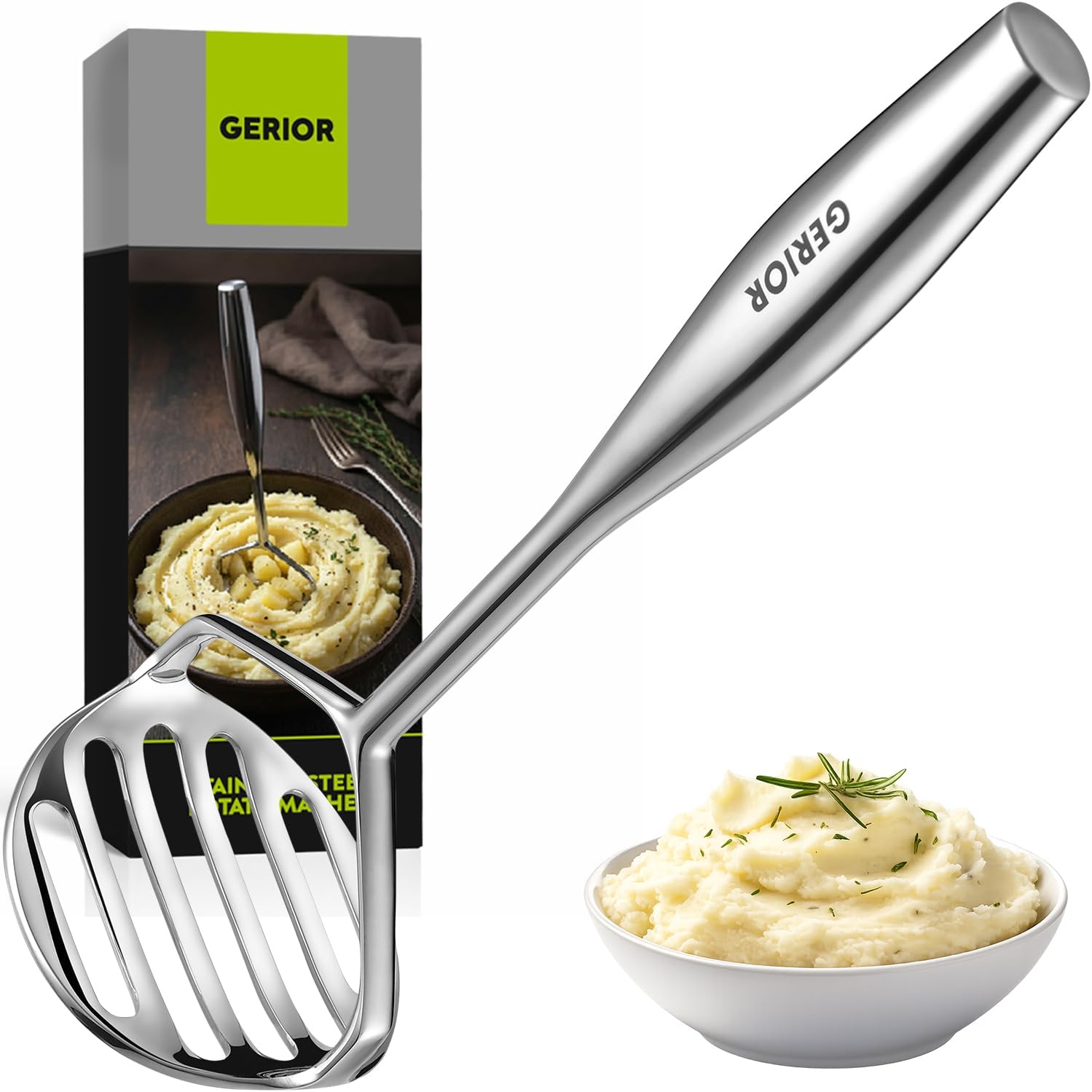
Selecting a heavy duty potato masher starts with examining its underlying material composition for long-term reliability. Solid cast 304 stainless steel provides exceptional resistance against rust, bending, and staining during intense daily cooking tasks. Models featuring seamless one-piece builds eliminate weak joints where food particles might otherwise accumulate over years of regular kitchen use and washing cycles.
Avoiding hollow or welded alternatives ensures your kitchen tool maintains structural integrity under high pressure without wobbling. High-grade stainless steel surfaces also maintain a mirror-polished finish that wipes clean effortlessly after heavy meal prep. Prioritizing robust metal construction guarantees a dependable utensil that withstands frequent preparation of dense root vegetables without ever degrading or cracking under pressure.
Handle Ergonomics and Grip Comfort
Handle design significantly influences how much wrist strain you experience while crushing large batches of cooked food. Ergonomic handles distribute downward pressure evenly across your hand, making the mashing process much smoother and considerably less tiring over time. Utensils featuring cushioned silicone or textured rubber grips offer enhanced traction and a softer touch during messy kitchen cooking tasks and meal preparations.
Conversely, solid stainless steel handles provide a sleek, seamless look and effortless dishwasher cleanup at the direct expense of extra cushioning. Deciding between a bare metal grip and a soft-touch overlay depends entirely on personal preference regarding hand comfort during extended food preparation sessions in busy home kitchens where speed matters.
Mashing Plate Design and Hole Configuration
The configuration of holes on a mashing plate dictates how efficiently ingredients break down into smooth, consistent textures. Plates featuring multiple precisely sized holes or optimized thirty-seven hole patterns push food through quickly while minimizing stubborn lumps in potatoes. Open grid layouts also prevent dense ingredients from getting trapped unnecessarily during active mashing sessions.
High-capacity pressing baskets offer an alternative mechanical approach by forcing cooked vegetables through fine metal screens for ultra-smooth results every single time. Assessing your preferred consistency helps determine whether a traditional flat plate or a deep pressing basket suits your daily cooking style and favorite family recipes best across different meals.
Cleaning and Maintenance Requirements
Maintaining kitchen utensils properly ensures long-term hygiene and prevents stubborn food residue buildup over months of heavy use. Seamless stainless steel mashers are exceptionally easy to clean because they feature smooth, non-porous surfaces that resist staining and lingering food odors. Most all-metal models are completely dishwasher safe for maximum daily household convenience.
Models with silicone or rubber handle components may require more careful drying around attachment seams to protect the materials from moisture degradation over time. Reviewing manufacturer care instructions helps maintain your utensil in pristine condition while ensuring effortless cleanup after preparing sticky, starchy, or oily foods in busy home kitchens.
Storage Dimensions and Physical Footprint
Kitchen storage space often dictates which tool fits best in your everyday culinary collection. Traditional flat mashers have a slim profile that slips easily into standard shallow drawers alongside mixing spoons and spatulas. Their compact vertical dimensions minimize clutter in crowded kitchen cabinets and utility drawers across the room very effectively.
In contrast, large potato ricers and longer specialty mashers require significantly more vertical and horizontal clearance due to hinged levers or extended frames. Measuring your available drawer or hanging space before purchasing ensures your new kitchen gadget stores away neatly without causing frustrating organizational bottlenecks in tight home kitchen spaces for everyone.
Versatility Across Ingredients
A truly versatile kitchen masher handles far more than just standard potatoes during routine home meal preparation tasks. Many heavy-duty models excel at crushing avocados for fresh guacamole, smashing soft fruits for baking, or preparing homemade baby food from cooked carrots and squash effortlessly. Choosing a multi-purpose tool significantly reduces the need for single-use gadgets crowding your drawers today.
Evaluating what ingredients you prepare most frequently helps clarify whether you need a flat mashing plate or a fine pressing mechanism. Matching the utensil capabilities to your typical recipes ensures maximum daily utility and long-term satisfaction from your kitchen investment over time without adding unnecessary clutter to your home spaces.
Frequently asked questions
Can these heavy duty mashers be cleaned in a dishwasher?
Most stainless steel potato mashers and ricers featured here are fully dishwasher safe for easy cleanup after meal preparation. Models crafted from solid 304 stainless steel or seamless one-piece designs withstand dishwasher cycles without rusting, bending, or degrading. However, if your chosen model includes a rubber or silicone handle component, checking the manufacturer guidelines is always wise to ensure the handle seams remain protected from excessive moisture exposure over prolonged washing cycles in your household appliance.
What materials are best for long-lasting durability in a potato masher?
Solid cast 304 stainless steel is widely considered the superior material for heavy-duty kitchen mashers because it resists rust, corrosion, and bending under high pressure. Unlike hollow or welded utensils that can wobble or snap at joint connections over time, integrated one-piece metal designs provide maximum structural stability. Avoiding plastic or weak metal alloys ensures your tool handles dense root vegetables like sweet potatoes and yams effortlessly for many years of reliable home cooking use.
Are potato ricers better than traditional flat mashers for making mashed potatoes?
Potato ricers use a pressing mechanism and fine holes to force cooked potatoes through a basket, creating an exceptionally smooth, lump-free texture that mimics restaurant quality. Traditional flat mashers, on the other hand, leave a slightly chunkier texture and offer faster, more straightforward operation with fewer parts to clean. Choosing between them depends entirely on whether you prefer ultra-smooth purees or a traditional rustic mash for your family meals.
Can I use a heavy duty potato masher for foods other than potatoes?
Yes, heavy-duty mashers and ricers are remarkably versatile tools suitable for a wide variety of soft foods and ingredients. You can easily use them to crush avocados for fresh guacamole, mash hard-boiled eggs, blend bananas for baking, or puree cooked vegetables and fruits to make homemade baby food. Their sturdy construction allows them to handle beans, ground meat, and squash without bending, replacing several single-use kitchen gadgets in your drawers.
How do I choose the right handle style for my physical comfort?
Selecting a handle style depends on your personal preference for grip comfort and leverage during repetitive mashing tasks. Cushioned silicone or textured rubber handles provide a softer grip that helps absorb downward pressure and reduce hand fatigue. Conversely, solid stainless steel handles offer a sleek, seamless aesthetic and superior hygiene but lack soft padding. Consider how often you cook large batches and whether grip cushioning is important for your hand comfort.