Appliances · Buying Guide
Best Kitchen Equipment And Utensils For Daily Cooking Needs
Selecting the right kitchen equipment and utensils shapes how efficiently you prep, cook, and store meals at home. A well-chosen collection brings together essential tools like spatulas, spoons, and mixing bowls tailored to your specific recipe requirements. Having the correct instruments on hand streamlines every stage of food preparation from slicing ingredients to serving finished dishes on the dining table.
Exploring different material options, from durable stainless steel to gentle wood and heat-resistant silicone, helps align your tools with your cookware and daily routines. Matching your kitchen setup to your cooking habits ensures lasting utility without unnecessary clutter on your counters or storage shelves. Thoughtful selection supports consistent cooking outcomes across diverse household recipes and baking projects.
As an Amazon Associate, StacyLaughs earns from qualifying purchases.
Buying guide
Material Selection for Cookware Protection
Choosing the right material for your kitchen utensils dictates how well your cookware holds up over years of daily meal preparation tasks. Stainless steel options provide exceptional durability for heavy-duty cooking and high-heat stirring, but their rigid metal edges can easily scratch delicate nonstick pot surfaces if used incorrectly across varied household recipes.
Silicone and natural wood alternatives offer much gentler contact points that safeguard delicate nonstick coatings against abrasive wear during active stovetop cooking routines and baking sessions. Evaluating your existing pots and pans before purchasing ensures your chosen tools complement your cookware collection effectively without causing accidental surface damage during busy family meal prep.
Assessing Set Size and Component Variety
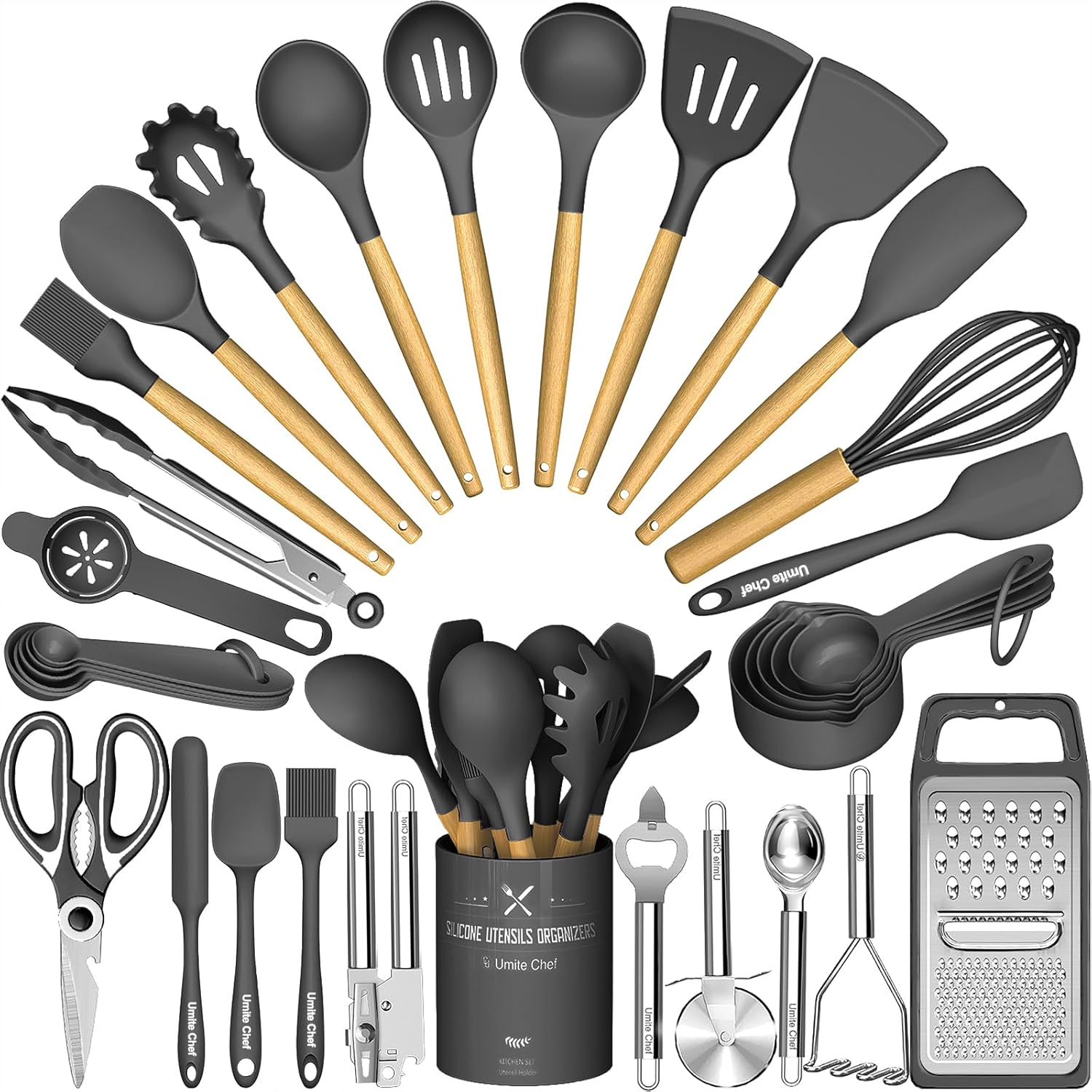
Large utensil sets containing thirty to fifty pieces offer an incredible variety of specialized tools, ranging from standard turning spatulas to pasta servers, whisks, and handy grater attachments. Reviewing the included item list ensures you actually use the provided gadgets rather than accumulating unnecessary clutter in your kitchen drawers or countertop holders over time.
Smaller collections focus tightly on foundational items like basic cooking spoons and turners, which suits minimalists who prefer streamlined cooking spaces. Matching the total piece count to your actual cooking style prevents overcrowding and guarantees every single tool serves a distinct, practical purpose in your daily meal preparation and everyday baking routine.
Understanding Cleaning and Maintenance Requirements
Maintenance routines differ significantly depending on the specific materials used to construct your kitchen tools and mixing vessels. Wooden handles and natural wood spoons typically require careful hand washing and prompt drying to prevent water damage or wood splitting, while stainless steel components need thorough drying after washing to prevent any water-based corrosion surface issues.
Fully silicone-coated items often tolerate higher heat and simpler washing procedures, though certain airtight lids or wooden-handled gadgets may warp or degrade in automated dishwashers over time. Knowing these upkeep demands in advance helps you choose products that fit comfortably into your household cleaning habits without creating frustrating daily maintenance chores.
Evaluating Heat Resistance and Thermal Limits
Cooking utensils frequently encounter high temperatures during frying, simmering, and boiling tasks on active household stovetops. Silicone heads designed to withstand temperatures up to four hundred forty-six degrees Fahrenheit provide reliable performance without melting or warping when left resting inside hot pots or pans during active cooking sessions and daily meal prep work.
Metal and solid wood tools handle thermal exposure differently, with stainless steel conducting heat and natural wood resisting thermal transfer to protect your hands from accidental burns. Matching the thermal rating of your chosen utensils to your cooking style prevents accidental heat damage during intense stovetop meal preparation projects and everyday baking tasks.
Storage and Countertop Organization Solutions
Managing kitchen clutter effectively requires considering how your equipment and utensils will be stored when not actively in use across diverse recipes. Sets that include dedicated countertop holders or feature nesting bowl designs offer organized storage solutions that fit neatly on standard refrigerator shelves, cabinets, or kitchen counters without creating workspace congestion.
Convenient hanging handles provide alternative storage methods for kitchens with limited drawer space, keeping frequently used cooking items within easy arm reach during meal prep. Assessing your available cabinet space and counter dimensions before purchasing ensures your new equipment integrates smoothly into your established kitchen layout and everyday storage setup.
Versatility and Multi-Purpose Functionality
Selecting versatile kitchen equipment allows you to accomplish multiple food preparation tasks with a single cohesive set of tools. Stainless steel mixing bowls equipped with airtight lids and built-in grater attachments successfully combine food storage, ingredient mixing, and vegetable shredding into one unified product ecosystem for busy home cooks everywhere preparing everyday meals.
Comprehensive utensil collections provide the right instrument for everything from stirring delicate sauces to serving hot pasta, eliminating the need to purchase separate specialty items later. Prioritizing multi-functional tools maximizes your financial investment and simplifies your daily cooking routine across breakfast, lunch, and dinner preparation projects in busy home kitchens.
Frequently asked questions
Can stainless steel utensils be used with nonstick cookware?
Using stainless steel utensils directly on nonstick cookware is generally discouraged because the rigid metal edges can easily scratch and ruin the sensitive nonstick coating over extended periods of time. If your kitchen features delicate nonstick pots and pans, it is much safer to choose wooden or silicone-coated utensils that offer gentle contact surfaces specifically designed to protect your cookware from abrasive scratching during active stovetop cooking and stirring routines.
How should wooden handles on kitchen utensils be washed?
Kitchen utensils featuring wooden handles require careful hand washing rather than automated dishwasher cycles to preserve their structural integrity and natural appearance. Submerging wood handles in water for extended periods or exposing them to high dishwasher heat can cause the wood to warp, crack, or split apart. Washing them gently by hand with mild soap and drying them promptly with a clean cloth helps maintain the natural finish over years of regular use.
Are silicone cooking utensils safe against high heat?
Food-grade silicone cooking utensils are engineered to withstand high temperatures safely, often handling heat up to four hundred forty-six degrees Fahrenheit without melting, warping, or developing unwanted odors during active cooking sessions. This high heat resistance means you can leave a silicone spatula or spoon resting inside a hot pot for a short while during simmering or stir-frying tasks without damaging the tool's structural shape or flexibility over time.
What are the benefits of nesting mixing bowls with airtight lids?
Nesting mixing bowls equipped with airtight lids offer exceptional space-saving storage advantages for crowded kitchen cabinets and standard refrigerator shelves alike. The graduated sizing allows smaller bowls to fit neatly inside larger ones, while the airtight lids secure ingredients or leftovers safely without worrying about countertop spills or refrigerator leaks. Additionally, specific bowl sets include convenient grater attachments and rubber non-slip bottoms that keep your prep space stable and well-organized during meal preparation.
How do I remove initial odors from new silicone utensils?
New silicone utensils sometimes carry a faint manufacturing scent when first unpacked from their shipping packaging. To resolve this easily, you can soak the silicone tools in clean water and expose them to fresh air for about three hours before your initial cooking session. This simple preparation step allows any temporary original smell to dissipate completely, leaving your silicone cooking gadgets clean, odorless, and completely ready for everyday food preparation tasks at home.