Appliances · Buying Guide
Best Kitchen Shears for Everyday Food Prep and Heavy Bone Cutting
Finding the right tool for food preparation often comes down to choosing between lightweight snipping and heavy bone cutting. Home cooks frequently discuss how blade design, handle materials, and cleaning mechanisms impact daily tasks, ranging from trimming delicate herbs to breaking down whole chickens for family dinners and gatherings.
Sourced specifications and features highlight distinct design choices among popular models, helping you match a pair of scissors to your specific cooking habits. Whether you need detachable blades for deep cleaning or specialized steel for tough joints, understanding these structural attributes ensures a practical addition to your kitchen setup without relying on guesswork.
As an Amazon Associate, StacyLaughs earns from qualifying purchases.
Buying guide
Blade Material and Steel Quality
Selecting the right kitchen shears starts with examining the blade material, as stainless steel and high-carbon Japanese steel offer different performance traits. Stainless steel resists rust well in humid kitchen environments, making it a reliable choice for daily washing.
Specialized alloys like 3Cr14 or SK5 steel provide enhanced hardness for maintaining sharp edges through repeated bone cutting. Evaluating your typical ingredients helps determine whether standard stainless steel or high-hardness metallurgy suits your cooking style best.
Blade Edge Types and Cutting Action
Micro-serrated edges grip food items firmly to prevent slipping on slick skins, slippery fish, or tough vegetable stalks. Straight edges offer clean, smooth slices for herbs and packaging but may require more initial downward pressure on dense items.
Some heavy-duty models combine serrated gripping teeth with straight cutting zones to handle varied kitchen tasks efficiently. Matching the edge style to your most frequent cutting jobs ensures smoother food preparation.
Handle Ergonomics and Grip Comfort
Comfortable handles reduce hand fatigue during long food preparation sessions, especially when chopping herbs or dense vegetables for extended periods. Look for ambidextrous designs that accommodate both left-handed and right-handed cooks equally well in busy kitchens.
Soft-grip coatings or nonslip inner linings provide extra security when your hands are wet or greasy. Checking the handle material thickness ensures a comfortable hold without pinching your fingers.
Take-Apart Cleaning Mechanisms
Kitchen shears with a come-apart design let the two blade halves separate fully for thorough cleaning around the pivot screw. This feature gives you direct access to hidden food residue, helping maintain hygiene between uses.
While many scissors are dishwasher safe, taking them apart for manual washing protects the inner pivot area from trapped debris. Consider this mechanism if you frequently cut raw poultry and prioritize easy sanitation.
Size, Leverage, and Physical Dimensions
Overall tool length and weight dictate the leverage available when cutting through thick bones, ribs, and tough joints. Models measuring over ten inches with solid metal handles provide powerful leverage for heavy-duty butchering tasks.
Compact shears under nine inches offer nimble handling for precise herb trimming and routine packaging opening. Choosing the right physical size prevents hand strain and ensures the tool fits comfortably in your storage drawers.
Included Accessories and Utility Features
Protective plastic sheaths keep blades covered and safe when stored alongside other utensils in crowded kitchen drawers. These covers also protect the fine cutting edges from dulling against metal tools.
Additional built-in features like bottle openers, nut crackers, and safety locks expand the utility of the tool beyond simple cutting. Assessing these extra functions helps you choose a versatile gadget for everyday household needs.
Frequently asked questions
Can kitchen shears be washed in the dishwasher?
Many kitchen shears are rated as dishwasher safe for convenient cleanup after meal preparation. However, manufacturers often recommend hand washing to preserve the sharpness of stainless steel or high-carbon blades over time. Taking the blades apart before washing, when the design permits, helps ensure that water and food residue do not collect near the pivot screw.
What is the benefit of detachable blades on kitchen scissors?
Detachable blades allow the two halves of the scissors to separate fully, giving you direct access to clean the inner pivot area. This design makes it much easier to remove trapped meat juices, fat, and food particles after cutting raw poultry or fish. Such thorough cleaning helps prevent cross-contamination and maintains better hygiene standards in busy home kitchens.
How do micro-serrated blades differ from straight edges?
Micro-serrated blades feature tiny teeth along the cutting edge that grip food surfaces firmly, preventing slippery items like chicken skin or fish from sliding away. Straight edges provide a smooth, clean slice that works exceptionally well for delicate herbs, paper packaging, and thin vegetables. Some heavy-duty shears combine both designs to handle multi-surface tasks.
Are heavy-duty poultry shears necessary for everyday cooking?
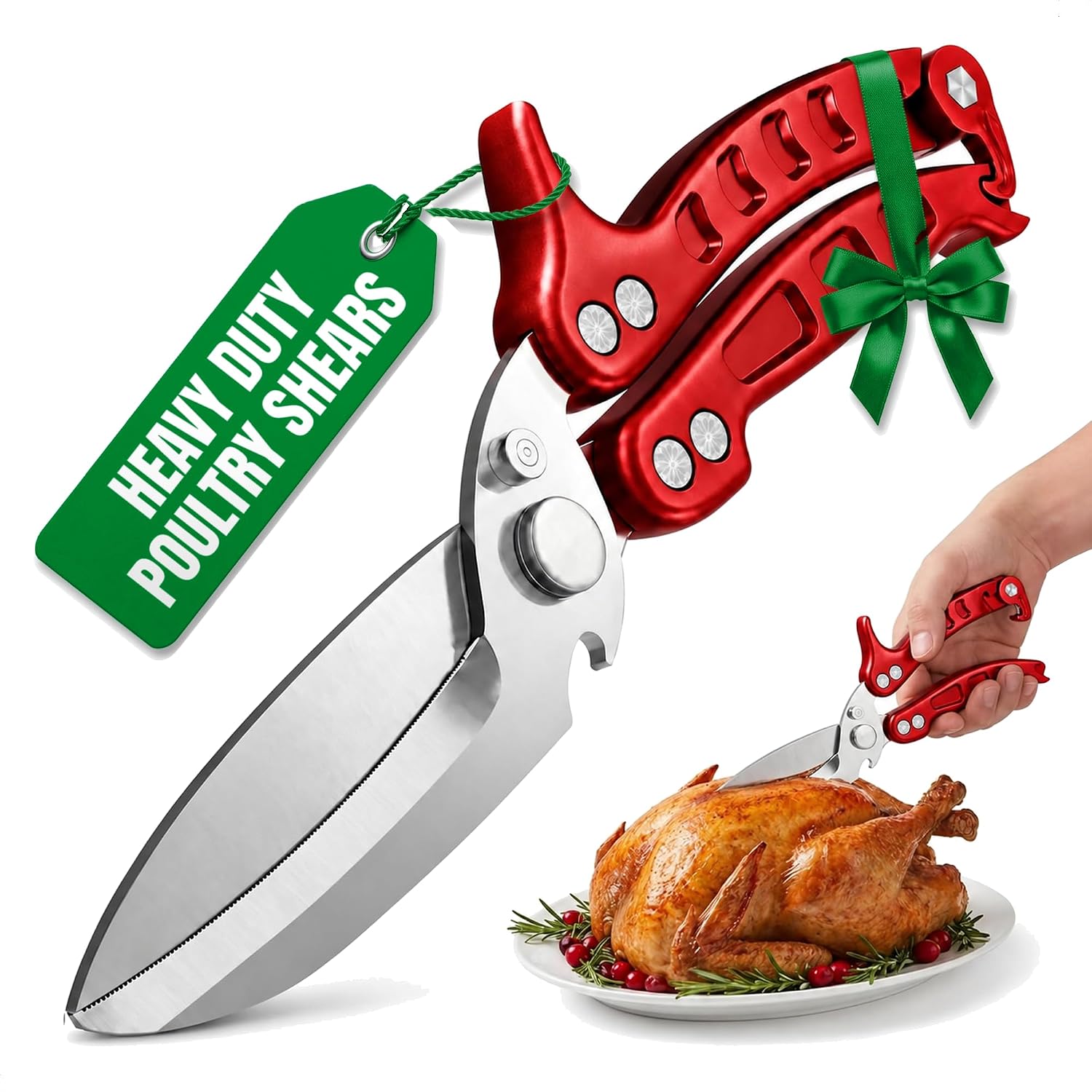
Heavy-duty poultry shears are specifically designed with solid metal handles, spring-loaded mechanisms, and thick blades to cut through chicken joints, ribs, and turkey spines. If you rarely break down whole birds or cut dense bones, a standard all-purpose kitchen shear will easily handle everyday tasks like snipping herbs and opening food packages without extra bulk.
How should I store my kitchen shears safely in the kitchen?
Kitchen shears can be stored safely in utility drawers, especially if they include a protective plastic sheath that covers the sharp blade edges when not in use. Some heavy-duty models also feature a built-in safety lock that keeps the blades securely closed in storage, preventing accidental contact with the edges while reaching into drawers.