Appliances · Buying Guide
Best Kitchen Shears That Come Apart for Easy Cleaning
Finding the right kitchen tools involves looking closely at how easily they can be cleaned and maintained after handling messy foods like raw meat, tough vegetables, and packaging. Kitchen shears that come apart offer a practical solution by allowing the two blades to separate completely, ensuring that trapped food particles around the pivot screw are easily washed away during routine washing.
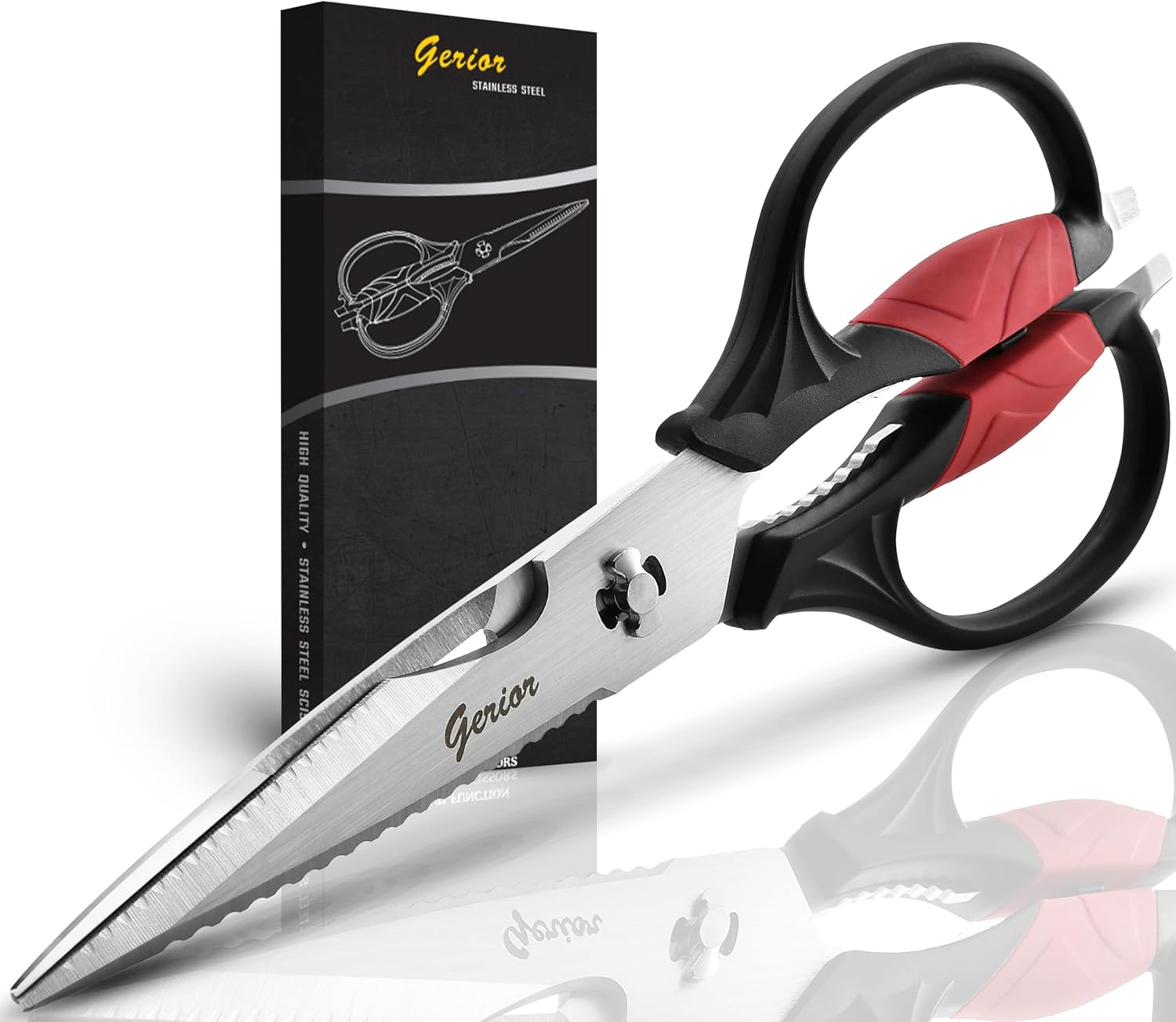
This detachable design prevents hidden residue buildup and actively supports safe everyday food preparation routines in busy kitchens. Whether you are snipping fresh herbs, opening stubborn packaging, or breaking down poultry, choosing a reliable pair depends on handle comfort, blade thickness, and overall utility features built directly into the handles.
As an Amazon Associate, StacyLaughs earns from qualifying purchases.
Buying guide
Blade Edge and Serration Types
Selecting the right blade edge significantly affects how kitchen shears perform during daily food preparation tasks. Micro-serrated blades feature tiny teeth along the cutting edge designed to grip slippery items like poultry skin, fish, and tough vegetable stems. This gripping action prevents the tool from sliding off the target material, ensuring cleaner and more precise cuts with less physical effort.
Conversely, straight blade edges offer smooth cutting action for softer items, herbs, and thin packaging materials. While straight edges require manual attention to maintain a clean slice on slick surfaces, they are often easier to sharpen using traditional kitchen knife sharpeners. Evaluating your usual cooking habits will help determine whether a micro-serrated or straight blade edge best suits your daily kitchen routines.
Handle Materials and Ergonomic Comfort
Handle construction plays a major role in user comfort, especially during repetitive food prep or extended cutting sessions. Many modern kitchen shears feature plastic or rubberized grips that cushion the hand and reduce pressure points. These non-slip surfaces are particularly helpful when working with wet hands, offering improved stability and control during demanding tasks like breaking down whole chickens or slicing dense cardboard boxes.
On the other hand, solid stainless steel handles provide maximum durability and break resistance over years of heavy use. Although all-metal handles lack soft cushioning, they can withstand rigorous cleaning cycles and resist corrosion effectively. Buyers must weigh the immediate comfort of soft grips against the long-term structural resilience of solid metal handle designs when selecting their ideal tool.
Detachable Mechanisms and Sanitation
Kitchen shears that come apart provide a distinct sanitation advantage over traditional fixed-pivot scissors. Food particles, moisture, and bacteria frequently accumulate inside the pivot screw area during meat and vegetable preparation. A detachable design allows the two blades to slide apart completely, exposing hidden surfaces for thorough washing and sanitization after every use.
Maintaining this level of hygiene is essential when transitioning between raw proteins and fresh produce in a busy home kitchen. Buyers should inspect how smoothly the pivot mechanism separates and locks back together. A reliable come-apart mechanism should operate intuitively without requiring excessive force, ensuring that daily cleaning remains a simple and safe habit rather than an awkward chore.
Blade Length and Overall Dimensions
Overall tool size and blade length dictate the cutting leverage and storage convenience of your kitchen shears. Compact models featuring blade lengths around three inches offer excellent maneuverability for detailed tasks like trimming herbs or opening small food packages. Their smaller footprint also allows for easy storage in crowded utensil drawers or magnetic knife strips without taking up excessive space.
Larger shears with longer blades provide greater cutting capacity for bulky vegetables, thick meats, and large poultry joints. However, oversized models can feel cumbersome if you primarily handle delicate kitchen prep. Matching the physical dimensions of the shears to your hand size and typical cutting requirements ensures optimal control, leverage, and comfort throughout every culinary project.
Integrated Utility Features and Multi-Tools
Many advanced kitchen shears incorporate secondary utility features directly into their handles and blades. Common additions include built-in bottle openers, center-toothed grips for cracking nuts or small bones, and notches designed to pry open stubborn jars. Some models even feature specialized screwdriver tips or integrated herb strippers, transforming a standard pair of scissors into a versatile multi-tool for the kitchen and household.
While these extra features add significant convenience, they can also introduce additional crevices where food residue might collect. Buyers who prioritize minimalist maintenance might prefer simpler shear designs without extra handle notches. Evaluating whether you will actually use these secondary tools helps determine if a multi-functional pair of shears justifies the extra cleaning attention around the handle cutouts.
Maintenance and Cleaning Guidance
Proper maintenance ensures that your stainless steel kitchen shears remain sharp, hygienic, and corrosion-resistant over years of service. Although many models state they are dishwasher safe, manufacturer instructions frequently recommend prompt hand-washing and thorough drying to preserve blade edges. Separating the blades during washing allows water and soap to reach every hidden surface, preventing moisture from lingering around the pivot point.
Storing your shears in a dry environment and occasionally checking the pivot tension will further extend their operational lifespan. Avoid using abrasive scouring pads that might scratch polished finishes or dull micro-serrated edges prematurely. Following these basic care guidelines keeps your detachable kitchen shears functioning smoothly and safely whenever you prepare meals or tackle household cutting chores.
Frequently asked questions
Why should I choose kitchen shears that come apart?
Choosing kitchen shears that come apart offers a major sanitation benefit for food preparation. When cutting raw meat, poultry, or vegetables, tiny food particles and moisture frequently become trapped inside the pivot screw area of traditional scissors. Detachable blades allow you to pull the two pieces completely apart, ensuring that hidden residues are thoroughly washed away. This simple separation mechanism supports a cleaner, safer kitchen environment by preventing bacteria buildup in hard-to-reach crevices after every use.
Are micro-serrated blades better for cutting food?
Micro-serrated blades feature tiny teeth along the cutting edge designed to grip slippery materials securely. This gripping action prevents the shears from sliding off slick surfaces such as poultry skin, fish fillets, and smooth vegetable stems, resulting in cleaner and more precise cuts. While straight blades offer smooth slicing for soft herbs and packaging, micro-serrations provide superior control when handling demanding food items. Your choice depends entirely on the types of ingredients you cut most frequently.
Can I put my detachable kitchen shears in the dishwasher?
Cleaning guidelines vary depending on the specific manufacturer recommendations for each model. While several kitchen shears state they are dishwasher safe, hand-washing is frequently recommended to preserve long-term blade sharpness and finish quality. Whenever you wash your shears, separating the blades ensures that water and soap reach the pivot point completely. Promptly drying the stainless steel components after washing helps prevent moisture spots and maintains optimal hygiene for future food prep.
What extra utility features do kitchen shears offer?
Many kitchen shears include secondary utility features built directly into their handles and blades to increase versatility. Common additions include integrated bottle openers, center-toothed grips designed for cracking nuts or small bones, notches for opening jars, and built-in herb strippers. While these multi-purpose tools provide extra convenience for everyday kitchen and household tasks, buyers should note that additional handle cutouts require careful washing to prevent food residue from lodging in the crevices.
How do I choose between plastic and stainless steel handles?
Handle materials dictate both comfort and durability during cutting tasks. Plastic or rubberized handles provide a soft, non-slip cushion that absorbs pressure and reduces hand fatigue during prolonged food preparation sessions. On the other hand, solid stainless steel handles offer maximum break resistance and structural strength for heavy-duty cutting. Buyers should weigh the ergonomic comfort of cushioned plastic grips against the rugged, all-metal durability of traditional stainless steel handle constructions.