Appliances · Buying Guide
Best Kitchen Sink Colanders for Easy Food Prep and Draining
Managing daily meal preparation often relies on having the right tools to handle wet ingredients efficiently. An over-the-sink colander transforms the basin area into a dedicated workstation for rinsing produce, draining pasta, and air-drying utensils without cluttering counters. Selecting a suitable strainer depends heavily on basin dimensions, preferred materials, and the specific types of food handled regularly in the kitchen.
Different designs offer unique advantages, ranging from expandable stainless steel wire mesh to rigid plastic frames with adjustable locking positions. Understanding how these features align with everyday tasks ensures that chosen accessories integrate smoothly into standard kitchen routines. Exploring the available options highlights distinct practical benefits for various sink configurations and cooking habits.
As an Amazon Associate, StacyLaughs earns from qualifying purchases.
Buying guide
Material Selection for Kitchen Strainers
Choosing between stainless steel and plastic colanders depends heavily on personal cooking habits and maintenance preferences. Stainless steel models offer high heat resistance and durability, making them ideal for draining boiling pasta straight from the stove. They resist rust and maintain structural integrity under heavy loads over time.
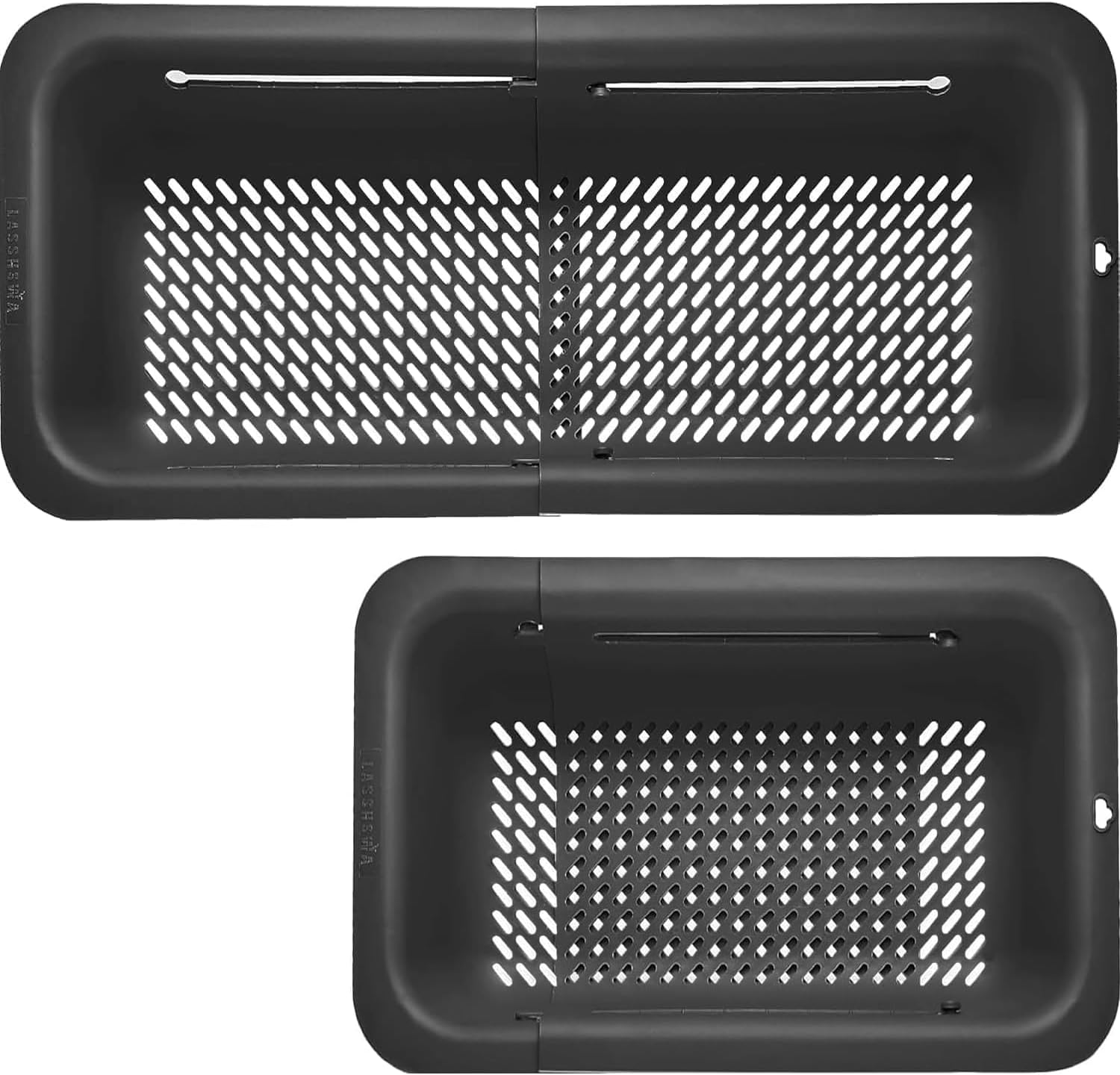
Plastic alternatives provide a lightweight, corrosion-free option that prevents scratching porcelain or composite sink basins. These units often feature molded drainage patterns and bright color choices that complement modern kitchens while remaining simple to clean in standard dishwashers.
Basin Compatibility and Handle Design
Ensuring a secure fit across the sink basin prevents accidental slips during active food rinsing. Expandable handle models adjust across varying spans, locking firmly onto opposing rim edges. This adjustability accommodates narrow bar sinks as well as wide double-basin setups.
Workstation colanders rest directly on built-in sink ledges for a streamlined, hands-free experience. Verifying sink width and rim dimensions beforehand guarantees that the chosen strainer stays stable while supporting heavy loads of produce or wet dishware.
Mesh Density and Food Grain Limitations
The opening size of a colander dictates which ingredients can be processed safely. Fine mesh metal sieves capture tiny food particles like rice, quinoa, and small pasta shapes without letting them escape down the drain.
Larger slotted plastic or wire configurations excel at draining bulky vegetables and long spaghetti noodles quickly. Reviewing hole dimensions helps match the strainer to preferred cooking ingredients, preventing frustrating food loss during meal preparation.
Countertop Stability and Resting Feet
Versatility increases significantly when a colander transitions smoothly from the sink rim to a flat countertop. Models equipped with dedicated stand legs or bottom resting feet elevate the basket above flat surfaces.
This elevation keeps washed fruits and vegetables clear of lingering moisture while freeing up active workspace. Stable resting bases also prevent the basket from tipping over when filled with heavier food items during busy kitchen prep.
Multi-Purpose Functionality and Storage
Modern kitchen accessories often serve multiple roles to maximize limited cabinet space. Many over-the-sink strainers double as air-drying racks for cups, small plates, and utensils after manual washing.
Compact profiles and hanging holes simplify storage options, allowing units to hang neatly on hooks or rest directly on sink ledges. Choosing a versatile design reduces countertop clutter and streamlines daily kitchen cleanup workflows.
Maintenance and Dishwasher Compatibility
Routine cleaning keeps kitchen tools hygienic and prevents food residue buildup. Most quality stainless steel and BPA-free plastic strainers are certified dishwasher safe, enduring regular high-temperature wash cycles without degrading.
Smooth surface finishes prevent food particles from clinging to corners or crevices. Simple manual rinsing combined with periodic dishwasher placement ensures long-lasting performance for everyday food preparation tasks.
Frequently asked questions
Can I use an over-the-sink colander for washing small grains like rice?
Fine mesh stainless steel colanders capture small particles effectively, making them suitable for rinsing rice or quinoa without losing food down the drain. However, standard plastic models with larger slotted openings are generally not recommended for small grains because the gaps allow tiny ingredients to slip through easily. Checking the mesh opening specification before purchasing ensures the strainer matches your typical cooking ingredients and food preparation habits.
How do adjustable handles stay secure on different sink sizes?
Adjustable models use sliding arms equipped with rubber grips or locking mechanisms to span various basin widths. These grips create friction against the sink rim, preventing the basket from sliding sideways when filled with heavy produce or hot pasta. Users simply pull the handles outward to match their specific sink span, creating a stable bridge that supports active washing and draining tasks safely throughout daily meal preparation.
Are plastic colanders safe to put in the dishwasher?
Quality plastic colanders crafted from durable BPA-free materials are generally designed to withstand standard dishwasher heat cycles for easy cleanup. Placing them on the top rack helps prevent warping from heating elements. Always review manufacturer guidelines regarding heat limits, and avoid exposing plastic strainers to direct open flames or scorching pan bottoms to maintain their structural integrity over years of regular kitchen use.
What is the advantage of a workstation sink colander over a standard model?
Workstation colanders are engineered to fit custom ledges built directly into compatible kitchen sinks. This design allows the basket to rest securely inside the basin without relying on expanding handles that span the outer rim. It creates a dedicated, multi-tier workspace that keeps counters clear, enhances hands-free food rinsing, and streamlines cleanup routines for individuals who own matching workstation sink systems.
Do over-the-sink strainers scratch porcelain or stainless steel sinks?
Most strainers feature protective rubber grips, coated handles, or smooth plastic edges designed to cushion contact points against sink rims. These protective elements prevent metal-on-metal scraping or chipping on porcelain and composite basin surfaces. For stainless steel sinks, soft grip handles minimize surface scuffs while keeping the basket firmly anchored during heavy food draining tasks and routine kitchen cleanup.