Appliances · Buying Guide
Best Large Stainless Steel Colander Choices for Every Kitchen
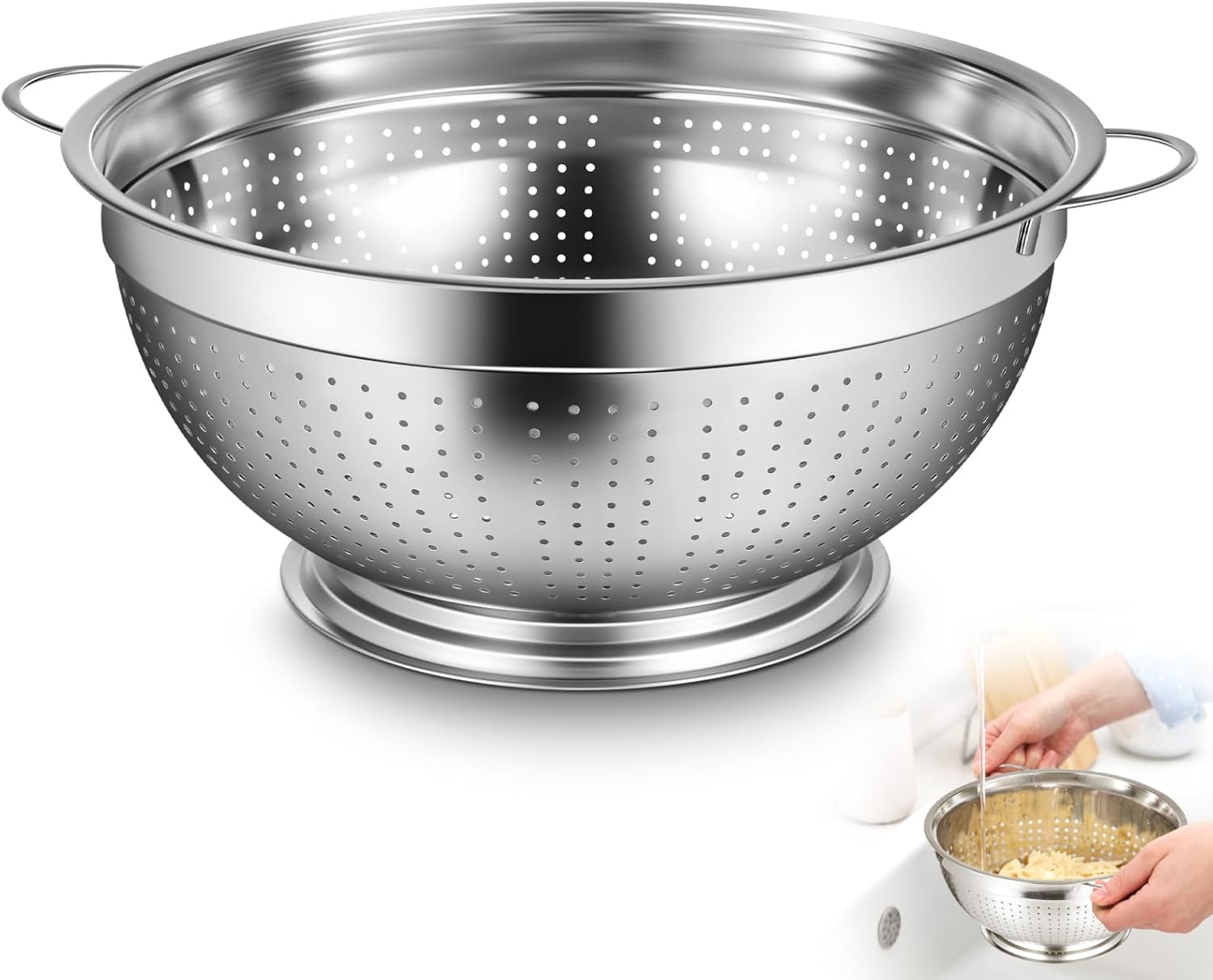
Finding the right large stainless steel colander transforms how you handle everyday meal preparation, from rinsing fresh garden produce to draining heavy family-sized batches of pasta. Stainless steel offers a durable, rust-resistant surface that withstands daily cooking demands while remaining entirely reliable for routine food contact. Choosing a well-designed kitchen strainer simplifies draining and keeps counters clean.
Different kitchen layouts and cooking volumes require specific capacities, ranging from compact 5-quart models to massive 12-quart commercial vessels. Selecting a design with stable bases, secure handles, and efficient perforation patterns ensures safer handling when working with boiling water, hot starches, or heavy ingredients. Matching your cookware scale to your typical meal size optimizes daily cooking efficiency.
As an Amazon Associate, StacyLaughs earns from qualifying purchases.
Buying guide
Capacity and Volume Matching
Selecting the correct capacity is essential when choosing a large stainless steel colander for your home kitchen. A standard 5-quart model suits everyday family meals, while a 6 or 7-quart option comfortably accommodates larger batches of pasta, greens, and root vegetables. Heavy-duty 12-quart versions cater directly to bulk cooking, canning tasks, and commercial food preparation environments.
Matching your cookware dimensions to your typical batch sizes ensures efficient meal preparation without unnecessary hassle. Oversized vessels consume excessive cabinet storage space, whereas undersized strainers force you to divide food into multiple batches, slowing down your cooking routine. Carefully evaluate your typical household portion sizes before investing in a specific capacity tier.
Base Design and Sink Stability
The base design of a stainless steel colander directly influences its stability during active kitchen tasks. Models featuring a solid ring base or reinforced wire feet provide a secure, stationary platform in the sink or on countertops. This elevated positioning prevents food from touching sink surfaces, reducing water buildup and supporting efficient drainage.
A stable base eliminates the need to hold the strainer constantly during heavy rinsing or steaming tasks. When working with boiling liquids or heavy produce, a non-tip foundation prevents accidental spills and kitchen accidents. Reviewing how the base interacts with your specific sink basin ensures seamless daily functionality.
Handle Construction and Grip Security
Handle construction is a vital safety factor when lifting heavy loads of boiling pasta or dense wet vegetables. Look for models featuring double-riveted handles or integrated one-piece designs that permanently secure the grips to the bowl body. Wide, non-slip handles offer enhanced leverage, reducing hand fatigue and preventing dangerous slips during transport.
Minimalist looped handles save storage space but require a more deliberate grip, particularly when hands are wet or gloved. Assess your physical comfort and the weight you typically lift to determine whether rubberized grips or sturdy metal loops suit your cooking style best for everyday kitchen tasks.
Perforation Patterns and Drainage Speed
The size and distribution of drainage holes dictate how quickly a stainless steel colander processes liquids. All-over perforated designs promote rapid water discharge across the entire bowl surface. Micro-perforated options feature tiny, closely spaced holes that excel at retaining fine grains like rice and quinoa without losing food down the drain.
Consider what ingredients you strain most frequently when evaluating hole patterns. If you primarily drain chunky vegetables and large pasta, standard perforations provide maximum drainage speed. For grain-heavy diets, micro-holes prevent frustrating food loss while maintaining efficient rinsing performance.
Material Grade and Long-Term Durability
Material quality determines how well your colander withstands daily exposure to water, heat, and acidic foods. Premium 18/8 stainless steel and high-grade metal alloys resist rust, dents, and warping, ensuring the strainer maintains its structural integrity over years of use. Thicker steel constructions offer superior deformation resistance against heavy food loads.
Investing in durable stainless steel prevents premature replacement and guarantees food safety. Unlike plastic alternatives, quality metal colanders will not absorb food odors or stain when exposed to strongly pigmented ingredients like berries or tomatoes. Check specifications for grade certifications to confirm long-term resilience.
Storage and Nesting Capabilities
Kitchen cabinet space is often at a premium, making storage compatibility an important purchasing consideration. Colanders designed with nesting profiles fit neatly inside standard mixing bowls or stack with similar strainers to conserve valuable shelving space. Reviewing exterior dimensions helps ensure the unit fits your available storage layout.
While multi-piece sets or oversized commercial colanders offer incredible versatility, they demand dedicated storage planning. Balancing your desire for multiple sizing options against your actual cabinet capacity prevents clutter and keeps your kitchen counters organized and functional for everyday meal preparation tasks.
Frequently asked questions
Can I wash a stainless steel colander in the dishwasher?
Yes, all featured stainless steel colanders are dishwasher safe, allowing for effortless cleaning after heavy meal preparation. Placing the strainer in the dishwasher removes food residues and starches effectively without damaging the metal finish or structural integrity. However, rinsing food debris immediately after use under running water can also prevent stubborn starches from drying onto the perforated surface, ensuring your kitchen tool remains hygienic, odor-resistant, and ready for your next cooking session with minimal manual effort.
What is the advantage of a footed base on a colander?
A footed base or solid ring design elevates the colander body above the bottom of your sink or countertop. This elevation ensures that draining water flows freely away from the food rather than pooling back into the bottom of the strainer. Additionally, keeping ingredients elevated prevents direct contact with sink surfaces, maintaining higher hygiene standards and reducing the risk of cross-contamination during food preparation. It also allows the colander to stand upright independently on countertops while you multitask in the kitchen.
How do I choose between micro-perforations and standard holes?
Choosing between micro-perforations and standard holes depends primarily on the types of food you prepare most often. Micro-perforated strainers feature tiny, closely spaced holes designed specifically to retain small grains like rice, quinoa, and orzo while draining water rapidly. Standard perforations feature larger holes optimized for fast bulk water discharge when draining heavy pasta, potatoes, and large vegetables. If your cooking routine involves diverse ingredients, selecting a model with fine micro-holes offers greater versatility across both grains and standard produce.
Are riveted handles better than welded handles?
Riveted handles are widely considered more durable and secure when handling heavy loads of food. Mechanical rivets physically fasten the handle to the colander bowl, minimizing the risk of detachment caused by excessive weight or accidental impact. Welded handles can offer a smoother interior surface and seamless aesthetic appearance, but riveted structures provide reinforced load stability that gives cooks greater confidence when lifting heavy pots of boiling pasta or dense wet vegetables from the sink.
Will stainless steel colanders rust over time?
High-grade stainless steel colanders are specifically engineered to resist rust, corrosion, and staining during everyday kitchen tasks. Premium alloys, such as 18/8 stainless steel, maintain their protective surface layer even when exposed to boiling water, acidic foods, and regular dishwasher cycles. To preserve this corrosion resistance, it is best to clean and dry the colander thoroughly after prolonged exposure to heavily salted water or aggressive cleaning agents, ensuring your kitchen strainer lasts for many years.