Appliances · Buying Guide
Best Leave In Cooking Thermometer for Roasts and Grills
Choosing a reliable leave in cooking thermometer changes how you monitor roasts, poultry, and smoked meats without constantly opening the oven door or lifting the grill lid. These specialized devices let you track internal temperatures continuously while food cooks, ensuring steady results for everything from Sunday roasts and holiday turkeys to slow-cooked briskets and smoked ribs.
Available options range from battery-free analog dials with direct glass viewing to advanced digital models featuring dual wired probes, magnetic backs, high heat resistance, and smartphone app integration. Selecting the right tool depends entirely on your specific cooking setup, desired temperature ranges, and whether you prefer reading a physical counter display or checking wireless updates from another room.
As an Amazon Associate, StacyLaughs earns from qualifying purchases.
Buying guide
Temperature Range and Heat Tolerance
Selecting an appropriate leave in cooking thermometer requires carefully matching its upper temperature limit to your specific everyday cooking methods and heavy-duty appliances. Standard kitchen ovens, backyard smokers, and high-heat broilers demand robust probes capable of enduring intense radiant heat without degrading internal sensors or exterior metal casings during long cooking processes.
While basic mechanical dials comfortably suit standard roasting ranges and traditional oven environments, demanding grilling tasks require specialized stainless steel cords and high heat resistance ratings. Verifying these thermal thresholds beforehand prevents unexpected equipment failure and ensures accurate temperature tracking during extended cooking sessions across various heavy meals and holidays.
Display and Interface Styles
Evaluating display and interface styles helps ensure you can easily read internal temperatures whether you are standing right next to the oven or monitoring from afar. Large LCD screens featuring bright backlighting offer clear visibility in dark kitchens or dim outdoor grilling environments, allowing quick glances at active food metrics, presets, and built-in timers.
Alternatively, traditional analog dials provide a reliable battery-free mechanical readout viewed directly through glass oven windows, while advanced smart hubs transmit real-time updates wirelessly to mobile applications. Choosing between physical buttons, clear digital screens, and app notifications depends heavily on your personal preference for tracking food progress without operational distraction.
Wired Versus Wireless Probes
The choice between wired and wireless probes fundamentally affects how you position food inside the cooking chamber and manage your busy kitchen workspace. Traditional wired setups connect stainless steel probes to an external base unit via long heat-resistant cables, letting you monitor internal temperatures while keeping the display safely outside the active heat source.
In contrast, completely wireless smart probes eliminate physical cables entirely, allowing the entire unit to rest inside the meat while transmitting data via Bluetooth or Wi-Fi to a smart hub. While wireless designs offer exceptional freedom of movement during large roasts, wired models avoid battery charging routines for stationary countertop monitoring.
Preset Options and Timers
Built-in preset temperature options and programmable timers simplify the daily cooking process by removing guesswork for various types of meat, poultry, and fish dishes. Many digital thermometers feature USDA-approved guidelines and chef-recommended targets, alerting you the moment your roast or steak reaches the desired level of doneness without requiring manual chart calculations during busy meal prep.
Integrating extended countdown timers also helps manage multi-step recipes or long smoking sessions running across many hours in the backyard. Reviewing these helpful software features ensures you select a device matching your preferred level of cooking assistance, active monitoring, and overall kitchen automation for holiday meals.
Probe Count and Placement
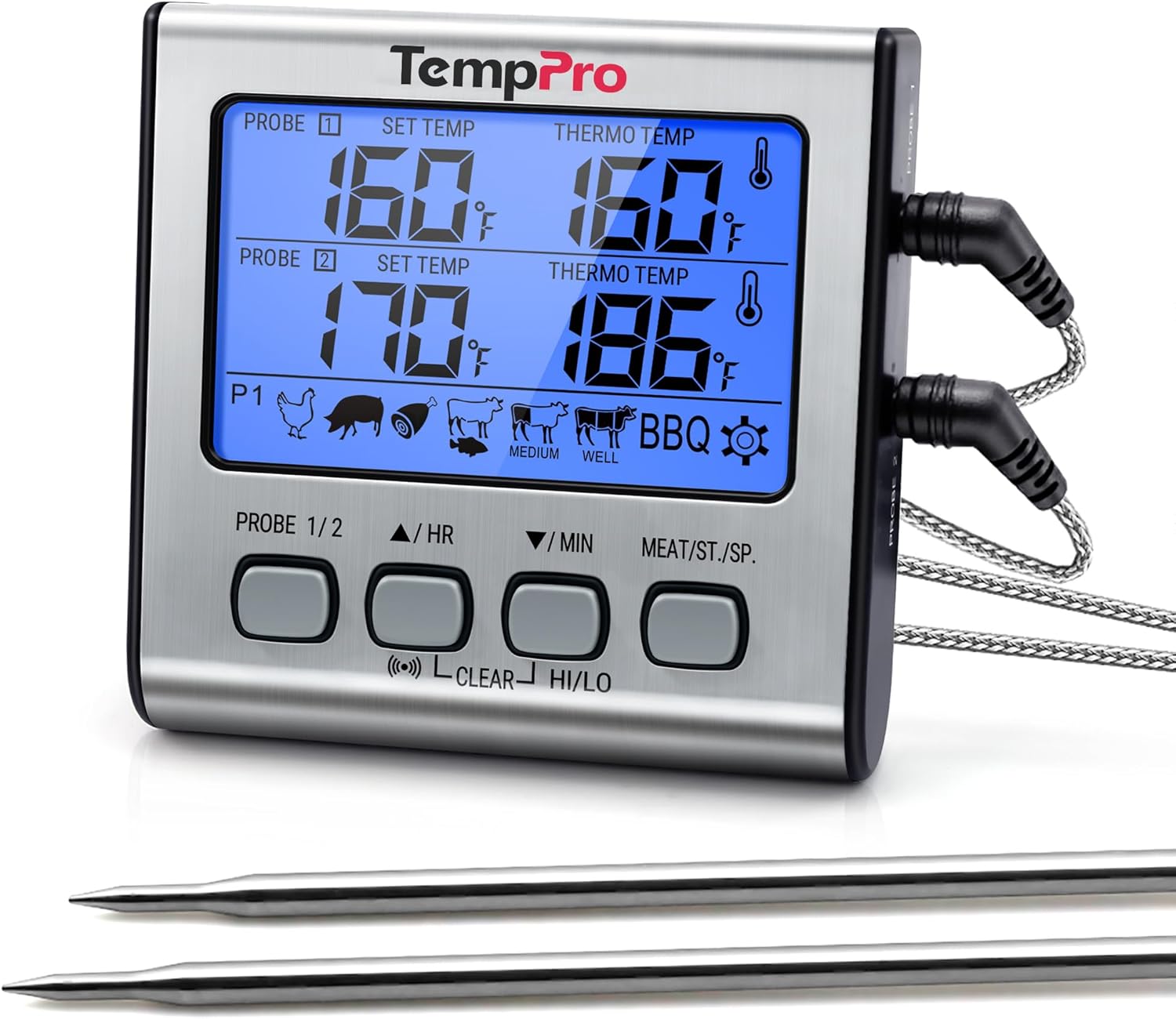
Considering how many different proteins you plan to cook at once determines whether a single or multi-probe leave in thermometer is necessary for your specific meals. Advanced dual-probe and multi-probe models let you monitor different cuts of meat or track ambient grill temperatures simultaneously without ever needing to swap hardware during busy cooking tasks today.
Proper probe placement is equally vital, requiring adequate insertion depth into thick muscle areas while avoiding hard bones or fatty pockets that distort thermal readings. Choosing a model with suitable probe quantities ensures you can successfully manage complex family dinners or multi-protein barbecues with absolute confidence and steady culinary results every time.
Maintenance and Storage
Carefully evaluating ongoing maintenance and storage requirements helps keep your leave in thermometer clean and protected between heavy kitchen cooking uses. Models featuring dishwasher-safe stainless steel probes or waterproof sealed bodies simplify post-cooking cleanup routines after messy roasting and smoking sessions where grease and food splatters naturally accumulate on exterior metal surfaces.
Additionally, practical features like magnetic backs, hanging holes, and onboard cord-nesting designs offer convenient storage solutions that keep devices neatly organized inside kitchen drawers or attached securely to refrigerator metal surfaces. Reviewing these structural details beforehand ensures your chosen thermometer remains easily accessible and fully functional for many future holiday cooking projects.
Frequently asked questions
Can I leave the entire thermometer inside a hot oven while cooking?
Most digital leave-in thermometers feature a heat-resistant stainless steel probe and cord designed to stay inside the oven while the base unit remains outside. However, basic analog dial thermometers are built with heat-safe glass and metal casings that allow the entire unit to stay inside the meat during roasting. Always verify the specific manufacturer temperature limits for your model, as digital display bases and plastic housings cannot withstand direct oven heat and must be kept outside the cooking chamber.
How do I clean and maintain my stainless steel probes?
Cleaning stainless steel probes depends on the specific manufacturer guidelines provided for your model. Many leave-in probes feature dishwasher-safe construction or waterproof seals that allow for easy rinsing in the sink with warm water and soap. For wired digital models, you should carefully wipe down the metal probe while protecting the cable and plug connections from excessive moisture immersion. Regular cleaning prevents grease buildup and ensures accurate thermal readings during your next cooking session.
What is the difference between analog dials and digital leave-in thermometers?
Analog dial thermometers rely on mechanical bimetal springs to measure internal food temperatures without requiring any batteries, charging cables, or electronic setup. They provide a direct visual reading through the oven window but offer limited temperature scales and no programmable alarms. Digital thermometers feature electronic sensors, LCD screens, and wired or wireless connections that deliver precise temperature readouts, customizable target alerts, and countdown timers, though they depend on battery power or recharging routines.
Do leave-in thermometers measure oven air temperature or internal food temperature?
Leave-in cooking thermometers are specifically engineered to measure the internal temperature of food rather than the surrounding oven air. Inserting the stainless steel probe deep into the thickest part of a roast or poultry piece ensures you track doneness accurately. While some advanced digital models include ambient sensors to monitor grill or smoker environments alongside the meat, standard leave-in probes should never be relied upon as a replacement for a dedicated oven air thermometer.
Can I use a leave-in meat thermometer for deep-frying or candy making?
You should not use standard leave-in meat thermometers for deep-frying oil or candy making unless the manufacturer specifications explicitly support those high-temperature ranges. Frying oil and boiling sugar frequently exceed 300 to 400 degrees Fahrenheit, which can easily surpass the upper limits of basic analog dials or damage standard food probes. Always check the maximum upper temperature range of your specific thermometer before attempting specialized cooking projects that involve boiling liquids or hot cooking oils.