Appliances · Buying Guide
Best Long Handle Wooden Spatula Options for Deep Pot Cooking and Stirring
Cooking large batches of food like seafood boils, stews, and thick jams requires specialized kitchen utensils that keep your hands safe from heat and steam. Long handle wooden spatulas provide the necessary reach for deep stockpots, brew kettles, and large canning pots while handling heavy mixtures easily.
Crafted from natural hardwoods like teak, beech, and acacia, these durable stir paddles offer flat blades to scrape pot bottoms and prevent scorching. Choosing the right length and material helps ensure comfortable stirring during extended cooking sessions without scratching nonstick cookware surfaces or transferring unwanted flavors, making them practical additions to home and commercial kitchens alike for everyday meal preparation tasks.
As an Amazon Associate, StacyLaughs earns from qualifying purchases.
Buying guide
Selecting the Right Handle Length for Deep Pots
Choosing an appropriate handle length depends directly on the interior depth of the stockpots, brew kettles, or woks you use most frequently. Standard home cooking vessels require moderate tools around fifteen inches, while massive seafood boiling vats and canning pots demand extended lengths ranging from eighteen to twenty-eight inches to maintain user safety during active boiling processes.
Longer handles keep your hands safely distanced from rising steam, hot liquids, and potential splatters during intensive stirring tasks. Matching the tool length to your specific cookware prevents awkward handling, reduces physical strain, and ensures comfortable control during extended cooking sessions without risking burns, which remains vital when preparing large heavy food batches.
Understanding Hardwood Material Differences
Wooden spatulas come crafted from various natural hardwoods like teak, beech, and acacia, each bringing distinct structural characteristics to your daily kitchen routine. Teak naturally resists moisture and decay, making it exceptional for wet cooking environments like seafood boils, crawfish pots, and gumbo preparation where water exposure is constant and demanding.
Beechwood provides a smooth, sturdy surface that handles thick mixtures like peanut butter or heavy mash without snapping under pressure, while acacia wood offers rich grain patterns and dependable durability for daily frying and stirring tasks. Evaluating wood types helps match the utensil to your specific cooking habits, aesthetic preferences, and maintenance routines.
Evaluating Blade Shape and Pot Scraping Performance
The shape of the paddle blade plays a crucial role in how effectively you can stir, mix, and scrape your cooking vessels during heavy food preparation tasks. Flat square or oblong blades sit flush against the bottom of deep pots, preventing thick sauces, fruit jams, and sugary mixtures from scorching against hot metal surfaces.
Thin edge designs allow the wooden utensil to glide along pot contours smoothly without scratching delicate nonstick coatings or porcelain interiors. Choosing a paddle with a properly configured flat blade ensures better food movement during long reduction processes and simplifies post-cooking cleanup tasks significantly across various sweet or savory dishes.
Managing Kitchen Storage and Physical Footprint
Owning an extra-long wooden spatula introduces unique storage considerations due to the physical dimensions of tools reaching up to twenty-eight inches in total length. Standard kitchen drawers simply cannot accommodate these oversized utensils, requiring alternative storage solutions like dedicated vertical wall hanging spaces in your cooking area to prevent household clutter.
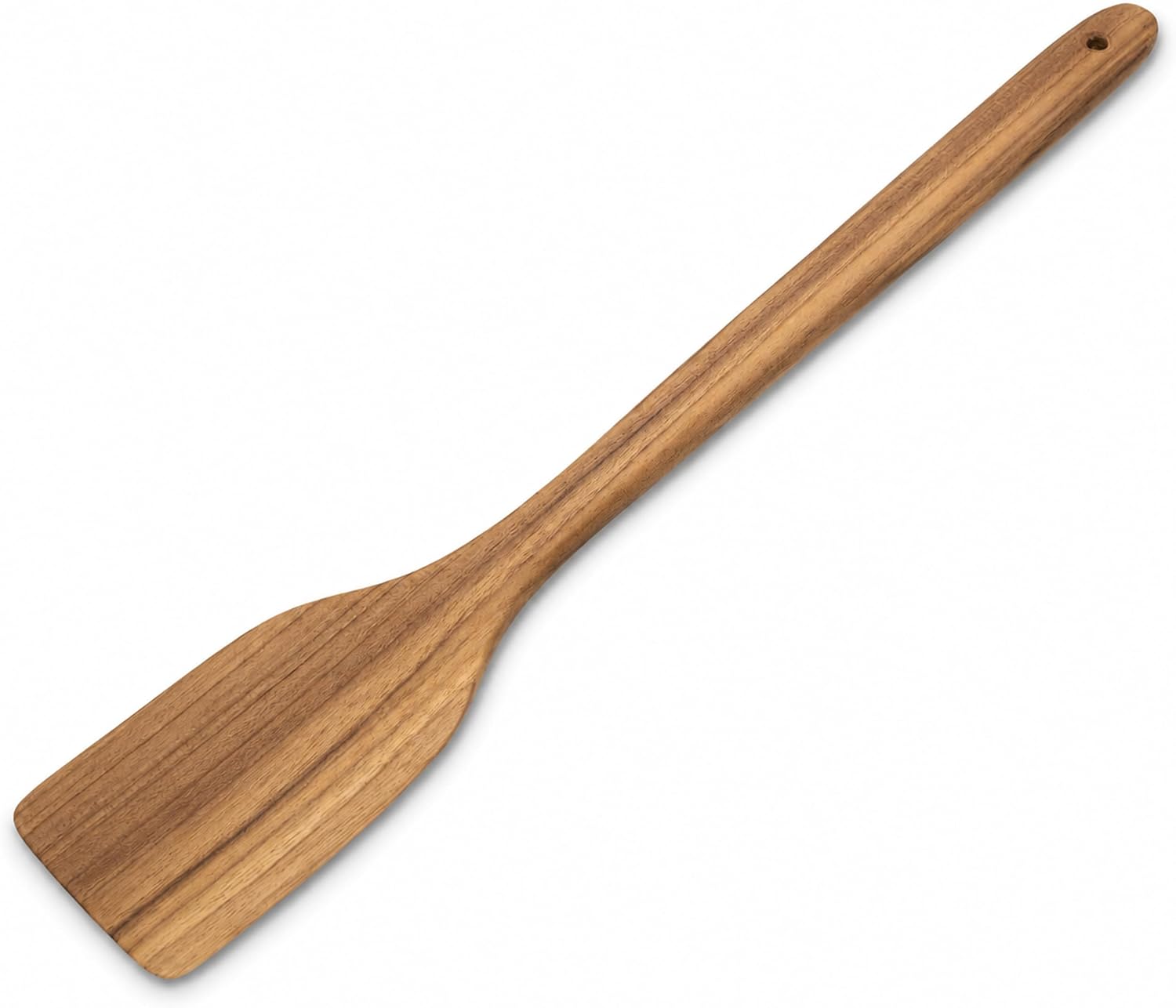
Many paddles feature integrated hanging holes or loops on their handles specifically designed to fit thick ropes or metal wall hooks securely. Utilizing vertical wall space keeps your counters organized while displaying attractive natural wood grains as decorative kitchen accents when the utensils are not actively in use for daily meal preparation tasks.
Caring for Natural Wood Kitchen Utensils
Natural wood utensils require specific maintenance routines to preserve their structural integrity and attractive natural finish over years of regular kitchen use. Unlike plastic or metal tools, wooden paddles should never be placed in automatic dishwashers, as harsh detergents, moisture, and high heat cause severe warping, splintering, and structural cracking over time. Following these cleaning guidelines ensures long-term usability.
Washing these utensils by hand using warm soapy water and drying them promptly keeps the wood conditioned and clean. Allowing stuck food to soak in water briefly before washing prevents abrasive scrubbing damage. Regular natural oil treatments maintain their smooth appearance and prevent moisture absorption during heavy cooking tasks like boiling.
Matching Utensils to Cooking Scale and Style
Choosing the correct wooden spatula involves carefully evaluating the scale of your culinary projects and the specific types of cookware you employ daily. Home cooks frying food in standard woks or nonstick pans benefit from medium fifteen-inch acacia or teak spatulas that offer nimble maneuverability without unnecessary bulk during everyday meal preparation tasks across various recipes.
Conversely, individuals preparing massive batches of crawfish, home-brewed beer, or large quantities of soup require heavy-duty eighteen to twenty-eight-inch paddles. Matching your utensil scale to your recipe volume ensures efficient bottom scraping, prevents scorching, and protects your hands from intense heat during long boiling sessions. Proper selection optimizes overall kitchen efficiency significantly for everyone.
Frequently asked questions
How do I clean and maintain a long handle wooden spatula?
Cleaning and maintaining a long handle wooden spatula requires washing the utensil exclusively by hand using warm water and mild dish soap. Never submerge wooden paddles in water for extended periods, and avoid placing them in automatic dishwashers where harsh detergents and high heat can cause warping or splitting. After washing, dry the paddle promptly with a towel. Periodically treating the wood with food-safe natural oils helps preserve the grain, prevents moisture absorption, and keeps the surface smooth for future cooking sessions.
Will these wooden spatulas scratch my nonstick cookware?
Most quality wooden spatulas featuring smooth sanded surfaces and thin edge designs are crafted to be gentle on nonstick pots, pans, and woks. Natural hardwoods like teak, beech, and acacia do not possess the abrasive hardness of metal utensils, allowing you to scrape pot bottoms and stir thick mixtures without gouging or scratching delicate nonstick coatings. However, you should always ensure the wood remains free of splinters and wash it correctly to maintain its smooth protective finish over time.
What size wooden spatula do I need for a 40-quart stockpot?
For large stockpots, brew kettles, or canning vessels up to fifteen inches deep, a twenty-four-inch wooden stirring paddle is typically recommended. An extra-long paddle provides a handle length of around fifteen inches that stays above the rim while resting in the pot, alongside a blade that reaches the bottom to prevent thick sauces, jams, and chili from scorching. Always measure the interior depth of your specific stockpot before purchasing to ensure the paddle offers adequate reach and safety clearance.
Can I use a wooden stirring paddle for heavy mixtures like peanut butter or thick dough?
Yes, solid hardwood paddles constructed from single pieces of beechwood, teak, or acacia are engineered for heavy-duty mixing tasks such as stirring peanut butter, canning jams, mashing potatoes, and working with thick stews or crawfish boils. Their sturdy, unyielding frames provide the structural strength needed to move dense foods without snapping. However, you should match the thickness and durability of the chosen paddle to the density of your recipe to ensure comfortable leverage during rigorous stirring operations.
How should I store an extra-long wooden paddle in a small kitchen?
Because extra-long wooden paddles can measure anywhere from eighteen to twenty-eight inches, they typically exceed the length of standard kitchen drawers and cannot be stored horizontally. To solve this storage challenge, many long spatulas feature integrated hanging holes or loops on their handles. You can attach a thick rope or leather cord to hang the paddle vertically on wall hooks, pot racks, or pantry doors, keeping your kitchen counters organized while proudly displaying the natural wood grain.