Appliances · Buying Guide
Best Mandoline Slicer and Grater Options for Faster Meal Prep
Preparing vegetables for daily meals often demands precision and time, making a dedicated mandoline slicer and grater an invaluable addition to any home kitchen. These multi-functional tools streamline chopping, dicing, and shredding tasks, helping home cooks process ingredients quickly, uniformly, and safely without relying solely on traditional chef knives.
Modern kitchen prep setups benefit greatly from interchangeable blade systems that handle everything from thin potato chips to coarse cheese shreds, wavy cuts, and fine juliennes. By consolidating multiple cutting instruments into a single compact unit, these devices reduce countertop clutter while keeping food preparation efficient and organized for everyday cooking and healthy meal assembly, saving valuable time during busy schedules.
As an Amazon Associate, StacyLaughs earns from qualifying purchases.
Buying guide
Blade Material and Quality
When evaluating a mandoline slicer and grater, inspecting the blade material is essential for ensuring long-term kitchen performance. Stainless steel options, particularly grade 420 variants, offer robust resistance against rust, corrosion, and bending under pressure. These hardened cutting edges maintain their razor-sharp profiles through repeated slicing and grating sessions involving diverse fruits and vegetables.
Selecting durable metal blades guarantees clean cuts on dense produce like carrots, onions, and potatoes without dulling prematurely. Premium manufacturing directly impacts how smoothly the tool glides through stubborn ingredients, reducing physical strain during extensive meal preparation. Always verify that the chosen model employs high-grade corrosion-resistant metals for sustained daily utility in busy home cooking environments.
Safety Mechanisms and Guards
Safety features represent a critical purchasing criterion given the inherent sharpness of mandoline blades. Look for models equipped with expanded hand guards, protective gloves, or dedicated fingerguards that shield your skin during operation. These accessories prevent accidental contact with exposed cutting edges while allowing you to guide produce securely across the slicing surface.
Reliable safety mechanisms provide peace of mind for both novice cooks and experienced culinary practitioners alike. Using physical barriers ensures that smaller vegetables can be processed down to the final slice without risking finger injuries. Prioritizing robust protective equipment transforms routine meal prep into a secure, controlled experience for the entire household.
Capacity and Collection Trays
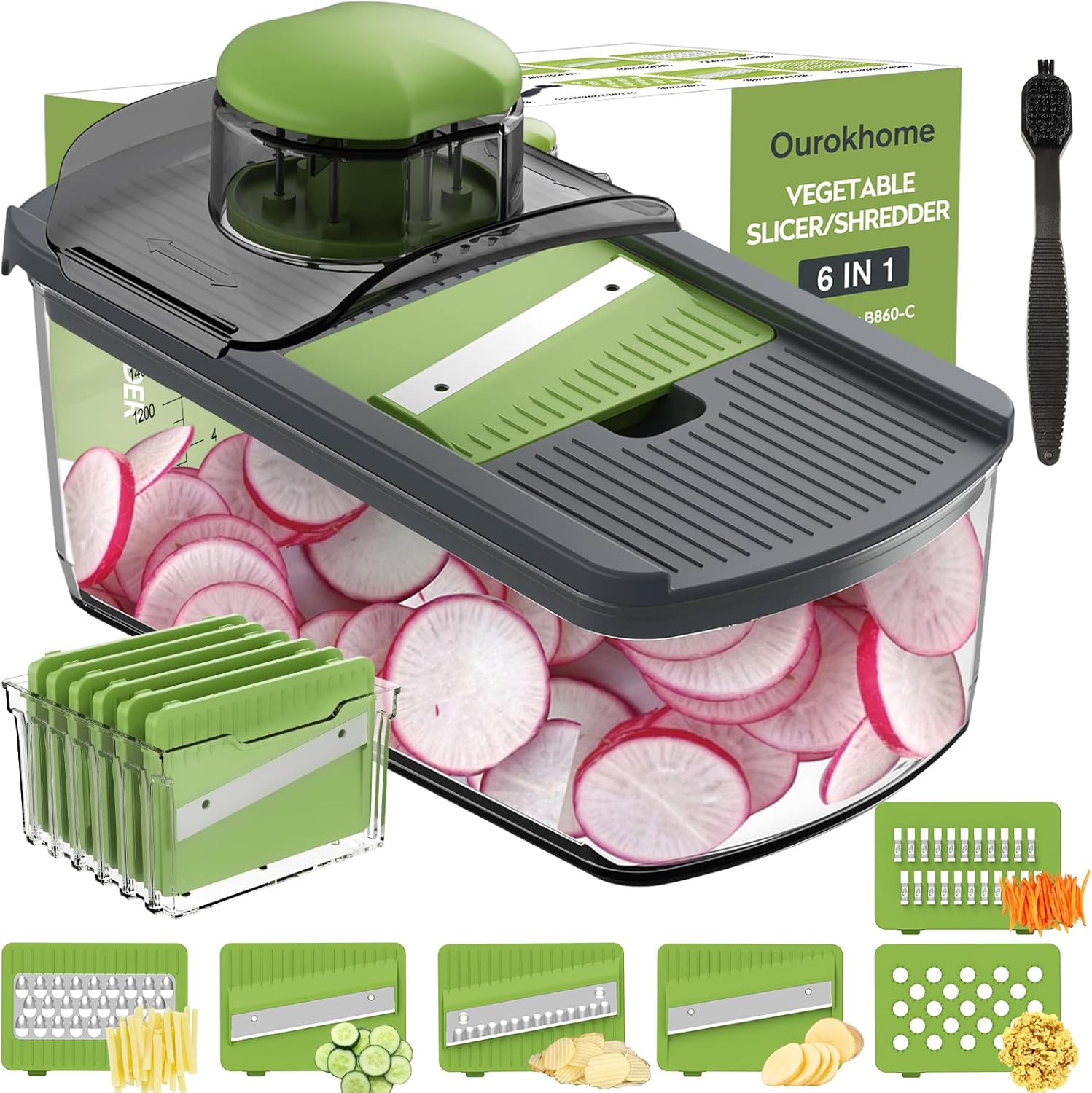
The presence and size of a built-in collection container significantly influence countertop cleanliness and workflow efficiency. Units featuring transparent catch trays allow you to monitor food volume as you slice or grate. Generous capacities, such as multi-cup bowls or two-liter bins, hold substantial amounts of chopped vegetables before requiring cleanup or emptying.
Measured collection trays with marked scales offer added convenience when following specific recipes that demand exact ingredient proportions. A stable base prevents sliding during vigorous slicing motions, keeping counters tidy. Assessing your typical batch sizes helps determine whether a compact container or a large-capacity tray best suits your daily cooking habits.
Versatility and Blade Count
Multi-functional kitchen tools derive their primary value from the variety of interchangeable blades included in the package. Systems offering multiple options—such as slicing inserts, coarse shredders, julienne cutters, and wave blades—replace several single-purpose utensils. This extensive selection allows home cooks to switch effortlessly between creating potato chips, coleslaw shreds, and decorative garnishes.
Assessing your preferred recipes clarifies how many blade variations you actually need for routine meal preparation. While comprehensive multi-blade sets maximize culinary flexibility, simpler configurations streamline setup times. Matching the blade assortment to your household dietary preferences ensures you utilize every included accessory without unnecessary clutter.
Ease of Cleaning and Maintenance
Maintaining hygiene in food prep tools requires considering how easily the unit disassembles for washing. Models featuring top-rack dishwasher-safe components simplify the post-cooking cleanup routine. Specialized cleaning tools, brushes, or scrubbing forks assist in removing stubborn food residues lodged between razor-sharp blade grids without endangering your fingers.
Reviewing manufacturer care instructions ensures proper maintenance, as certain auxiliary parts might necessitate manual washing while primary containers tolerate machine cycles. Quick disassembly design minimizes the effort required to clear out trapped vegetable particles. Prioritizing easy-to-clean construction preserves the longevity and sanitary condition of your cutting tool.
Storage and Footprint Considerations
Countertop and cabinet space availability dictates the practical size of the mandoline slicer and grater you select. Larger multi-blade kits often require dedicated storage for auxiliary accessories, separate blade boxes, and expansive collection trays. Compact models or units featuring internal blade storage compartments help keep kitchen drawers organized.
Formulating a thoughtful storage plan prevents kitchen clutter and ensures all associated components remain readily accessible for daily cooking tasks. Balancing physical dimensions against available cabinet real estate guarantees the selected tool integrates smoothly into your home without causing spatial inconvenience during routine meal preparation.
Frequently asked questions
How do I protect my fingers while using a mandoline slicer?
Protecting your fingers relies on utilizing the specialized safety accessories provided with your specific mandoline slicer model, such as included hand guards, protective gloves, or dedicated fingerguards. Always secure small fruits and vegetables firmly inside the designated food holder rather than guiding produce downward with bare hands. Maintaining a controlled sliding rhythm and keeping your fingers safely away from the exposed stainless steel cutting edges prevents accidental cuts during high-speed vegetable preparation sessions.
Can I wash all parts of my mandoline slicer and grater in the dishwasher?
Dishwasher compatibility varies depending on the specific manufacturer guidelines assigned to each individual component. Many modern mandoline slicers feature top-rack dishwasher-safe collection containers and main bodies, but certain auxiliary parts, specialized cleaning tools, or auxiliary storage boxes may require manual washing to preserve their structural integrity. Always review the official product care instructions before placing plastic housings or metal blade inserts into an automated dishwasher cycle to ensure proper maintenance.
What is the benefit of having interchangeable blades?
Interchangeable blades provide exceptional versatility by transforming a single kitchen tool into multiple cutting instruments capable of slicing, dicing, shredding, grating, and julienning. Instead of purchasing separate gadgets for potato chips, grated cheese, and coleslaw cabbage, a multi-blade system consolidates these functions into one compact footprint. This adaptability allows home cooks to execute diverse culinary tasks quickly, experiment with healthy vegetable pastas, and prepare visually appealing meal garnishes without cluttering kitchen drawers.
How do I remove stubborn food particles from blade grids?
Removing stubborn food residues from intricate blade grids and chopper lids requires utilizing dedicated cleaning tools, such as specialized scrubbing forks or cleaning brushes typically supplied with multi-blade sets. Gently brushing away trapped vegetable particles under running water prevents food from drying onto the stainless steel edges. Avoid poking sharp metal grids with bare fingers or harsh abrasive scouring pads to maintain blade alignment and protect your hands during cleanup.
Are larger collection trays better for daily meal prep?
Larger collection trays, such as multi-cup bowls or two-liter bins, offer distinct advantages when processing substantial quantities of vegetables because they hold high volumes of chopped ingredients without requiring frequent emptying. This minimizes countertop mess and streamlines preparation workflows for family meals. However, larger containers also increase the overall physical dimensions of the tool, requiring more storage space inside kitchen cabinets compared to compact models featuring smaller catch trays.