Appliances · Buying Guide
Best Mineral Oil for Wood Utensils to Prevent Cracking and Drying
Wooden kitchen utensils, cutting boards, and butcher blocks require regular maintenance to maintain their natural wood grain and prevent splitting over time. Applying a food-grade mineral oil regularly replenishes lost moisture and creates a protective barrier against water and food juices during daily meal preparation tasks. Unfinished woods easily absorb liquids without this crucial protective step.
Choosing the right conditioning treatment depends on bottle size, applicator design, and whether you prefer an added wax finish for extra sealing protection. The following selections offer reliable options tailored for different kitchen maintenance routines, keeping your wooden culinary tools safe, functional, and visually appealing for years of reliable use.
As an Amazon Associate, StacyLaughs earns from qualifying purchases.
Buying guide
Selecting Pure Food-Grade Mineral Oil
When maintaining wooden kitchen utensils and cutting boards, choosing pure food-grade mineral oil is essential for safety and performance. USP grade oils ensure the liquid remains completely free from harmful additives or toxic compounds. Because kitchen tools come into direct contact with food ingredients, verifying purity standards prevents unwanted chemical transfer. Pure mineral oils lack scent, color, and flavor completely.
Checking product labels for purity guarantees helps ensure you purchase a reliable conditioning agent. Avoid general industrial-grade lubricants containing harmful petroleum byproducts. Sticking to trusted formulations designed specifically for kitchenware safeguards both your health and the longevity of your wooden spoons, bowls, and chopping blocks. This ensures dependable everyday meal preparation.
Understanding Bottle Sizes and Storage
Evaluating bottle capacity is important for fitting maintenance supplies into crowded kitchen pantries or utility drawers. Smaller four-ounce containers offer exceptional portability and occupy minimal space, making them ideal for minor utensil collections. However, larger options ranging from eight to sixteen ounces provide better value for households maintaining multiple large cutting boards and butcher blocks regularly.
Consider your usage frequency and available cabinet space before committing to a specific container volume. Tall squeeze bottles require adequate vertical clearance on shelves, whereas compact dispensers slip easily into tight storage zones. Balancing bottle dimensions with your actual wood care workload prevents clutter while ensuring you always have enough conditioner on hand.
Evaluating Applicator Caps and Pumping Mechanisms
The design of the bottle cap significantly impacts your overall oiling experience. Disc top caps and push-applicator tips allow for controlled dispensing, helping you apply just the right amount of oil without creating slippery messes on countertops. Precision tips direct fluid straight onto specific board edges and utensil handles where wood dries out most rapidly.
Simple screw caps require more careful pouring to avoid spilling excess liquid during maintenance sessions. Choosing a bottle with an induction seal also guarantees that your product arrives completely intact without leaks. Selecting thoughtful dispenser designs simplifies routine upkeep tasks, encouraging regular conditioning habits for all your wooden kitchen essentials.
Comparing Liquid Oils and Beeswax Creams
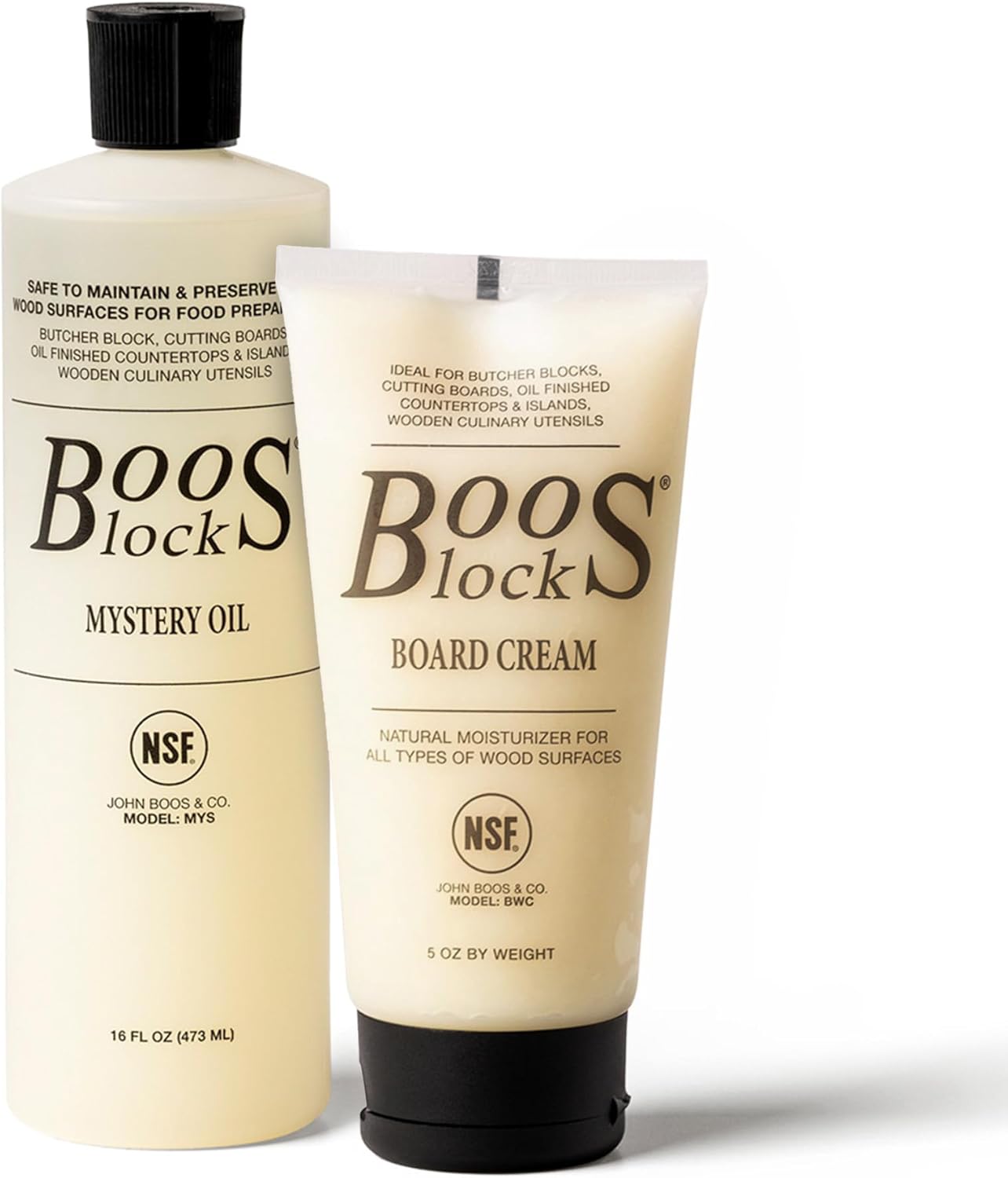
While liquid mineral oil excels at deep-penetrating moisture replenishment, combining it with a beeswax cream offers enhanced surface sealing. Pure oil sinks deep into wood pores to prevent internal cracking, while wax creates a protective outer layer that repels water droplets and food juices. Understanding this distinction helps you decide between single-liquid treatments and multi-component care kits.
Dual-step systems require an extra application phase but deliver superior long-term protection for heavily used butcher blocks. Single liquid oils offer faster application times for quick utensil touch-ups. Assess your willingness to manage multiple containers against your desire for maximum moisture defense when selecting wood care products.
Establishing a Routine Maintenance Schedule
Establishing a consistent conditioning schedule prevents wooden utensils and cutting boards from becoming brittle and cracked over time. Brand new wooden items require frequent oiling during their first few months to saturate dry wood fibers thoroughly. Once seasoned, monthly or bi-weekly maintenance applications generally suffice to maintain a healthy moisture balance across your entire culinary collection.
Watch for visual cues like fading colors or water soaking directly into the grain rather than beading up on the surface. These signs indicate that your wooden tools need immediate reconditioning. Following a predictable maintenance routine extends the functional lifespan of spoons, bowls, and chopping blocks for years of reliable kitchen service.
Proper Care and Cleaning Guidelines
Proper daily cleaning habits protect the investment you make in wood conditioning products. Always wash wooden utensils and cutting boards by hand using mild dish soap and warm water, never submerging them for extended periods. Automated dishwashers expose wood to harsh detergents and extreme heat, causing severe warping, splintering, and cracking that nullifies protective oil treatments.
Allow washed wooden items to dry completely before applying any new mineral oil or beeswax cream. Trapped moisture underneath oil layers can lead to bacterial growth or internal wood rot. Adhering to these hand-wash guidelines ensures your conditioned culinary tools remain hygienic, smooth, and visually striking during everyday meal preparation tasks.
Frequently asked questions
How often should I apply mineral oil to my wooden utensils and cutting boards?
Applying mineral oil depends on how frequently you wash and use your wooden kitchen items. Brand new boards and utensils generally require generous applications once every week or two during their initial three months of use to properly saturate dry wood pores. After this initial seasoning period, scaling back to a monthly maintenance schedule is usually sufficient to maintain protection. If you notice the wood looking dry, fading in color, or absorbing water instead of repelling it, apply another coat immediately regardless of your standard calendar schedule.
Will food-grade mineral oil go rancid or alter the taste of my food?
Genuine food-grade mineral oil is chemically stable and will never go rancid, unlike organic vegetable oils such as olive or canola oil. Because high-purity USP grade mineral oils are completely colorless, odorless, and tasteless, they will not impart any strange flavors to your ingredients or absorb unpleasant food aromas. This stability makes mineral oil the preferred choice for preserving wooden cutting boards, salad bowls, and serving utensils that regularly contact diverse foods during daily meal preparation without compromising taste or safety.
Can I use regular vegetable oil instead of mineral oil for wood care?
Using regular vegetable oil for wood care is strongly discouraged because organic cooking oils oxidize over time, turning sticky and rancid. Rancid oils produce unpleasant odors and create a sticky residue that attracts bacteria on your cutting boards and utensils. Food-grade mineral oil penetrates wood pores safely without spoiling, creating a clean, inert barrier against moisture. Sticking to specialized mineral oil ensures your kitchen tools remain hygienic, smooth, and free from sticky buildup throughout their operational lifespan.
What is the difference between liquid mineral oil and beeswax board cream?
Liquid mineral oil is a deep-penetrating conditioner that sinks directly into wood pores to replenish natural moisture and prevent internal drying, cracking, and warping. Beeswax board cream blends natural wax with mineral oil to create an external protective seal on top of the wood surface. While liquid oil nourishes the wood from within, the cream adds a smooth, water-resistant finish. Many users apply liquid oil first for deep conditioning and follow up with beeswax cream for maximum surface protection.
How do I properly apply mineral oil to my wooden kitchen tools?
To apply mineral oil properly, ensure your wooden utensils or cutting boards are completely clean and thoroughly dry. Pour a generous amount of oil directly onto the wood surface using the bottle applicator. Spread the oil evenly across the entire piece using a clean cloth or paper towel, making sure to cover all edges and corners. Allow the oil to absorb into the wood for at least two to four hours or overnight. Finally, wipe away any remaining excess oil with a clean cloth before use.