Appliances · Buying Guide
Best mississippi kween cheese grater for fast kitchen prep
Preparing everyday meals often demands reliable tools to handle daily kitchen tasks efficiently. Whether you need to shred blocks of cheese, slice cucumbers, or grate nuts for baking, choosing a manual rotary or box design helps streamline food prep without unnecessary complexity. Different mechanical setups offer distinct advantages for home cooks seeking speed and convenience during routine cooking sessions.
When shopping for a mississippi kween cheese grater setup, understanding blade configurations, container additions, and base stability ensures a practical fit for your kitchen counter space and recipe requirements. Evaluating how these kitchen implements handle various foods allows you to select a reliable option that matches your exact cooking style and ingredient preparation habits.
As an Amazon Associate, StacyLaughs earns from qualifying purchases.
Buying guide
Evaluating Blade Options and Cutting Surfaces
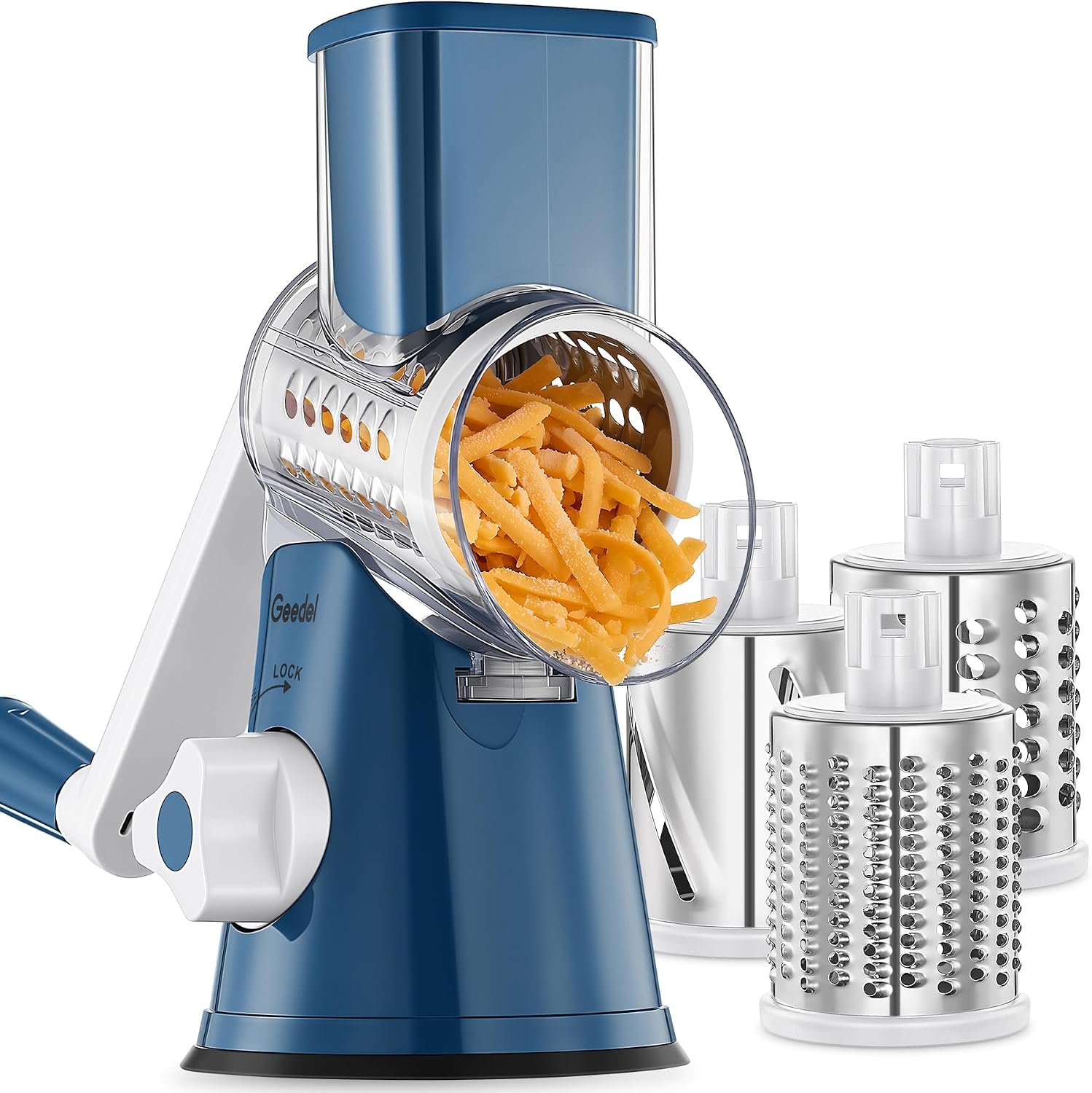
Selecting the right cutting mechanism depends heavily on the types of food you prepare most frequently. Rotary models typically use interchangeable steel drums to slice, shred, or grind ingredients with minimal effort. In contrast, traditional box graters feature multiple fixed surfaces ranging from fine to coarse textures. Understanding whether you need simple shreds or specialized crushing textures helps narrow down your choices effectively.
Reviewing the material construction of each blade ensures lasting performance during routine cooking tasks. Stainless steel components resist dulling and corrosion over time. Matching your expected recipes to the available blade counts prevents buying unnecessary accessories while guaranteeing you have the precise textures required for salads, baking, or taco toppings.
Understanding Base Stability and Counter Placement
Maintaining a firm grip on the kitchen counter is essential for safe manual food preparation tasks. Many rotary units rely on strong suction bases to anchor the main body securely during active hand cranking. These specialized bases require clean, smooth surfaces such as glass, polished marble, or finished laminate countertops to function properly and prevent any unwanted shifting during fast operation.
Box graters use stable vertical frames and ergonomic top handles to steady the tool during manual downward strokes. Evaluating how your kitchen counter space accommodates either a suction-based rotary crank or a standing box grater ensures comfortable daily operation without unexpected slipping, wobbling, or tilting while you process hard cheeses and dense vegetables for recipes.
Assessing Cleanup and Maintenance Requirements
Keeping kitchen tools hygienic requires examining how easily they disassemble and wash after preparing meals. Rotary graters featuring fully detachable parts allow you to rinse the transparent barrel, removable handle, and stainless steel blades quickly under running water. Many modern units also support top-rack dishwasher cleaning for added everyday convenience after preparing sticky cheeses.
Box graters and integrated storage containers often feature dishwasher-safe construction that simplifies routine cleanup chores. Checking manufacturer maintenance guidelines regarding water temperatures helps protect metal edge sharpness and plastic durability over years of regular use. Selecting designs that avoid trapped food zones ensures particles wash away completely without requiring tedious manual scrubbing or soaking.
Managing Storage Space and Component Organization
Kitchen cabinet real estate dictates whether an oversized multi-blade system or a compact rotary grater suits your cooking space best. Units equipped with five distinct blades often include dedicated storage cases to keep sharp metal components neatly organized inside kitchen drawers rather than floating loose among other utensils.
Simpler three-blade tools take up less vertical room but offer fewer cutting textures for specialized recipes. Box graters provide a flat vertical profile that slides easily beside baking sheets or cutting boards. Assessing available drawer space prevents cabinet clutter when storing extra accessories, ensuring all cutting drums remain protected and easily accessible for your next cooking session.
Evaluating Food Preparation Speed and Capacity
The physical size of the feeding chute and internal drum directly influences how much ingredient pre-cutting is required before grating begins today. Oversized drums easily accommodate larger chunks of vegetables or blocks of cheese, cutting preparation time significantly compared to narrower barrels that demand smaller food pieces.
Hand-crank mechanisms generally accelerate grating speeds compared to manual box graters, though they require continuous rotational effort from the user during active cooking sessions. Balancing processing speed with batch size helps determine whether a high-capacity rotary model or a traditional box grater with an integrated measuring container matches your daily kitchen routine and recipe volume objectives.
Prioritizing Safety and Finger Protection Features
Protecting your fingers from sharp metal blades is a primary consideration when choosing any grating tool for your home kitchen environment. Rotary models keep hands entirely away from cutting edges by utilizing an enclosed rotating drum design paired with a separate hand pusher mechanism to process food safely down to the end.
Traditional box graters also provide ergonomic top handles to steady the frame, but they require careful hand movement along exposed metal surfaces during food preparation. Selecting designs with effective food pushers or protective barriers ensures family members can help with daily meal tasks confidently without risking accidental cuts during routine cooking activities and recipe assembly.
Frequently asked questions
How do rotary cheese graters stay secure on smooth kitchen countertops?
Rotary cheese graters typically rely on a powerful suction base designed to anchor the main unit firmly onto smooth, clean surfaces like glass, polished marble, or laminate counters. Activating the suction mechanism creates a tight seal that prevents the device from shifting or wobbling while you turn the hand crank. For best results, ensure the countertop surface is clean, dry, and free of grease or debris before pressing the suction base down to engage the locking control firmly.
Can I wash these cheese graters and slicers in the dishwasher?
Many rotary and box grating models feature dishwasher-safe components, making cleanup straightforward after preparing sticky cheeses or dense vegetables. Manufacturers generally recommend placing detachable barrels, handles, blades, and containers on the top rack of your dishwasher. Using normal or low-temperature wash cycles helps protect plastic durability and keeps stainless steel blade edges sharp for a longer period. Always verify specific cleaning instructions to maintain your tool properly over time.
What is the advantage of having five blades instead of three?
Upgraded grating units offering five interchangeable stainless steel blades provide greater versatility for diverse recipe requirements compared to standard three-blade options. In addition to basic slicing, coarse shredding, and fine grating, five-blade systems often include specialized cutting surfaces such as extra-fine shredding and crushing blades. This expanded selection allows you to tackle specialty tasks like powdering hard nuts, creating fine parmesan shreds, or making uniform vegetable ribbons with a single kitchen tool.
Do I need to pre-cut ingredients before using a rotary grater?
The amount of pre-cutting required depends directly on the physical dimensions of the feeding chute and internal drum on your chosen rotary model. Units featuring oversized drums and wide output chutes easily accommodate larger chunks of cheese, potatoes, or zucchini without requiring extensive prep work. Smaller rotary models feature narrower feeding jars that demand smaller food portions so items fit comfortably inside before you turn the hand crank mechanism smoothly.
How do box graters compare to manual rotary crank models?
Box graters feature vertical stainless steel frames with multiple fixed working surfaces and a top handle, requiring manual downward strokes to process food. They often include detachable measuring containers that catch grated ingredients and provide convenient storage lids. In contrast, rotary crank models use mechanical rotation and interchangeable drums to speed up batch processing while keeping hands entirely away from exposed metal edges, offering a different physical approach to everyday kitchen food preparation.