Appliances · Buying Guide
Best Olive Wood Cooking Utensils for Natural Kitchen Style
Upgrading your kitchen tools with natural materials brings both practical utility and a warm, rustic aesthetic to everyday meal preparation. Olive wood utensils offer a distinct alternative to standard metal or plastic options, combining unique grain patterns with smooth, gentle surfaces designed to protect nonstick cookware during frequent cooking tasks like stirring, mixing, and serving various hot dishes.
Whether you need a comprehensive multi-piece set for daily cooking tasks, or targeted spatulas for stovetop use, choosing the right configuration depends entirely on your specific cooking habits. Examining individual set compositions, handle lengths, and routine maintenance requirements ensures you select durable wooden tools tailored to your culinary space and daily meal preparation routine.
As an Amazon Associate, StacyLaughs earns from qualifying purchases.
Buying guide
Material Quality and Grain Variation
Selecting olive wood utensils starts with understanding the unique characteristics of natural timber. Olive wood is known for its high density, solid weight, and distinct golden grain patterns. Unlike uniform plastic or metal tools, each piece displays unique visual variations that add rustic charm to your kitchen counter. This natural density helps resist moisture absorption and staining during food prep.
When evaluating options, look for descriptions confirming solid wood construction without artificial fillers. Natural timber contains inherent oils that contribute to durability and heat resistance. While these variations make every item visually distinct, they also mean no two pieces look identical. Embracing this individuality ensures you appreciate the authentic craftsmanship built into your chosen kitchen tool collection.
Set Composition and Tool Variety
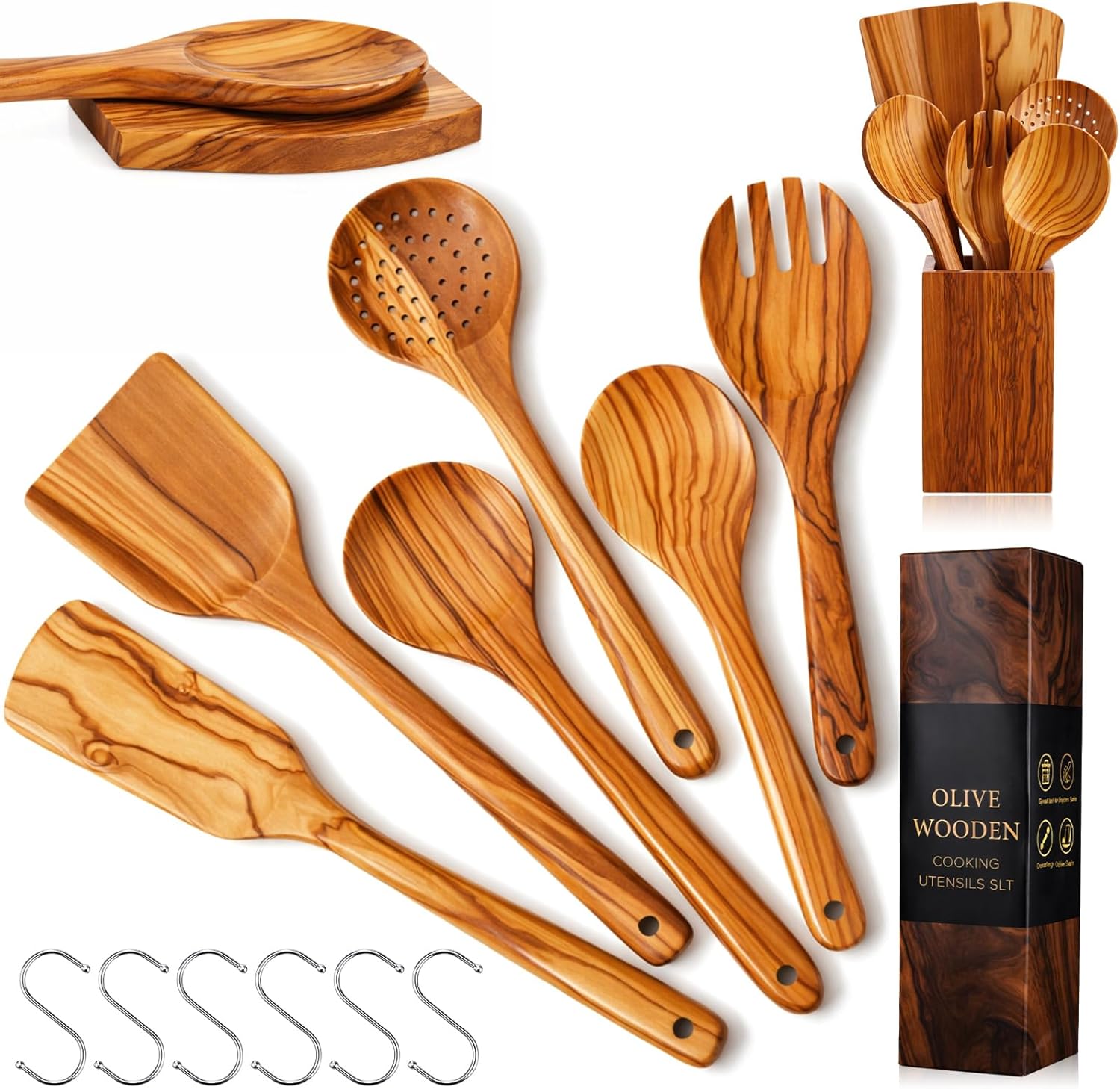
The right set composition depends heavily on your daily cooking routine and meal preparation habits. Smaller collections typically offer essential tools like a single spatula and a few basic spoons, which suit minimalists or bakers. Larger bundles expand your options with slotted spoons, forks, turners, and ladles, covering everything from flipping pancakes to serving thick stews and tossing fresh salads.
Assess which specific tasks you perform most frequently at the stovetop before choosing a set size. If you primarily stir soups and sauté vegetables, a multi-spoon configuration is ideal. Cooks who frequently fry burgers and steaks benefit more from dedicated flat spatula packs. Matching the tool variety to your actual culinary habits prevents unnecessary clutter in your utensil drawers.
Handle Length and Stovetop Reach
Handle length plays a crucial role in your overall comfort and safety during active stovetop cooking sessions. Standard twelve-inch handles work well for routine pan stirring and general meal preparation tasks. However, extended handles reaching nearly fourteen inches offer a greater working distance, keeping your hands farther away from rising steam, boiling liquids, and splattering hot oil.
Consider the depth of your cookware when evaluating handle dimensions for your kitchen space. Deep stock pots and large frying pans benefit immensely from longer reaches, preventing hand fatigue and heat exposure. Conversely, shallower pans pair comfortably with standard lengths. Selecting the appropriate reach ensures you maintain confident control over flipping and stirring without awkward physical strain.
Cookware Compatibility and Surface Safety
Protecting delicate cookware surfaces is one of the primary reasons home cooks transition to wooden kitchen tools. Natural olive wood provides a smooth, non-abrasive surface that prevents scratches on non-stick pans, ceramic coatings, enamel cookware, and seasoned cast iron. Unlike metal turners, wood absorbs impact forces, eliminating harsh scraping noises and surface gouges during vigorous stirring or flipping.
Ensuring your chosen utensils remain completely free of synthetic lacquers or chemical coatings enhances safe daily food contact. Solid wood naturally interacts gently with hot ingredients without melting or warping under standard cooking temperatures. By relying on smooth, rounded wooden edges, you preserve the lifespan of expensive coated cookware while enjoying reliable performance across diverse cooking vessels.
Maintenance and Wood Preservation
Proper maintenance is essential for preserving the natural beauty and structural integrity of olive wood utensils over time. Because natural timber reacts poorly to extreme environments, you must always hand wash your pieces using mild soap and warm water. Avoid placing wooden tools in the dishwasher, as prolonged exposure to intense heat and moisture causes cracking and dryness.
Periodic conditioning with food-grade mineral oil or specialized wood rescue wax helps maintain the wood's luster and prevents splitting. Applying oil regularly restores the rich grain patterns and repels liquids effectively. Adopting a simple routine of washing, drying immediately, and occasional oiling ensures your wooden kitchen utensils remain dependable, attractive assets for years of daily meal preparation.
Craftsmanship and Ethical Sourcing
Craftsmanship traditions significantly influence the tactile feel and long-term durability of wooden kitchen utensils. Handcrafted pieces often feature careful sanding, smooth rounded grips, and meticulous finishing that reflect decades of woodworking heritage. Sourcing items made from sustainably harvested olive wood ensures responsible environmental practices while delivering dense, durable tools built for daily culinary applications.
Examining how each utensil is shaped provides insight into its overall quality and ergonomic balance. Artisanal carving results in unique grips that fit comfortably in your hand during extended mixing and stirring tasks. Valuing traditional woodworking methods helps you invest in functional art pieces that combine environmental sustainability with reliable, everyday utility in your home kitchen.
Frequently asked questions
Can I put olive wood cooking utensils in the dishwasher?
No, you should never place olive wood cooking utensils in a dishwasher. Dishwashers expose wooden items to prolonged high heat and excessive water immersion, which strips natural oils and causes the timber to warp, splinter, or crack. Instead, always hand wash your utensils using mild soap and warm water, then dry them thoroughly with a towel right away. Applying a food-grade mineral oil periodically will help maintain the wood surface and prevent dryness over extended periods of use.
How often should I oil my olive wood kitchen utensils?
You should oil your olive wood kitchen utensils whenever the wood begins to look dry, dull, or feels slightly rough to the touch, which typically happens every few weeks depending on usage frequency. Clean and dry the utensils completely before applying a small amount of food-grade mineral oil or wood wax using a soft cloth. Rub the oil into the grain, let it sit for a short duration, and wipe away any excess. This routine preserves moisture resistance and shine.
Will olive wood utensils scratch my non-stick cookware?
No, olive wood utensils are naturally gentle and will not scratch non-stick cookware, ceramic pans, or enamel surfaces. The smooth timber provides a soft, non-abrasive interface that protects delicate pan coatings during everyday stirring, flipping, and mixing tasks. Unlike metal tools that can easily gouge or ruin non-stick layers, well-finished wooden utensils absorb friction safely, making them an ideal choice for maintaining the lifespan of your favorite specialized pots and pans.
Why do olive wood utensils have different color shades and grain patterns?
Olive wood utensils display varying color shades and unique grain patterns because they are carved from natural timber where each tree grows with distinct characteristics. Factors like soil composition, age, and branch placement create rich golden veins and contrasting dark streaks. This natural variation means no two kitchen tools are identical, transforming functional cooking items into unique decorative pieces that showcase authentic wood grain rather than uniform manufactured plastic.
Are olive wood utensils safe for high-heat cooking?
Olive wood utensils possess natural heat-resistant properties that make them suitable for standard cooking tasks like stir-frying, sautéing, and mixing hot ingredients. Unlike plastic tools, they will not melt or warp under normal stovetop temperatures. However, you should avoid leaving wooden utensils resting inside a hot pan for prolonged periods or exposing them to direct open flames, as extreme direct heat can dry out the natural wood fibers and cause surface cracking.