Appliances · Buying Guide
Best Oxo Good Grips Rotary Grater Options for Kitchen Food Prep
Choosing a rotary grater changes how you handle daily kitchen tasks like shredding semi-soft cheese, slicing fresh vegetables, and grinding nuts. Manual hand crank designs and drum systems offer practical alternatives to traditional flat box graters. They rely on mechanical rotation to process ingredients efficiently while keeping your fingers safely away from sharp stainless steel cutting surfaces.
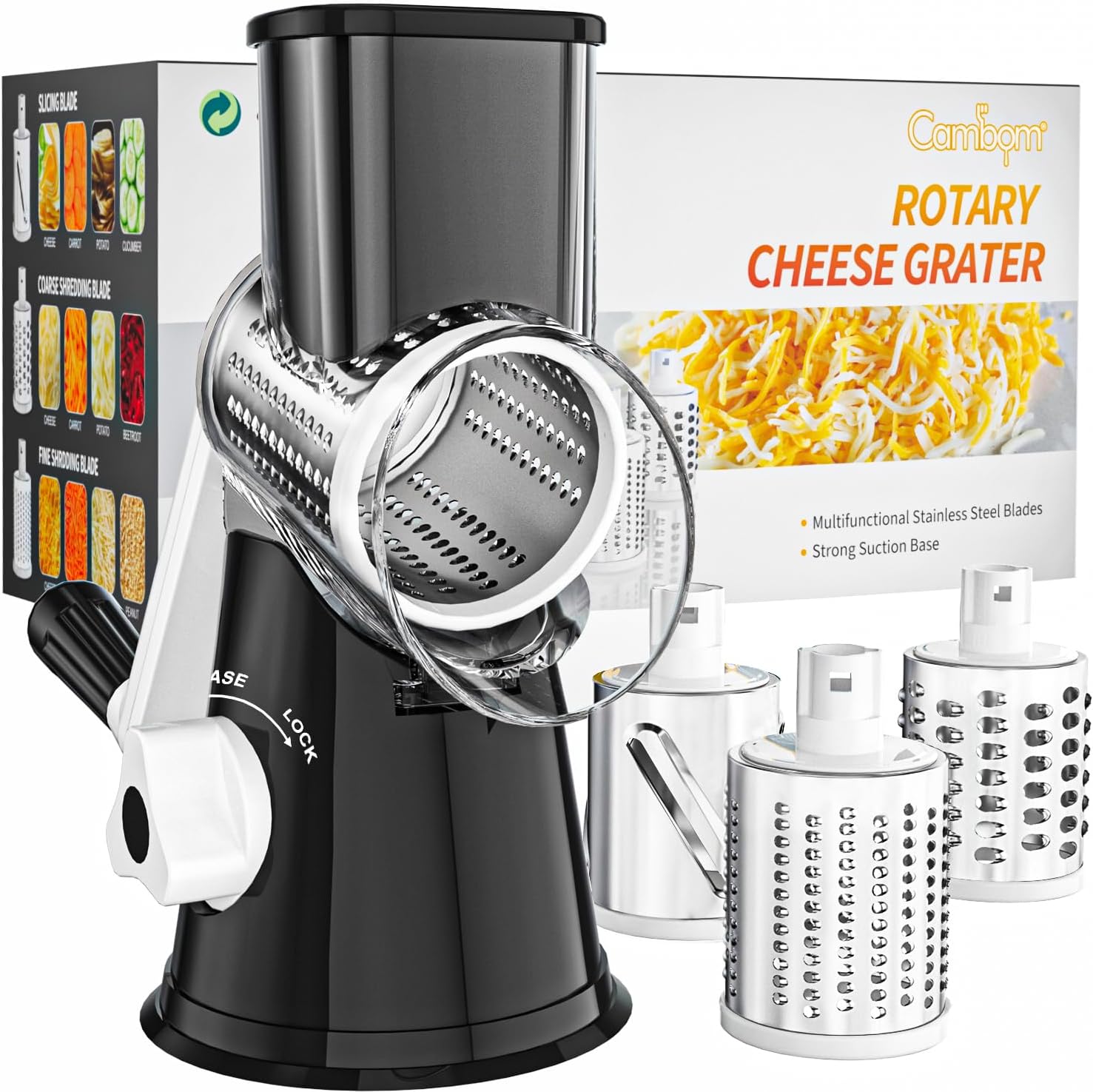
Different models feature various blade configurations, interior storage compartments, and stabilization mechanisms like suction bases. Evaluating these physical attributes helps match a tool to your specific food preparation habits, available counter space, and daily cleanup preferences. Exploring available options ensures you select a practical rotary grater for your home cooking routine without unnecessary complications.
As an Amazon Associate, StacyLaughs earns from qualifying purchases.
Buying guide
Selecting Blade Options and Types
Rotary graters offer different blade configurations ranging from single fixed surfaces to sets featuring up to five interchangeable stainless steel drums. Evaluating your common cooking recipes helps determine whether you need simple coarse shredding or multiple cuts like fine grates, thick slices, and decorative wavy patterns. Units with multiple drums expand your overall food preparation capabilities for vegetables, hard cheeses, and chocolate.
Fixed blade models provide straightforward performance without extra components to store or wash. Consider which ingredients you process most frequently when deciding on blade variety. Choosing the right configuration prevents kitchen clutter while ensuring you have the exact cutting surfaces required for your daily meal preparation tasks.
Understanding Base Stabilization Systems
Countertop stability during manual cranking is essential for safe and efficient food processing in home kitchens. Many rotary graters incorporate powerful suction bases designed to lock firmly onto smooth countertop surfaces like marble or glass. These suction mechanisms prevent the unit from slipping or shifting while you turn the handle at higher speeds.
Models without suction bases often rely on handheld designs or manual weight distribution to stay steady during use. Assessing your kitchen counter material helps you choose between suction-locked units and traditional handheld options. Selecting the appropriate stabilization method ensures comfortable operation during heavy volume grating sessions without unexpected movement across your work surface.
Evaluating Material and Construction Quality
Material composition directly impacts the durability, weight, and maintenance requirements of your rotary grater. Most units combine food-grade ABS or BPA-free plastic bodies with hardened stainless steel cutting drums and components. Stainless steel naturally resists rust and maintains sharp cutting edges through frequent use with hard cheese, fresh vegetables, and nuts.
Plastic housings keep the overall appliance weight manageable while remaining completely safe for direct food contact during meal preparation. Reviewing the material specifications helps ensure the grater withstands regular use and repeated cleaning routines. Selecting durable plastics and steel components provides long-term reliability for your kitchen tool collection without premature wear or structural failure over time.
Assessing Storage and Footprint Requirements
Kitchen storage space dictates which rotary grater style fits your home best. Compact handheld units occupy minimal drawer space, while larger multi-component models featuring suction bases and multiple drums require dedicated cabinet room. Understanding the physical dimensions and total component count helps prevent overcrowding in your kitchen storage areas and crowded drawers.
Some advanced multi-blade systems include specialized storage cases to keep extra drums neatly organized and protected from damage. Checking whether a model features easily detachable parts simplifies finding an appropriate storage spot in small kitchens. Balancing your available cabinet space with the appliance footprint ensures convenient access whenever you need regular food preparation assistance.
Understanding Cleaning and Maintenance Procedures
Regular cleaning keeps rotary graters hygienic and prevents food residue buildup after processing cheese, chocolate, and fresh vegetables daily. Many modern units feature dishwasher-safe construction, allowing top-rack cleaning for removable barrels, stainless steel blades, and food pushers. Detachable components simplify reaching every corner during manual washing under running water as well without excessive operational effort.
Following manufacturer guidelines regarding dishwasher cycles helps preserve stainless steel blade sharpness and plastic integrity over extended periods of frequent use. Avoiding high-heat drying cycles prevents warping on sensitive plastic parts and accessory storage containers. Proper maintenance routines extend the functional lifespan of your rotary grater and ensure safe food preparation for every single meal.
Safety Features and Finger Protection
Protecting your hands from sharp cutting edges is a primary advantage of rotary graters compared to traditional flat box graters. Hand crank mechanisms replace your fingers in turning the cutting surface, while included food pushers keep your hands safely away from the rotating stainless steel blades. Enclosed drum designs offer additional protection for users of all experience levels during food prep.
Checking for stable suction base operation and secure pushers ensures you can grate ingredients without accidental contact. These safety measures make rotary graters suitable for family kitchens where multiple people help with daily meal preparation. Prioritizing protective mechanical designs gives you confidence when tackling high-volume grating tasks across various recipes.
Frequently asked questions
How do I clean my rotary grater safely?
Most rotary grater models feature detachable parts that simplify the cleaning process significantly. You can wash removable components under running water with mild soap or place them on the top rack of your dishwasher. It is important to follow manufacturer guidelines and avoid high-heat drying cycles to prevent warping plastic parts and to maintain the sharpness of stainless steel blades over time. Ensure all pieces are completely dry before storing them in your kitchen cabinets or drawers to maintain optimal hygiene.
What types of food can I process with a rotary grater?
Rotary graters handle a wide variety of ingredients depending on the specific blade configuration included with your model. Common foods include semi-soft cheeses like cheddar and mozzarella, hard cheeses like parmesan, fresh vegetables such as potatoes, carrots, zucchini, and cucumbers, as well as chocolate and nuts like peanuts and almonds. Using the appropriate drum or blade ensures clean cuts for salads, hash browns, tacos, and baked desserts without clogging the mechanism.
Are rotary graters safer to use than traditional box graters?
Yes, rotary graters offer enhanced safety by keeping your fingers away from exposed cutting surfaces. Instead of rubbing food directly against a stationary blade like you do with traditional box graters, a rotary system uses a turning handle and an enclosed drum. Furthermore, included food pushers allow you to press ingredients down safely to the very end of the piece, preventing accidental skin contact with the sharp stainless steel blades during operation.
Do rotary graters require a suction base to work properly?
Not all rotary graters require a suction base, as design styles vary between handheld units and countertop models. Countertop rotary graters frequently use powerful suction cup bases to anchor themselves firmly onto smooth surfaces like marble or glass, preventing movement during manual cranking. Conversely, handheld models rely on manual stabilization and a comfortable grip handle. Your choice depends on your counter material and whether you prefer a secured station or a portable tool.
How do I prevent food from jamming inside the rotary grater?
Preventing food jams involves selecting the correct blade type for your ingredients and avoiding oversized chunks that exceed the feed chute dimensions. Some rotary grater models feature specialized inclined transparent barrels designed specifically to reduce clogging and ensure smooth ingredient flow. Feeding food items evenly while applying gentle pressure with the food pusher helps maintain a consistent flow through the drum, allowing processed cheese and vegetables to drop smoothly into your collection container.