Appliances · Buying Guide
Best Pampered Chef Small Spatula Options for Kitchen Tasks
Finding the right mini turner can completely change how you handle delicate baked goods, morning eggs, and evening skillet meals. A compact cooking tool gives you precise control when working inside crowded pans or serving neat squares of brownies. Manufacturers design these scaled-down utensils to bridge the gap between full-sized turners and precise pastry knives, offering sharp edges and flexible blades for everyday kitchen utility.
When selecting a compact turner for your kitchen drawer, evaluating the blade material and edge design helps match the tool to your cookware. Stainless steel variants offer rigid cutting capabilities, while nylon alternatives protect coated surfaces from scratches. Exploring different multi-pack configurations ensures you always have the right utensil ready for serving appetizers, lifting cookies, or flipping small burger patties during busy meal preparation.
As an Amazon Associate, StacyLaughs earns from qualifying purchases.
Buying guide
Material Composition
Selecting the right material for your small spatula dictates how well the tool handles heat and interacts with your cookware. Stainless steel variants provide exceptional rigidity and sharp edges, making them ideal for cutting and serving baked goods like brownies or lasagna. However, metal blades require careful use in coated pans to avoid unwanted scratches.
On the other hand, nylon or silicone materials offer a gentle touch for non-stick surfaces. These alternatives absorb less heat and prevent scratching, though they may lack the rigid cutting power found in metal designs. Evaluating your typical kitchen tasks ensures you pick a material that balances surface safety with structural strength.
Blade Edge Design
The leading edge of a compact turner determines its overall versatility when shifting from preparation work to serving duties. Models featuring beveled or sharp front edges double as efficient pastry knives, letting you cleanly slice portions right inside the baking dish. This dual functionality saves valuable time and reduces the number of dirty utensils generated during dessert preparation.
Conversely, standard rounded edges prioritize smooth sliding beneath delicate items like fried eggs or thin pancakes without puncturing their surfaces. If your cooking routine involves frequent pastry slicing alongside stovetop flipping, a beveled edge provides a distinct advantage. Matching the edge profile to your favorite recipes prevents daily frustration during meal assembly and table plating.
Handle Ergonomics and Grip
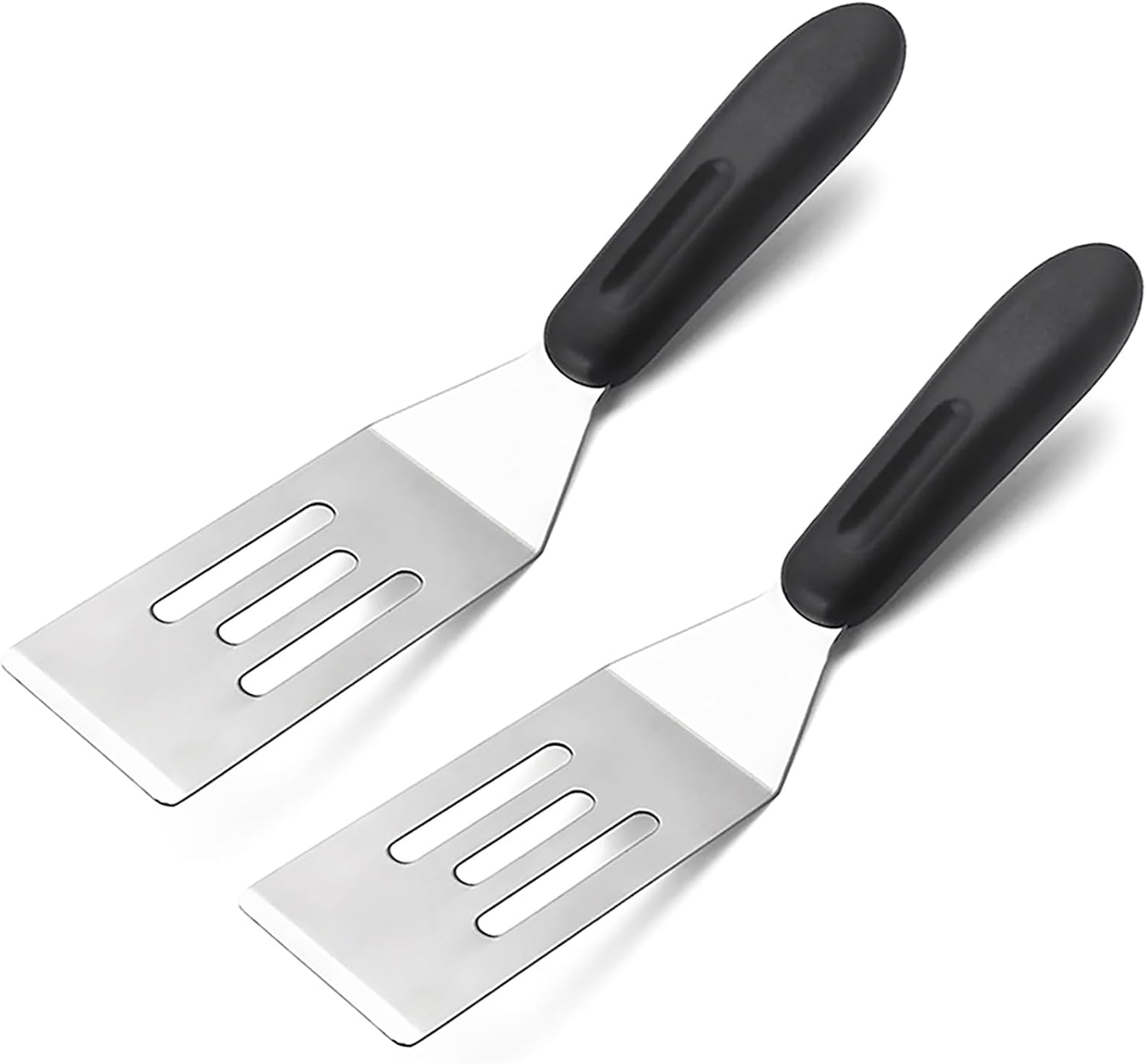
A comfortable handle ensures precise control when manipulating small utensils in crowded pans or tight baking dishes. Contoured plastic handles fit naturally into the hand, reducing fatigue during repetitive tasks like flipping dozens of cookies or burger patties. Textured surfaces or rubberized insets further enhance stability, preventing slips when hands are wet or greasy.
Utensils featuring bare stainless steel handles offer straightforward cleaning and maximum durability, though they may lack the cushioning of molded grips. When preparing large batches of food, ergonomic design directly impacts your comfort level. Assessing how the handle feels during extended use helps you choose a tool that minimizes hand strain and improves overall kitchen efficiency.
Slotted Versus Solid Blades
Choosing between slotted and solid spatula blades depends heavily on the specific foods you prepare most often. Slotted designs incorporate openings that allow excess oil or liquids to drain away, making them ideal for handling fried items like burgers or hash browns. This drainage prevents meals from becoming overly greasy during plating.
On the other hand, solid blades provide an unbroken surface that supports fragile items like delicate crepes, frosted cakes, and single-serve brownies without sagging. Many multi-pack options include both styles, giving you the flexibility to select the optimal blade configuration for each recipe. Evaluating your weekly menu helps determine which blade style deserves primary drawer space.
Size and Storage Proportions
Small spatulas typically measure around eight inches in total length, offering a compact footprint that fits easily into standard kitchen drawers and countertop utensil crocks. This scaled-down size provides superior maneuverability inside smaller skillets, toaster ovens, and baking pans where full-sized tools simply cannot reach. They take up minimal storage space while delivering highly targeted utility for daily tasks.
However, shorter shafts provide less leverage when lifting heavy or oversized food portions from deep baking dishes during meal service. Balancing your storage constraints against your typical portion sizes ensures the selected tool meets your practical requirements without feeling cramped. Checking dimensions beforehand guarantees the utensil matches your specific kitchen drawer layout and storage needs.
Maintenance and Cleaning Ease
Keeping your kitchen tools clean should require minimal effort after a busy meal preparation session. Most stainless steel and nylon mini spatulas feature dishwasher-safe construction, allowing for convenient cleanup alongside your regular dinner plates. Food-grade materials resist stubborn stains and odors, ensuring the utensils remain fresh through repeated use cycles.
Certain designs with multi-component handles may require careful hand washing to prevent water retention inside seams over extended periods. Reviewing manufacturer care instructions helps preserve the finish and structural integrity of your small spatula set. Selecting easy-to-clean utensils saves valuable time at the end of the day and extends the functional lifespan of your kitchen tools.
Frequently asked questions
Can I use a metal mini spatula on non-stick cookware?
Using metal mini spatulas on non-stick cookware requires extreme caution because the rigid stainless steel edges can easily scratch or damage delicate protective coatings. If your pots and pans feature non-stick surfaces, nylon or silicone alternatives provide a much safer option that prevents accidental surface wear. Reserve metal turners for stainless steel pans, cast iron skillets, or glass baking dishes where scratching is not a concern. Always check your cookware manufacturer guidelines before pairing them with metal utensils.
Are mini spatulas dishwasher safe?
Most mini spatulas constructed from stainless steel or food-grade nylon are fully dishwasher safe, allowing for convenient cleanup after preparing meals. Placing them in the automatic dishwasher helps remove stubborn food residues from handles and blades without requiring excessive manual scrubbing. However, reviewing specific manufacturer instructions remains wise, especially for tools featuring multi-material handles or specialized coatings, to ensure long-term durability and prevent any potential warping or degradation during high-heat wash cycles.
What makes a beveled edge useful on a small spatula?
A beveled edge provides a sharp, tapered profile that easily slides beneath delicate foods like fried eggs, pancakes, and cookies without breaking their shape. Furthermore, this sharpened edge allows the spatula to double as a practical cutting tool, letting you portion brownies, lasagna, or cake directly inside the baking pan. This dual functionality reduces the number of separate knives and utensils you need to use and wash during dessert preparation and serving tasks.
Why choose a slotted mini spatula over a solid one?
Slotted mini spatulas feature built-in drainage openings that allow excess oil, grease, or liquids to escape when you lift foods from a skillet or baking sheet. This makes slotted variants particularly useful for serving fried items like burgers, hash browns, or patties without transferring unwanted grease to your plate. Solid blades, conversely, provide an unbroken surface ideal for supporting fragile baked goods, single-serve cakes, or crepes that require full structural backing during transport.
What is the typical size of a mini serving spatula?
Mini serving spatulas typically measure around eight inches in total length, featuring a compact blade that spans roughly one and a half to two inches wide. This scaled-down footprint makes them exceptionally easy to store in standard kitchen drawers or countertop crocks while offering superior maneuverability inside tight spaces like toaster ovens and small skillets. While their compact size excels at portioning desserts and flipping small items, they offer less leverage for heavy foods.