Appliances · Buying Guide
Best Pioneer Woman Cooking Utensils Style Sets for Daily Cooking
Finding the right cooking utensil set can transform how you handle daily meal preparation, baking, and everyday stovetop tasks in your home kitchen. Many home cooks specifically look for options that match colorful or classic country-style aesthetics reminiscent of popular rustic cookware collections, offering both charming visual appeal and reliable functional utility on the countertop.
This article examines several diverse utensil collections currently available on the market, ranging from massive multi-piece bundles to solid natural wood sets. By carefully evaluating physical construction, handle materials, and included accessory pieces, you can select a practical kitchen companion that suits your specific cooking habits, storage space limitations, and aesthetic preferences.
As an Amazon Associate, StacyLaughs earns from qualifying purchases.
Buying guide
Material Selection for Cookware Protection
Choosing the correct material for your cooking utensils is essential for preserving the lifespan and finish of your pots and pans. Silicone heads offer exceptional softness, ensuring that delicate non-stick coatings remain entirely free from scratches during aggressive daily stirring, mixing, and scraping tasks.
On the other hand, natural woods like teak and acacia provide a classic, plastic-free aesthetic while still remaining gentle on sensitive cookware surfaces. Evaluating your existing pots and pans helps determine whether flexible silicone or solid wood best fits your daily cooking habits.
Set Size and Practical Tool Variety
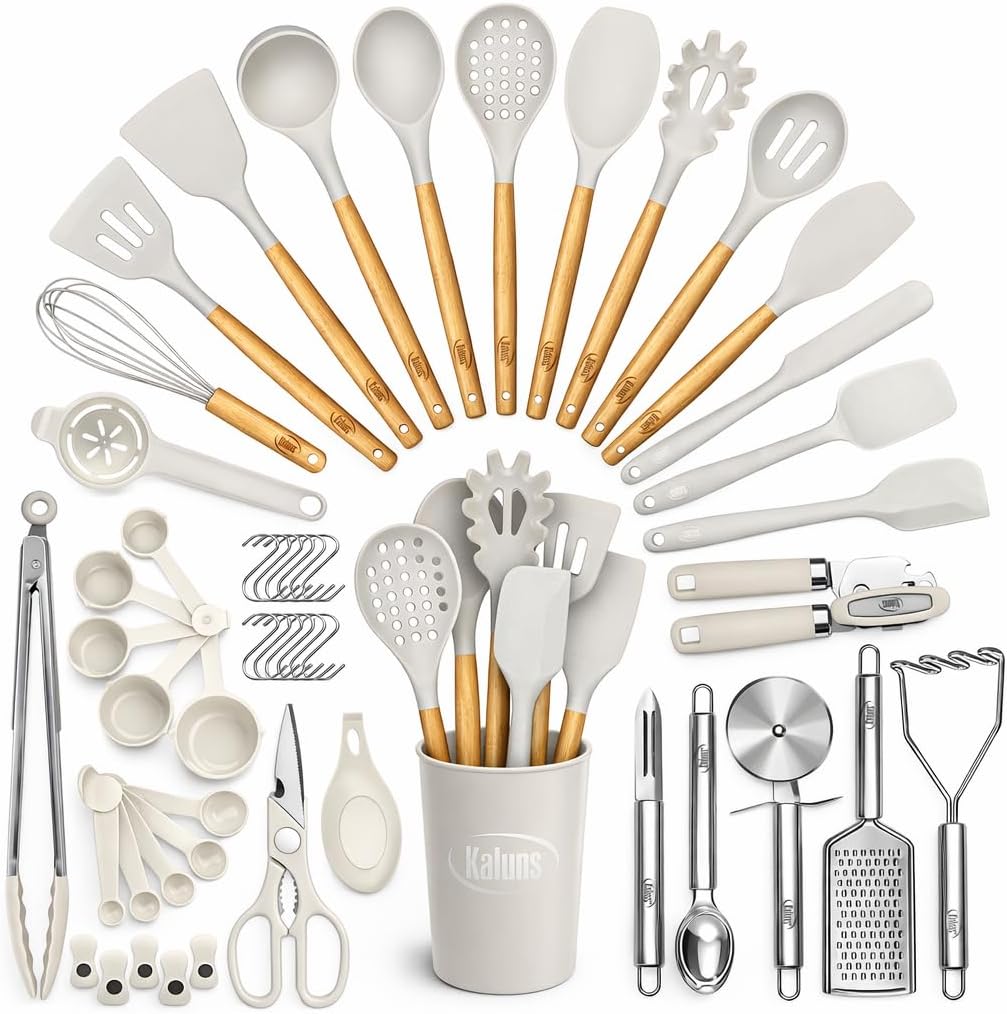
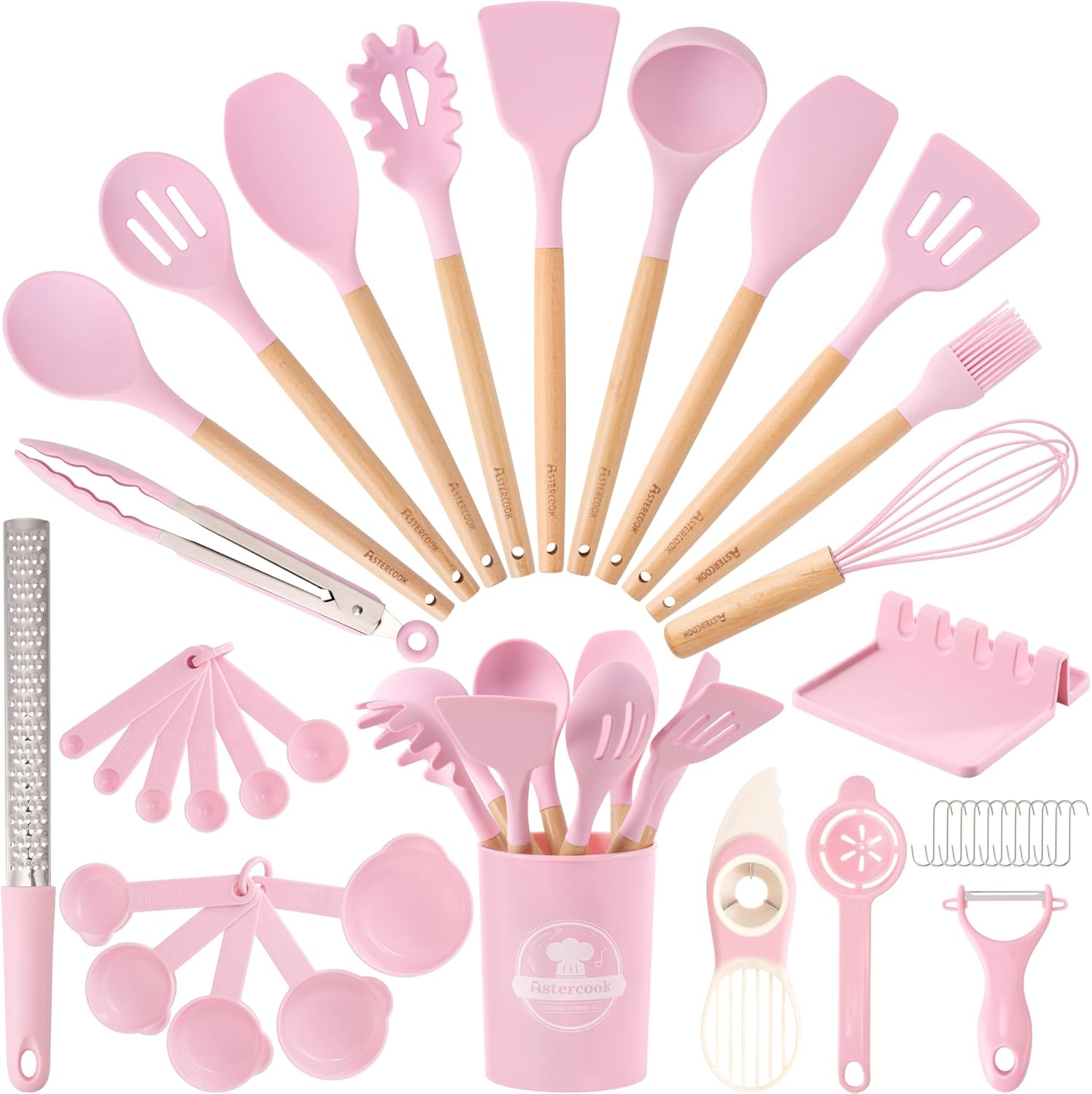
Utensil sets vary dramatically in piece count, ranging from compact eight-piece teak collections to massive thirty-three or fifty-piece culinary bundles. Larger sets typically include specialized gadgets such as tongs, graters, pizza cutters, veggie peelers, and measuring spoons alongside standard turners, spatulas, and soup ladles.
Assessing your actual cooking habits dictates whether a large kit is necessary or if a smaller selection works better. If you bake frequently and prepare complex recipes, a high-count bundle provides instant access to diverse tools without extra shopping.
Handle Construction and Ergonomic Grip
The handle construction significantly influences how comfortable a utensil feels during extended cooking sessions and heavy meal preparation tasks on the busy stovetop. Many modern silicone sets pair flexible heads with smooth wooden handles, which provide a comfortable grip.
Solid wood handles also offer exceptional physical balance and control when stirring heavy mixtures, thick stews, or dense baking batters. However, you must carefully consider how these handle materials affect daily cleaning requirements, as wooden components demand manual washing.
Storage Options and Countertop Organization
Keeping your busy kitchen organized requires evaluating the storage solutions included with a utensil set. Many popular collections feature dedicated matching holders equipped with drainage holes, alongside hanging hooks and silicone resting mats to keep your countertops clean during food preparation.
A well-designed holder prevents clutter by keeping all matching utensils centralized in one accessible location right near your stove. If your kitchen has limited counter space, check whether the included cylinder holder fits comfortably in your layout or if you prefer hanging your tools.
Heat Resistance and Stovetop Performance
High heat resistance is a critical factor when selecting cooking utensils for active daily stovetop use. Silicone materials typically withstand high cooking temperatures ranging from 446 up to 480 degrees Fahrenheit without melting, warping, or degrading during intensive frying, simmering, and boiling tasks.
Natural wood tools also handle daily stovetop heat effectively without transferring uncomfortably high temperatures to the user's hand. Reviewing the maximum temperature limits specified for silicone components ensures your chosen utensils remain physically stable during demanding high-heat culinary activities.
Maintenance and Long-Term Care Routines
Proper maintenance routines ensure that your kitchen utensil collection remains functional and visually attractive for years to come in your home. Utensils featuring wooden handles or solid wood construction generally require manual hand washing in warm soapy water rather than automated dishwasher cleaning.
For natural wood sets, applying occasional protective coats of mineral oil helps preserve the smooth surface texture and prevents drying out over extended use. Following manufacturer cleaning guidance prevents premature wear, ensuring that your cooking tools remain reliable.
Frequently asked questions
Can I put my wooden handle cooking utensils in the dishwasher?
Most manufacturers explicitly recommend against placing utensils with wooden handles or solid wood construction into the dishwasher. The intense heat, prolonged water immersion, and harsh detergents used in automated dishwashers can cause natural wood handles to warp or crack over time. To maintain the structural integrity and appearance of your utensils, it is best to hand wash them in warm soapy water, rinse them clean, and dry them thoroughly with a towel before storing them in their holder or hanging them up.
Are silicone cooking utensils safe to use on non-stick cookware?
Yes, silicone cooking utensils are exceptionally well-suited for non-stick cookware surfaces. The soft, flexible silicone heads provide a gentle contact point that prevents scratching or damaging expensive pots and pans during daily cooking tasks like stirring, flipping, and serving. Unlike metal tools that can easily ruin non-stick coatings, food-grade silicone allows you to scrape bowls and pans clean safely. Additionally, high-quality silicone resists staining and does not react with various foods or retain unpleasant odors during regular meal preparation routines.
How do I remove the initial factory smell from new silicone utensils?
Brand new silicone kitchen utensils sometimes retain a slight original manufacturing odor when first unboxed. To eliminate this smell before your initial cooking session, you can soak the silicone pieces in clean water and expose them to fresh air for about three hours. This simple process allows any trapped factory scents to dissipate naturally. Once aired out, the silicone will not retain food odors or colors during regular kitchen use, ensuring safe and pleasant meal preparation for your family every single day.
How should I maintain natural wood cooking utensils over time?
Maintaining natural wood cooking utensils requires a straightforward routine centered around proper cleaning and occasional conditioning. Always wash your wooden spoons and spatulas by hand using warm soapy water, and dry them immediately rather than letting them air dry in pools of water. To prolong their smooth feeling and prevent the wood from drying out or splitting, periodically apply a light coating of food-grade mineral oil across the surface. Proper storage in a ventilated holder or on hanging hooks also prevents moisture buildup.
What temperature can heat-resistant silicone utensils handle?
Heat-resistant silicone utensils are engineered to withstand high cooking temperatures without melting, warping, or degrading during active stovetop use. Depending on the specific set collection, these silicone tools typically handle heat thresholds ranging from 446 degrees Fahrenheit up to 480 degrees Fahrenheit safely. This robust thermal resistance makes them ideal for everyday kitchen tasks such as simmering sauces, stir-frying vegetables, boiling liquids, and flipping food items in hot pans. Always check the specific product specifications to confirm the exact temperature tolerance for your chosen utensils.