Appliances · Buying Guide
Best Rotary Cheese Grater with Handle Options for Quick Kitchen Prep

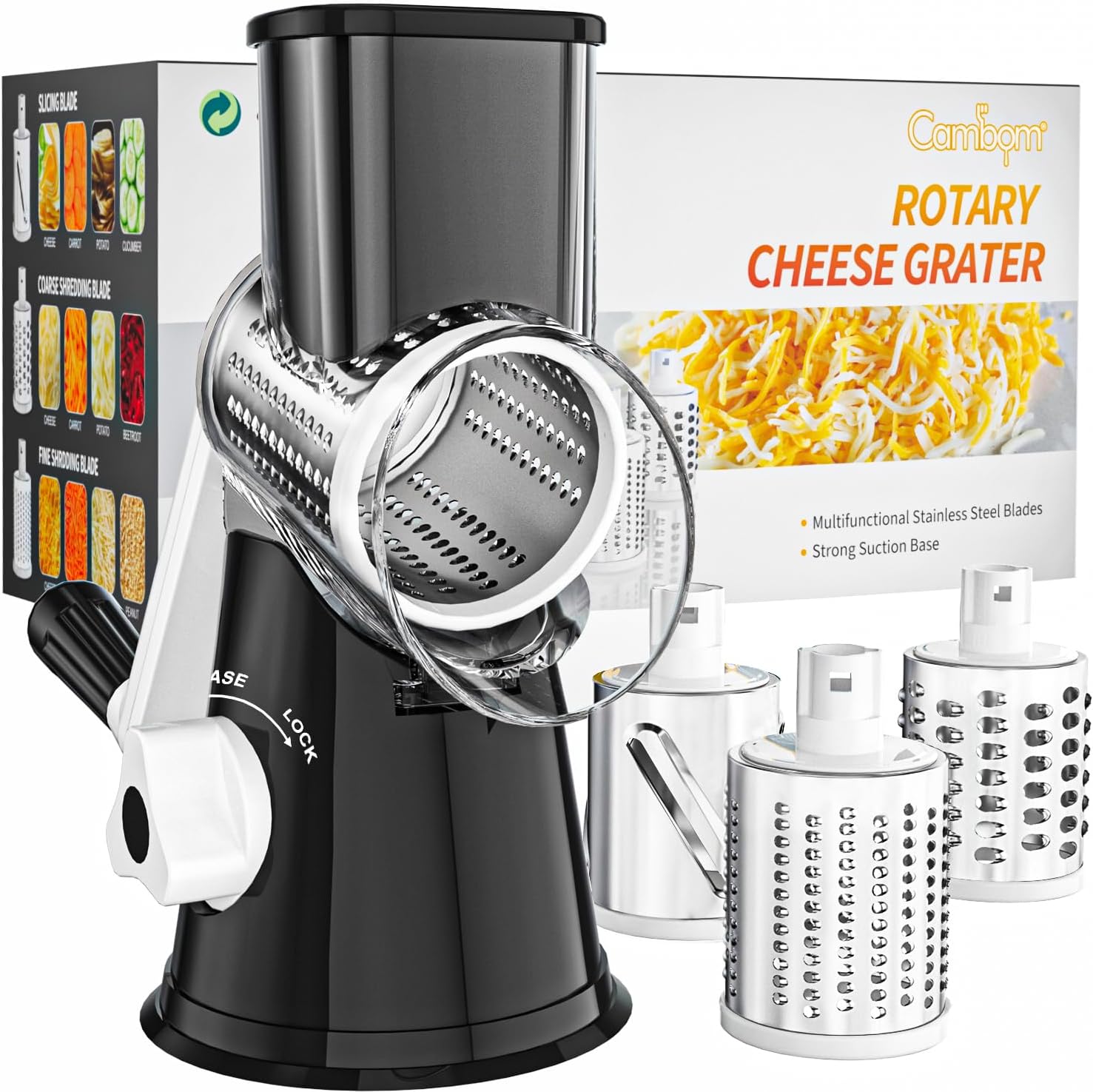
Finding the right kitchen tool for daily food preparation can transform how you handle routine cooking tasks. A rotary cheese grater with handle design offers a manual, hand-cranked mechanism to process blocks of cheese, vegetables, and nuts without requiring electricity. These mechanical shredders typically feature interchangeable stainless steel blades housed inside a transparent barrel, paired with a suction base to anchor the unit firmly to smooth countertops during operation.
Whether you are preparing toppings for taco night, slicing vegetables for a fresh salad, or grating chocolate for desserts, selecting the appropriate model depends on your specific kitchen needs. Different designs offer various blade counts, capacities, and footprint dimensions. Reviewing the available options helps you match mechanical shredders to your counter space, ingredient preferences, and desired cleanup routine for everyday meal preparation.
As an Amazon Associate, StacyLaughs earns from qualifying purchases.
Buying guide
Evaluating Blade Options and Cutting Styles
When choosing a rotary cheese grater, examining the included blade configurations is essential for matching the tool to your regular recipes. Models typically feature stainless steel drums that handle coarse shredding, fine grating, and flat slicing. Some units expand versatility by adding specialized drums for wavy cuts or fine grinding. Selecting a design with multiple blades ensures you can process firm cheeses and vegetables efficiently.
Reviewing how easily these blades swap out during food preparation prevents frustration during busy cooking sessions. Look for mechanisms that secure drums firmly inside the transparent barrel while allowing quick removal for cleaning or changing cuts. Matching the blade selection to your typical meal ingredients guarantees that the hand-crank shredder performs reliably across various daily kitchen tasks.
Understanding Countertop Mounting and Stability
Stability during hand-crank operation is a vital factor for safe and efficient food processing. Many rotary graters rely on a suction cup base designed to anchor the unit securely to smooth, clean surfaces like marble or glass countertops. This suction mechanism prevents the grater from shifting or sliding while you turn the handle, allowing you to apply steady pressure without holding the main body with your secondary hand.
Assessing your kitchen countertop material is necessary before selecting a suction-based model. Textured, tiled, or porous surfaces often prevent suction bases from achieving a secure grip, which can impact operational stability. If your kitchen features non-smooth counters, you may want to look for units equipped with a stable standalone physical stand or anti-slip support feet that do not rely exclusively on vacuum suction.
Assessing Size, Capacity, and Footprint Dimensions
Physical dimensions and capacity dictate how much food you can process at one time and where you can store the appliance. Compact models feature smaller feed openings and shorter barrel heights, making them easy to tuck into standard drawers. However, smaller feeding jars often require you to pre-cut larger vegetables into smaller pieces before loading, which adds an extra step to your meal preparation routine.
Oversized drum models accommodate larger food pieces without pre-cutting, significantly speeding up high-volume tasks. The trade-off involves a wider base footprint and a heavier overall weight, requiring more permanent counter space or dedicated cabinet room. Balance your available storage space against your typical batch sizes to find a mechanical shredder that fits comfortably in your kitchen environment.
Evaluating Cleaning Routines and Dishwasher Compatibility
Keeping your kitchen tools clean after food preparation influences how often you will choose to use them. Many rotary cheese graters feature detachable components, allowing you to separate the transparent barrel, handle, and blades for straightforward washing. Models with smooth plastic bodies and minimal crevices prevent food particles from becoming trapped, enabling quick rinsing under a stream of running water right after finishing your meal prep.
Checking manufacturer guidelines regarding dishwasher compatibility helps maintain the longevity of the blades and plastic parts. While several units offer top-rack dishwasher-safe construction, certain models recommend avoiding high-heat drying cycles to prevent dulling stainless steel cutting edges. Reviewing these maintenance instructions ensures your hand-crank shredder remains sharp, clean, and operational over long-term use in busy household kitchens.
Material Safety and Construction Durability
The materials used in constructing a manual rotary grater impact its overall durability and daily safety. Food-grade ABS plastic bodies provide a sturdy, impact-resistant structure that withstands regular hand-cranking pressure without cracking. Stainless steel cutting components resist rust and maintain their edge performance when processing firm cheeses, root vegetables, nuts, and chocolate across numerous cooking sessions without degrading in quality.
Inspecting whether the plastic parts are free from potentially harmful chemical compounds like BPA gives added peace of mind during food preparation. High-quality engineering plastics combined with robust stainless steel drums ensure the appliance remains stable and reliable. Prioritizing durable material construction helps you choose a kitchen tool capable of handling frequent vegetable slicing and cheese shredding without requiring premature replacement.
Storage Features and Included Accessories
Managing multiple interchangeable blades requires thoughtful storage solutions to keep your kitchen drawers organized. Some rotary grater sets include dedicated storage cases or boxes designed to hold all extra drums neatly in one place. This prevents loose blades from rattling around in drawers and reduces the risk of accidental contact with sharp edges when searching for specific cutting attachments during busy cooking preparations.
Additional accessories like cleaning brushes, food pushers, and instructional guides further enhance the usability of a manual shredder. A dedicated food pusher keeps your fingers safely away from the rotating blades while applying downward pressure on ingredients. Evaluating what components come bundled with the main unit helps you select a comprehensive package that meets your storage and operational preferences from day one.
Frequently asked questions
How do rotary cheese graters attach to countertops?
Many rotary cheese graters use a suction cup base that anchors the appliance to smooth, flat surfaces like glass or marble countertops. By engaging a suction lever or twist mechanism, the base creates a secure vacuum grip that prevents the unit from slipping during hand-cranking. However, this suction mode requires a clean, non-porous surface. Textured or tiled counters can prevent proper adherence, meaning you should verify your countertop texture before selecting a vacuum-anchored model.
Can I wash a rotary cheese grater in the dishwasher?
Most rotary cheese graters feature detachable parts that are designated as top-rack dishwasher safe, simplifying cleanup after food preparation. When using a dishwasher, it is generally recommended to use normal or low-temperature cycles and avoid high-heat drying settings. High heat can sometimes warp plastic components or dull the sharp stainless steel cutting blades prematurely. Hand washing parts under running water with a mild brush is also an acceptable and straightforward cleaning method for these tools.
Are rotary graters safe for fingers during operation?
Rotary graters are designed with user safety in mind, keeping your hands physically separated from the cutting surfaces during operation. Instead of pressing food directly against exposed blades like a traditional flat box grater, you place ingredients into a feeding jar and use an included food pusher. The hand-crank handle replaces your fingers in rotating the drum. This enclosed mechanism significantly reduces the risk of accidental cuts, making food prep safer for home cooks.
What types of foods can be processed with a hand-crank shredder?
Hand-crank shredders handle a wide variety of ingredients depending on the selected blade type. They process moderately firm cheeses like cheddar, mozzarella, and parmesan effectively. Additionally, you can slice or shred vegetables such as potatoes, carrots, cucumbers, broccoli, and zucchini for salads or hash browns. Some models also accommodate chocolate, nuts like almonds and peanuts, and cookies, expanding your recipe preparation options beyond standard cheese grating across daily cooking tasks.
Do I need to pre-cut large vegetables before using a rotary grater?
Whether you need to pre-cut vegetables depends on the physical dimensions of the feeding jar and the size of the drum. Compact models feature narrower feeding openings, meaning larger whole vegetables like potatoes or zucchini often need to be cut down into smaller chunks before loading. Conversely, oversized drum models feature wider chutes designed to accommodate larger food pieces directly with minimal pre-cutting. Reviewing feed opening dimensions helps match the grater to your preferred prep style.