Appliances · Buying Guide
Best Rotary Grater And Slicer Options For Quick Kitchen Food Prep
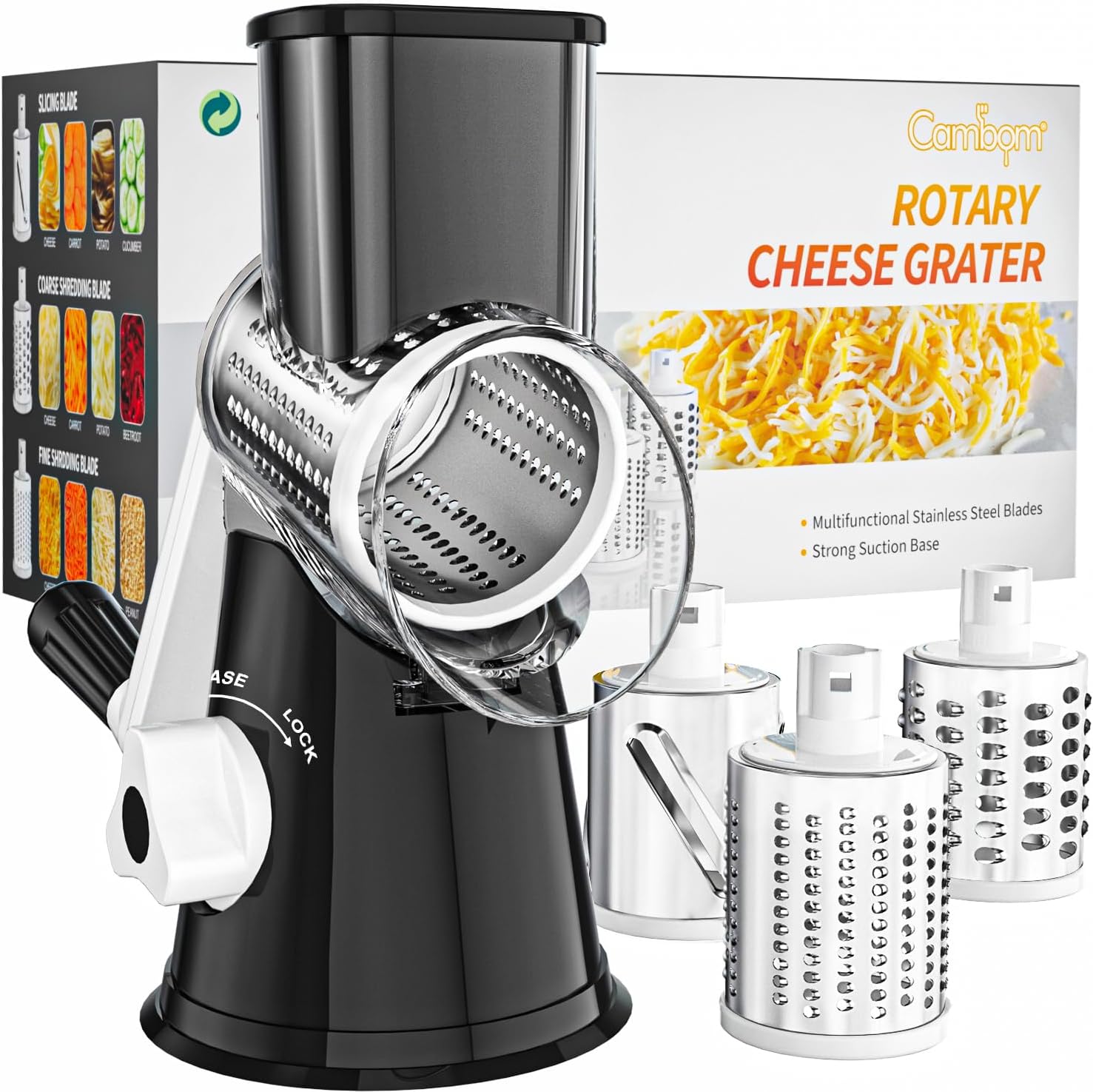
Preparing vegetables, cheeses, and nuts for everyday meals often requires repetitive cutting tasks that take up valuable time in the kitchen. Manual rotary graters and slicers offer a mechanical hand-crank design to process ingredients efficiently without using electricity. These tools typically feature interchangeable stainless steel blades housed inside a transparent barrel, supported by a suction base to keep the unit steady on smooth countertops.
Selecting the right model depends on the specific blade variety, the footprint on your counter, and how frequently you plan to switch between slicing, shredding, and grating tasks. By keeping hands safely away from the sharp cutting surfaces using an included food pusher, home cooks can process various food items cleanly and consistently.
As an Amazon Associate, StacyLaughs earns from qualifying purchases.
Buying guide
Blade Variety and Interchangeability
When selecting a rotary grater, evaluating the included blade options is essential for matching the tool to your regular cooking habits. Basic models typically feature three core blades dedicated to coarse shredding, fine shredding, and standard slicing tasks. Advanced versions expand this selection to include extra-fine shredding, crushing, and decorative wavy cut options for specialized recipes.
Having multiple stainless steel blades allows you to process hard cheeses, crisp vegetables, and nuts with precise textural results every time. Ensure that swapping the blades in and out of the transparent barrel is straightforward and does not require overly complicated mechanical steps during active meal preparation sessions in your kitchen.
Suction Base Stability and Countertop Compatibility
Manual hand-crank graters rely heavily on a secure base to prevent shifting, sliding, or tipping over while you turn the handle forcefully. Most modern designs utilize a powerful suction cup mechanism that locks securely onto smooth, clean surfaces like polished marble, laminate, or glass countertops.
Evaluating the suction strength on your specific kitchen surface ensures safe operation without requiring you to hold the main body down manually during use. Users with textured, tiled, or porous countertops should note that suction bases generally require a completely flat, non-porous area to achieve a firm and reliable grip during fast food preparation tasks. Checking this compatibility prevents frustrating movement when processing stubborn blocks of cheese.
Hopper Capacity and Pre-Cutting Requirements
The size of the food hopper and the width of the input chute directly influence how much preparation work you need to do before grating ingredients. Units featuring oversized drums and wide chutes allow you to load larger chunks of vegetables, potatoes, or zucchini without requiring extensive pre-cutting into tiny pieces beforehand.
Choosing a model with a properly proportioned hopper reduces the time spent feeding ingredients through the chute during busy cooking sessions. An inclined barrel design can also help guide food items downward efficiently, minimizing frustrating clogs and ensuring a smooth continuous flow as you rotate the handle with minimal physical effort.
Material Safety and Construction Quality
Because rotary graters process food items directly for your meals, verifying the material composition is a vital step for any prospective buyer. Look closely for food-grade, BPA-free plastic components that ensure safe contact with fresh produce, cheeses, and nuts during everyday food preparation routines in your household kitchen environment.
The cutting blades should always be constructed from robust stainless steel, such as grade 430 variants, to resist rust and maintain their sharp edges over extended periods of use. Durable construction materials prevent structural warping under regular hand-crank pressure and ensure the mechanical parts continue to function smoothly across numerous meal preparation cycles without premature degradation.
Cleaning and Maintenance Procedures
Keeping a rotary grater clean involves disassembling all removable parts, including the transparent barrel, handle, and interchangeable blades, thoroughly after each food prep session. Many modern models feature fully detachable components that allow for straightforward hand washing under running water or convenient placement on the top rack of a standard home dishwasher.
Manufacturer maintenance guidelines often recommend avoiding high-heat drying cycles when using a dishwasher to protect the long-term sharpness of the stainless steel blades. Using a specialized cleaning brush can also help clear small food particles from tight crevices without risking accidental contact with sharp cutting edges during routine cleanup tasks.
Storage Footprint and Cabinet Organization
Before purchasing a rotary grater and slicer, consider carefully the available storage space inside your kitchen cabinets, pantry, or utensil drawers. Some units come equipped with compact storage boxes designed to hold multiple loose blades neatly in one designated place, preventing accidental clutter on your kitchen shelves and counters.
The overall physical dimensions and vertical height of the assembled unit will dictate precisely where you can store the device when not actively in use. Models featuring detachable handles and slim bodies fit easily into standard kitchen drawers, while larger oversized drum configurations may require dedicated shelf space in a pantry or deep cabinet enclosure.
Frequently asked questions
How do rotary graters stay stable during operation?
Rotary graters typically maintain stability during operation by utilizing a suction base on the bottom of the unit. This suction mechanism creates a firm grip when pressed onto smooth, non-porous countertop surfaces such as polished marble, glass, or laminate. Users press the base down and engage a locking mechanism or lever, which prevents the grater from sliding, tilting, or tipping over while turning the hand crank. It is important that the countertop surface is clean, dry, and flat for the suction to work effectively.
Are the blades safe to handle and change?
Yes, rotary graters are designed to keep your fingers safely away from the cutting surfaces during food preparation. The blades are housed inside a protective transparent barrel, and an included food pusher is used to press ingredients down into the hopper rather than using your hands. When changing the interchangeable stainless steel blades, users typically slide or insert them into the drum without needing to grasp sharp edges directly, making the system suitable for home cooks.
Can these graters handle hard cheeses and vegetables?
Rotary graters are well-equipped to process a wide variety of kitchen ingredients, including moderately firm cheeses like cheddar, mozzarella, parmesan, and romano. In addition to cheese, they handle firm vegetables such as carrots, cucumbers, potatoes, radishes, and broccoli effectively. Many models also process nuts, chocolate, and cookies depending on the specific blade attachment selected, such as coarse shredding, fine grinding, or slicing blades, allowing for versatile kitchen food preparation tasks across numerous daily recipes and meals.
How should I clean my rotary grater after use?
Cleaning a rotary grater involves disassembling the removable parts, which typically include the transparent barrel, handle, food pusher, and stainless steel blades. Many of these components are designed to be top-rack dishwasher safe for easy maintenance, while others can be washed by hand using warm water and soap. Manufacturers often recommend avoiding high-heat drying cycles in the dishwasher to protect the sharpness of the blades. Using an included cleaning brush helps clear residue from tight spots safely.
Do rotary graters require electricity to operate?
No, rotary graters do not require electricity, batteries, or power cords to function. They rely entirely on a manual hand-crank mechanism, which means you can operate them anywhere in the kitchen without needing access to a wall outlet. The user simply turns the handle to rotate the internal stainless steel blade inside the barrel, processing ingredients quickly and efficiently. This manual operation also makes the units lightweight, portable, and straightforward to store inside cabinets or drawers.