Appliances · Buying Guide
Best Small Fine Mesh Strainer for Cocktails and Teas
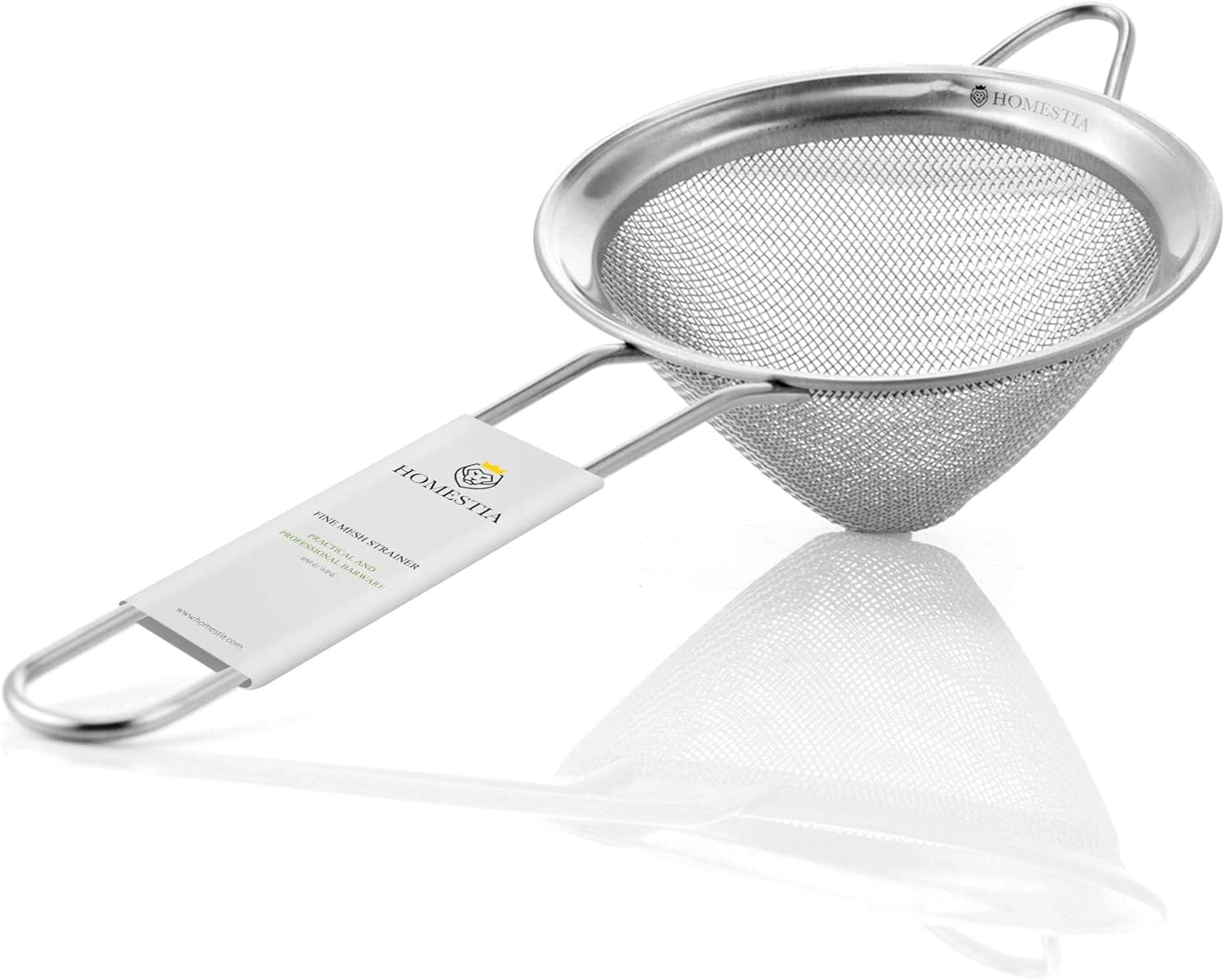
Finding the right small fine mesh strainer can completely change how you handle delicate kitchen tasks like steeping loose leaf tea, dusting powdered sugar, or filtering cocktail pulp. These compact metal sieves offer dense screening capabilities to catch tiny seeds and unwanted bits while letting smooth liquids pass right through effortlessly without creating a messy workspace.
Whether you are setting up a home bar or upgrading your baking accessories, selecting a durable stainless steel model ensures long-term reliability and easy maintenance. We examine five distinct options ranging from classic cocktail cones to silicone-handled sifters, helping you identify the ideal tool for your daily beverage and food preparation needs.
As an Amazon Associate, StacyLaughs earns from qualifying purchases.
Buying guide
Material Composition and Durability
When shopping for a small fine mesh strainer, evaluating the underlying metal quality is essential for securing long-term kitchen performance and reliable food safety. Food-grade 304 stainless steel serves as the industry standard because it naturally resists rust, corrosion, and everyday staining from acidic ingredients like citrus juices, coffee, and loose-leaf teas.
Choosing inferior metals can easily lead to premature warping, structural failure, or unsightly discoloration after repeated exposure to moisture and automated dishwashers. Opting for verified high-grade stainless steel ensures that your sieve maintains its shape, fine mesh tension, and safe operational qualities over years of consistent daily culinary preparation without deteriorating or losing its original finish.
Mesh Density and Weave Style
The primary function of any fine sieve relies heavily on its mesh density to capture unwanted particles while permitting smooth, uninterrupted liquid flow. Look for models featuring tight weaves or specialized 30-mesh screens that effectively trap tiny citrus seeds, stubborn coffee grounds, and loose tea leaves without letting debris slip through into your final drink.
A loose or poorly constructed screen can easily stretch, sag, or deform when you press down on ingredients like fruit pulp or dry flour. Selecting a reinforced twill weave or multi-strand mesh design protects the delicate filtering barrier from warping, ensuring consistent straining precision across countless beverage and baking applications over time.
Handle Design and Ergonomics
Comfort during frequent use depends heavily on how the handle is shaped, textured, and physically attached to the main filtering basket. Traditional metal rod handles offer lightweight balance and simple storage, while silicone-wrapped alternatives provide a much softer, non-slip grip that prevents hand fatigue during extended food preparation or repetitive batch-straining sessions.
Inspecting the connection point between the handle and the rim is equally critical for preventing accidental breakage under heavy loads. Riveted joints or heavily reinforced welds offer superior structural strength compared to basic glued or superficial attachments, ensuring your small strainer handles thick purees, seeds, and heavy ingredients safely without ever snapping or loosening.
Stability Loops and Rest Features
A well-designed small strainer often incorporates structural rest loops or bent U-shaped ends positioned directly opposite the handle. These thoughtful architectural additions allow you to balance the sieve securely across the rim of standard coffee mugs, cocktail shakers, mixing bowls, or cooking pots without requiring constant manual support during busy preparation tasks.
Hands-free resting capability significantly improves overall kitchen efficiency, letting you pour hot liquids or sift dry powders without spilling precious contents over your clean countertops. Checking for dual rest loops or front hooks ensures the tool remains stable and perfectly balanced even when positioned over narrow glassware or wide mixing bowls during active cooking use.
Capacity and Bowl Depth
Selecting the appropriate bowl depth and diameter depends entirely on your specific culinary routines and typical batch requirements. Shallow three-inch strainers excel at targeted tasks like dusting powdered sugar or straining single cocktail servings, but they can quickly overflow if loaded with bulky ingredients or larger liquid volumes during busy cooking sessions.
Deeper basket profiles expand your working volume significantly, allowing you to process larger quantities of grains, berries, or purees at once without constant reloading interruptions. Balancing physical dimensions with your available cabinet storage space ensures you choose a strainer that meets your volumetric needs without occupying excessive kitchen drawer room or hanging space.
Cleaning and Maintenance Ease
Maintaining a fine mesh strainer should be a straightforward, hassle-free process rather than a frustrating chore after cooking or baking sessions. Models constructed with seamless wire rims and smooth stainless steel surfaces actively prevent tiny food particles from becoming permanently trapped in hidden crevices or hard-to-reach corners during daily use.
Checking whether a strainer is fully dishwasher safe or easily rinsed clean under a running kitchen faucet saves valuable post-meal cleanup time in a busy household. Choosing smooth, corrosion-resistant designs ensures your kitchen tool stays hygienic, structurally sound, and visually appealing with minimal physical effort over years of routine maintenance, washing, and storage care.
Frequently asked questions
What can I use a small fine mesh strainer for?
A small fine mesh strainer is a versatile kitchen accessory ideal for multiple everyday tasks. You can use it to strain pulp, herbs, and ice chips out of cocktails, filter loose-leaf tea, or sift small amounts of flour and cocoa powder. It is also well-suited for dusting baked goods with powdered sugar and filtering coffee grounds or fruit juices. The dense mesh captures tiny particles, ensuring smooth liquids and clean ingredients every time you prepare drinks or desserts.
Are stainless steel strainers safe for the dishwasher?
Most quality stainless steel strainers are designed to be dishwasher safe for convenient cleanup after cooking or baking sessions. Their corrosion-resistant metal construction allows them to withstand automated washing without rusting or degrading. However, checking specific manufacturer guidelines is always recommended to ensure long-term durability. Rinsing food residue off immediately after use also helps prevent particles from drying onto the fine mesh, making both manual washing and dishwasher cycles much more effective.
Why is 304 stainless steel preferred for kitchen strainers?
Food-grade 304 stainless steel is widely preferred for kitchen strainers because of its exceptional resistance to rust, corrosion, and staining. When you work with acidic ingredients like citrus juices, coffee, or teas, lesser metals can degrade, discolor, or impart unwanted metallic flavors into your food and beverages. Choosing 304 stainless steel ensures the mesh screen and frame maintain their structural strength, safety, and polished finish over years of regular daily use in home kitchens and bars.
How do rest loops help when using a strainer?
Rest loops and bent U-shaped ends provide hands-free stability by allowing you to balance the strainer directly across the rim of a coffee mug, cocktail shaker, mixing bowl, or cooking pot. This architectural feature prevents the sieve from slipping or sliding into your container while you pour liquids or sift powders. It frees up both of your hands, making single-person beverage preparation and baking tasks significantly easier, safer, and cleaner without unnecessary counter spills.
What is the difference between a shallow and deep mesh strainer?
The main difference lies in physical volume capacity and intended application. Shallow three-inch strainers are compact and lightweight, making them perfect for precise tasks like dusting sugar or filtering a single cocktail glass. In contrast, deep mesh strainers provide increased bowl depth, allowing you to process larger quantities of grains, berries, or wet ingredients at once without overflowing. Choosing between them depends on whether you prioritize a minimalist profile for single servings or higher capacity for batch work.